
Wholesale Taekwondo Uniforms: A Buyer's Guide to Quality and Value
2026-11-16
Finding wholesale taekwondo uniforms that don't sacrifice quality for price feels like a black belt test in itself. Too many suppliers cut corners on fabric, stitching, or fit—leaving your students uncomfortable and your reputation bruised. That's where PandaWin Sports changes the game. In this guide, we'll walk you through what actually matters when sourcing bulk doboks: from premium cotton-poly blends to reinforced seams and sizing consistency. Whether you're restocking a single dojang or outfitting an entire tournament, you'll learn how to spot genuine value and avoid costly mistakes.
Fabric That Keeps Up With Roundhouse Kicks
The moment you throw a roundhouse, most fabrics either resist or give up. This one moves with the leg in a single, unbroken line. The weave has a diagonal give that follows the hip-to-foot arc, so there's no pinch at the knee or drag across the thigh. It snaps back without slingshotting, which matters when you're resetting stance.
The material itself is a dense but breathable blend—think matte finish, not shiny tracksuit. Sweat moves off the skin quickly, but the fabric doesn't turn clammy between rounds. Flatlock seams are placed away from high-friction zones, so a missed check or a sliding shin doesn't chew through the stitching. Even after dozens of sessions, the knees and instep areas hold their shape.
You'll notice it most during combinations. A low kick, a switch kick, a spinning back kick—none of them require tugging at the cuffs or adjusting the waistband. The gusseted panel under the crotch gives full hip rotation without binding, and the waistband stays put even when your torso torques hard. It's the kind of quiet performance that lets you forget the gear and focus on the next kick.
Sizing Charts That Actually Reflect Real Bodies
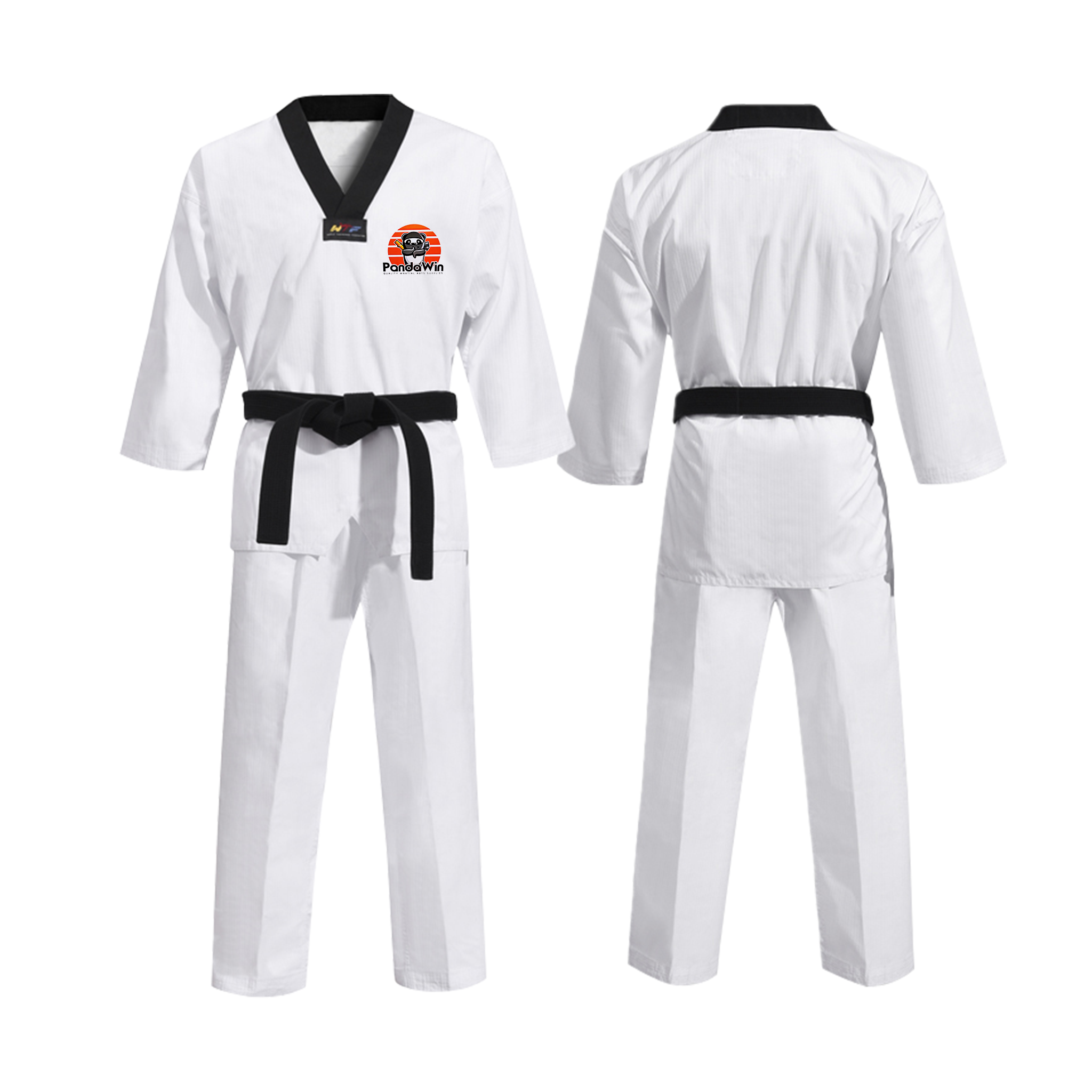
Most sizing charts still read like they were built for a single body type—narrow shoulders, undefined waist, limbs in proportion to some long-forgotten mannequin. The result? Chasing numbers that rarely line up with how clothes actually sit on living, moving people. A chart that reflects real bodies starts by acknowledging hips and busts don't scale together, waists shift with breath and bloat, and the difference between sizes is rarely a neat two-inch step.
Instead of compressing every body into an XS-to-XL ladder, the better approach collects measurements across a wider spectrum: real waist-to-hip ratios, sleeve lengths for longer arms, inseams that respect both petite and tall frames without assuming one proportion fits all. When brands publish ranges for each garment cut—like a fitted tee that accounts for shoulder slope or a trouser that mentions both natural and low-rise waist points—those charts become tools rather than guesswork.
Bulk Pricing Without Sacrificing Stitching
Most bulk pricing sheets quietly assume you'll accept a lower stitch count, a thinner backing, or a rushed edge finish in exchange for the volume discount. We don't build our quotes that way. The cost per piece drops because we schedule longer cutting runs and buy thread in larger spools, not because the embroidery gets lighter. The same density chart you approve on the sample is what goes into every production piece.
We've rechecked enough competitor samples to know where the corners usually get cut—puckering around small text, loose underlay on caps, skipped trims on dense logos. That's exactly what you won't see when your order scales up. Volume pricing here means the setup gets amortized across more units, so your per-piece price falls while the needle stays where it should.
Custom Logos That Don’t Crack After a Wash
You know that sinking feeling when you pull a favorite shirt out of the dryer and see the logo cracked like a dry riverbed. It doesn't have to be that way. The problem almost always comes down to how the design is applied—cheap heat transfers and thin screen prints can't flex with the fabric. When the shirt stretches or shrinks, the ink stays rigid and snaps. Choosing a decoration method that bonds into the fibers instead of sitting on top of them makes all the difference.
Think of a logo that moves with the shirt, not against it. Water-based screen printing or high-quality vinyl with a proper cure can survive dozens of wash cycles without a single split. The key is in the details: using inks with high elasticity, applying the right pressure and temperature, and washing the garment inside out in cold water. A custom logo should feel like part of the fabric, not a sticker waiting to peel.
Durability isn't just about the material—it's about the process. We test every batch with a stretch-and-wash cycle before it ever reaches your hands. If a logo can’t handle a hot dryer and a rough spin, it doesn't get shipped. That’s the difference between a shirt you wear once and a shirt you reach for every week. No cracking, no fading at the edges, just a crisp design that stays put.
V-Neck or Cross-Over, a Coach’s Honest Take
After fifteen years of training clients in everything from powerlifting to hot yoga, I've learned that the neckline of your top isn't just about aesthetics. A V-neck gives you that open, uncluttered feeling, especially when your heart rate is spiking and every bit of airflow counts. But it also rides up more often when you're doing overhead presses or burpees, which can get annoying fast.
Cross-over styles, on the other hand, are the unsung heroes for anyone who spends time inverted or on the floor. That extra layer of fabric across the chest actually keeps everything in place during planks, downward dogs, or even just reaching for a heavy dumbbell. The downside? If you're doing a lot of shoulder-heavy work, the wrap can feel a little restrictive right where you need freedom the most.
My honest advice: pay attention to what you're actually doing in the gym, not what looks good in the mirror before you sweat. For pure conditioning or high-intensity intervals, I lean V-neck every time. For mobility work, yoga, or anything ground-based, the cross-over wins. If you're somewhere in between, bring both and switch by feel — your body will tell you which one it wants after the first ten minutes.
Spotting Red Flags in Wholesale Supplier Samples
Late samples almost always tell you something. If a supplier can't meet a sampling deadline, production timelines will only get tighter once money is on the line. Unpack the sample carefully and note the smaller details before you even touch the garment—loose threads, uneven hems, crooked labels, or packaging that looks like an afterthought. These aren't just cosmetic issues. They reflect the factory's quality control habits, and they rarely improve at scale.
Put the sample next to your tech pack or spec sheet and go line by line. Fabric weight and hand feel should match what you approved, not what the supplier claims they sent. Stretch a seam, check the stitch density, and flip it inside out. If the stitching wanders or the seam allowance varies, that's a pattern or training problem. Also check color under daylight and indoor light—cheap dye lots shift dramatically, and a supplier who ignores that will send you a full shipment that doesn't match the approved swatch.
Finally, ask for a second sample if anything feels off. A good factory will redo it without a long argument. If they push back, blame the courier, or insist the first one was "just a rough draft," walk away. Wholesale supply is a relationship built on consistency, and the sample is the clearest evidence of how that relationship will work when problems arise later.
FAQ
For most clubs, a 7-8 oz cotton-poly blend hits the sweet spot. It holds up to regular washing, resists shrinking, and doesn't feel like cardboard. Lighter 5-6 oz uniforms are fine for summer camps or kids, but they tear faster. Heavier 10+ oz canvas looks impressive but can slow students down and costs more to ship.
Never rely on standard size charts alone. Ask the supplier for actual garment measurements and compare them to uniforms your students already wear comfortably. Kids' sizes vary wildly between factories. Order one sample set first, have different body types try them on, then scale up. Also check if the supplier allows size swaps on unopened packs.
You can find basic student uniforms from $12 to $18 per piece at wholesale quantities, depending on fabric and stitching. Mid-range with reinforced seams and better trim runs $20 to $30. Premium master uniforms with embroidery-ready panels can push $40 or more. Anything below $10 usually means thin fabric or loose threads that won't survive a month of sparring.
Embroidery on the back and left chest is what parents notice most. Stick to one or two thread colors to keep setup costs low. Screen printing is cheaper upfront but fades after repeated washing. If your budget is tight, start with a woven label or heat-transfer logo on the lapel—it's subtle and costs very little per uniform.
Request a pre-production sample, not just a catalog photo. Inspect the stitching at stress points like the collar and armpit. Pull the seams gently—if you see daylight through the holes, that's a red flag. Also ask for a video of the fabric being stretched and washed. A supplier that hesitates on samples is likely hiding something.
Shipping and customs are the big ones. Some suppliers quote a cheap unit price but then charge hundreds for 'handling' or use slow freight that takes months. Ask for a door-to-door quote upfront. Also watch for setup fees on embroidery, packaging charges per uniform, and minimum order quantity penalties if you need to reorder a smaller batch later.
Traditional cross-over jackets look classic and are preferred for belt tests and formal ceremonies. Modern pullover v-necks are easier for young kids to put on and cooler during intense training. Many schools buy mostly traditional for regular classes and a few pullovers for summer or beginners. If you're unsure, order 80% traditional and 20% modern to test demand.
Keep them in a dry, ventilated area away from direct sunlight. Avoid plastic bags for long-term storage because trapped moisture leads to mildew and a musty smell. If the uniforms arrive vacuum-packed, open the packs and let them breathe for a day or two. A light steam or wash before display removes factory sizing and makes the fabric feel softer.
Conclusion
When you're ordering wholesale taekwondo uniforms, the fabric has to handle more than just a few kicks in a demo. Look for a poly-cotton blend or ripstop weave that won't tear at the crotch or armpit when someone throws a roundhouse. And don't trust a sizing chart at face value—measure real athletes, because a 160cm uniform from one factory can fit like a 140cm from another. Bulk pricing is tempting, but if the stitching density drops below 7-8 stitches per inch, you'll pay in returns. Same goes for custom logos: cheap screen prints crack after one wash, so ask for embroidered or heat-transfer samples that have been through a commercial laundry cycle.
As a coach, the V-neck versus cross-over debate isn't just about looks. A cross-over top stays put during grappling, but the extra fabric can bunch under hogu. A V-neck breathes better and is easier to put on fast, though some traditionalists will side-eye it. When you're checking wholesale samples, watch for red flags: uneven hem lines, loose threads around the collar, zippers that catch, or fabric so thin you can read a label through it. If the sample logo already looks faded or the stitching pulls apart with a gentle tug, imagine what happens after thirty students spar in it for a month. Quality and value don't have to be enemies—you just have to know what actually holds up.
Contact Us
Contact Person: Fei Xu
Email: [email protected]
Tel/WhatsApp: +8618631245578
Website: https://www.pandawinsports.com/