

Wholesale Road Roller Factories Driving Reliable Construction Equipment Supply
2026-09-24
Every highway, runway, and foundation starts with compaction—and behind every reliable compactor is a factory that gets the details right. Yet when it comes to sourcing road rollers at scale, many contractors still overlook the advantage of buying wholesale from specialized manufacturers. That's where Dynamic steps in, bridging the gap between heavy-duty performance and supply-chain dependability.
Inside the Factory Floor Where Road Rollers Take Shape
The air inside the assembly hall carries a faint tang of hot metal and hydraulic oil, underscored by the rhythmic clang of steel plates being guided into position. Overhead cranes glide along rails with a low whine, ferrying massive axles and drum shells from one station to the next. Workers in reinforced gloves and ear protection move through this carefully choreographed flow, pausing to inspect weld seams or torque a bolt to its exact specification. The factory floor doesn't just build road rollers here—it tunes them, like instruments meant to flatten earth with relentless precision.
Each roller begins as a skeletal frame on a jig, then gains weight and purpose section by section. A curved steel drum arrives from the fabrication bay, its surface already polished to a dull gleam. Technicians mount the eccentric weights inside the drum that will later create the vibrating force needed for deep compaction. Wiring harnesses snake through the chassis, connecting the operator's console to engine, pumps, and sensors. Every connection is logged, every torque value recorded—not for show, but because a single loose fitting on a machine that pounds the ground thousands of times per hour would spell failure.
Beyond the visible assembly work lies a quieter layer of testing. Each finished roller is driven onto a dynamometer that simulates steep grades and long shifts. Operators sit in the cab, gripping the steering wheel with the same posture they'll use on a highway project, while instruments monitor vibration frequency, hydraulic pressure, and braking response. Only when the roller passes these trials does it receive its final paint touch-up and a serial plate. The factory floor is not just a place where machines are made—it's where they earn the right to be called road rollers.
Why Factory-Direct Pricing Shifts the Math for Buyers
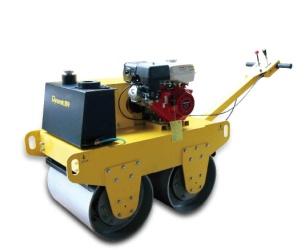
Cutting out middlemen isn't just a supply chain tweak—it rewrites the entire cost equation. When you buy straight from the factory, the traditional markup layers that usually pile on 30–50% simply never enter the picture. That means the price you see reflects actual production, materials, and a reasonable margin, not a chain of commissions.
This shift also changes how buyers think about value. Instead of comparing inflated retail tags and hunting for discounts, you start from the real cost floor. The math becomes transparent: you can see exactly where your money goes, and that clarity often makes the decision easier—and the final number far more comfortable.
The Quality Gates Every Roller Passes Before Shipping
Every roller that leaves our facility must first clear a series of exacting checkpoints, each designed to catch flaws that even seasoned inspectors might overlook by eye alone. We start with dimensional verification, where micrometer readings are compared against the original CAD model at no fewer than twelve points along the cylinder. Any deviation beyond three microns sends the roller back for regrinding. Then comes the surface finish scan—not just a visual gloss check, but a profilometer pass that quantifies roughness in Ra and Rz values. A roller that looks smooth can still fail here if the microscopic valleys are too deep for the intended bearing interface.
After geometry and finish, we force every roller through a dynamic runout test. Mounted between centers and spun at twice its rated speed, the roller must hold its radial and axial wobble below a tight threshold. This isn't just about balance; it exposes internal stress patterns that static checks miss. Finally, a cleanliness audit swabs the roller's surface and analyzes the residue under a particle counter. If the count of residual iron or abrasive fines exceeds our in-house limit, the roller is rejected or sent for an additional ultrasonic wash. This gate matters because a single stray chip can destroy a bearing in hours.
The last barrier before shipping is a randomized destructive pull from the batch. One roller in every fifty is cut, etched, and examined under a microscope for subsurface microcracks or heat-treat irregularities. It sounds wasteful, but it's the only way to validate the entire lot without relying on faith. Only when a batch survives all these gates—dimension, finish, runout, cleanliness, and metallurgical confirmation—does it earn the right to be packed and sent to a customer's loading dock.
Custom Specs for Projects That Demand More Than Standard
Standard configurations often fall short when a project carries unusual load requirements, tight spatial constraints, or environmental conditions that don't match the datasheet assumptions. Custom specs begin with a close reading of those mismatches: thermal drift in a high-vibration setting, a board outline that must follow an irregular chassis curve, or a power rail that has to tolerate frequent brownouts. Instead of forcing off-the-shelf parts into a role they were never meant to play, the design starts from the actual operating envelope and builds outward.
That approach changes how tolerances, connectors, and material choices are selected. Where a generic build might allow ±5% on a reference voltage, a custom spec can demand ±0.5% across the full temperature range and verify it with a specific test sequence. The result is not just a different part number, but a set of parameters that match the way the equipment actually behaves on site.
Keeping Large Orders on Track With Staggered Production Runs
Large orders rarely fail all at once—they tend to slip in stages, and that’s exactly where staggered production runs earn their keep. Rather than locking the entire quantity into one massive batch, you split it into smaller, sequenced runs with clear check-ins after each. This gives you a natural pause to catch quality issues, adjust material flow, or rebalance labor before the next slice starts. It’s less about adding paperwork and more about giving the schedule enough breathing room to absorb real-world hiccups.
The tracking side works best when each run has its own short set of completion markers: raw materials verified, first-off approval signed, final count confirmed. Because the batches overlap or follow tightly, you can compare one run’s output against the previous without waiting until the whole order is done. If run two comes in slower or with slightly higher rejections, you still have run three and four to correct course. That kind of early signal keeps a big order from quietly drifting into a late penalty.
Suppliers and floor supervisors also find staggered runs easier to manage because the work arrives in digestible chunks instead of one overwhelming surge. It reduces the temptation to cut corners just to clear the dock, and it lets you shift capacity if another urgent order needs a slot. Done consistently, the approach turns a large order from a single risky bet into a series of smaller, recoverable decisions.
Spare Parts and Service Support That Outlast the Warranty
A warranty is a promise for a fixed window, but solid equipment should still be earning years later. That's why we keep parts on the shelf long after the model number fades from the catalog, and why our service line is staffed by people who have actually opened the panels. When something goes sideways at year seven, the answer isn't "time for an upgrade" — it's a diagnosis, a part number, and a plan to get you running again.
We've built our support around the less glamorous side of ownership: firmware updates for older units, repair kits instead of full replacements, and field technicians who document the odd fixes so the next call goes faster. The goal isn't just covering the warranty window; it's making the years after it feel just as supported.
FAQ
Focus on the factory's track record with similar tonnage classes, the welding and machining equipment on the floor, and whether they run full load tests before shipping. A factory that builds its own drums and frames rather than outsourcing them tends to have tighter control over tolerances.
Most reliable factories stress-test prototypes on graded gravel and asphalt test pads for hundreds of hours. They also use thicker drum shells, reinforced articulation joints, and hydraulic systems sized for prolonged vibration without overheating.
Direct purchasing removes distributor markups and gives you room to negotiate on container loads. You also get clearer communication about component substitutions, so the price you pay reflects the actual specifications instead of a generic catalog listing.
Yes, many will adjust drum width, vibration frequency, cabin options, and even add features like padfoot shells or GPS-based compaction meters. Customization usually requires a minimum order quantity and adds a few weeks to the production schedule.
Expect a clear warranty on the engine, hydraulic pumps, and drum bearings, plus access to spare parts with part numbers cross-referenced to standard catalogs. A responsive factory will also offer video-guided troubleshooting and, in some regions, dispatch a technician for major repairs.
Factory lead times typically run 30 to 60 days depending on the order size and customization, while local distributors might have stock ready in a week. The trade-off is that factory orders can be timed with your project pipeline, and you avoid paying for inventory holding costs built into distributor pricing.
The engine, hydraulic valves, and drive motors usually determine how long a roller stays out of the repair shop. Factories that source from established component brands and publish the exact model numbers make it easier to service the machine anywhere, which is a strong signal of long-term reliability.
Look for ISO 9001 for process control, and ask if they perform ultrasonic testing on critical welds or dynamic balancing on the drum. A factory that keeps detailed inspection records for each serial number is usually more accountable than one that relies only on final visual checks.
Conclusion
Walking through a wholesale road roller factory, the first thing that hits you is the sheer physicality of the process. Steel plates are cut, rolled, and welded into massive drums while assembly lines move at a pace that balances precision with output. Factory-direct pricing emerges naturally from this setup because middlemen are cut out, and buyers get a clear view of what they're paying for—no hidden markups, just the cost of raw materials, labor, and engineering. Each machine doesn't leave the floor until it clears a gauntlet of quality gates: hydraulic pressure tests, vibration frequency checks, and braking simulations on graded slopes. For projects that need more than a standard model, the factory floor adapts quickly—reinforced frames, different drum widths, or specialized compaction settings can be integrated without stalling the line.
Large orders rarely ship all at once; staggered production runs keep every buyer's timeline intact. A batch might be split into weekly releases, so a contractor can receive rollers as the site prepares each phase rather than storing a dozen machines at once. This approach also lets the factory allocate quality control staff proportionally, avoiding the rush that leads to defects. After delivery, the relationship doesn't end with a signed invoice. Many factories maintain ready stock of high-wear parts—bearings, scrapers, hydraulic hoses—and offer service support that stretches years beyond the warranty period. It's a different kind of wholesale deal: not just moving heavy equipment, but building a supply chain that keeps road construction moving long after the first roller hits the asphalt.
Contact Us
Contact Person: Annie
Email: [email protected]
Tel/WhatsApp: 8613391442963
Website: https://www.dynamic-eq.com