

Wholesale Film Sandpaper 5 Key Benefits for Bulk Buyers
2026-10-01
For bulk buyers, sourcing the right film sandpaper isn’t just about price—it’s about consistency, durability, and a supplier who understands heavy usage. Wholesale film sandpaper from SHENZHEN SUN ABRASIVES delivers five concrete advantages that go beyond the spec sheet, from longer roll life to fewer mid-job changeovers. Here’s what smart procurement teams should know before their next order.
What Bulk Film Sandpaper Pricing Does to Your Actual Cost Per Sheet
Bulk film sandpaper is usually priced by the roll or by the square meter, which looks great on a quote until you try to compare it to the per-sheet price of precut discs. A 50-meter roll that costs $120 might seem like a steal, but if your cutting pattern for 150mm discs leaves a 40mm strip on every row that you can't use, the real cost per sheet climbs fast. You're not paying for the full square footage; you're paying for the usable discs you actually get out of the roll.
Then there's the hidden labor factor. Someone has to unroll, measure, mark, and cut that film into sheets or discs, and that time doesn't show up on the invoice. If a worker spends 20 minutes converting a roll into 80 sheets, add that labor cost back into your per-sheet math. Cheaper bulk film can end up more expensive per finished sheet than buying precut product, especially if the film is thin and tears during the cutting process, wasting material.
Finally, watch how the price is quoted per square meter versus per linear meter. A roll that is 1.4 meters wide and 50 meters long contains 70 square meters, but if the supplier quotes you $3.50 per linear meter, you're actually paying $5 per square meter—and that's before any waste. Break every bulk price down to cost per usable sheet after cutting and labor, not the sticker number on the roll.
How Wholesale Film Sandpaper Keeps Your Sanding Stations Running Without Interruption
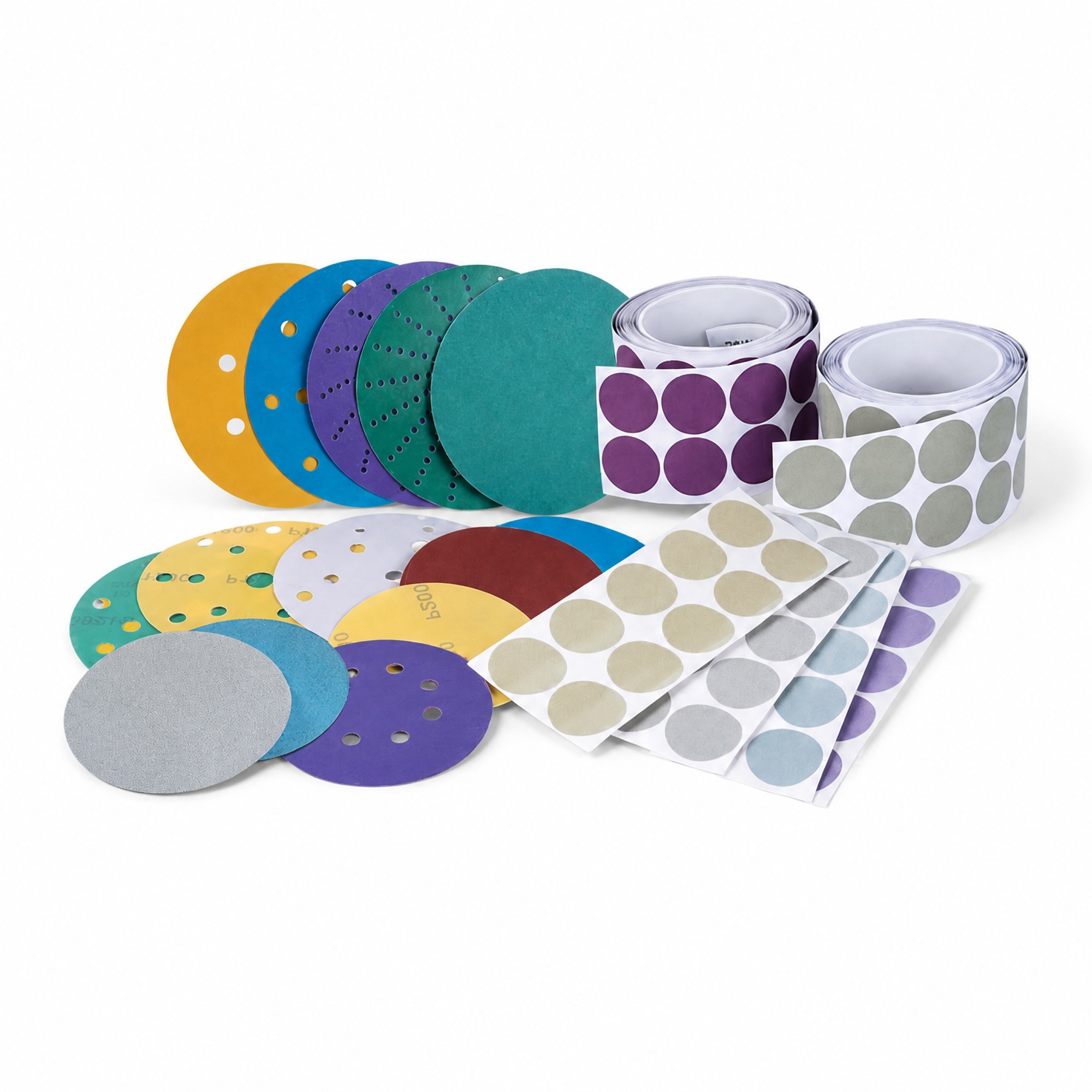
A steady supply of film sandpaper does more than fill a shelf—it keeps the rhythm of your sanding stations intact. The polyester film backing holds up under heat and edge pressure that would shred paper sheets, so operators spend less time swapping discs and more time on the actual surface. That kind of continuity is what separates a busy shop from one stuck waiting for abrasives.
Buying wholesale changes the math on interruptions. Instead of running low between small orders, you keep enough grits and diameters on hand to cover every stage without borrowing from another line. When a station does need a change, the uniform film backing peels clean and seats flat, cutting the seconds that add up over a shift.
There is also a quieter benefit: fewer rework cycles. Because film sandpaper wears evenly and resists loading, the finish stays consistent from the first panel to the last. That means less stopping to check for scratches or re-sand spots, which keeps the whole line moving at a pace your team can actually sustain.
Why Batch-to-Batch Consistency Becomes Critical When You Order Film Sandpaper by the Pallet
When you're ordering film sandpaper by the pallet, the cost per sheet stops being a rounding error and starts becoming a line item that can make or break a production budget. The real problem isn't the initial purchase, though—it's what happens when three different batches show up with slightly different backing flexibility, abrasive loading, or even just a subtly shifted grit distribution. Operators start compensating without realizing it, and suddenly the same pressure, speed, and stroke count are producing different finishes on the same part number.
A pallet of sandpaper might sit in your warehouse for months, moving from one work cell to another as demand shifts. If the manufacturer doesn't hold tight tolerances on the resin bond system and the film caliper, you'll find yourself chasing scratches that appear only with a particular lot. Those intermittent defects are worse than a full batch failure because they're hard to trace and even harder to explain to a customer who sees a finish variation on a supposedly identical product.
Batch-to-batch consistency isn't just a quality metric; it's a production planning tool. When you know the film sandpaper will cut, flex, and wear the same way every single time, you can lock in your process parameters and stop burning hours on trial runs. That predictability is what lets a small shop take on a large contract without hiring extra QC staff just to babysit incoming abrasive shipments.
Custom Film Sandpaper Specifications Without the Custom Price Tag for Bulk Buyers
Custom film sandpaper usually carries a steep markup when you ask for a non-standard backing weight or a specific grit blend, because the factory has to stop a line and reset tooling. Bulk orders flip that equation. If your annual usage justifies a production run, those same adjustment costs get spread across thousands of square meters, making the per-unit premium nearly vanish. You get the exact film thickness, adhesive system, and roll width your process needs without treating every purchase like a prototype.
What often surprises buyers is how flexible many manufacturers actually are once minimum quantities are met. You can specify a narrower backing, a finer grit distribution, or a water-resistant bond and still pay close to the standard catalog rate. The trick is to bundle your requirements into a single, larger order instead of requesting small custom batches throughout the year. That way you lock in consistent specs, reduce freight and administrative churn, and keep the pricing in line with off-the-shelf alternatives.
The Hidden Administrative Savings of Placing One Wholesale Sandpaper Order Instead of Ten
When you split sandpaper purchases across multiple small orders, each one quietly generates its own trail of busywork: a separate purchase order, approval email, receiving entry, and invoice to reconcile. Consolidate those ten orders into a single wholesale shipment and all of that duplication collapses into one set of documents. Your accounting team isn’t matching ten supplier invoices against ten packing slips; they’re handling one. Your warehouse crew isn’t stopping to count and shelve ten deliveries; they’re processing a single pallet.
There’s also the less obvious cost of chasing vendors. Ten orders means ten potential backorders, ten tracking numbers, and ten chances for a box to arrive short or late. One larger order gives you a single delivery window and one point of contact if anything goes wrong. Over a year, that can free up hours of phone calls and email threads that nobody budgets for.
Finally, think about the purchasing rhythm. Frequent small orders force someone to monitor stock levels constantly and reorder before the next job. A single bulk sandpaper order lets you set a predictable replenishment schedule—say, twice a year—so the buyer can step away and handle other tasks without the nagging worry that the shop will run out mid-project.
What to Expect From a Long-Term Wholesale Film Sandpaper Partnership
When you settle into a long-term partnership with a wholesale film sandpaper supplier, the first thing you notice is a shift from transactional to relational. Orders stop feeling like one-off guesses and start reflecting your actual usage patterns. Your supplier learns which grits you burn through fastest, when your production cycles peak, and which backing materials hold up best under your specific finishing conditions. This familiarity means fewer calls about stockouts and more proactive suggestions—like switching to a different film weight for high-speed orbital sanders or consolidating SKUs to simplify inventory. Over time, you may even find your supplier flagging potential supply chain hiccups before they hit your line, because they've come to understand your tolerance for substitutions and lead times.
Another expectation that often gets overlooked is the quiet evolution of pricing and payment terms. Longevity earns you more than a lower per-sheet cost. You might see tiered discounts based on rolling volume, but also less obvious benefits: waived freight on mixed pallets, extended net terms during seasonal slow spells, or first access to discontinued lots sold at steep markdowns. A good wholesale partner will periodically review your buying history and propose adjustments that save money without pushing you toward products you don't need. There's a mutual accountability that develops—you commit to realistic forecasts, and they commit to holding buffer stock or reserving production capacity. It's a rhythm that doesn't happen with spot purchases, and it can translate into more stable cash flow for both sides.
Finally, expect the technical side of the relationship to deepen in ways that directly affect your output. A long-term film sandpaper wholesaler isn't just a box mover; they become a sounding board for troubleshooting. Maybe you're dealing with premature clogging on aluminum oxide films, or you're curious whether a stearated coating would reduce loading on softwoods. Instead of generic advice, you get targeted recommendations grounded in your machine fleet, operator habits, and substrate mix. Some suppliers will even send samples with slight modifications and walk your team through controlled trials. Over months and years, this collaboration can lead to custom grit sequences or exclusive film constructions that set your finishing quality apart. You stop shopping for sandpaper and start co-developing it.
FAQ
Film backing resists tearing and folding even under heavy pressure or on sharp edges, so a single sheet lasts longer and keeps its shape. For buyers ordering by the pallet, that durability translates into fewer replacements and less downtime on the shop floor.
Yes—because film sheets outlast paper abrasives, workers change them less often. The real savings come from reduced labor stoppages and fewer discarded sheets, not just a cheaper sticker price per roll or disc.
Automotive refinishing, metalworking, woodworking, and composites manufacturing tend to see the biggest gains. Any operation that wet sands, uses fine grits on contoured parts, or needs consistent scratch patterns will notice the difference quickly.
Film is waterproof and won't swell or disintegrate like paper. That makes it ideal for automotive clear coat work and primer leveling, where water is used to clear debris and prevent loading. Bulk buyers in body shops often run film exclusively for this reason.
Look at the film thickness, grain type (aluminum oxide, ceramic, or silicon carbide), adhesive system, and roll width options. Ask for samples to test on your actual substrates—film can vary a lot between mills, and a cheap lot that loads up quickly will erase any upfront savings.
Yes. Film has a consistent thickness and a smooth, non-compressible surface, so the abrasive grains cut at a steadier depth. That reduces random deep scratches and gives body shops and furniture makers more predictable results from coarse to fine grits.
The color usually comes from the film dye and doesn't affect performance, but some coatings are easier to see against a particular backing. Clear film can be useful for visual inspection on glass or headlight restoration, while colored film may reduce glare under bright shop lights.
Keep rolls and sheets in a cool, dry area away from direct sunlight and extreme temperature swings. Store flat or on proper roll racks to prevent curling, and avoid stacking heavy objects on boxes, which can crease the film and create weak spots.
Conclusion
Buying film sandpaper in bulk flips the math on what you actually pay per sheet. Instead of chasing small orders with per-unit markups and repeated freight charges, you lock in a rate that reflects the full pallet. That lower per-sheet cost isn't just a surface discount—it means your sanding stations keep running without the stop-start rhythm of backorders or last-minute runs to the supplier. When the same grit and backing arrive in large, consistent batches, your operators spend less time adjusting to subtle shifts in cut rate or finish quality. That consistency matters more than most people admit once you're running multiple shifts on the same job.
There's also a quieter side to wholesale buying that rarely gets mentioned: the paperwork and coordination shrink. One purchase order, one delivery, one invoice to reconcile—it eats far less time than juggling ten small buys. If you need a specific film backing, grit range, or roll width, many suppliers will match those specs without treating it like a one-off custom order. Over time, a steady wholesale relationship gives you priority on inventory, predictable lead times, and a supplier who actually knows your production rhythm. That's the kind of reliability you can't put on a spec sheet, but it shows up in fewer stalled jobs and less wasted material.
Contact Us
Contact Person: Amanda Wang
Email: [email protected]
Tel/WhatsApp: +86-13602569854
Website: https://www.sunabrasives.com.cn