

Top Distillery Equipment Supplier: Your Guide to Quality Stills and More
2026-05-11
Every great spirit starts with exceptional equipment. If you're serious about distilling, settling for anything less than the best is never an option. That's where DYE comes in—a name that consistently emerges in conversations about top-tier stills and brewing gear. But with so many suppliers claiming excellence, what truly defines a reliable partner for your distillery? In this guide, we cut through the noise to reveal what makes a supplier stand out, and why DYE deserves a closer look as you craft your next batch.
What to Look for in a Distillery Equipment Partner
When scouting for a distillery equipment partner, experience speaks louder than spec sheets. You want someone who's seen a few fermentations go sideways and knows how to tweak a still to match your grain bill. They should be as excited about your single malt as you are, offering real-world wisdom instead of cookie-cutter solutions.
Durability matters, but so does flexibility. A partner who only pushes one type of copper still or a specific mash tun might not be the best fit if your recipes evolve. Look for craftsmanship that balances old-school techniques with an openness to your process. If they aren't willing to discuss custom configurations or don't ask about your water source, that's a red flag.
After-sale support often gets glossed over, yet it's the backbone of a lasting partnership. The best partners stick around long after installation—troubleshooting odd temperature swings, sending replacement gaskets before you even know you need them, and sharing tips that only come from years on the job. A real partner treats your distillery like their own, because when your barrels sell out, theirs do too.
Exploring the Range of Still Types for Your Craft
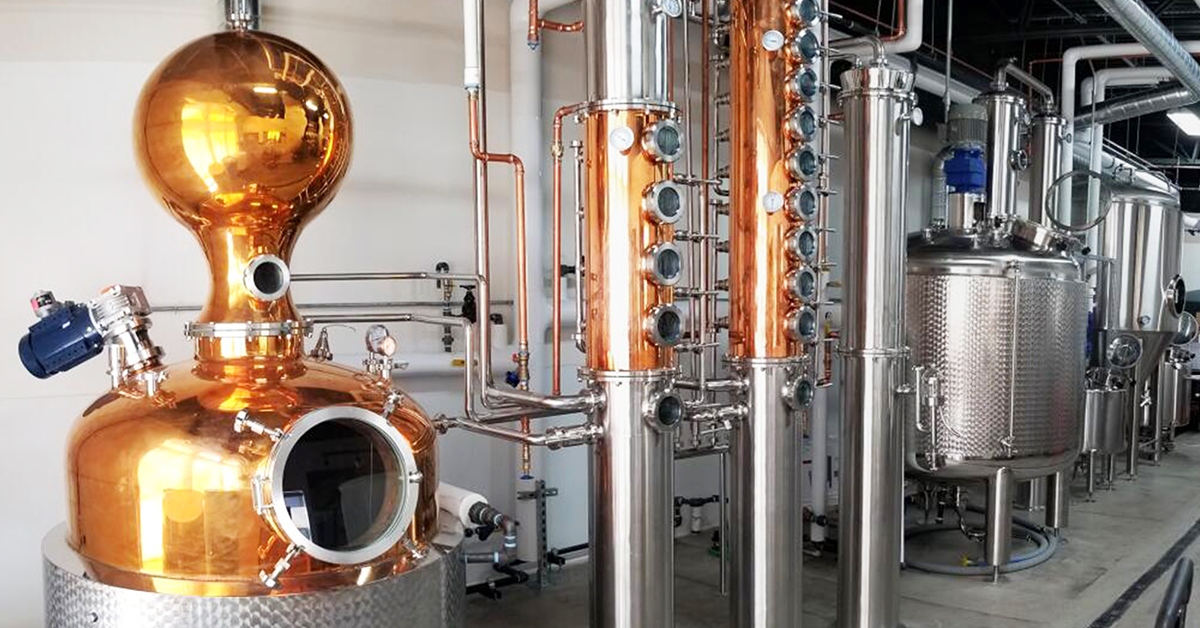
Choosing the right still can reshape the soul of your spirit. Pot stills, with their wide, onion-shaped bodies and swan necks, coax out rich, oily textures and deep, earthy flavors—perfect for a single malt that lingers on the palate. They thrive on patience, rewarding you with complexity through slow, batch-driven runs.
Column stills, on the other hand, work with surgical precision. Stacked plates and constant distillation strip away impurities, yielding a cleaner, higher-proof output that’s tailor-made for vodka or a crisp, light rum. If you’re after consistency and volume, this is your workhorse.
Then there’s the hybrid route, blending the best of both worlds. Adding a rectification plate to a pot or running a column with a doubler lets you shape the spirit to your whims—pull out fruity esters or keep a whisper of grain. It’s the artisan’s playground, blurring boundaries and letting you tinker until the profile feels unmistakably yours.
Materials and Build Quality That Matter
It’s easy to overlook the small details until they fail. That quiet, satisfying click of a well-machined button, the cool, smooth weight of a solid metal frame in your hand—these aren’t accidents. They’re choices. Materials matter not just for durability, but for the daily experience. A device crafted from high-grade aluminum or reinforced with subtle texture doesn’t just survive drops; it feels intentional every time you pick it up.
Build quality is where design stops being theoretical. It’s the uniform gap between panels you don’t notice because it’s perfect. It’s the hinge that moves with exactly the right resistance, year after year. These are the things that turn a tool into something you rely on without thinking, and frankly, they’re what separate a fleeting gadget from a lasting companion. No spec sheet can capture that.
We’ve seen too many products chase looks while forgetting that real quality is tactile. It’s in the scratch-resistant coating that stays matte, the seams that don’t collect dust, the consistent color that doesn’t fade along edges. That’s why we obsess over the unglamorous stuff: drop tests, material fatigue, and the thousand tiny stress points that only matter when they break. But if we do our job, you’ll never have to think about them at all.
Maintenance Wisdom for Long-Lasting Gear
Most gear fails not from use, but from neglect between adventures. After each outing, take ten minutes to wipe down surfaces with a damp cloth, paying attention to zippers, buckles, and fabric folds where grit hides. For technical fabrics, a periodic wash with a cleaner designed for waterproof or breathable materials restores performance without stripping protective coatings. Dry everything thoroughly before storage—lingering moisture invites mildew and weakens seams over time.
Storage habits matter as much as cleaning routines. Avoid cramming tents and sleeping bags into stuff sacks for months; instead, hang them loosely in a cool, dry closet to preserve loft and elasticity. Leather boots and belts benefit from occasional conditioning with a light layer of wax or oil, but go easy—too much product clogs pores and accelerates deterioration. Rotate footwear so it can fully air out between uses, and replace insoles when they lose their spring.
Catching small problems early keeps gear going strong. Before you stash anything away, check for frayed stitching, tiny punctures, or hardware that’s starting to stick. A needle and thread, a dab of seam sealant, or a quick zipper wax can save you from a catastrophic blowout on the next trip. Listen to the sounds your gear makes—a grinding tent pole or a squeaky backpack frame is asking for attention before it snaps.
Navigating Customization and Scaling Needs
Tailoring a platform to fit your exact workflow can unlock remarkable efficiency, but it often introduces a hidden tension: the more you fine-tune, the harder it becomes to grow without breaking what you’ve built. Many teams discover that a feature they added for a niche use case now sits at the center of a sprawling process, and suddenly the lightweight tweak needs to support ten times the traffic. The challenge isn’t just about adding more servers; it’s about ensuring that every custom rule, integration, and interface element can gracefully handle increased demand without requiring a complete rewrite. This balancing act demands a mindset shift from “build it for now” to “design it for what comes next,” even when next isn’t fully clear.
A practical way to approach this is by treating customization as a series of modular, replaceable parts rather than a monolithic layer on top of a core system. When each enhancement lives in its own container—metaphorically and literally—scaling becomes a matter of replicating or adjusting that piece without touching the whole. For instance, a reporting widget that works for ten users might choke at a thousand, but if it’s built as a stateless service with clear boundaries, you can swap in a more robust version or spin up multiple instances without affecting the dashboard it feeds. The same logic applies to logic-heavy customizations: store complex rules in a dedicated engine that can be scaled independently from the main application, so a surge in one area doesn’t cascade into system-wide slowdowns.
Ultimately, smooth navigation between customization and scaling relies on a subtle cultural shift: treating your own additions as temporary scaffolding that should be continuously revisited. Instead of viewing a successful customization as a permanent fixture, think of it as a prototype that proves value—then iterate to make it resilient. This might mean refactoring a popular custom field into a first-class feature, or migrating a homegrown automation into a dedicated microservice before it becomes a bottleneck. By weaving scalability checks into every custom development cycle, you avoid the all-too-common trap where a system that works beautifully in demos collapses under real-world pressure. The result is an environment where the team can innovate freely, confident that the groundwork is already in place for growth.
Staying Ahead with Modern Distilling Innovations
In a craft shaped by centuries of tradition, today’s distillers are rewriting the rulebook with cutting-edge techniques that defy convention. From ultrasonic extraction that coaxes deeper flavors in hours instead of weeks, to vacuum distillation systems operating at lower temperatures to preserve delicate aromatics, innovation is no longer a distant horizon—it’s the heartbeat of the modern stillhouse. These advances aren’t just about efficiency; they’re about unlocking new sensory dimensions, allowing master blenders to design spirits with unprecedented precision and imagination.
The smart distillery has emerged as a nexus where data meets craftsmanship. Real-time sensors track fermentation kinetics, while machine learning algorithms predict optimal cut points, turning the art of distillation into a finely tuned collaboration between human intuition and digital acumen. Some pioneers are even experimenting with customized yeast strains, engineered through adaptive laboratory evolution, that produce entirely novel ester profiles—whiskeys with notes of grilled pineapple, gins with a whisper of fresh basil. It’s a playground of possibility, yet grounded in a respect for raw materials.
True staying power, however, lies in sustainable ingenuity. Closed-loop water systems, CO₂ recapture for greenhouse use, and spent grain upcycling into biofuels are no longer niche experiments—they’re becoming the baseline. Combine that with lightweight, recycled-glass bottles and blockchain-tracked supply chains, and you have a blueprint for a distillery that doesn’t just survive the next decade, but shapes it. In this landscape, being ahead isn’t about chasing trends; it’s about building a resilient, responsible future—one batch at a time.
FAQ
Focus on their experience and reputation in the industry. Check if they offer a wide range of equipment, from stills to fermentation tanks, and whether they provide after-sales support. It’s also wise to look for customer reviews and ask about customization options.
Quality stills are typically made from food-grade stainless steel or copper, with smooth welds and no sharp edges. Check for thick gauge material, especially in the boiler and column. A reliable supplier will often share details about their manufacturing process and material certifications.
Many top suppliers offer design and consulting services to optimize your space. They can suggest efficient workflows, proper equipment placement, and even help with regulatory compliance. It’s a good idea to discuss your production goals upfront so they can tailor a solution.
You’ll find pot stills, column stills, and hybrid stills. Pot stills are great for craft spirits like whiskey and rum, while column stills are better for high-volume vodka or gin production. Hybrid models combine both for flexibility. The supplier can guide you based on your product line.
It depends on your priorities. Local suppliers often provide faster service, easier communication, and lower shipping costs. International suppliers might offer more variety or specialized designs, but consider import duties and warranty support. Ask for a detailed quote to compare total costs.
You’ll likely need fermenters, mash tuns, cooling systems, and storage tanks. Don’t forget pumps, piping, and filtration units. A knowledgeable supplier can recommend a complete setup and even offer bundled packages to save you time and money.
Conclusion
Finding the right distillery equipment supplier goes beyond comparing catalogues and price tags. It starts with a partner who listens closely to your production goals, whether you're crafting a single malt or scaling a rum operation. The backbone of any reliable still starts with copper and stainless steel—metals chosen not just for tradition but for their proven role in removing sulfur compounds and resisting corrosion. Quality shows in the thickness of a pot wall, the precision of a weld, and the thoughtful design of a column that balances reflux ease with spirit character. When visiting a workshop or reviewing specs, pay attention to how the supplier handles custom requests, because your process might call for a peculiar lyne arm angle or an extra plate that no off-the-shelf model provides. A trustworthy partner doesn't just sell you a piece of kit; they help you map out future upgrades so you're not boxed in when demand climbs.
Once the equipment is humming, the real test is how it holds up over years of runs. Regular passivation and gentle cleaning routines prevent metallic off-flavors, while a supplier that offers ongoing support—whether through troubleshooting guides or direct service visits—protects your investment long after the installation crew leaves. Modern gear increasingly weaves in digital sensors and automated controls that track temperature and cut points precisely, cutting waste and tightening consistency. Yet innovation doesn't mean abandoning craftsmanship; the best setups blend data-driven tools with the distiller's instinct. Customization plays into this too—whether it's adding a gin basket, expanding a mash tun, or reconfiguring a condenser for a new whiskey style. Scaling should feel like a logical step, not a full restart. When your initial choice of supplier understands your journey from hobby scale to full production, the transition stays smooth and the signature quality of your spirits remains unmistakable.
Contact Us
Contact Person: Ada Xu
Email: [email protected]
Tel/WhatsApp: 0577-86806088
Website: https://www.dayuwz.com/