

Top BOPP Masterbatch Solutions for High-Performance Film Manufacturing
2026-08-13
Ask any experienced BOPP film producer what separates premium output from ordinary reels, and masterbatch quality will almost always come up. Getting the right dispersion, thermal stability, and optical performance isn't just a box to tick—it's the foundation of high-performance film manufacturing. Below, we break down the top masterbatch solutions that actually move the needle, including a closer look at how Xinwancai helps converters push beyond conventional limits.
Why BOPP Film Makers Are Rethinking Masterbatch Formulations
BOPP film production has become far less forgiving over the last decade. Line speeds keep climbing, film gauges keep dropping, and downstream converters expect flawless optical clarity and stable slip performance straight off the roll. But many standard masterbatches were built for older, slower processes. They carry heavier additive loads, use generic carrier resins, or rely on fillers that don't disperse evenly at high throughput. The result is more die lip buildup, random film breaks, and visible gels that force downgrades. That's pushing formulators to strip out low-molecular-weight waxes, switch to purer carrier polymers, and redesign additive packages so every pellet behaves identically under extreme shear.
At the same time, sustainability targets are changing the definition of a good formulation. Brands want mono-material BOPP structures that can enter existing recycling streams without contamination, and they want thinner films that still hold up in packaging lines. A masterbatch that introduces unwanted chlorine, heavy metals, or non-polyolefin components is now a liability. Reformulators are turning to mineral-free anti-block systems, bio-based slip additives, and tight molecular weight control to keep COF low without sacrificing recyclability. It's no longer just about cost per kilo; it's about keeping a BOPP grade viable in markets where downgauging and design-for-recycling are the new baseline.
Balancing Dispersion and Throughput in High-Speed Extrusion
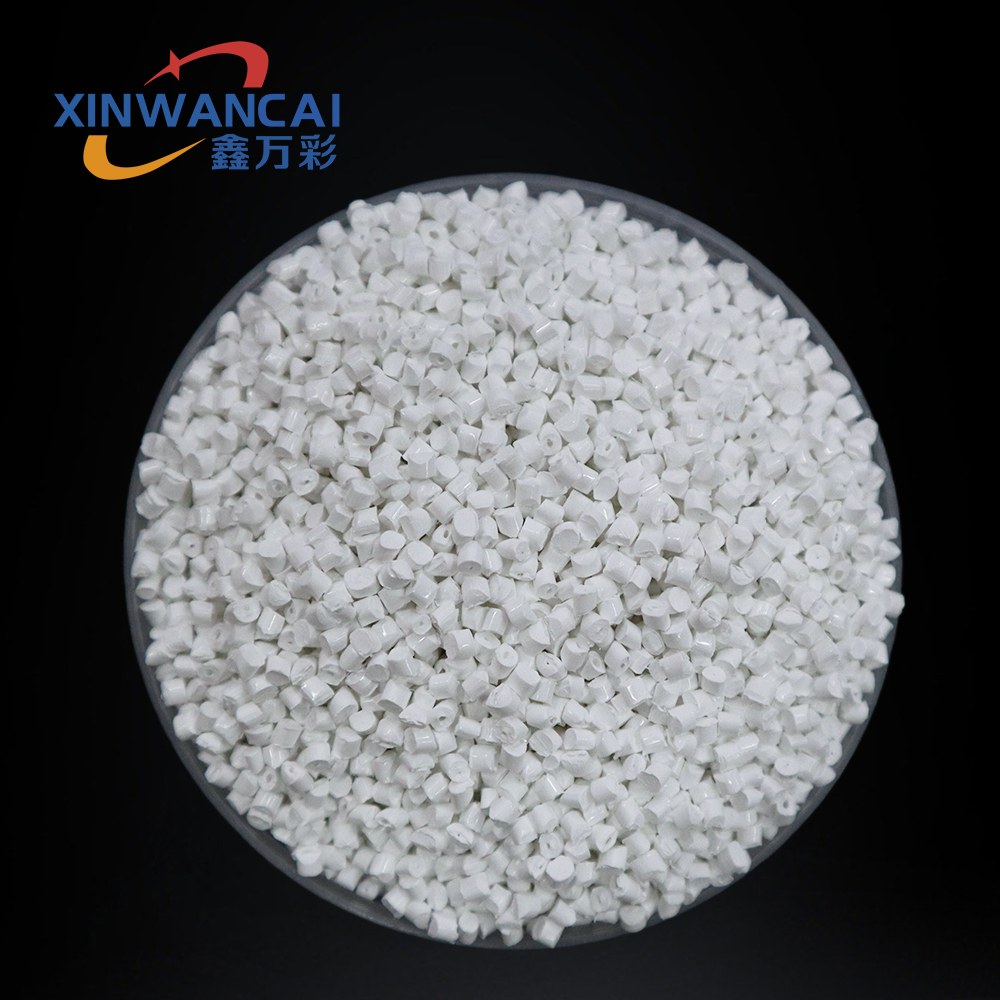
High-speed extrusion pushes material through at rates that amplify mixing demands. Dispersion relies on shear and residence time; raising screw speed shortens the window for agglomerate breakdown. Without adjusting geometry or thermal profile, throughput gains often show up as visible defects or inconsistent melt quality.
The main lever is specific energy input. Aggressive kneading blocks or gear pumps can maintain distributive and dispersive mixing while the line runs faster. However, excessive shear raises melt temperature, which degrades heat-sensitive polymers and lowers viscosity so much that dispersive forces drop. Operators often trim barrel temperatures to offset this, but cooling capacity becomes the limiting factor.
A practical balance comes from staged screw configurations: an early section for melting and initial wetting, a moderately aggressive mixing zone, and a pressure-building section that keeps residence time tight. Monitoring melt pressure before the die and comparing torque with output rate gives a fast read on whether dispersion keeps pace with throughput.
Custom Additive Packages for Clarity and Haze Control
Achieving the right optical profile in polyolefin films often means pushing beyond off-the-shelf clarifiers. Tailored blends of sorbitol-based nucleators and specialty amides can lower haze while preserving a soft, diffused light transmission for packaging that needs both shelf appeal and product protection.
The real challenge lies in controlling the crystallization kinetics without introducing surface defects. Custom packages fine-tune the ratio of primary clarifier to co-additives, such as acid scavengers or slip agents, so that nucleation density stays uniform across varying cooling rates. This prevents the formation of large spherulites that scatter light and raise haze values.
For converters running high-speed lines, small adjustments to the additive load can mean the difference between a hazy roll and a crystal-clear one. Working with a formulator to map thermal history against optical response yields a bespoke solution that outperforms generic masterbatches in both clarity and consistency.
Slip and Antiblock Systems That Survive Corona Treatment
Corona treatment drives film surface energy upward, but it rarely leaves slip additives untouched. Conventional erucamide and oleamide blooms oxidize quickly under the discharge, leading to a sharp rise in coefficient of friction within days. The systems that hold up rely on non-blooming, high-molecular-weight siloxanes or specialty waxes that stay embedded in the polymer matrix instead of migrating to the surface. These slip agents do not rely on a replenishable surface layer, so they stay effective even after multiple passes through a treater or post-treatment lamination.
Antiblock additives face a different stability test. Inorganic particles like diatomaceous earth or synthetic silica are naturally corona-resistant, but their relatively large size and irregular shape can scatter light and create visible haze. A better route for clarity-critical films is to use engineered organic beads or surface-treated minerals with a narrow particle size distribution, often centered around 2 to 4 microns. These particles maintain separation efficiency without roughening the surface enough to hurt gloss or printability, and they do not agglomerate when the film surface is oxidized.
Long-term performance shows up in accelerated aging, not just a single lab measurement. A robust slip and antiblock package will keep blocking force under control and maintain a stable COF after weeks of storage at elevated temperature following corona treatment. Formulators often pair a non-migratory slip agent with a tuned antiblock to balance machinability, seal strength, and optical quality. That balance, verified under real converting conditions, separates durable systems from ones that only pass the initial specification sheet.
Masterbatch Strategies for Down Gauging Without Sacrificing Strength
Down gauging often feels like a direct trade-off between material savings and mechanical performance. The real leverage comes from masterbatch design that alters the polymer matrix at a microstructural level. Instead of simply accepting that thinner walls mean weaker parts, formulators can introduce nucleating agents that promote finer spherulite formation in semi-crystalline resins. This increases the total surface area of crystalline boundaries, which acts as a crack-arresting network. Using a masterbatch that delivers a high concentration of these nucleators enables converters to push gauge reductions of 15–20% while retaining tensile and impact properties that would otherwise drop sharply.
A second approach focuses on reinforcing the amorphous phase without raising viscosity. Specialty masterbatches loaded with surface-treated nanoclays or graphene nanoplatelets can bridge microvoids that initiate under load. The key is to avoid simple filler dispersion—those create stress concentrators. Instead, the masterbatch should be engineered for exfoliation during the final melt processing step. When the platelets reach a critical aspect ratio, they act like internal stitches across potential fracture planes. This allows downgauged films or injection-molded parts to resist tear propagation and slow crack growth, even when the nominal wall thickness is reduced by a third.
A third lever is to use masterbatches that modify chain entanglement density. Adding a small percentage of ultra-high molecular weight polymer or a controlled level of long-chain branching can compensate for the loss of bulk material in thin sections. These additives are often delivered as a concentrated masterbatch because direct addition leads to poor dispersion and melt fracture. The masterbatch carrier is selected to match the base resin’s rheology, so the high molecular weight fraction stretches and aligns during flow, creating a self-reinforcing skin layer. The result is a downgauged product where the outer surface carries more of the stress than the core—an effect that cannot be achieved by simply blending more resin.
Recycled Content Compatibility in BOPP Masterbatches
Recycled polypropylene streams often carry a mix of stabilizer residues, printing inks, and low-level contaminants that can disrupt film orientation or create visible defects. In BOPP masterbatches designed for rPP blends, the carrier resin must be chosen to wet and disperse pigments and additives across varying melt viscosities caused by recycled content. A higher melt flow carrier can help maintain uniform draw resonance during stretching, but it may sacrifice some mechanical strength if overused.
Beyond dispersion, additive packages need to buffer the acidic or oxidative species introduced by recycled feedstock. Calcium stearate and hydrotalcite are common scavengers, yet their ratio must be tuned to avoid plate-out on chill rolls or die lip buildup. Trials with post-industrial recyclate show that masterbatch loading can often be reduced when the formula includes a small amount of maleic anhydride grafted PP, which improves interfacial adhesion and reduces gel formation caused by incompatible particles.
Batch-to-batch variability in recycled content means the masterbatch should not rely on a single rigid formulation. Instead, offering a robust additive system with wider processing latitude allows converters to adjust addition rates between 2% and 6% without sacrificing optical clarity or film strength. This flexibility is particularly important for tenter-frame lines where recycled content percentages can shift from 10% to 40% within a single production week.
FAQ
Start with thermal stability and dispersion. If the carrier resin can't handle stretching temperatures or the additives aren't well distributed, you'll see film breaks and uneven haze before any other issue shows up.
They keep the film from sticking to itself during winding, slitting, and pouch making. A good formulation holds the coefficient of friction steady after storage without hurting seal integrity or print adhesion.
Tightly controlled, fine particles deliver opacity with less pigment loading. That means fewer weak points during orientation, lower risk of gels, and better retention of film toughness.
Absolutely. Poor dispersion creates micro-agglomerates that scatter light. A well-matched masterbatch keeps additives invisible to the eye, so clarity and gloss stay close to virgin resin levels.
It introduces controlled microvoids during stretching, which lowers density and gives that pearlescent look. The key is uniform void formation so barrier and stiffness don't drop too much.
The best options use low-volatility additives and a carrier with excellent thermal stability. Some grades also contain processing aids that keep the die area cleaner, extending the interval between cleanings.
Run it long enough to see filter pressure trends and check film appearance, tensile strength, and coefficient of friction at regular intervals. Then test printing, lamination, or metallization on the trial film.
Yes. They focus on low surface defects and controlled additive migration so the metal layer bonds evenly. This leads to higher barrier and better visual consistency after metallization.
Conclusion
BOPP film production is shifting away from one-size-fits-all masterbatch approaches as manufacturers seek finer control over optical clarity, processing stability, and mechanical performance. Modern formulations now integrate advanced dispersion aids that prevent agglomerates during high-speed extrusion, allowing lines to maintain throughput without sacrificing film uniformity. Custom additive packages for haze reduction and gloss improvement are tailored to specific resin grades and quenching conditions, while slip and antiblock systems are being redesigned to withstand corona treatment without losing their low-friction or anti-blocking properties. These adjustments help converters avoid costly rework and improve downstream converting efficiency.
Down gauging trends push masterbatch suppliers to deliver higher reinforcement efficiency at lower addition rates, using nucleating agents and specialty mineral fillers that preserve tensile strength and dart impact. At the same time, the growing use of post-consumer and post-industrial recycled content in BOPP films demands masterbatches that can mask gels, stabilize viscosity, and prevent odor or color drift from recycled streams. By combining robust dispersion, corona-stable surface modifiers, and recycled-content compatibility, the latest BOPP masterbatch solutions enable film producers to reduce thickness, improve sustainability, and maintain premium optical and mechanical performance in high-speed manufacturing environments.
Contact Us
Contact Person: JACK
Email: [email protected]
Tel/WhatsApp: 86 18650130917
Website: https://www.xinwancai.com/