

Top 10 Pharmaceutical Air Compressors for Clean and Reliable Operation
2026-08-16
Pharmaceutical manufacturing doesn’t leave room for ‘good enough’ when it comes to compressed air. A single oil droplet or stray particle can compromise an entire batch, putting patient safety and regulatory approval on the line. That’s why the market’s top compressors focus relentlessly on purity, consistency, and uptime. Below, we compare ten systems that meet those strict standards—and highlight where Seize Air provides a smart, compliance-ready alternative for modern facilities.
Oil-Free Design Alone Won't Keep Pharma Air Clean
An oil-free compressor eliminates the risk of lubricant carryover into the compressed air stream, but that single feature addresses only one piece of a much larger contamination puzzle. Pharmaceutical facilities must also control water vapor, particulate matter, and microbial growth, all of which can enter the system through intake air, piping, or storage. Without proper filtration, drying, and routine monitoring, even an oil-free machine can deliver air that falls short of cleanroom requirements.
The surrounding infrastructure often decides whether compressed air stays clean after it leaves the compressor. Condensation in distribution lines becomes a breeding ground for bacteria and mold, while rust or scale from older piping introduces particles that can compromise sensitive processes. An oil-free design does nothing to prevent these risks, so it must be paired with point-of-use filtration, dew point control, and a validation plan that covers the entire system, not just the compressor itself.
Regulatory expectations also push beyond oil-free as a standalone claim. Standards such as ISO 8573-1 classify air purity across particles, water, and oil, and pharmaceutical manufacturers are increasingly expected to demonstrate ongoing compliance through sampling and trend analysis. Treating oil-free as the endpoint can create blind spots in quality risk management, leaving critical operations exposed to contamination that originates well downstream of the air end.
Dew Point, Particle Counts, and the Filtration Chain Most Teams Miss
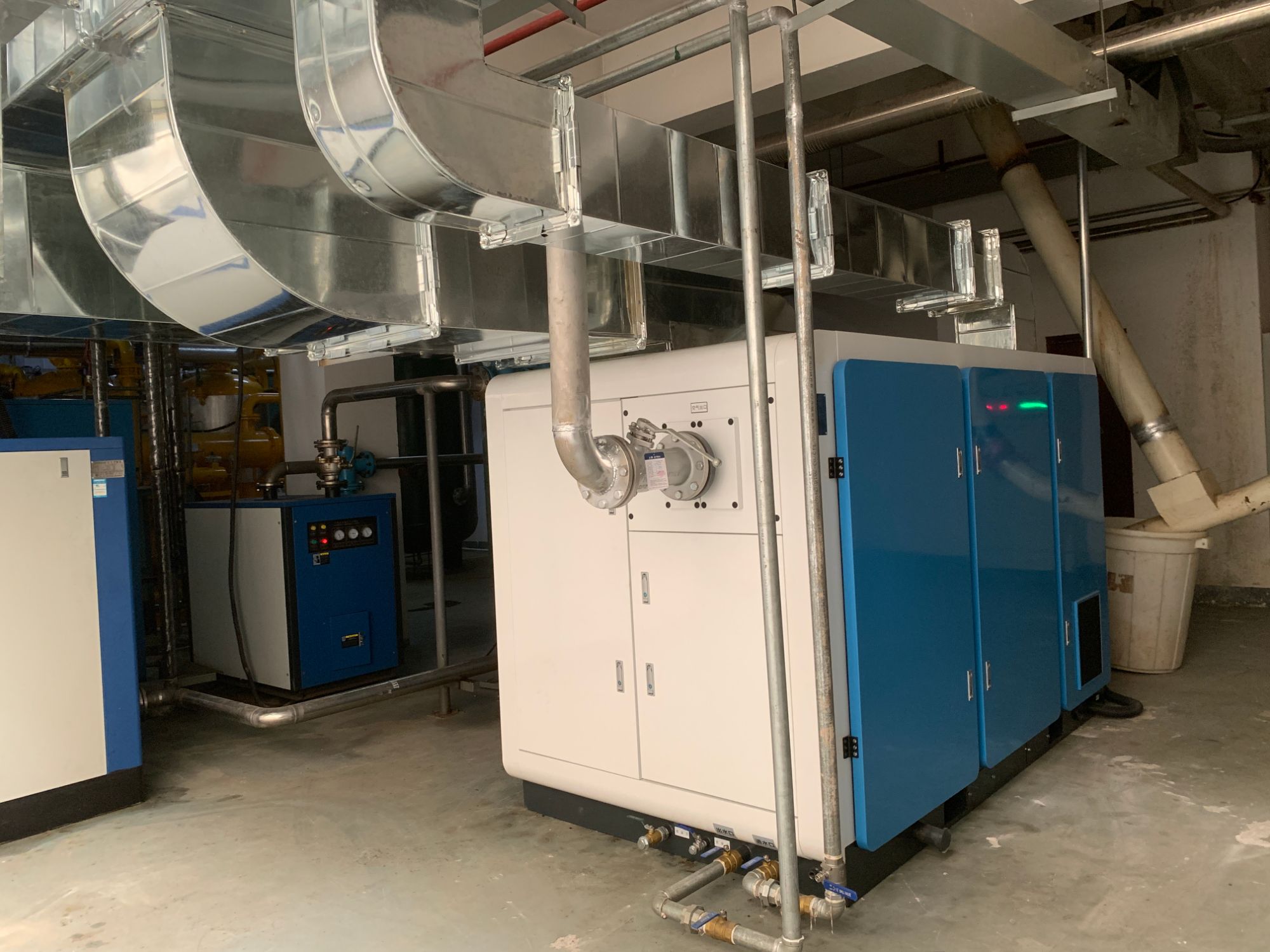
Most teams treat a low dew point as proof that the entire air system is dry, but that number is usually captured at the dryer outlet. Once compressed air travels through uninsulated pipe, across a cold mezzanine, or past a poorly sloped drop leg, the real dew point can shift dramatically. A reading of -40°C at the source means nothing if the line temperature falls to 10°C before the point of use. That gap between where you measure and where you actually use the air is the first weak link most teams never inspect.
Particle counts get the same narrow treatment. A single inline counter might show ISO 8573-1 class 2 at the compressor room, but downstream fittings, flexible hoses, and aging point-of-use filters can shed more particles than the source ever generated. The filtration chain is not one element; it is a sequence of wet coalescers, dry particulate filters, and sometimes sterile vents. Any filter that runs past its differential pressure limit becomes a source, not a barrier. And if a filter housing has a tiny bypass leak, the cleanest air in the header never reaches the tool.
The chain most teams miss is the condensate and drain path. Even with perfect dew point and particle counts, water collects at low points, dead legs, and filter bowls. A timed drain that opens on a fixed interval either wastes air or leaves condensate behind. Manual drains are worse. Until teams map the entire run from dryer to final connection, including pipe slope, insulation, and drain function, they are only monitoring two numbers while the actual contamination happens between them.
Screw or Scroll? Matching Compressor Mechanics to Cleanroom Demands
In cleanroom settings, the choice between screw and scroll compressors often comes down to how each mechanism handles particulates, vibration, and long-term air purity. Oil-free screw compressors typically run at high speeds with tightly meshed rotors, which can generate more vibration and require sound dampening. Scroll compressors, with their orbital motion and fewer moving parts, tend to produce less vibration and lower noise, making them a quieter fit for sensitive environments where even minor disturbances can affect processes.
Scroll designs also have an edge in oil-free operation because the compression chamber is sealed by the scroll wraps themselves, reducing the need for lubricants that could contaminate cleanroom air. But screw compressors offer better scalability and can maintain efficiency under variable load demands. For a cleanroom with fluctuating airflow needs, a variable-speed screw unit may outperform a scroll compressor, provided the air treatment system can handle any residual oil carryover from the drive side.
Maintenance access is another practical factor. Scroll compressors often have simpler tip seals that can be replaced without dismantling the entire airend, while screw compressors may require more involved service intervals. In a cleanroom, minimizing the frequency and duration of maintenance intrusions matters as much as the compressor's baseline particle count, since every service event risks introducing contaminants. Choose based on your actual load profile, pressure requirements, and tolerance for vibration—not just the datasheet's air quality rating.
The Preventive Maintenance Points That Stop Contamination Before It Starts
Start with the seals and gaskets that sit between your product and the outside world. Even a hairline crack in a rotary shaft seal or a hardened O-ring can let dust, moisture, or microbes slip through long before a full failure shows up on a gauge. Schedule a simple weekly visual check for wet spots, discoloration, or loose fasteners around flange joints, pump housings, and access doors. Swap out any suspect component immediately instead of waiting for the next overhaul window.
Next, treat lubricants and hydraulic fluids as part of the contamination chain, not just consumables. A new oil drum left open with a missing breather cap is an open invitation for airborne particles and humidity. Use sealed transfer containers with quick-connect couplers, install desiccant breathers on reservoirs, and run routine oil analysis to catch early signs of water ingress or metal wear before they circulate downstream. Grease fittings should be wiped clean before and after every service to avoid pushing dirt into bearings.
Finally, make the surrounding environment work for you. Pressurized enclosures with filtered air intakes keep positive pressure so unfiltered outside air doesn't rush in when a door opens. In food or pharmaceutical areas, dedicated color-coded tools and portable HEPA air scrubbers can prevent cross-contact between zones. Regular wipe-down of conveyor frames, control panels, and overhead pipe racks removes settled dust that would otherwise find its way into product streams during routine maintenance.
Why Redundant Air Supply Is Worth the Extra Footprint in Pharma Plants
When a single compressor or dryer goes down in a pharmaceutical facility, the ripple effects move through cleanrooms, pneumatic controls, and even final packaging lines. A redundant air supply may consume valuable floor space, but that footprint buys something no plant manager wants to live without: continuity. In an environment where batch records and audit trails leave no room for unexplained pressure drops, having an independent backup loop turns a potential deviation into a non-event.
Space inside a pharma plant is always contested—every square meter must justify itself against production, storage, or quality control. Yet the cost of dedicating a corner to a second air compressor and receiver rarely compares to the cost of a halted lyophilizer or a failed actuated valve during a critical process step. Redundancy here is not about luxury; it is about keeping validated states intact and avoiding the messy work of re-qualification after an unexpected loss of instrument air.
Maintenance windows also become far less risky when the air system can float on a standby unit. Instead of squeezing all service work into planned shutdowns, technicians can isolate one branch, swap filters, rebuild valves, or replace dryers while production continues on the other. That flexibility can reduce overtime, cut emergency call-outs, and extend the life of primary equipment—benefits that quietly repay the initial floor space many times over.
What a Top-Tier Pharmaceutical Compressor Provider Should Offer Beyond the Quote
In pharmaceutical manufacturing, the compressor itself is only part of the equation. A top-tier provider understands that what happens after the purchase can make or break a production line. They should walk the facility with your engineers, not just to measure space but to map out airflow, pressure stability, and contamination risks that only become apparent in real operating conditions. That kind of pre-installation assessment is rarely mentioned in a standard quote, yet it often prevents costly retrofits later.
Beyond installation, the provider should offer validation support that aligns with regulatory expectations. This means generating thorough documentation packages—IOQ, materials certificates, surface finish reports—without being asked twice. When an auditor walks in, you shouldn’t have to chase down missing data. The best suppliers treat documentation as a deliverable, not an afterthought, and they keep it updated as components or software change over time.
Finally, look for a partner who plans for your future capacity and evolving compliance requirements. That could mean proactive advice on oil-free upgrades, remote monitoring setups, or energy-recovery options that reduce long-term operating costs. A supplier who only reacts to breakdowns is just a vendor; one who anticipates your next audit, your next expansion, or your next efficiency push is actually adding value beyond the initial purchase.
FAQ
Standard units often introduce trace oil, moisture, and particulate that can compromise drug purity. Dedicated pharmaceutical compressors use oil-free designs, stainless steel piping, and high-grade filtration to keep compressed air within strict contamination limits. They also run at stable dew points and pressure levels required for processes like tablet coating, fluid bed drying, and aseptic packaging.
ISO 8573-1 defines purity classes for particles, water, and oil in compressed air. For most pharma applications, Class 0 oil content and very low particle counts are expected. Compressors on a top 10 list typically achieve Class 0 through dry screw or scroll designs, eliminating oil contact altogether and simplifying validation.
Oil-free rotary screw compressors avoid oil carryover entirely, which is non-negotiable for direct product contact. Oil-lubricated models can work only with extensive filtration and monitoring, but residual risk remains. The top pharma compressors lean heavily on dry screw or centrifugal tech because they deliver clean air without relying on downstream oil removal.
Look for variable speed drives, integrated refrigerant or desiccant dryers, stainless steel internals, and zero-loss condensate drains. Top models also offer remote monitoring with real-time dew point and particle readings, plus heat recovery options that cut facility energy costs without affecting air quality.
Frequent checks of intake filters, dryer performance, and condensate drains prevent contamination buildup. Many sites replace air filters every 2,000 hours and validate oil-free status through regular ISO 8573 tests. Predictive vibration and temperature monitoring also help catch bearing wear before it leads to unplanned downtime in a cleanroom.
Atlas Copco, Ingersoll Rand, Kaeser, Gardner Denver, and Sullair often lead because their oil-free models hold up under continuous pharma loads. Lesser-known but strong contenders like ELGi and Mattei also offer Class 0 machines at competitive costs. The exact ranking shifts with energy efficiency, noise, and service networks.
A compressor that wastes energy often runs hotter and cycles more, which stresses dryers and filters and shortens component life. Top-rated units use variable speed control to match demand, reducing both electrical consumption and wear. Heat-of-compression recovery further improves total cost of ownership without sacrificing clean air output.
Peak flow, pressure stability, and dew point requirements matter more than raw horsepower. Undersizing causes pressure drops that disrupt pneumatic controls and cleanroom gowning systems. Oversizing leads to frequent cycling, moisture carryover, and wasted energy. A careful load profile with redundancy for critical processes is the usual approach.
Conclusion
Choosing a pharmaceutical air compressor involves far more than picking an oil-free model. Even a unit marketed as oil-free can deliver contaminated air if the receiving system lacks proper filtration and drying. Dew point, particle counts, and the filtration chain deserve as much attention as the compressor itself. For cleanroom use, you need to monitor dew point continuously—typically below -40°C—and confirm particle counts meet ISO 8573-1 Class 1 or stricter. A multi-stage filtration setup, including coalescing filters and activated carbon, removes oil vapor, water aerosols, and submicron particles that a basic aftercooler misses. Matching compressor mechanics to demand also matters: scroll compressors work well for smaller, intermittent cleanroom loads because they are quiet and have no oil-lubricated bearings, while rotary screw compressors suit larger, continuous operations but require vigilant oil separation and downstream purification. One overlooked risk is condensate buildup in receiver tanks and piping, which becomes a breeding ground for bacteria, so automatic drain valves and dew-point sensors must be checked routinely.
Preventive maintenance is the real barrier against contamination. Teams should replace intake and line filters on schedule, inspect and clean aftercoolers, verify drain traps open freely, and calibrate dew-point transmitters at least twice a year. Without these steps, a compressor can quietly push moisture and microbes into critical processes. Redundant air supply is another non-negotiable in pharmaceutical plants. Even a brief pressure drop can ruin a batch or compromise isolator integrity, so designing an N+1 configuration—where one compressor can be taken offline for service without losing line pressure—justifies the extra footprint. Finally, a top-tier pharmaceutical compressor provider should go beyond the initial quote by offering documented validation support, IQ/OQ protocols, filter and dryer performance testing, and operator training. The best suppliers help you map out air quality risk points from compressor discharge to point of use, including sample ports for routine microbial and particle monitoring. In short, clean and reliable pharmaceutical air comes from a system-level approach: the right compressor technology, a robust purification train, disciplined maintenance, built-in redundancy, and a supplier who understands regulatory pressure.
Contact Us
Contact Person: Mia
Email: [email protected]
Tel/WhatsApp: +86 19821985894
Website: https://www.seize-air.com