

Top 10 Crazy Chinese Games That Will Blow Your Mind
2026-06-20
From ancient board games to modern digital creations, China has always been a hidden treasure chest of wildly original games that few outsiders know about. Recently, platforms like Zonfun have been putting a spotlight on these hidden gems, and honestly, some of them are so bizarrely entertaining they'll make you question everything you thought you knew about gaming. Whether it's mind-bending strategy or sheer chaotic fun, this list of the top 10 crazy Chinese games is here to surprise you at every turn. Get ready to have your mind blown.
When Mahjong Met Battle Royale: A Match Made in Madness
The idea sounds like something concocted during a fever dream: 100 players dropping onto a sprawling mahjong table, scrambling not for guns and armor, but for bamboo tiles and dragon sets. Yet this bizarre hybrid has somehow clawed its way into reality, blending the calculated patience of ancient tile-matching with the chaotic, last-one-standing tension of battle royale. Instead of a shrinking safe zone, you’ve got a rapidly discarding wall of tiles, and instead of looting buildings, you’re snatching discarded East Winds from unlucky opponents who just got ronned into oblivion.
Matches unfold like a multiplayer version of speed chess played by caffeinated grandmas. You’re constantly weighing the odds: do you chase that risky Thirteen Orphans hand while three other players are visibly sweating over their own concealed kans? All the while, the tile pool depletes like oxygen in a sinking submarine. One wrong discard and you’re out—not just from the round, but from the entire lobby, forced to spectate as the final dozen survivors engage in nerve-shredding riichi duels where every drawn tile could spell instant death.
It’s a beautifully unhinged marriage of incompatible vibes. The meditative clack of tiles collides with the frantic heartbeat of a circle closing in. You’ll find hardened battle royale veterans suddenly memorizing yaku lists and muttering about dora indicators, while seasoned mahjong sharks develop a whole new appreciation for kill feeds and rage-adding the player who just sniped their flush with a defensive pon. Against all logic, the fusion works—a testament to the fact that sometimes the most unhinged combinations make for the most unforgettable games.
Legendary Beasts and Digital Mayhem: Myth-Inspired Games
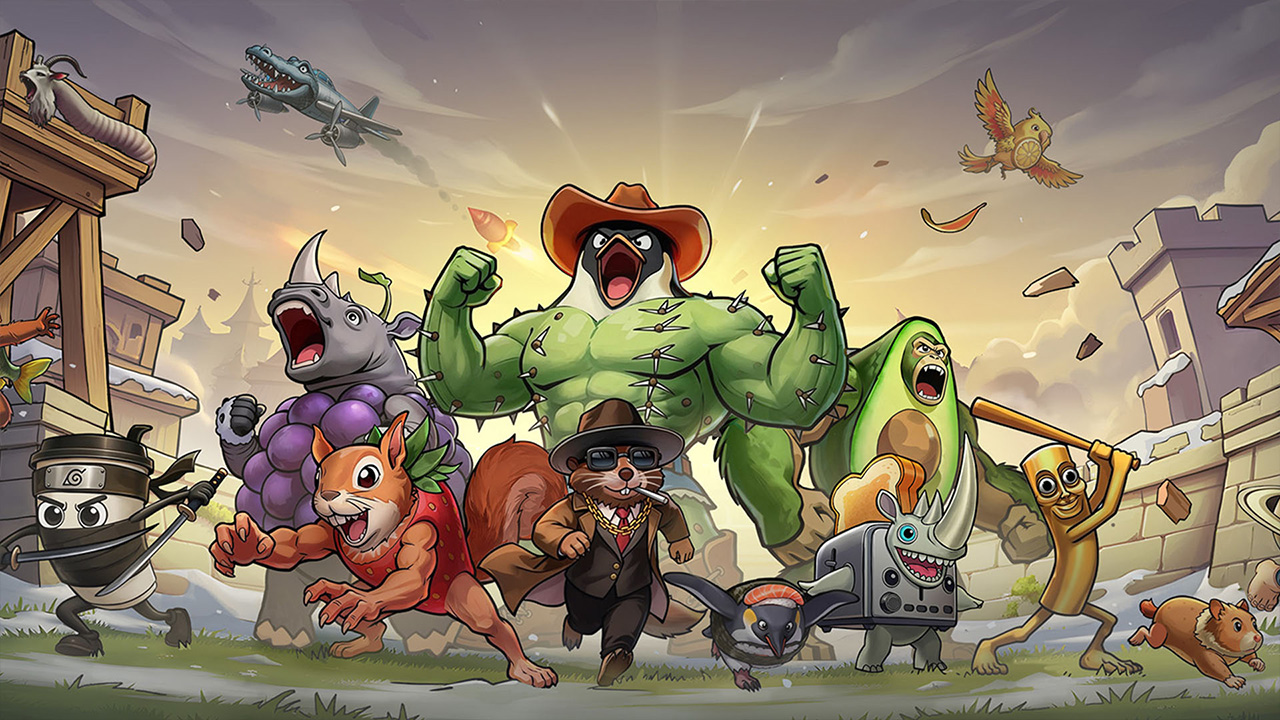
There’s something irresistibly primal about facing down a creature that shouldn’t exist—something with too many heads, a roar that shakes the screen, and a backstory steeped in centuries-old lore. Games that pull from mythology tap into that raw fascination, turning dusty legends into digital brawls where you’re not just reading about a griffin or a thunderbird, but actually dodging its lightning strikes or figuring out how to clip its wings. It’s one thing to see a dragon in a book; it’s another entirely to feel your pulse spike as it circles overhead, ragged shadows sliding across the ground.
What makes these myth-inspired titles stick isn’t just the creature design—though a nine-tailed fox wreathed in blue flame certainly helps—but the sense that the rules are slightly off-kilter. The settings tend to ditch clean, modern logic for something older and more chaotic. A forest might rearrange itself while you’re not looking, or a sea serpent’s mood could shift the weather. That unpredictability mirrors the oral traditions these beasts crawled out of: stories that were never meant to be tidied up, but retold around fires with details swapped and stakes raised. The best games do the same, leaving room for the weirdness to breathe.
And then there’s the sheer spectacle of it all. When a game lets you summon a storm-wreathed phoenix or go toe-to-toe with a mountain-sized turtle that carries a world on its back, it’s hard not to appreciate how far the technology has come—not just in rendering scales and fur, but in translating that mythic weight into something you can almost feel. These moments are built on the backs of stories that have already done the heavy lifting for thousands of years, proving that the right pixelated snarl can be just as haunting as any campfire tale.
From Village Halls to Viral Hits: Unlikely Game Origins
Some of the most addictive games weren't born in glossy studios but in cramped back rooms of village halls, where a handful of friends hammered out code between cups of lukewarm coffee. These spaces, often rented for a pittance, hosted late-night brainstorming sessions that accidentally sparked phenomena. It’s a pattern you see again and again: a simple prototype built for a local competition quietly morphs into a global obsession, far from the watchful eye of any publisher.
What flips the switch from local curiosity to viral sensation is rarely a marketing budget. It’s usually a quirky piece of gameplay that streamers latch onto, or a sudden wave of memes on social platforms nobody predicted. By the time millions are logging in, the original creators might still be working the same folding tables they started on, stunned that their village hall experiment now defines the zeitgeist.
Rules So Bizarre They’ll Make Your Head Spin
Some regulations feel like they were dreamed up after one too many cups of something questionable. Consider the fact that in certain corners of the world, it’s technically illegal to step onto a bus if you’ve just eaten garlic, the logic being that your breath might distract the driver. Or take the rule that forbids chewing gum that doesn’t resemble actual food—because apparently, your candy should look like what it tastes like, or you’re up to no good. These aren’t relics from centuries ago either; many of them are still technically enforceable today, lurking in municipal codes and dusty law books, waiting to surprise the unwary.
Then there’s the classic: the law against walking your pet elephant without an official leash, or the one requiring any stray horse being ridden down Main Street to have its hooves muffled after dark. It makes you wonder who exactly these laws were designed to police, and whether anyone, at any point in history, actually thought, "Yes, this is the missing piece of our civic harmony." The sheer specificity often gives away their origins in some long-forgotten incident—a runaway elephant, a spooked horse, a gentleman with terrible garlic breath—that prompted an overcorrection so dramatic it became permanent.
Strange as they are, these rules cling to existence because overturning them is often more effort than anyone cares to expend. Every few years, a local journalist unearths one, writes a chuckling exposé, and it gets passed around dinner tables before sinking back into obscurity. Meanwhile, somewhere out there, a law still says you can’t fish while sitting on a giraffe’s neck, or that all bathtubs must be filled to exactly the regulation level before noon on Sundays. The best part? No one really knows why—not even the officials quietly upholding them.
Visual Chaos: The Art of Over-the-Top Design
Over-the-top design doesn’t whisper—it screams with wild color combos, mismatched fonts, and layers that defy every rule of visual hierarchy. It’s the aesthetic equivalent of a punk rock concert in a baroque palace, where neon green clashes with electric purple, and ornate serif typefaces crash into retro pixel text. This isn’t about polished grids or subtle palettes; it’s about creating a visceral, almost chaotic energy that pulls you in by sheer force of personality. The aim isn’t to confuse but to overwhelm in the most deliberate way, turning every scroll or glance into a treasure hunt for hidden details.
What makes the method so compelling is its unapologetic rejection of coherence. Designers in this space treat the canvas like a playground, piling on gradients, holographic textures, and vintage clip art until the composition feels alive, as if it might burst off the screen. It borrows heavily from early web nostalgia, zine culture, and club flyers, yet feels completely contemporary because it mirrors our overstimulated, multiverse-obsessed reality. There’s a strange harmony in the discord—not from balance, but from the sheer confidence of its excess. Each element competes for attention, and in that competition, a new kind of rhythm emerges.
Mastering the art of visual chaos isn’t a free-for-all; it demands a deep understanding of what to break and when to hold back just enough to avoid illegibility. It’s a tightrope walk between too much and just enough, where a single clean line might anchor a sea of visual noise. This style celebrates the imperfect, the loud, and the outright bizarre, proving that disruption itself can be the message. In a world saturated with minimalist branding, this bold approach carves out a distinct voice that refuses to be ignored, turning clutter into a form of self-expression that’s both rebellious and oddly beautiful.
Hooked in Seconds: The Addictive Charm of Weird Games
There's a special delight in stumbling upon a game that looks utterly absurd. Something about its strangeness—a giant rolling ball gathering up park benches and livestock, a goat wreaking havoc in a physics-toy town—bypasses the usual mental guards. You aren't weighing features or checking hours of gameplay; you're just hit with the need to try it yourself. That immediate curiosity is the first needle of addiction.
Weird games often subvert expectations from the very first second. The controls might feel wrong on purpose, the sound design might jolt you, the visual style might be a deliberate mess. But instead of pushing you away, those choices spark a playful challenge. You want to understand the internal logic, or just revel in the chaos. The weirder the rules, the more you want to prod them, and before you know it, a ten-minute test balloons into a three-hour obsession.
The real charm lies in how these games reward curiosity with pure surprise. Mainstream titles promise epic stories or competitive mastery, but weird games promise the unknown. Each new area or interaction might reveal something you couldn't have predicted—a dancing cactus, a sudden narrative shift into melancholy, a mechanic that breaks the fourth wall. That unpredictability creates a tight, personal loop of discovery that keeps you pressing forward, not because you're supposed to, but because you genuinely need to see what happens next.
FAQ
We're talking about everything from ancient sports that look downright perilous to modern street competitions where balance, bravery, and a touch of madness collide. Think games involving flying blades, teetering towers of humans, and props you'd never expect.
Definitely. Take bamboo stick fighting, where participants whack each other with slender poles while trying to stay on a platform. Or cockfighting, though brutal, has deep roots. Even gentler ones like shuttlecock kicking have extreme variants played over flaming nets.
Featherball, or jianzi, looks simple—just keep a weighted feather in the air using your feet. But then you see athletes pulling off backflips and bicycle kicks in a park. It's like hacky sack meets martial arts, and the skill level is mind-blowing.
Sometimes yes. There's a game called 'high-altitude walking on a single bamboo pole' where performers balance on a pole held by teammates. Another involves spinning a giant top the size of a washing machine and then trying to stop it with a bare foot. Stuff that makes you wince.
The 'firewood dance' of the Yi people involves hopping and leaping over piles of burning kindling. It's a tribal tradition that's equal parts beautiful and terrifying, often done at night with sparks flying everywhere.
Remember those videos of people stacking chairs in a circle and climbing on them until it's a human tower? That's a competitive game called 'stool stacking' from Guangxi. It spread like wildfire online because watching it gives you vertigo.
They tap into something primal—risk, spectacle, and incredible human ability. When you see someone juggle machetes or balance a spinning plate on a stick while riding a unicycle, you can't look away. It's pure adrenaline with a cultural twist.
Conclusion
Picture a mahjong table where the clacking tiles are suddenly interrupted by a shrinking safe zone—yes, someone mashed up the ancient four-player classic with battle royale chaos, and it works. That same spirit spills into games that pluck creatures straight from Chinese mythology and hurl them into neon-drenched brawls, where a nine-tailed fox might face off against a drunken immortal in a disco-lit arena. These aren't polished, predictable imports; they're born in village internet cafes and tiny phone screens, exploding into viral sensations almost overnight despite (or because of) rulebooks that read like fever dreams. You'll encounter a fishing game that demands you argue with a virtual grandmother, or a cooking sim where burning your soup summons a dragon—logic took a holiday, and everyone's invited.
The visuals are a deliberate assault: shimmering gold fonts crash into pixel-art pandas while particle effects bloom like fireworks in a hurricane. It's chaotic, unapologetic, and strangely hypnotic. Beneath the madness lies an addictive pulse—a three-second loop that hooks you before your brain can object, then layers on absurd combos and ridiculous power-ups you never knew you craved. These games tap into a shared cultural memory of market-street mayhem and family reunion shenanigans, wrapping nostalgia in so many glitchy, exuberant layers that you can't help but obey when a dancing carp offers you a jetpack. They're not just games; they're a joyful, unhinged carnival that proves China's indie scene has rewritten the definition of fun—one bewildering screen at a time.
Contact Us
Contact Person: Zhixing Zhou
Email: [email protected]
Tel/WhatsApp: +86 13642670015
Website: https://www.mirmzhy.top/yd