

Smooth HDPE Geomembrane: The Top Choice for Durable Containment
2026-06-16
When containment failure is not an option, industry leaders turn to a proven performer: the smooth HDPE geomembrane. Its unmatched durability and chemical resistance make it the silent guardian in countless critical projects—from landfills to mining. But not all geomembranes are created equal. Discover why WEN FENG STONE sets the standard for reliability in demanding environments, and how the right choice can make all the difference before a single drop leaks.
What Makes Smooth HDPE Geomembranes Stand Out?
Smooth HDPE geomembranes earn their reputation through exceptional chemical inertness. Unlike alternative materials that can swell or degrade when exposed to acids, alkalis, or hydrocarbons, high-density polyethylene maintains its integrity across a wide pH spectrum. This makes it the go-to choice for industrial containment where aggressive leachates or process liquids are in play. Over decades, the polymer structure resists oxidation and environmental stress cracking far better than flexible membranes, providing a reliable barrier that aging infrastructure can count on.
The flat, untextured surface might appear simple, but it plays an outsized role in construction quality and leak prevention. A smooth geomembrane simplifies wedge welding by allowing consistent heat transfer and pressure along the seam—there’s no texture to trap air or create microchannels that could compromise the weld. Post-installation, it’s easier to vacuum test or spark test every inch of the linear seams, giving quality assurance teams real confidence that the containment system is truly watertight before the site goes live.
Field experience across landfills, mining pads, and wastewater ponds shows another quiet advantage: smooth geomembranes don’t harbor solids or biofilm as aggressively as textured counterparts. In applications where periodic cleaning or visual inspection matters, the slick surface can be flushed clean with less water and effort. While textured options are often specified for slope stability, engineers frequently pair smooth liners with geotextiles or drainage composites to manage friction—leaving the primary barrier unencumbered by unnecessary surface roughness that can complicate maintenance down the line.
Applications That Demand Reliable Containment
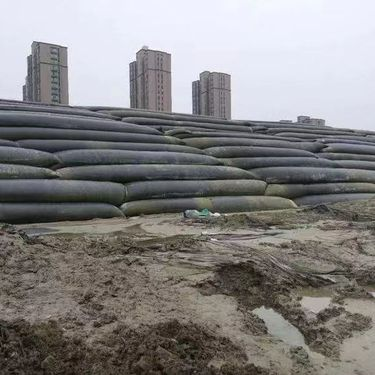
When processes handle volatile chemicals or high-pressure reactions, even a minor breach can cascade into catastrophe. Pharmaceutical synthesis, for instance, relies on glass-lined reactors and double mechanical seals to isolate aggressive reagents. Any compromise in these barriers risks cross-contamination that could ruin entire batches and endanger operators.
Nuclear material handling leaves no room for error: gloveboxes with continuous negative pressure and welded stainless-steel enclosures keep radioactive particulates strictly confined. The same philosophy applies to biolabs operating at BSL-4, where airtight suits and HEPA-filtered exhaust systems form multiple layers of defense. Here, containment isn’t just about process integrity—it’s a matter of public health.
Beyond safety-critical sectors, the semiconductor industry depends on ultra-clean confinement to prevent nanoscale defects during wafer fabrication. Even trace humidity or particulate intrusion can short-circuit yield. In these contexts, reliable containment evolves from a design preference into a non-negotiable engineering requirement, woven so deeply into operations that failure is simply not an option.
Installation Insights for Long-Term Performance
The way a system is installed has a direct impact on how well it performs over the years. While most focus on the initial setup, it's the subtle details—like how components align under load, how thermal expansion is managed, or how connections are sealed—that determine whether performance gradually fades or stays consistent. Getting these right from the start saves endless troubleshooting down the road.
One often overlooked factor is environmental adaptation during installation. When a setup is rushed, small mismatches with the surrounding conditions—temperature swings, vibration, humidity—can lead to premature wear. Taking the time to calibrate equipment to its actual operating environment, not just the test bench, makes a measurable difference in long-term reliability.
Another insight that matters is the human element. Installers who document their steps, label wires, and leave clear notes make future maintenance far easier. That upfront effort prevents misdiagnosis and reduces downtime later. In practice, a well-documented installation is one that stays performing, year after year, with fewer surprises.
Weathering the Elements: Durability in Action
Real durability isn’t about surviving a lab test—it’s about holding up when the world throws its worst at you. Salt spray, torrential rain, relentless sun, and abrasive grit conspire to break down materials over time. But true resilience lies in how a product bears these scars, turning potential failure into a quiet story of endurance. Whether it’s a coastal railing fighting corrosion or a high-traffic floor shrugging off scuffs, durability in action means never having to apologize for the environment.
This isn’t passive resistance—it’s an active dialogue between design and the elements. Coatings that self-heal minor scratches, alloys that form protective patinas, and fabrics that shed water before it soaks in: these aren’t just features, they’re strategies. The real test comes when nobody’s watching—during that storm, that heatwave, that freeze-thaw cycle. And when the skies clear, the surface tells you it’s ready for more, without a single word about maintenance or replacement.
We’ve all seen products that look invincible on day one but falter after a season. What sets lasting materials apart is how they handle the mundane abuse we forget about: UV rays softening plastics, wind-driven sand etching glass, constant footfall compressing fibers. They don’t just endure—they adapt. Think of a wooden deck that grays gracefully instead of splintering, or a metal sign that weathers to a rich patina while staying legible. Durability in action is less a spec sheet metric and more a long-term partnership with the outdoors, proving its worth not in guarantees, but in years of silent, steadfast performance.
A Smarter Approach to Environmental Protection
For decades, environmental protection relied on blunt instruments—broad regulations, one-size-fits-all standards, and reactive cleanup efforts. While well-intentioned, these methods often proved inefficient, failing to account for regional nuances or the complex interplay between industrial activity and natural systems. They also placed a heavy burden on businesses without always delivering proportional ecological benefits.
A smarter approach flips this script by weaving together real-time data, predictive analytics, and adaptive management. Rather than treating every pollution source identically, it pinpoints the most impactful interventions—whether that means retrofitting a specific facility, preserving a critical wetland, or nudging consumer behavior through dynamic incentives. By learning from continuous feedback loops, strategies evolve organically, becoming more precise and cost-effective over time.
In practice, this means fewer resources wasted on marginal gains and a sharper focus on what genuinely moves the needle. Communities benefit from cleaner air and water, industries avoid costly over-compliance, and ecosystems recover with targeted support. It’s not about doing more, but about doing what works—and having the agility to change course when the evidence demands it.
Maximizing Value Without Compromising Quality
Getting the most out of every dollar doesn’t mean settling for less. It’s about rethinking what truly matters and directing resources toward the elements that create real impact. By stripping away unnecessary extras that inflate costs without adding genuine benefit, you can preserve—or even elevate—the core experience. This approach demands a sharp focus on essentials, ensuring that every choice aligns with the outcomes you value most.
Crafting something remarkable on a sensible budget often sparks inventive solutions that a blank check never would. Constraints push you to explore unconventional materials, smarter workflows, or partnerships that deliver more without the premium price tag. The result isn’t a stripped-down version but a refined one, where quality shines through because it’s been deliberately amplified, not diluted. It’s proof that resourcefulness can outperform raw spending power.
Ultimately, lasting value grows from trust and practicality. When you avoid cutting corners on what people will actually see, use, or feel, you build a reputation that speaks louder than a price point. This isn’t about chasing perfection—it’s about delivering substance that holds up over time, quietly exceeding expectations without flashy compromises. That’s how you create something people return to, not because it’s the cheapest, but because it’s the wisest choice they ever made.
FAQ
Its high tensile strength, puncture resistance, and excellent chemical stability enable it to withstand harsh environmental conditions and maintain integrity over decades.
The smooth surface reduces friction during installation, allows for easier cleaning, and ensures consistent contact with subgrades, minimizing the risk of leaks.
It's widely used in landfill liners, mining heap leach pads, pond liners, and secondary containment structures where reliable long-term performance is critical.
Yes, it is UV-stabilized to resist degradation from sunlight, making it suitable for exposed applications like covers and lagoon liners, though protective coatings can extend its life further.
High density polyethylene provides exceptional stress crack resistance, dimensional stability, and a wide temperature tolerance, ensuring it remains flexible and strong under varying loads.
Installation typically involves deploying panels, welding seams using heat or extrusion methods, and testing for leaks to create a continuous impermeable barrier.
It is inert and does not leach harmful chemicals, making it safe for potable water containment and environmentally sensitive applications, while its longevity reduces replacement waste.
Conclusion
Smooth HDPE geomembranes have carved out a reputation as the go-to solution for projects where dependable containment is non-negotiable. Their standout features—exceptional chemical resistance, low permeability, and high tensile strength—make them ideal for lining landfills, mining heap leach pads, and wastewater treatment ponds. Unlike textured alternatives, the smooth surface minimizes friction during installation and allows for easier cleaning, which is crucial in applications like aquaculture where hygiene matters. Beyond the obvious strength, these liners prove their worth under extreme sun exposure, temperature swings, and aggressive chemicals. They resist cracking and maintain flexibility even after years of service, a fact demonstrated in field studies where properly specified HDPE liners have performed reliably for decades.
Getting the most out of a smooth HDPE geomembrane starts with careful installation. Seaming techniques, notably thermal fusion welding, create joints that are as strong as the parent material when executed by certified technicians. Attention to subgrade preparation and anchoring details prevents stress points that could compromise the barrier over time. This meticulous approach pays off by eliminating leaks that would otherwise harm the environment and lead to costly remediation. At its core, choosing a smooth HDPE geomembrane is about adopting a smarter environmental strategy: it contains hazardous materials effectively while minimizing the project’s ecological footprint. By investing in quality materials and proper installation upfront, operators avoid frequent repairs and replacements, ultimately achieving lower total life-cycle costs—a clear case where durability and value go hand in hand.
Contact Us
Contact Person: Jennifer LEE
Email: [email protected]
Tel/WhatsApp: 8618553418999
Website: https://vip.e-baixing.com/wenfengshitong