

Smart Die Making Steel Rule Manual Bender for Precision Rule Forming
2026-10-21
Every rule former knows the moment of truth: a tiny deviation in a bend, a fraction of a degree off, and the entire die setup fails. What if you could eliminate that guesswork without moving to costly automated systems? Enter ADEWO's Smart Die Making Steel Rule Manual Bender. This isn't just another hand tool—it's a precision instrument designed for rule forming tasks where every millimeter matters. In this guide, we'll walk through how its smart features and manual control redefine what you can achieve at the bench, and why it might be the missing link in your die making workflow.
How a manual steel rule bender handles tight radii without material distortion
Manual steel rule benders rely on a simple but clever approach: the rule is supported close to the bend point, and pressure is applied through a rounded nose or roller that matches the desired inside radius. This keeps the metal from kinking because the bend forms gradually over the curved contact surface instead of at a single sharp line. The operator works the bend in short, controlled strokes, checking the angle frequently. For tight radii, the trick is to use a nose piece with the same radius as the finished corner, so the steel rule wraps around it evenly. With a bit of practice, you can feel when the material starts to resist and ease off just before it would stretch or tear.
Another factor is the rule's hardness and grain direction. Most steel rules are made from cold-rolled spring steel, which can take a tight bend if the bend line runs across the grain. If you try to bend parallel to the grain, the metal is more likely to crack or distort, especially on radii under 1/8 inch. Skilled operators will flip the rule or choose a different section to work with the grain rather than against it. Lubrication isn't usually needed for a manual bender, but a light wipe of oil on the nose piece reduces friction and helps the rule slide into the curve without galling.
The real secret to distortion-free tight radii is patience. Instead of forcing the bend in one go, you make several passes, each one moving the rule a little further. Between passes, you can tap the bend line lightly with a soft-faced mallet to relax any uneven stress. This lets the metal settle into the radius without thinning or bulging at the sides. It's slower than a powered bender, but for short runs or one-off tooling, a manual steel rule bender gives you the control to hit a 1/16-inch inside radius cleanly, as long as you respect the material's limits and work with the tool, not against it.
Setting up the smart die making bender for repeatable precision across short runs
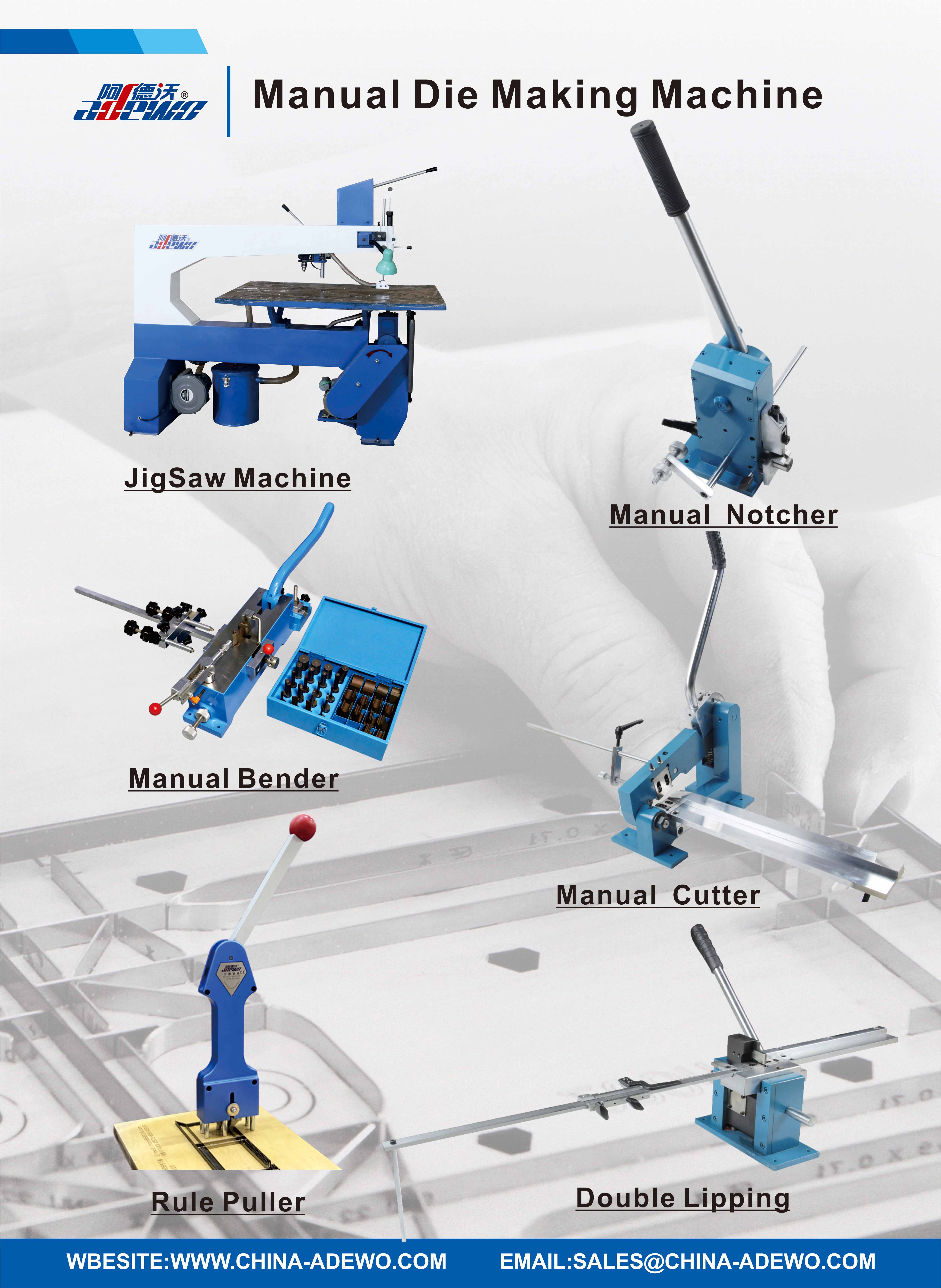
Getting consistent bends on a smart die making bender starts with a clean, well-maintained tool set. Before loading material, check that the die shoulders and punch tips are free of burrs or debris—small nicks can telegraph into the bend angle and ruin a short production run. Set the clamp pressure just high enough to hold the blank without marking it; too much force distorts the material before the bend even begins.
With the mechanical side settled, spend a few minutes teaching the machine your exact material. Enter the actual thickness, tensile strength, and grain direction rather than relying on generic presets. Many smart benders allow you to store a small library of material profiles, which pays off when you switch between alloys or sheet suppliers. Run two or three test pieces, measure the resulting angles with a digital protractor, and let the controller fine-tune the overbend and springback compensation. That feedback loop is what turns a one-off setup into a repeatable process.
Finally, lock in your tooling positions and record the settings in a job file. For short runs, this matters more than on long production batches because you may only get one chance to nail the geometry before the parts move to the next station. Note the back gauge distance, punch depth, and any dwell time at full tonnage. When the next repeat order arrives, you can load the saved profile, verify the first bend, and be running good parts within minutes instead of spending half a shift re-tuning the machine.
Choosing the right steel rule profile for intricate forming work
When you are shaping tight radii, deep draws, or detailed relief forms, the cross-section of the steel rule matters as much as its hardness. A common mistake is reaching for the tallest, thickest rule on the shelf, only to fight springback and surface marking throughout the run. For intricate forming work, a lower-profile rule with a reduced body height often lets the material flow more naturally around bends, while a sharper, narrower bevel concentrates the forming pressure without spreading it into unwanted areas.
Pay attention to edge geometry: a centre bevel works well for symmetric forms and balanced stress, but off-centre or single-bevel profiles give you room to place the bending line exactly where the detail demands. If the part has multiple folds close together, a thinner rule body prevents crease interference and leaves space for the necessary clearance between adjacent forms. Hardness still needs to match the stock—softer rules wear quickly in abrasive materials, but overly hard rules can chip on repeated small-radius work.
Finally, test the chosen profile on scrap before committing to a full die. Run a short series at production speed with the actual material and thickness, checking not just the form accuracy but also the surface finish on the inside of the bend. Small adjustments in rule height, bevel angle, or the use of a relieved back edge can eliminate marking and make the difference between a clean intricate form and a die that fights every stroke.
Common bending mistakes that quietly ruin rule accuracy in die making
Many die makers unknowingly introduce error at the first bend by treating every rule as if it were the same thickness and temper. A 2-point rule bent on a standard post will behave differently than a 3-point rule with a harder core, yet the same bend allowance gets applied out of habit. That small mismatch compounds across a multi-cavity die, leaving rule tips that no longer line up with the laser-cut board or the knockout pattern. The fix is not a fancier bender; it is measuring the actual setback on a sample of the exact rule stock before cutting the first production piece.
Another quiet accuracy killer is forcing a tight radius without relief. When a bend is made too fast or with a worn die insert, the inside of the rule compresses unevenly and the outside stretches beyond its elastic limit. This creates a slight bow along the straight section right after the bend, which is easy to miss under shop lighting but shows up as a gap when the rule is seated into the plywood. Instead of pushing the bend further, experienced makers back off and add a tiny inward nick at the bend line so the metal can flow instead of buckling.
Springback is also treated as a nuisance rather than a predictable variable. Different rule heights, bevel types, and even room temperature shift the amount the rule opens up after bending. If the bending machine is not reset between batches, the accumulated error can move a nick or a crease point by several thousandths, which is enough to cause a mis-stripped blank. Keeping a simple logbook of actual bend angle versus intended angle for each job removes the guesswork and stops the drift before it becomes a customer complaint.
Why hand control still beats automation for prototype and repair dies
Prototype dies rarely arrive with fully settled dimensions. A toolmaker often has to feel how the metal flows, hear the press tone change, and make on-the-spot adjustments that no pre-written program can anticipate. This hands-on feedback loop—pausing to tap a high spot, then blending it back by hand—keeps the iteration fast and avoids scrapping a nearly finished die over a few microns.
When a production die comes back with galling, a chipped edge, or localized wear, the damage is seldom uniform. Hand control lets a skilled repairer remove only the affected material, preserving the surrounding geometry that still works. Automated milling or grinding tends to follow a nominal CAD model, which may not match the actual worn surface, so it either under-cuts the repair or digs into healthy steel. A human touch reads the existing surface and works with it.
Setup time also tips the balance. Prototype and repair jobs are usually one-offs or very small batches, where programming, probing, and dry runs for automation can take longer than the actual metal removal. A manual die grinder, a hand scraper, or a polished stone needs no toolpath verification and can be picked up the moment the problem is seen. That immediacy matters when a press line is down and every hour of downtime counts.
Daily maintenance habits that keep a precision rule bender reliable for years
Most operators only think about cleaning a precision rule bender when visible debris builds up, but a daily five-minute wipe down with a dry, lint-free cloth prevents micro-abrasion on the rule guides. Pay special attention to the bending edge and the clamping zone: even tiny metal shavings or dust particles can embed themselves and throw off repeatability by a few thousandths of an inch. If you use any solvent or light oil, make sure it fully evaporates before the first bend, otherwise the material feed will slip and you'll chase inconsistent angles all morning.
Lubrication is often overdone. Instead of flooding the pivot points, apply a single drop of light machine oil to each pin and then cycle the bender through a full open-close motion three or four times. Wipe away any excess that squeezes out. This keeps the action crisp without attracting grit. At the same time, check the rule itself for nicks or flat spots—running a fingernail lightly along the edge each morning catches damage before it transfers to your workpieces.
Finally, don't store the bender with tension locked on the rule. Release the clamp and leave the handle in the neutral position overnight. This removes constant stress from the springs and hinge points, preventing slow fatigue that leads to sloppy bends. A simple habit of hanging the tool on a wall bracket instead of tossing it in a drawer will also protect the rule from accidental knocks, keeping your reference edge true for years with almost no extra effort.
FAQ
It takes standard flat steel rule from about 0.71 mm to 1.42 mm thick and rule heights from 8 mm up to 23.8 mm. That covers most common die-making stock without swapping tooling.
The angle stop lets you repeat bends within half a degree once you lock in a setting. Because the bending head supports the rule close to the bend point, you get crisp corners with minimal twist.
It is built for precision single-piece and small-batch die work. You can do production runs, but the manual crank means the speed depends on the operator's pace.
No, this bender only forms bends. You need a separate rule cutter or notcher for cutting and mitering steel rule before shaping it.
The smart part is mostly in the adjustable angle stops, center-line bending reference, and hardened rollers that reduce marking on the rule. It gives you repeatable bends without needing electronic controls.
It usually mounts on a bench and needs about 60 cm by 40 cm of clear space. The rule swings outward during bending, so keep the area to the front and side open.
Keep the pivot points lightly oiled, remove steel slivers and dust after each job, and check the angle stops for looseness. Recalibrating the zero point takes only a few minutes with a square.
Yes. The manual action gives you direct feel for how the steel responds, and the angle guides help you learn consistent bending. Most people can produce usable rule forms after a short practice session.
Conclusion
A well-built manual steel rule bender gives you a level of tactile feedback that no CNC setup can replicate, especially when you're pulling a 2 mm rule into a radius that would kink on a cheaper machine. The secret lies in controlled pivot pressure and a properly radiused anvil—by working the bend in short, incremental strokes rather than forcing the curve, the steel's cross-section stays intact and the cutting edge remains true. For repeatable short runs, smart die making benders rely on adjustable stop collars and scribed angle references, so even a run of ten identical forms stays within half a degree. Choosing the right rule profile matters just as much: harder, edge-hardened rule holds intricate curves better, while softer center-bevelled stock is easier to hand-form but requires more support on tight bends.
Many accuracy problems come from habits that feel harmless—over-bending then springing back by eye, using the wrong nose piece for the rule height, or letting the rule slip in the clamp because the knurled nut wasn't snugged. Those small errors compound into dies that don't seat properly. That's why for prototype and repair work, a skilled pair of hands still wins: you can feel the exact moment the steel yields, adjust mid-bend, and work with partially damaged or reclaimed rule that automation would reject. Daily maintenance is the quiet enabler—wiping the pivot rod clean, checking the anvil for flat spots, and lightly oiling the slides every few weeks. It's not glamorous, but it's why a good manual bender stays reliable for a decade instead of two years.
Contact Us
Contact Person: KAELYN LEE
Email: [email protected]
Tel/WhatsApp: +86 15012673758
Website: https://www.china-adewo.com