

Silicone Water Bottle Manufacturer How to Choose a Reliable Partner for Your Brand
2026-10-18
Finding a silicone water bottle manufacturer that won't disappear after the first shipment or quietly swap materials is harder than most brands expect. You need more than a supplier; you need a partner who understands durability, food safety, and the small details that keep customers coming back. In this guide, we'll break down what to look for, from certifications to production transparency. And if you're already evaluating options, Qunhao sets a high bar on every one of these points.
Food-Grade Silicone Is a Claim—Make Them Prove It
Walk down any baby aisle or kitchen supply store and you'll see the label everywhere: food-grade silicone. It sounds reassuring, even official. But here's the thing—"food-grade" is not a magic shield, and the term itself isn't as tightly regulated as you might hope. Many brands slap it on packaging without providing a shred of evidence, betting that consumers won't ask the hard questions.
Real food-grade silicone should meet standards like FDA 21 CFR 177.2600 or European LFGB, which test for leaching, migration of chemicals, and overall purity under repeated use. The problem is that fillers—cheap additives like plastic or silica—can make silicone less safe, and a manufacturer can still call the blend "food-grade" if it passes bare-minimum checks in one country but not another. Some products never face third-party verification at all.
So before you trust that teether, baking mat, or collapsible straw, make the seller prove it. Ask for the test report by name, look for the certifying lab, and be wary of vague claims like "made with food-grade materials." A legitimate company will have documents ready. A vague one will change the subject.
Tour the Production Line, Not Just the Showroom
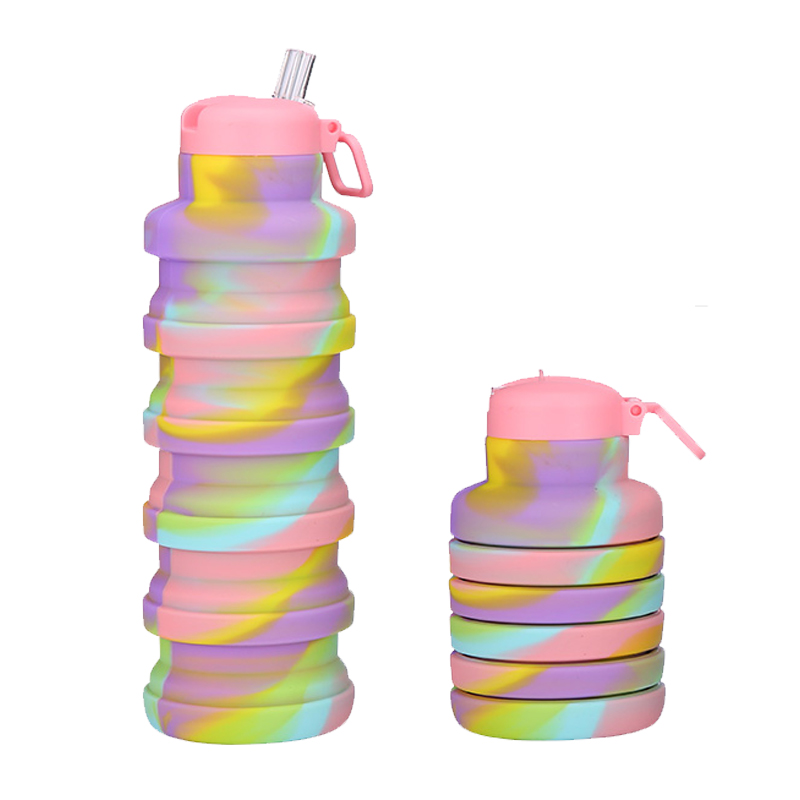
Most factory tours stop at the polished display area, where every surface gleams and the machinery sits silent behind glass. But if you only see the showroom, you miss the actual heartbeat of the place. Walk past the finished samples and step onto the floor where raw materials get cut, welded, stitched, or assembled. Listen for the rhythm of the line—the pause before a station change, the quick exchange between operators who have worked together for years. That is where you learn whether a company actually cares about quality or just about appearances.
A real production tour lets you spot the small details no brochure will mention. Watch how workers handle a minor jam or a defective part. Do they stop the line, or do they quietly push it through? Notice the condition of the tools and the layout of inventory. Are labeled bins overflowing, or is there a clear system for every component? These observations tell you more about reliability than any polished presentation. One visit to the floor can reveal whether their process is built for consistency or simply for show.
Of course, not every factory will open its production areas to visitors, often citing safety or trade secrets. That hesitation itself is information. The best manufacturers, the ones genuinely confident in their methods, will let you get close enough to feel the heat, smell the coolant, and see the pace. Ask to speak with a line supervisor, not just the sales director. The answers you get—and the ones they avoid—will shape your decision far more than any showroom display ever could.
Customization Without the 'That's Extra' Surprises
Tired of picking a base model and then discovering every useful feature is locked behind another fee? That frustration ends here. We treat customization as part of the core offer, not as a chance to upsell. Choose the layout, finish, and functional details that match your needs, and all of them are accounted for in the price you see before you commit. No sudden add-ons at checkout, no fine print listing "optional upgrades" that are actually essential.
When you adjust dimensions, swap materials, or add integrated components, the total updates right in front of you. There's no waiting for a revised quote or stumbling into a mandatory compatibility upgrade halfway through. The number you see before purchase is the number on your receipt, full stop.
That kind of transparency changes how you explore the options. You can try out different combinations freely, confident that the price moves with your choices, not against them. It's a straightforward way to build exactly what you need—without the mental math of wondering what will cost more later.
Certifications Look Great on Paper—Ask for the Audit Trail
A shiny certificate can turn a questionable supplier into a trusted name overnight—at least on a website. Certifications hold weight because they suggest third-party verification, but the real value isn't the badge. It's the paper trail behind it. Ask how the certification was earned, when it was last renewed, and who actually performed the audit. A credible operation won't hesitate to walk you through the steps.
Often, the difference between a meaningful credential and a marketing prop lies in the details. Did the audit involve site visits, interviews, or sample testing? Or was it a self-assessment dressed up in official-looking language? Requesting the audit trail reveals whether a company has been examined against independent standards or simply paid for a logo. The ones with nothing to hide will share the report, including any corrective actions they took afterward.
Don't settle for the certificate hanging in the lobby or the scan on the product page. Ask for documentation that shows scope, dates, and the auditor's credentials. If the response is vague, delayed, or defensive, treat that as part of the evaluation. Real certification programs leave a footprint, and following it often tells you more than the certificate itself ever could.
A Trial Order Reveals More Than a Spec Sheet
Most spec sheets can be made to look flawless. A trial order strips away that polish and shows you how the product actually arrives: the fit of the components, the weight of the packaging, the crispness of the labels, and whether the finish matches the photos you were sent. It turns a paper promise into something you can hold, measure, and run through your own workflow.
Beyond the physical item, a trial order exposes the supplier's habits. You notice whether they confirm details without being chased, how they handle a minor change, and whether the invoice matches what was agreed. These small signals are almost impossible to read from a brochure or a line in a datasheet, yet they determine how smooth a full production run will be.
The real value is not in the product alone. It is in learning whether this supplier can repeat what they just made. A single well-made sample means little if the next batch drifts. A trial order gives you a baseline for consistency, and that baseline is worth far more than any printed tolerance.
Great Manufacturers Ask About Your Customer, Not Your Container Size
When a manufacturer starts the conversation by asking how your product will be used, who buys it, and what problems it solves, that's a signal they're thinking beyond a simple order. Container size matters, but it's only one detail in a much bigger picture. The best suppliers want to understand the end user's habits, the retail environment, and the emotional triggers that lead to a purchase.
That kind of questioning changes the relationship. Instead of a transactional back-and-forth about milliliters or ounces, you get a partner who can suggest materials, closures, or labeling tweaks that make the product easier to use or more appealing on the shelf. A manufacturer who only asks for dimensions is focused on filling a spec sheet; one who asks about your customer is focused on helping you sell.
Pay attention to the questions you're asked early on. If the conversation stays locked on volume, weight, and dimensions, you might be dealing with a vendor rather than a true manufacturing partner. The great ones know that your container is just a vessel—what matters is the experience it delivers to the person who ultimately pays for it.
FAQ
Silicone is lightweight, flexible, and can handle both hot and cold temperatures without leaching chemicals. Unlike plastic, it won't crack easily after drops, and it's safer for repeated use because food-grade silicone doesn't react with acidic drinks. Stainless steel is durable, but it dents and transfers heat too quickly; silicone gives you that soft-touch feel plus easier printing for custom branding.
Ask for the specific certifications—LFGB, FDA, and EU 1935/2004 are the big ones. Don't just accept a 'food grade' label. Request batch test reports from third-party labs like SGS or TÜV. You can also ask for a sample and do a simple smell test: food-grade silicone has almost no odor, while industrial silicone smells chemical. If they hesitate to share documentation, move on.
Start with whether they have in-house mold making or outsource it. In-house means faster revisions and tighter quality control. Ask about logo placement options—embossed, debossed, printed, or color-blocked. Also clarify the maximum number of colors in the silicone body and whether they can match Pantone shades. If you have an unusual shape, ask if they provide 3D drawings and prototype samples before cutting steel molds.
Don't rely on the sales pitch. Ask for a current client list in similar product categories and request references. For lead time, split it into stages: mold making (usually 7–15 days), sample approval (5–10 days), and mass production (20–35 days depending on order size). If they promise everything in two weeks, that's a red flag. Make sure they tell you their monthly output per production line, not just total factory capacity.
Mold fees are the biggest one—some factories charge separately for mold design, steel cutting, and sample molds. Then there are charges for color matching if you need custom Pantone shades, plus printing plates for logos. Shipping costs can also spike if the bottle shape is bulky or if you need individual poly bags and hang tags. Always ask for a breakdown: unit price, mold amortization, packaging, and any QC inspection fees.
Request a documented QC checklist for incoming silicone raw material, in-process checks, and final inspection. Good factories test for tensile strength, tear resistance, and compression set. They should also do leak tests on the cap and drop tests on the full bottle. Ask how many pieces they inspect per lot and whether they provide a defect rate guarantee. If they can't explain their AQL standard, they likely don't have one.
A low unit price is meaningless if you have to spend weeks chasing updates or fixing defects. Choose a partner who responds within 24 hours, gives honest timelines, and flags potential problems before they happen. A slightly higher price with transparent communication and consistent quality ends up cheaper in the long run. Look for someone who treats your brand like their own, not just another order number.
Conclusion
Choosing a silicone water bottle manufacturer isn't about picking the shiniest catalog or the lowest quote—it's about verifying what actually happens behind the curtain. Anyone can stamp "food-grade silicone" on a website, but a reliable partner will prove it with batch-level material certifications and independent lab results, not just a logo. Demand a walk through the actual production floor: watch how molds are cleaned, how workers handle uncured silicone, and whether the line is set up to prevent contamination. The showroom may look perfect, but the factory tells you the real story. Customization should be straightforward too—if every tweak to lid design, color, or logo placement comes with a surprise "that's extra," keep looking. A trustworthy manufacturer lays out tooling fees, minimums, and unit price changes upfront so your margin doesn't disappear before launch.
Certifications are useful only if you can trace them. Ask for the audit trail: which certifying body issued the LFGB or FDA compliance, when was the last unannounced inspection, and can they share the report? Paper credentials mean little without evidence of ongoing compliance. Then place a small trial order and treat it like a stress test—check wall thickness consistency, seal integrity, and whether the finished product matches the pre-production sample. The best manufacturers don't just ask about container size or volume; they ask who your customer is, how the bottle will be used, and what failure would cost your brand. That kind of curiosity shows they're building a product for your market, not just filling a mold.
Contact Us
Contact Person: Cecilia
Email: [email protected]
Tel/WhatsApp: 8619057488653
Website: https://silwatbottle.com