

Sandpaper Jumbo Roll Company: How to Choose a Reliable Bulk Abrasive Supplier
2026-09-18
Sourcing sandpaper jumbo rolls in bulk shouldn't be a roll of the dice. One inconsistent batch can stall your entire finishing line, leaving rough edges on both your products and your profit margins. Whether you're grinding metal, shaping wood, or prepping automotive surfaces, the supplier behind your abrasives dictates the smoothness of every final result. So how do you separate dependable partners from risky middlemen? This guide cuts through the clutter and lays out a practical checklist for choosing a bulk abrasive supplier you can actually trust—and introduces you to SHENZHEN SUN ABRASIVES, a manufacturer that has quietly earned a reputation for turning raw jumbo rolls into precision performance.
Inspect the Grit Distribution Under Bright Light
Hold the sheet at a slight angle beneath a strong, direct light source. Shadows and sparkles will reveal how evenly the abrasive particles are spread across the backing. Pay close attention to edges and corners, where sparse coverage often hides. Run your fingertip lightly over the surface—if you feel bare patches or clumps, that unevenness will translate into erratic sanding performance.
Tilt the sample back and forth and watch how the glint shifts. A uniform grit layer produces a consistent shimmer, while thin spots create dull interruptions in the reflection. Compare several areas before making a judgment; some coatings intentionally vary grit density, but those differences should be deliberate, not random. Mark any suspected voids with a soft pencil for later testing.
Ask Where the Abrasive Grains Actually Come From
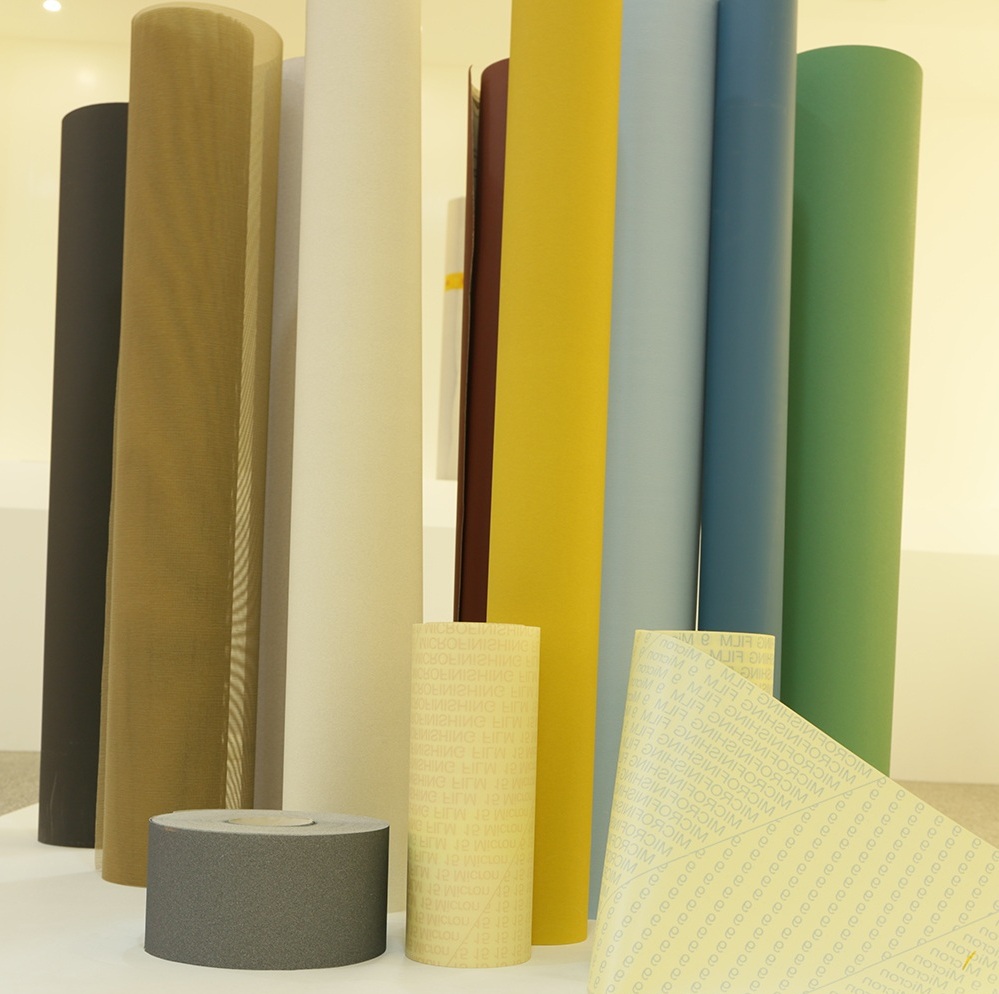
It's easy to fixate on grit size, hardness, or bond type when ordering abrasives. But one question rarely gets asked: where do the actual grains come from? A quick chat with your supplier can reveal a lot. Those tiny cutting particles might be virgin fused alumina from a bauxite mine in one country, recycled crushed slag from a steel mill in another, or even a blend of leftover fines from a completely different batch. The origin often dictates consistency — and inconsistency is what ruins a finishing job.
Ask directly: "Are these grains produced from raw ore, or are they a byproduct?" Some low-cost abrasives use furnace slag or reclaimed material that varies wildly in hardness and shape. A batch might cut fine one week, then glaze or shed under the same pressure the next. On the flip side, a tightly controlled synthetic grain from a single production line — say, seeded gel alumina or sol-gel ceramic — will behave predictably. If the supplier hesitates to name the plant or the raw feedstock, treat that as a warning sign. Knowing the grain's birthplace isn't a trivial detail; it's the difference between a wheel that performs and one that just spins.
Test Roll Tension Before You Sign Anything
It’s easy to trust the numbers on a roll ticket, but the way a roll behaves under tension tells you more than any datasheet. Give the roll a slow turn by hand and watch how the outer layers shift. If the edges start to walk or the web feels spongy in the middle, you’re looking at a tension profile that will cost you time downstream.
A quick hands-on check beats a signature you can’t take back. Pull off a few feet and let the material hang free. Loose, floppy edges usually mean the roll was wound with uneven tension, and that leads to wrinkles and web breaks once it’s on the machine. You can also press your thumb against the side of the roll; it shouldn’t give way in one spot and feel rock-hard in another.
The moment you sign the delivery receipt, you’ve accepted the roll as-is. Rejecting a bad roll later because of tension issues becomes an uphill battle with the supplier. So take two minutes, feel the roll, watch how it unwinds, and only then put your name on the line.
Don't Overlook Edge Trimming and Splice Counts
A finished roll can look flawless from a distance, but the real story is in the edges and the hidden joins. Edge trimming often gets treated as a minor cleanup step, yet uneven or rushed trimming leads to visible seams, peeling, and wasted material once installation starts. Checking that both edges are cut cleanly and consistently before the roll leaves the floor saves headaches later.
Splice counts deserve the same level of attention. Every splice is a potential point of failure, so keeping that number low isn't just about appearance—it directly affects how smoothly a job runs. When you compare rolls, look beyond the surface pattern and ask how many splices are actually present. A slightly lower price rarely makes up for extra time spent working around weak joins.
Require a Small Trial Reel Before Full Commitment
Hiring someone for a long video project without seeing how they handle your actual footage is a gamble. A short trial reel—maybe 30 to 60 seconds—can tell you more than a portfolio full of polished work. Ask the candidate to cut a brief clip from raw material you provide, or a similar sample. The goal isn't to judge their reel against a full production; it's to see if their editing rhythm, color choices, and sound balancing fit what you already have in mind.
Keep the trial small enough that it doesn't feel exploitative. Offer a fixed, fair fee if the work takes more than an hour, and give clear notes on what you want. Then watch how they handle feedback. Do they push back with useful ideas or just nod and disappear? That exchange often predicts what a longer collaboration will feel like. If the trial edit misses on tone but shows quick, thoughtful revisions, that's a better signal than a perfect reel that came from someone else's direction.
Compare Moisture Resistance Across Different Backings
When it comes to backings, some fail faster in damp conditions than others. Foam backings, for instance, tend to soak up water like a sponge, which leads to swelling and eventually the edges start to curl. Cork, on the other hand, has a natural waxy component that helps it resist moisture for a while, but prolonged exposure can still cause it to lose shape. Rubber backings are the most waterproof of the bunch, yet they aren't perfect—humidity can break down the adhesive holding the layers together, leading to separation over time.
If you're dealing with a basement or a bathroom, the choice becomes clearer. Rubber handles standing water without much issue, while foam will start to smell musty after a few months. Cork sits somewhere in the middle: fine for occasional spills but risky in consistently wet areas. It’s not just about immediate damage either—each backing's moisture response affects the overall floor stability, so a cheap foam backing might seem fine until it isn't.
FAQ
Start with the basics that actually affect your production line. Ask for a full technical datasheet that lists the backing weight, bond type, grain type, and grit range. Then request a sample roll and run it on your own equipment for at least two full shifts. Pay attention to loading, edge fray, and whether the splice holds under tension. A supplier that only sends marketing brochures but hesitates on samples is already telling you something.
Consistency is the silent killer in bulk abrasive buying. Ask the supplier to provide batch-level test reports, not just a single certificate. Look for grain size distribution, backing tensile strength, and coating weight per square meter. If possible, visit the factory and watch how they store raw materials and blend abrasive grains. A reliable plant will have clear lot traceability from incoming resin to finished jumbo roll. You can also run a simple tape adhesion test on three random rolls from different batches. Big variations there mean trouble.
A few obvious ones: they cannot explain the difference between open-coat and closed-coat, they offer a price far below the cost of raw materials, or their lead time is 'whenever the ship arrives.' Watch for vague answers on backing supplier or resin system. Also be wary of companies that switch sub-suppliers without telling you, because that changes performance even if the product code stays the same. Poor communication during the sampling stage almost always gets worse after payment.
Technical support is often more valuable than the product itself. A good supplier will ask about your substrate, machine speed, contact wheel hardness, and coolant type before recommending a roll. They should be able to troubleshoot loading, glazing, or burn marks over the phone or with a quick video call. If they only have a sales team and no application engineers, you will be on your own when a new batch behaves differently. Look for a partner who treats your finished abrasive converting line as their own.
Don't compare price per square meter alone. Calculate cost per finished part or cost per grinding minute, because a cheaper roll that wears out faster or causes rework is more expensive overall. Ask for a split quote: backing, abrasive grain, resin, and coating weight as separate line items. That lets you see where a low price comes from, like thinner backing, lower-grade grain, or less resin. Also agree on rejection criteria before signing, so a low bid cannot turn into a write-off later.
Ask for their monthly output in square meters, not just 'we have big capacity.' Then ask how many production lines run jumbo rolls specifically. Confirm what happens if your order doubles mid-quarter: can they add a shift without changing the recipe? Request the current backlog for your grade and backing combination. A reliable supplier gives you a written lead time with a plus or minus five day window and penalty clause. If they promise ten-day delivery but their raw material lead time is thirty days, something doesn't add up.
For standard grades and flexible order sizes, a good trading company can be fine, especially if they have long-term contracts with a quality mill. But for custom backings, special grit blends, or tight tolerances, a direct manufacturer usually gives you faster problem solving and better traceability. The safest approach is to ask a trading company to name the factory and allow a joint visit. If they refuse or become vague, you risk paying extra for an unknown layer in the chain.
Never skip the trial stage, even if the supplier has great reviews. Start with one or two sample rolls and define pass or fail criteria upfront: belt life, surface finish, edge wear, and dust generation. Then place a small commercial order of five to ten jumbo rolls to test their logistics, packaging, and batch consistency under real receiving conditions. Keep a reference sample from the approved trial and compare it to every incoming container. If the trial roll and production roll come from different lines or batches, require written confirmation and retest if needed.
Conclusion
Choosing a reliable bulk abrasive supplier for sandpaper jumbo rolls demands careful scrutiny of details that are often missed in catalog photos. Start by unrolling a sample under bright light to inspect grit distribution—uneven clusters or bare patches indicate poor coating control and will lead to inconsistent finishes. Ask pointedly where the abrasive grains are sourced from, because the origin directly affects hardness, fracture behavior, and cut rate. A supplier who cannot name the mine or manufacturer behind their aluminum oxide or silicon carbide is likely blending lower-grade reclaimed grit. Before signing any contract, run your own tension test on the roll: unwind a few meters with a brake applied and feel for stretching, bagging, or edge flutter, as insufficient roll tension causes tracking problems on wide belt sanders and shortens usable life.
Do not overlook the smaller physical defects that accumulate into downtime: check edge trimming for ragged cuts or adhesive bleed, and count the number of splices per roll—every splice is a potential weak point and a source of vibration marks on the workpiece. Require a small trial reel before full commitment, and run it on your actual production line under normal speed and pressure; a supplier confident in their product will ship a 10–20 meter sample without hesitation. Finally, compare moisture resistance across different backings, especially if your shop has humidity swings or wet sanding steps. A saturated paper backing curls, delaminates, and loses grain adhesion, while a properly treated cotton or polyester blend holds its shape. By combining these checks—grit inspection, grain origin, roll tension, edge quality, trial runs, and backing durability—you can separate genuine industrial suppliers from resellers pushing cosmetic seconds.
Contact Us
Contact Person: Amanda Wang
Email: [email protected]
Tel/WhatsApp: +86-13602569854
Website: https://www.sunabrasives.com.cn