

Recycled Material Filler Pad Company Leads the Shift to Sustainable Packaging Solutions
2026-11-22
Packaging waste keeps piling up, but one recycled material filler pad company is proving that product protection does not have to come at the planet's expense. As e-commerce and logistics accelerate, Top Packaging is turning reclaimed materials into dependable filler pads that cushion shipments without the environmental guilt. This is not a superficial material swap; it signals a practical move toward circular packaging. Here is a closer look at the shift and why it matters for brands ready to ship smarter.
Where Industrial Scrap Becomes a Protective Layer
At first glance, the twisted offcuts and spent liners piled behind a fabrication plant look like the end of a production cycle. Run them through the right sizing and bonding process, though, and that same scrap turns into impact-absorbing mats, abrasion-resistant liners, and heavy-duty underlayments. The shift happens when material streams are sorted less by what they used to be and more by what they can withstand.
Rubber crumbs from worn conveyor belts, slag from furnaces, and ground glass from rejected packaging all carry different strengths. Mixed with binders and pressed under heat, they form dense panels that guard warehouse floors, loading docks, and trench walls. Some facilities coat pipe exteriors with recycled polymer fines, while others lay shredded tire layers beneath rail tracks to dampen vibration and slow soil erosion.
What makes the result useful is not just the reuse of material, but the way irregular feedstocks create a less uniform, more stubborn surface. Cracks, inclusions, and mixed particle sizes force stress to spread rather than travel in a straight line. That is why a layer built from leftovers often outperforms a cleaner, single-source sheet in rough service. The scrap is not hidden or downgraded; it is reworked until its flaws become the reason the layer holds.
Rethinking Cushioning Without Virgin Plastic
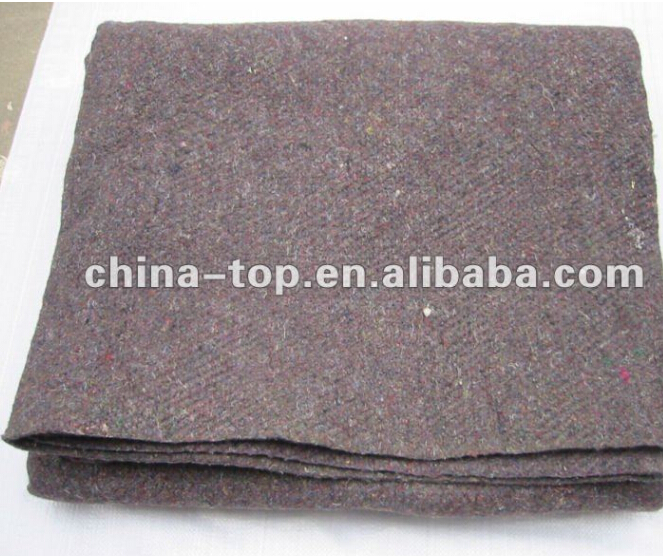
The assumption that cushioning needs virgin polymers has quietly shaped product design for decades. Once you set that assumption aside, the problem shifts from replacing one material with another to rethinking how cushioning actually behaves. Some of the most interesting approaches now use bio-based foams, expanded cork, or castor bean derivatives, but the real change comes from matching the material to the specific load, impact speed, and recovery cycle instead of defaulting to a single petrochemical foam.
There is also a structural side. Instead of relying on a thick slab of foam, designers are turning to geometric cushioning—lattice midsoles, hollow thermoplastic ribs, or interlocking paper pulp forms—that absorb energy through shape rather than mass. These systems can often be tuned with simple parameter changes, which means a single production line can yield different levels of softness or support without introducing new virgin plastic.
End-of-life behavior matters just as much as first use. A cushioning layer made from wool felt, coconut fiber, or starch-based foam may not feel identical to conventional EVA on day one, but it can break down in an industrial compost stream or be recycled into new padding more cleanly. Accepting a slightly different hand feel is part of the trade-off, and for many applications that trade-off is becoming easier to justify.
The Performance Threshold for Recycled Filler Pads
Recycled filler pads rarely fail outright; they slip below usefulness in smaller increments. The threshold that matters most is not a single number but a combination of wet bulb approach, pressure drop, and the pad's ability to hold its shape after repeated wetting and drying. A pad that looks intact can still force the fan to work harder, and that extra energy cost usually marks the real end of its service life.
Field measurements often point to a 10 percent rise in airside pressure drop or a visible loss of flute definition as the practical cutoff. Once the flutes soften or collapse, water distribution becomes uneven, and dry spots begin to appear. Those dry spots are where scale and biological growth take hold, accelerating the decline and pushing the system past the point where cleaning restores performance.
Recycled content adds another variable. Some batches handle thermal cycling well, while others become brittle early, so the threshold should be tied to a minimum number of wet-dry cycles without cracking. If a recycled pad cannot survive at least two full seasons with stable thermal performance and no more than a small rise in pressure drop, it is not meeting the same functional bar as virgin material, regardless of its environmental appeal.
Inside a Production Loop Built on Material Recovery
The shop floor here treats scrap as part of the regular flow, not as a downstream cleanup problem. Regrind from rejected parts, runners and edge trim gets sorted by polymer type before it leaves the production cell, then moves straight back into the next shift's schedule. That keeps the material's heat history short and avoids the usual bins full of mixed plastic waiting for someone to decide what to do with it.
The loop holds together because of constant contamination checks. Mesh screens, magnets and simple density separation catch label fragments and stray metal before a batch hits the hopper. Each regrind lot carries a basic tag: where it came from, how much virgin resin it can replace, and whether it has passed through more than two heat cycles. If the data looks off, the lot gets redirected to a less demanding product instead of being quietly blended into first-grade output.
Placement also does a lot of the work. Granulators sit close to the forming lines, so material travels by short conveyors or gravity rather than being carted across the plant. Shorter movement means fewer torn bags, fewer label mistakes and less pellet scatter. After a while, the bigger payoff isn't just cheaper material handling; it's knowing exactly where every kilogram goes from the moment it enters the building.
Cutting Packaging Waste Without Weakening Load Stability
Trimming packaging waste often starts with a hard look at stretch film consumption, but the obvious cost-cutting moves tend to backfire when pallets start shifting mid-transit. The issue is rarely the film itself; it’s the assumption that less material automatically means less protection. A better starting point is mapping the actual load dynamics, such as vibration, compression, and lateral force, before changing film gauges or wrap patterns.
One practical route is to run a containment force audit on your highest-volume SKUs. Instead of applying a universal wrap spec, adjust film tension, number of wraps, and reinforcement bands according to how the load actually behaves on a vibration table or in a real trailer. In many cases, switching to a higher-performance film with better puncture and tear resistance lets you drop from a 70-gauge to a 53-gauge film while keeping the same containment force, which cuts plastic weight without inviting damage claims.
Corner boards, tier sheets, and interlocking load patterns also do heavy lifting here. They stabilize the unit load independently of the stretch film, so the film can be reserved for dust protection and basic cohesion rather than brute-force holding. When you combine these structural aids with pre-stretched film and calibrated wrappers, you usually end up with less plastic per pallet, fewer rejected loads, and a packaging line that does not depend on over-wrapping to survive the road.
Why Distribution Teams Are Redrawing Packaging Specifications
Packaging specifications used to arrive from brand or procurement with little input from the people actually moving cartons through a facility. That has changed quickly as distribution centers add more automated sortation, robotic palletizers, and dimension-based storage. A box that is slightly too tall or a flap that springs open can stop a line, trigger a sensor fault, or force a worker to hand-process an order that should have sailed through. Distribution teams are now pushing for tighter dimensional tolerances and fewer one-off box styles so equipment runs consistently across shifts.
Freight economics are doing the rest. When trailers leave with empty space above stacks or with mixed pallet heights that cannot be double-stacked, the cost shows up in more loads and more touches. Distribution managers have started working backward from the outbound trailer and the delivery van, asking packaging engineers to adjust case counts, void fill, and container dimensions to match how cartons are actually cubed and routed. Some teams now keep separate specs for parcel, less-than-truckload, and full-truckload shipments instead of relying on a single national box standard.
Damage data is also rewriting the rules. Instead of looking only at the purchase price of a corrugate sheet or mailer, distribution groups track where scrapes, corner crushes, and taping failures happen in their own network and in last-mile delivery. That evidence is leading to changes that can feel counterintuitive, like moving to a lighter board with better stacking strength or cutting a half-inch from a carton to reduce sidewall bulging. Fewer packaging formats also means fewer replenishment errors and less time spent hunting for the right carton at a packing station.
FAQ
They're made almost entirely from recovered post-industrial and post-consumer material, so each pad diverts waste that would otherwise be sent to landfill. The production process also uses less virgin resin and lower heat than typical extrusion, which trims energy use without sacrificing cushioning performance.
In most standard shipping conditions they hold up just as well. The recycled blends are formulated to keep their thickness and rebound after repeated compression, and they resist moisture and tearing well enough for everything from glassware to heavy machinery parts.
The same material is showing up as layer padding in palletized freight, void fill for crates, and even as protective interleaving in furniture and appliance shipping. Some customers cut them into custom shapes for dunnage or use them as a lightweight alternative to wood spacers.
A mix of post-consumer plastic film, trimmings from packaging plants, and off-spec industrial polymer that would normally be scrapped. The company sorts, grinds, and recompounds this feedstock in-house so the final pad stays consistent batch to batch.
Yes, mainly because the pads can be reused several times before they lose their cushion. They're also accepted by many recycling programs at end of life, so a single shipment can move through multiple trips instead of becoming single-use foam or bubble wrap.
Filler pads are a high-volume, low-complexity product, so it's easier to control recycled content and keep quality predictable. The company saw that most sustainable packaging efforts were aimed at boxes and mailers, while the protective inner layers still relied heavily on virgin foam and plastic.
Many logistics teams were skeptical at first but changed their minds after testing them on fragile, heavy, and odd-shaped loads. Buyers tend to appreciate that the pads reduce disposal headaches at the receiving dock and help meet internal waste-reduction targets without requiring a full packaging redesign.
Conclusion
A growing share of the filler pads moving through distribution centers does not begin as virgin resin. The company driving that change collects trim waste, offcuts, and other industrial scrap that would otherwise be discarded, then feeds it back into a closed production loop where the material becomes a dense, resilient protective layer. That approach adds no new plastic to the packaging stream. Instead, it recovers value from what factories already have on hand, and the finished pads are built to meet the same cushioning demands that traditional foam or air-based fillers were supposed to cover. The process treats industrial leftovers not as a disposal problem, but as an input that can be calibrated for thickness, density, and recovery.
The fit is proven, not assumed. Recycled filler pads go through compression, rebound, and puncture testing to confirm they can hold up under pallet loads without losing thickness or shifting in transit. The point is not to trade load stability for sustainability; the pads still need to absorb vibration and fill voids while keeping cartons locked in place. That is why packaging engineers and distribution teams are redrawing their specifications, moving away from single-use plastic buffers toward filler made from recovered material that can be reused or cycled again. The shift is less about a label and more about whether the protection holds up run after run, which is the metric warehouse crews notice first.
Contact Us
Contact Person: Shelly
Email: [email protected]
Tel/WhatsApp: 86-577-64286522
Website: https://www.topmovingpad.com/