

Rapid Transfer Port Manufacturer Insights for High-Containment Facility Design
2026-10-04
Ask any containment engineer where projects go wrong, and rapid transfer ports rarely make the list—until a seal fails or a glove change takes twice as long as planned. That's why insights from a focused manufacturer like AVM matter more than generic spec comparisons. Here's what changes when you treat RTP selection as a design variable, not an afterthought.
What RTP Door Geometry Means for Containment Leak Tightness
RTP door geometry shapes the entire sealing interface between the alpha port and beta flange. Even a fraction of a millimeter in flatness deviation or lip misalignment can prevent the gasket from seating uniformly, creating micro-channels that compromise containment during transfer.
The door's outer rim, centering features, and clamping surface work together to control how force is distributed around the perimeter. When geometry is off, local areas may see excessive compression while others starve, leading to uneven gasket deformation and accelerated wear that undermines leak tightness over repeated cycles.
For high-containment applications, door geometry also affects the dynamic clearance between moving parts during actuation. Tight tolerances in the interlocking profiles help maintain a predictable seal line, reducing particle ingress and allowing the system to hold pressure differentials more reliably.
Seal Materials That Survive Repeated Sterilization Cycles
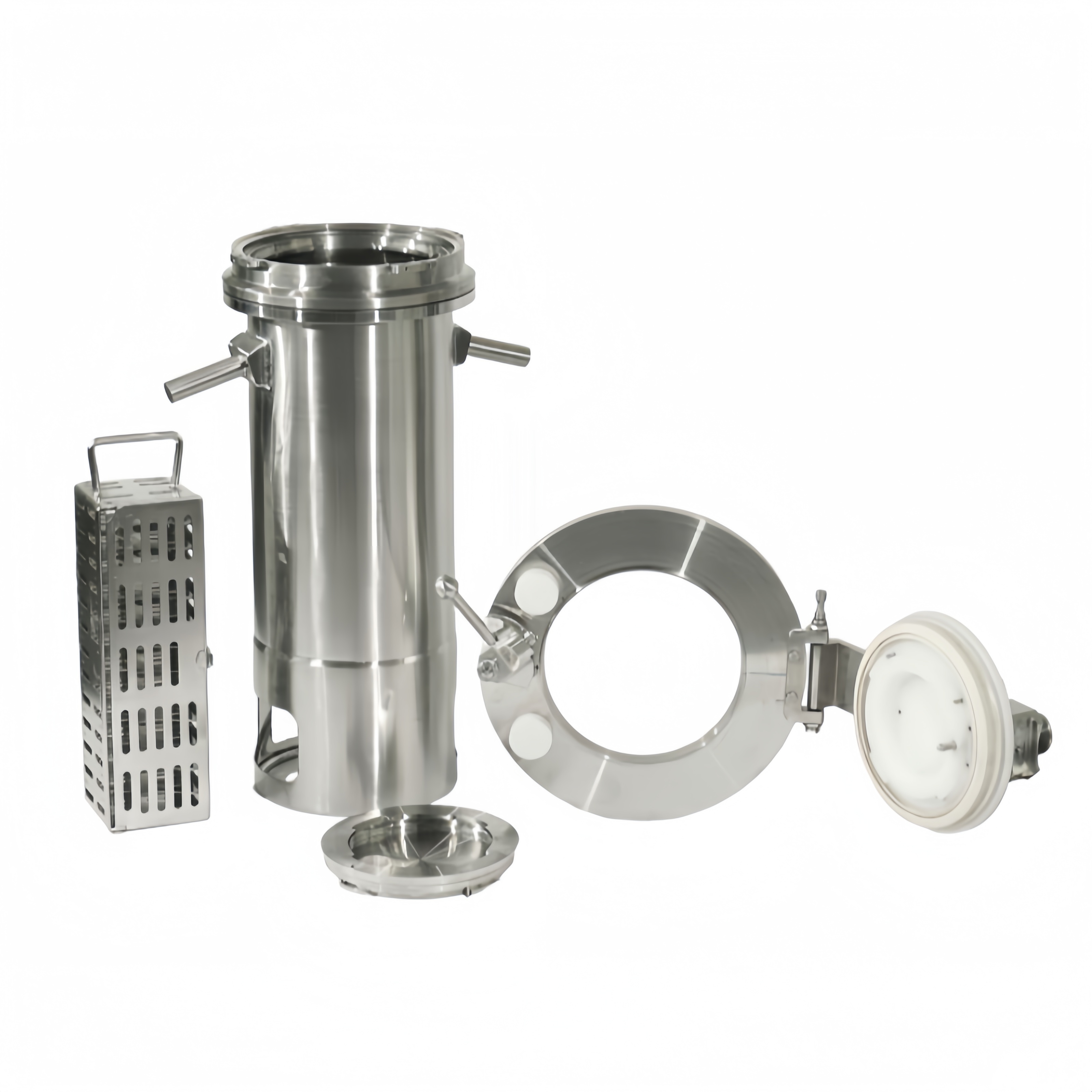
Choosing a seal material for medical or lab equipment often comes down to a quieter question: how many times can it be autoclaved, gassed, or chemically bathed before the surface starts to degrade? Silicone is a common starting point because it flexes well under heat and resists hardening after steam cycles. But not all silicone grades are equal—platinum-cured versions tend to hold their shape and sealing force longer than peroxide-cured ones, especially when exposed to hydrogen peroxide plasma or ethylene oxide on a weekly basis.
Fluoroelastomers like FKM or FFKM offer a different kind of endurance. They shrug off aggressive disinfectants and maintain compression set resistance even after hundreds of cycles at 135°C. The trade-off is stiffness and cost, which pushes many designers toward a hybrid approach: a PTFE-encapsulated core for chemical resistance with a resilient inner elastomer to maintain the spring-back needed for a reliable seal. This combination can survive repeated steam and chemical exposure without the cracking or swelling seen in standard EPDM.
The real differentiator, though, is surface finish and microgeometry. A seal with a mirror-smooth contact face traps fewer residues and is less likely to develop microtears that become leak paths after repeated thermal expansion and contraction. Testing matters more than the datasheet: a material that passes a single autoclave cycle may fail at the 200-cycle mark due to gradual loss of elastic recovery. For equipment that runs sterilization daily, it's worth specifying materials that have logged at least 300 cycles without measurable change in sealing force—otherwise maintenance downtime will quietly eat into throughput.
Integrating Rapid Transfer Ports with Isolator and Glovebox Workflows
Bringing rapid transfer ports into isolator and glovebox setups changes the rhythm of material handling in ways that are easy to overlook until you're working with them daily. These ports allow items to move in and out without breaking containment, which keeps the internal environment stable and reduces the need for lengthy decontamination cycles. Operators quickly learn that the placement of the port matters as much as the port itself—too high, and it becomes awkward; too close to a work area, and it interferes with routine tasks. A well-thought-out integration feels almost invisible, letting the workflow dictate movement rather than forcing people to adjust around the hardware.
One practical approach is to map out the most frequent transfers before committing to a port location. In a glovebox used for weighing powders or assembling sensitive components, the rapid transfer port should sit near the staging area but far enough from active manipulation zones to avoid accidental bumps. Some teams find that angling the port toward the operator's natural reach reduces strain during repeated docking and undocking. It also helps to consider the size and weight of the containers being passed through; a port that works for small vials may become a bottleneck if you later need to move larger trays or tooling. Matching the port diameter to the largest expected item, with a little clearance, prevents future headaches.
Beyond the physical layout, integrating these ports also involves a shift in how people document and verify transfers. Instead of relying on open-door exchanges that demand airlocks or purge cycles, the port becomes a controlled interface where each pass is deliberate. Some facilities pair the port with a simple log or sensor that records when a dock occurs, giving a clearer trace of material flow without adding paperwork. The key is to keep the process straightforward so that the port enhances throughput rather than becoming another step that people rush through. Over time, a well-integrated rapid transfer port stops being seen as a piece of equipment and simply becomes part of how the workspace breathes.
Interlock Design Choices That Reduce Operator Error
A well-designed interlock doesn't just prevent a machine from starting in the wrong state; it actively guides the operator toward the correct sequence of actions. One practical approach is to make the interlock mechanism require a deliberate two-step engagement, such as pressing a release tab before sliding a guard into place. This extra physical step breaks the rhythm of habitual motion and draws attention to the current setup, reducing the risk of a rushed or automatic response that might bypass safety.
Color and tactile cues on the interlock itself can further cut down on operator mistakes. For example, a bright orange handle that must be rotated a full ninety degrees, combined with an audible click and a slight vibration through the grip when the interlock seats properly, gives immediate, unambiguous feedback. If the operator tries to force the guard closed without aligning the interlock pins, the handle resists with a noticeable change in force. This built-in resistance teaches correct alignment without requiring a separate training module or warning sticker.
Another subtle but effective design choice is to place the interlock release within the operator's natural field of view, rather than hidden behind a panel or below waist level. When the release lever sits next to the start button, the operator must consciously move from one control to the other, reinforcing the mental link between guard status and machine activation. Designers can also shape the lever so it cannot be grasped comfortably with gloves on in the wrong orientation, turning a common source of fumbling into a non-issue. These small geometric and positional decisions accumulate into a system that anticipates human error instead of merely reacting to it.
Validation Steps Manufacturers Recommend Before Facility Commissioning
Manufacturers often start by verifying that every utility connection meets the equipment's rated specifications. Air pressure, water quality, electrical voltage, and exhaust capacity are checked against the installation manual before any powered test. This prevents false alarms during the actual validation runs.
Next, they recommend a systematic review of all mechanical fasteners, sensor placements, and safety interlocks. Calibration certificates for temperature probes, flow meters, and pressure transmitters are confirmed to be current. Any deviation found here is corrected and documented, because once commissioning begins, troubleshooting becomes more disruptive.
Finally, a controlled dry cycle or simulation is run without process materials. This step confirms that control logic, alarms, and emergency stops behave as designed under near-real conditions. Only after this no-load validation passes do manufacturers advise moving to the full facility commissioning sequence.
Modular RTP Retrofits for Evolving High-Containment Needs
High-containment facilities rarely stay static. A lab originally designed for one class of biologics may later handle a more hazardous organism, or a fill-finish suite may shift from small-batch cytotoxics to larger potent compound campaigns. Replacing wall-mounted rapid transfer ports (RTPs) in these situations has traditionally meant cutting into panels, revalidating barriers, and losing weeks of production. Modular retrofit systems change that calculus. By using a common frame with interchangeable inserts, teams can swap port diameters, add or remove glove rings, or shift between single-door and double-door transfer without tearing out the surrounding wall. The seal interface is engineered to maintain the same leak-tightness as a factory-installed port, so containment class is preserved while the workspace adapts.
The practical advantage is phased investment. Instead of overbuilding on day one, a facility can start with a standard beta port and later retrofit to a larger alpha-beta configuration when a new process demands it. The retrofit also accommodates evolving monitoring needs: a port that once relied on manual checks can accept a sensor module for pressure differential or door-position status. Because the cutout and clamping geometry stay consistent, requalification focuses on the new insert rather than the entire barrier system. This cuts downtime from weeks to days and allows high-containment suites to respond to changing product pipelines, biosafety requirements, or even supply-chain shifts without waiting for a capital project.
FAQ
Beyond basic dimensional fit, focus on the manufacturer's track record with high-containment projects, their in-house testing capabilities for leak rates under cyclic loading, and whether their port geometry supports the specific transfer containers and decontamination methods you already use. Ask for detailed failure mode data from field installations rather than relying on catalog claims.
Solid-wall systems typically require rigid alpha-beta ports with machined flanges and mechanical interlocks, while flexible-film isolators benefit from lighter ports that can be welded into the film without creating stress concentrations. The port's dynamic load path also changes: in flexible systems, the port must resist tearing at the film interface during repeated docking, so manufacturers often use flared rims and rounded corners to distribute force.
Stainless steel alloys with low surface roughness (below 0.4 Ra) reduce bioburden adhesion, but the real differentiator is often the gasket material. Fluoropolymer-coated elastomers withstand vaporized hydrogen peroxide better than plain silicone, though they cost more. For chlorine dioxide exposure, look for ports with electropolished interiors and minimized crevices where residue can collect.
It is not a one-time check. You should expect the manufacturer to provide a pressurized decay test protocol at the factory and on-site verification after installation. A meaningful acceptance criterion is a leak rate below 0.05% of the internal volume per hour at the maximum operating differential pressure, tested across the full docking and undocking cycle, not just in the closed position.
Yes, but the retrofitting approach depends on the existing wall thickness and panel material. Thin stainless steel panels often require reinforcement rings welded or bolted around the port opening to prevent deformation during docking. For acrylic or polycarbonate gloveboxes, an adapter plate with a compressible gasket can work, but you must verify that the additional gasket interface does not create an unmonitored leak path.
Look beyond the port's opening diameter. Evaluate the force required to rotate the docking ring, the height of the port centerline relative to the operator's elbow, and the clearance needed for gloved hands to manipulate the transfer canister. A port that requires more than 30 newtons of rotational force or sits above shoulder height for the 5th percentile female operator will lead to errors during repeated use.
Request a full design history file excerpt, including material certificates for wetted components, surface finish measurements on the sealing faces, and a risk assessment for each failure mode. The manufacturer should also supply installation qualification templates, leak test data from the exact serial number you are purchasing, and a documented change control process for any future design modifications.
Conclusion
Selecting the right rapid transfer port (RTP) requires careful attention to door geometry, as subtle dimensional variations in the flange and sealing face directly influence containment leak tightness under cyclic pressure differentials. Manufacturers note that a double‑O‑ring groove with a precisely machined mating surface often outperforms a single static seal, especially after hundreds of autoclave or vaporized hydrogen peroxide cycles. Seal materials such as EPDM or fluoroelastomer blends are validated for repeated sterilization without losing compression set or outgassing into the isolator environment. Integrating the RTP with isolator and glovebox workflows involves more than bolting on a port; the transfer interface must align with glove port ergonomics, rapid transfer containers, and material airlocks so that operators can dock and undock without breaking first‑air or over‑reaching.
Interlock design is equally critical. Mechanical and electromechanical interlocking systems that prevent opening the alpha port unless a beta container is fully seated reduce operator error and safeguard containment. Before commissioning a high‑containment facility, manufacturers recommend a staged validation sequence: dimensional checks of the welded port assembly, helium leak testing under negative and positive pressure, repeated sterilization cycle testing of seals, and glove‑port integration trials with trained operators. For evolving containment needs, modular RTP retrofits allow existing isolators or gloveboxes to be upgraded with minimal downtime, using adapter frames and clamp rings that accommodate different beta container sizes. This modular approach supports changing biosafety levels or process requirements without replacing entire containment suites, provided that the original port geometry and seal interface remain compatible.
Contact Us
Contact Person: Ananda
Email: [email protected]
Tel/WhatsApp: 8619016718200
Website: https://www.wzaomi.com