

Pusher Furnace Import Guide for Smart Buyers
2026-11-16
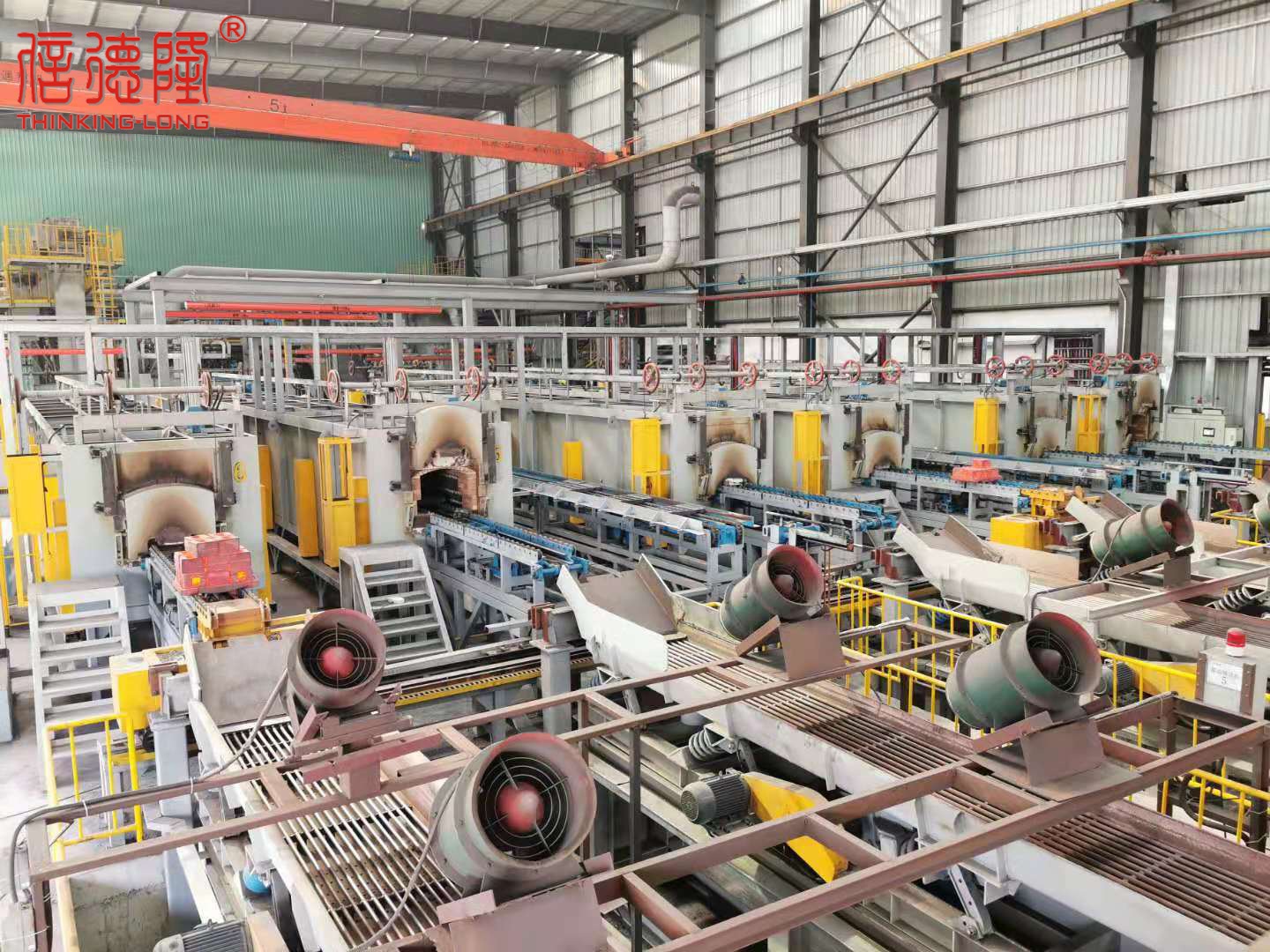
Importing a pusher furnace isn’t a decision you make from a spec sheet alone. Between hidden compliance traps, energy costs that quietly eat margins, and suppliers who overpromise on throughput, smart buyers need more than a checklist. This guide breaks down what actually matters before you sign — from kiln design and after-sales support to total cost of ownership. Whether you're upgrading a heat-treatment line or sourcing your first continuous furnace, THINKING-LONG has field-tested insights to help you avoid the mistakes that only surface after installation.
Why Most Importers Overlook the Furnace Lining
When importers walk through a supplier’s showroom or flip through a catalog, their eyes land on the things they can see and touch: the steel frame, the burner, the control panel, maybe even the paint job. The furnace lining is hidden behind all of that, buried under layers of insulation and sheet metal. Unless someone has explicitly warned them about refractory failure, most buyers simply don’t think to ask what’s inside the walls. They assume any lining that comes with the furnace must be adequate, because the machine itself looks sturdy and well-built.
Even when buyers do glance at the specification sheet, the language around furnace linings rarely helps. Terms like “high-alumina refractory” or “quality firebrick” sound reassuring but tell you almost nothing about density, thermal shock resistance, or how the lining was installed. Suppliers know this, and many are happy to leave those details vague. Without a technical background in heat treatment or metallurgy, an importer has no easy way to compare one lining against another, so it quietly drops off the priority list.
There’s also a more uncomfortable reason: cost pressure. A proper multi-layer lining with the right materials and careful installation can add a noticeable amount to the upfront price, and that’s money a budget-conscious importer would rather spend on visible features that help sell the furnace later. The result is a common pattern—purchase decisions get made on horsepower, chamber size, and touchscreen controls, while the lining gets whatever is left over. It only becomes a pressing concern months later, when heat loss drives up energy bills or a cracked lining forces an unplanned shutdown.
Questions to Ask Before You Sign the Proforma Invoice
A proforma invoice isn't just a formality—it's a preview of the final deal. Before you put your signature on it, dig into the specifics that often get buried in fine print. Ask about payment terms: what percentage is due upfront, and are there penalties for late installments? Clarify the delivery timeline and whether the quoted price covers freight, insurance, and any customs fees. If you're importing goods, confirm the Incoterms used and who bears the risk at each stage of transit.
Don't assume that a proforma invoice locks in the price or the product specs. Request a detailed breakdown of unit costs, packaging, and any additional charges like inspection or certification fees. Ask whether the seller can alter quantities or materials after you sign, and under what circumstances the invoice can be revised. Also check the validity period—some proforma invoices expire after a set number of days, which affects your ability to secure financing or compare offers.
Finally, verify the seller's identity and the bank details on the document. Fraudulent proforma invoices are common in cross-border trade, so cross-check the company's registration number, address, and contact information independently. Ask for references from past buyers and confirm that the payment account matches the seller's official business name. If anything feels rushed or vague, pause and request written clarification before committing.
The Real Cost of a Cheap Temperature Controller
A low-priced temperature controller often looks like a bargain on paper. You save a few dollars upfront, and the spec sheet claims accuracy within a degree or two. But once it's wired into a process that demands tight thermal stability, those small deviations show up everywhere. A lab incubator drifts half a degree overnight, a food holding cabinet swings enough to spoil a batch, or a reptile enclosure dips into dangerous territory. The cost of one ruined experiment or one failed health inspection far exceeds what you saved at checkout.
Beyond the immediate failures, cheap controllers tend to burn through relay contacts faster, overshoot more aggressively, and require constant manual correction. That means extra energy consumption as heating and cooling elements fight each other, plus more frequent recalibration and replacement. A unit that lasts a year instead of five effectively triples its effective price. When you factor in downtime, wasted materials, and the hours spent babysitting an unstable system, the "bargain" is anything but.
The real cost is rarely printed on the box. It hides in misfired production runs, lost samples, and utility bills that creep upward month after month. A quality controller with genuine PID logic and robust output hardware costs more initially but stabilizes the entire process. In the end, the cheap option doesn't save money—it just moves the expense somewhere harder to see.
How to Verify a Supplier's Claim Without Flying Overseas
Start by treating any supplier's claim as a story that needs proof, not a promise. The cheapest tool is a live video call on your own schedule, not a pre-recorded tour. Ask them to walk the floor with a phone or tablet and show you the production line, the raw material storage, and the shipping area. Make it interactive: ask them to point the camera at a specific machine, show today's date on a whiteboard, or open a random box of finished goods. If the connection cuts out every time you get to the loading dock, or if they keep rescheduling because the "camera is broken," you already have useful information about how they operate.
Documents help, but only if you verify their source. Request a copy of the business license, export records, and any certificates they claim to hold. Then check those documents with someone who has no reason to lie to you. A local trade lawyer or a small inspection agency can usually confirm whether the license is active and whether the factory address matches what you saw on the video call. Ask for three references, but don't just call the ones they give you. Look up other buyers in the same industry and reach out with a short, polite question about delivery times and quality. People are often more candid than you'd expect when they've been burned.
For a few hundred dollars, you can get physical proof without leaving your desk. Order a sample with custom markings or a specific packaging requirement that's hard to fake. Then have it shipped to you, or to a trusted friend in that country who can inspect it on arrival. If the sample arrives late, differs from what you agreed, or comes from a completely different address than the factory you video-called, that's a signal to walk away. For larger deals, a third-party inspection before shipment is worth every cent: an inspector will count the units, check the materials, and run basic function tests, then send you photos and a report within 24 hours. It's not as romantic as flying over, but it's faster, cheaper, and often more reliable.
Customs and Port Delays That Eat Your Timeline
You can plan every mile of your shipment, but the moment it hits a congested port or gets flagged for inspection, your schedule starts bleeding hours. Customs holds, documentation mismatches, and sudden terminal backups don't just slow things down—they quietly eat away at delivery windows you promised your customers. One missing HS code or a mismatched invoice can turn a two-day clearance into a week of back-and-forth emails while your cargo sits in limbo.
Port congestion adds another layer of unpredictability. Even when your paperwork is perfect, a vessel waiting for a berth or a yard running out of chassis can push pickup times from morning to next week. These delays rarely announce themselves; they surface as truckers waiting in line for hours or freight forwarders suddenly going quiet. If your timeline didn't factor in buffer days for these choke points, you'll find yourself apologizing to customers instead of shipping to them.
The real cost isn't just the lost days—it's the knock-on effect across your supply chain. A delayed container in one port forces you to reroute inventory, pay premium for air freight, or hold production because parts didn't arrive. Smart logistics teams treat customs and port variability as a built-in risk, not an occasional surprise, and plan their timelines with enough slack to absorb the routine chaos of global trade.
What Your Installation Team Wishes You Knew
Your installation crew doesn't expect you to know the technical details, but they do wish you knew how much smoother things go when the workspace is truly ready. Clearing the path from the entry to the install point, moving fragile items out of the way, and making sure there's a working outlet nearby can save an hour of awkward maneuvering. It's not about you doing their job—it's about not adding avoidable friction to a process that already has enough variables.
They also wish you knew that the quote you approved rarely covers the surprises hiding behind your walls or under your floors. Old wiring, uneven studs, unexpected pipe runs—these aren't excuses, they're realities of working in lived-in spaces. When you budget a little extra time and money for the unknown, you're not being upsold; you're preparing for the messiness that comes with making something new fit into something old. And please, don't hover. Ask your questions upfront, then trust them to do what they were hired to do. A clear line of communication beats constant supervision every time.
FAQ
Beyond the invoice you have to budget for pre-shipment inspection, export crating that survives ocean freight, import duties based on the correct HS code, and inland transport with a rigging crew that knows how to handle a furnace without warping the frame. Many smart buyers also set aside a contingency for commissioning support and a small stock of critical spare parts like heating elements and thermocouples, because waiting for replacements after startup is far more expensive than buying them with the original order.
Ask for a traceable test report from a furnace that shipped to a customer with a similar process, not just an empty compliance statement. Better yet, request a video call walkthrough of the test setup, and ask where the thermocouples were placed during the survey. If the seller cannot explain how they compensated for door openings, belt speed, or load mass, the uniformity number on the datasheet is probably optimistic.
Ignore the headline temperature range for a moment and look at heat-up time to working temperature, hearth loading capacity per square foot, atmosphere control accuracy, and the thickness of the insulation rather than just the type of fiber. These numbers tell you whether the furnace can recover after each push cycle or if it will gradually lose temperature during a full shift.
Check the pusher plate guide system and the hearth roller bearings. If the supplier uses a single central guide rather than side guides, or if the rollers are not rated for continuous exposure to your process temperature, you are looking at alignment drift and premature wear. Also listen for vague answers about thermal expansion gaps—if the design does not account for growth, the pusher mechanism will bind.
You need a full bill of materials with brand names for critical components, wiring diagrams that match the actual control panel, a pressure test certificate for any water-cooled circuits, and a factory acceptance test report signed by the operator who ran it. Do not accept a 'standard manual'—request a custom startup checklist that covers your specific voltage, gas pressure, and ambient conditions.
Ask for the response time guarantee in writing, and then test it before signing: send a technical question about a hypothetical fault and see how quickly and specifically they answer. Request contact details for two existing customers in your region, and ask those customers how long they waited for replacement parts. Also confirm whether remote troubleshooting via live video is included or treated as an extra charge.
Focus on scope rather than just price. You can negotiate free commissioning support, an extended warranty on heating elements, or a discounted rate on spare parts for the first two years. Suppliers often accept these terms more easily than a price cut, and they protect your operating budget far better than saving a few thousand dollars on the initial quote.
Specify a slightly wider hearth and taller clearance than today's parts require, and make sure the control system can store multiple profiles with different push speeds and atmospheres. If you think you might switch from air to a protective atmosphere later, order the furnace with sealed connections and a gas manifold now. Retrofitting these later is invasive and sometimes impossible without replacing the entire casing.
Conclusion
Most importers tend to fixate on price per kilogram or delivery lead time, but the furnace lining is where long-term value actually lives. A thinner or poorly cured lining might pass initial inspection, yet it begins degrading after a few months of continuous pusher operation, forcing an unplanned rebuild that costs far more than any upfront saving. Before you sign the proforma invoice, pin down the exact brand, grade, and installation method of the refractory, and ask for case studies from buyers who used the same configuration for at least two years. Also request a complete list of spare parts and consumables with their expected replacement intervals, because suppliers sometimes quote a low base price and then lock you into overpriced aftermarket components. The temperature controller deserves the same scrutiny: a cheap unit with poor PID tuning or weak relay contacts can cause temperature overshoot, shorten heating element life, and ruin entire batches of product, making the saved money disappear within the first quarter.
Verifying a supplier's claim without flying overseas has become easier if you insist on the right evidence. Ask for a live video tour where the supplier shows the serial number of your specific furnace being assembled, not a showroom model. Request recent third-party test reports for the control panel, heating elements, and refractory, and cross-check the company's export records through a freight forwarder or trade reference. Customs and port delays are another hidden drain: incomplete HS codes for refractory bricks, outdated safety certifications, or missing wood packaging stamps can hold your container for weeks, so prepare a pre-shipment document checklist and use a forwarder familiar with industrial furnace imports. Finally, share that checklist and the full wiring and brick layout diagrams with your installation team before the furnace arrives. They will tell you that labeled cables, spare thermocouples, extra heating elements, and a contact who answers after installation are worth more than any polished sales brochure, because field adjustments always happen and waiting for parts from overseas is the fastest way to burn your project timeline.
Contact Us
Contact Person: Qian Xijun
Email: [email protected]
Tel/WhatsApp: 8613961736750
Website: https://www.thinkinglong.com/