

Professional Industrial Inkjet Printers: Transforming Manufacturing Efficiency
2026-05-26
Manufacturing floors are no stranger to bottlenecks, but few are as stubborn as slow, error-prone marking and coding. Enter professional industrial inkjet printers—a quiet revolution that’s turning production lines into seamless, high-speed operations. Danmajet stands at the forefront of this shift, delivering precision and reliability that traditional methods simply can’t match. In this post, we’ll explore how the right printing technology doesn’t just keep pace with modern manufacturing—it redefines what’s possible.
Precision at Scale: How Advanced Printheads Redefine Accuracy
Chasing throughput without sacrificing detail has long been the print industry’s central tension. Older printheads falter when pushed to higher speeds—nozzle misfires creep in, droplet placement drifts, and fine features blur into noise. Modern printheads flip that compromise on its head. By orchestrating thousands of micron-scale nozzles with sub-picoliter drop control, they lay down fluid with a consistency that holds across entire production shifts. The breakthrough isn’t just faster firing; it’s the ability to maintain that rhythm while correcting for viscosity shifts, nozzle condition, and substrate irregularities in real time.
Under the hood, this leap comes from a tight coupling of precision mechanics and smart electronics. Piezoelectric actuators now deform with nanometer repeatability, ejecting droplets at frequencies above 100 kHz without amplitude drift. Meanwhile, integrated waveform shaping lets a single printhead switch between multiple drop sizes mid-pass—essential for rendering smooth gradients and crisp edges on the same sweep. Closed-loop systems read back meniscus pressure and jet straightness after every ejection, automatically fine-tuning drive voltages to keep the curtain of droplets uniform. It’s a level of self-awareness that transforms the printhead from a passive tool into an active partner in quality assurance.
The ripple effect on manufacturing is tangible. In textiles, registration errors that once meant wasted bolts of fabric are now measured in microns and corrected on the fly. Electronics assembly prints conductive traces with such fidelity that post-process inspection rates plummet. Even packaging lines, where variability in board stock is a given, achieve photo-realistic graphics without slowing the belt. What ties these examples together is a quiet shift in mindset: accuracy isn’t something you trade against speed anymore. With the right printhead architecture, they scale together.
Speeding Up the Line Without Sacrificing Quality
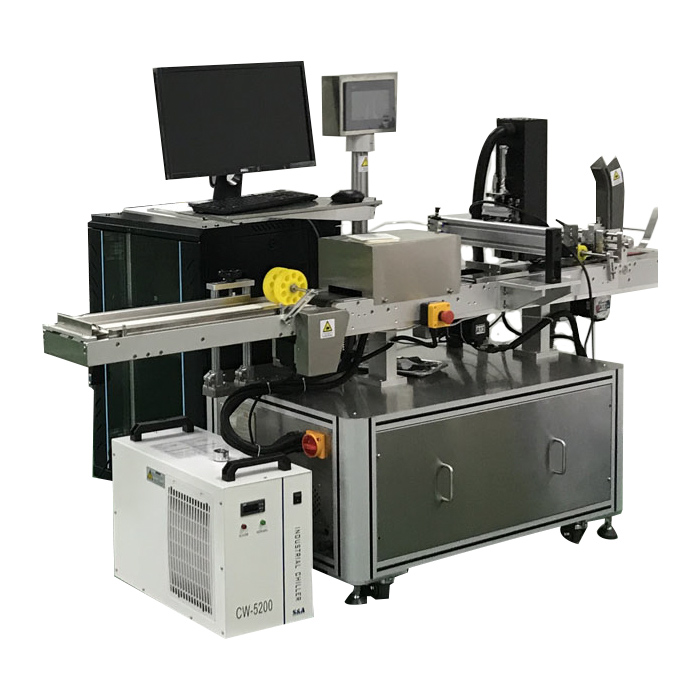
When production demands surge, the instinct is often to push harder and faster, but raw speed without a clear strategy can backfire quickly. The key lies in dissecting every step of the line to pinpoint micro-delays that accumulate over time. Instead of simply telling operators to work quicker, look at tool placement, movement patterns, and handoff points. Often, minor adjustments—like repositioning a parts bin or resequencing a task—can shave seconds off each cycle, adding up to substantial gains without increasing the risk of errors or fatigue.
Maintaining quality while accelerating output requires building checks into the flow rather than relying on final inspection. Introducing in-line verification steps that are almost invisible to the operator can catch deviations the moment they happen. For instance, a simple sensor or a visual cue can confirm a component is seated correctly before the next stage proceeds. This approach not only prevents defects from moving downstream but also reduces the temptation to skip steps under pressure. The operators become part of the quality control system, empowered to stop the line if something feels off, knowing that a brief pause is far less costly than a batch of rework.
Another often-overlooked lever is cross-training team members so that the line can flex around bottlenecks in real time. When everyone understands multiple stations, temporary imbalances caused by absenteeism or fluctuating cycle times can be absorbed without halting progress. This creates a fluid, responsive environment where the pace adapts to conditions rather than breaking under them. Regular, short feedback loops—where the team reviews what worked and what didn’t during the shift—help fine-tune the process continuously, ensuring that gains in speed never come at the expense of the craftsmanship your customers expect.
Versatility Unleashed: Printing on Everything From Glass to Textiles
Modern printing technology has shattered the old boundaries, allowing for vivid, durable designs on surfaces that were once considered off-limits. Glass, with its smooth, non-porous face, now holds intricate patterns and photographic-quality images, transforming ordinary windows, bottles, and tabletops into personalized works of art. Textiles, too, have entered a new era where cottons, silks, and synthetics accept inks that bond at the fiber level, resulting in fabrics that stay bright and soft after countless washes. This isn't just about decoration—it's about embedding utility and emotion into the very materials that surround us.
The real magic lies in the adaptability of the process. Whether you're transferring a delicate floral motif onto a glass vase or flooding a bolt of polyester with a vibrant abstract pattern, the same fundamental principles apply—yet the outcomes are as diverse as the materials themselves. Specialized pretreatments for glass create a microscopic key that anchors the inks, while textile printing often requires a heat press that opens up fabric fibers, infusing them with color that resists fading. The result is a seamless marriage of technology and craftsmanship, where a single machine can switch from producing a high-gloss decal for a storefront window to a soft, breathable print on a cotton tee.
This versatility opens up a playground for creators, small businesses, and large-scale manufacturers alike. A boutique owner can offer matching sets of printed glassware and linen napkins, each piece echoing the same custom design but adapted perfectly to its medium. An interior designer can conceive a space where the pattern on a curtain panel flows effortlessly onto a frosted glass room divider, creating a cohesive narrative that was once impossible to achieve without disjointed techniques. It's a quiet revolution—one that turns the everyday objects we touch and see into canvases for innovation, without fanfare, simply by letting the materials speak in ways they never could before.
Waste Less, Make More: The Sustainability Edge of Inkjet Tech
Inkjet technology is quietly reshaping how industries think about resource efficiency. Unlike traditional analog printing methods that rely on plates, screens, or chemical baths, inkjet systems deposit only the exact amount of material needed—whether it’s ink for packaging, conductive fluids for electronics, or even biological matter for medical applications. This precision drastically reduces waste at the source. There’s no excess coating to trim, no leftover dye to dispose of, and no solvent-laden cleaning cycles between runs. The result is a leaner process that conserves raw materials and cuts disposal costs, all while maintaining high throughput.
The sustainability benefits extend beyond material savings. Digital inkjet presses eliminate many of the setup steps that consume energy and generate scrap in conventional manufacturing. Short runs become practical and eco-friendly because there’s no need to produce thousands of units just to offset plate-making or screen-burning efforts. Companies can print on demand, which slashes inventory waste and the carbon footprint of warehousing and transportation. Moreover, water usage—a major concern in textile and graphic printing—plummets because inkjet processes often skip the wet finishing stages entirely. This dry, additive approach aligns with circular economy principles by keeping resource loops tight.
What makes inkjet’s sustainability story compelling is that it simultaneously boosts productivity. Faster changeovers, less downtime for maintenance, and the ability to personalize every piece without extra waste mean that “making more” doesn’t have to conflict with “wasting less.” From food-safe packaging printed with compostable inks to 3D-printed tissues that reduce animal testing, the technology is enabling new eco-friendly business models. As regulatory pressure and consumer demand push industries toward greener practices, inkjet’s efficiency edge is transitioning from a nice-to-have to a genuine competitive advantage.
From One-Offs to Millions: Seamless Scalability in Production
Scaling a product from a handful of prototypes to a full-blown production line isn’t just about copying and pasting processes. The real challenge lies in preserving the quality and functionality that made the original one-off so promising, while navigating the unpredictable terrain of real-world demand. Too many teams discover that what worked in a controlled lab setting crumbles under the weight of a thousand daily iterations. The secret lies in architecting early decisions with one eye on the present and the other firmly fixed on the millions of units to come, ensuring that every material choice, assembly step, and quality checkpoint can flex without snapping.
A seamless transition hinges on modularity—not just in components, but in thinking. Instead of bolting capacity onto a fragile foundation, smart scalability builds a manufacturing ecosystem that can breathe. This means standardizing interfaces where they matter most, designing tooling that can be replicated without heroic efforts, and embedding feedback loops that turn early production hiccups into enduring improvements. It’s a mindset that treats the first batch not as a final destination, but as the initial pulse of a living, evolving system hungry for the next million units.
True scalability also demands a culture that’s comfortable with growth spurts. Cross-functional teams learn to read the signals of scaling—subtle shifts in cycle time, material variance, or operator fatigue—before they become bottlenecks. By weaving automation in gradually, not all at once, and empowering people to refine processes on the fly, companies can surge past the typical cliff-edge of pilot-turned-production. The result isn’t just bigger numbers; it’s a resilient, self-correcting rhythm that turns the dream of a one-off into a reality of millions, without ever looking back.
Smart Factories, Smarter Printing: Integrating IoT and Real-Time Analytics
Across modern production floors, printers are no longer isolated output devices—they’re becoming intelligent nodes in a connected ecosystem. By embedding IoT sensors directly into print machinery, operators can track temperature fluctuations, ink viscosity, and component wear with sub-second precision. This constant flow of operational data transforms reactive maintenance into a predictive discipline, slashing unplanned downtime and ensuring that every label, package, or component meets exact specifications without manual checks.
Real-time analytics add another layer of intelligence, turning raw sensor streams into actionable insights on the fly. Algorithms now cross-reference ambient conditions, substrate variations, and historical performance to fine-tune print parameters mid-job. In high-mix environments, this capability means a single press can instantly recalibrate between materials or designs, eliminating setup waste and reducing human intervention. The result is a print process that learns from each impression, steadily boosting throughput while cutting consumable costs.
Beyond the machine level, this integration reshapes entire workflows. Quality data from the press feeds back into upstream systems, triggering automatic adjustments in digital file preparation or material orders when patterns drift. Plant managers gain a holistic view where printing isn't a bottleneck but a responsive, self-optimizing stage. Such closed-loop orchestration brings the promise of lights-out manufacturing closer, all while producing sharper, more consistent output than ever before.
FAQ
They streamline production by enabling direct printing on diverse materials, eliminating steps like labeling and reducing setup times.
Packaging, automotive, electronics, and textiles see major gains due to high-speed, precise marking and coding needs.
Absolutely. Modern systems maintain crisp, durable prints at speeds exceeding 300 meters per minute, even in 24/7 operations.
They cut costs by reducing material waste, minimizing maintenance, and allowing quick changeovers between jobs without tooling expenses.
Real-time variable data printing enables serialization, batch tracking, and compliance labeling directly on products, reducing errors and delays.
Yes, they offer flexible integration with existing lines, support various inks like UV and solvent, and can be tailored to print on irregular surfaces.
They lower environmental impact by minimizing ink waste, energy use, and the need for additional packaging materials compared to analog methods.
Advanced ink chemistries resist chemicals, abrasion, and extreme temperatures, ensuring legibility throughout the product lifecycle.
Conclusion
The realm of manufacturing has been reshaped by professional industrial inkjet printers, which marry precision engineering with digital agility. Advanced printheads, capable of depositing microscopic droplets with sub-micron accuracy, ensure that even the most intricate designs are reproduced flawlessly at high speeds. This precision-at-scale means that production lines no longer need to choose between velocity and quality; high-frequency firing and multi-pass strategies allow for rapid throughput without compromising image sharpness or color fidelity. Moreover, these systems readily adapt to an incredible range of substrates—from delicate textiles to rigid glass and metal—opening up new avenues for customization across industries like packaging, electronics, and decor.
Beyond the intricacies of printing, these machines bring a profound sustainability edge by drastically cutting waste compared to analog methods. On-demand digital deposition eliminates the need for screens and plates, conserves ink, and reduces chemical usage, aligning with circular economy goals. Their seamless scalability means a single platform can effortlessly transition from prototyping to mass production, optimizing run lengths without retooling. Embedded within smart factories, these printers leverage IoT sensors and real-time analytics to monitor jetting health, predict maintenance, and auto-correct print anomalies, fostering a proactive ecosystem that maximizes uptime and overall equipment effectiveness. In essence, they embody the confluence of efficiency, adaptability, and intelligence that defines the future of manufacturing.
Contact Us
Contact Person: Jacky
Email: [email protected]
Tel/WhatsApp: 086 15000607053
Website: https://www.danmajet.com