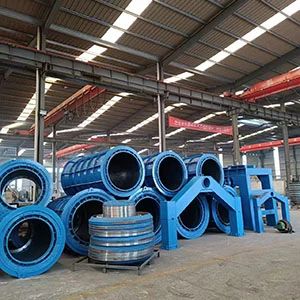

Precast L-Shaped Wall Mold Manufacturer Ranked Top for Quality and Durability
2026-10-16
You've probably seen L-shaped wall molds that look fine on day one but start showing wear after a few dozen cycles. That gap between initial finish and long-term durability is exactly where most manufacturers fall short. One company that consistently avoids that trap is Qianfeng Electromechanical Equipment—ranked top for quality and durability in recent industry comparisons. Here's what actually makes their precast L-shaped molds different.
How Tight Corner Tolerances Keep Wall Joints From Becoming Callbacks
Framers who let corner studs run a hair out of square rarely see the problem until the finishers arrive. A corner that's off by even 1/8 inch forces the drywall to bridge a small gap or twist slightly, and that stress shows up later as a hairline crack along the tape line. Tight corner tolerances eliminate that hidden tension before the first coat of mud goes on.
When both sides of a corner fall within a narrow tolerance, the board edges meet without fighting each other. The corner bead sits flush, the tape beds evenly, and the angle stays crisp down its full height. You don't end up shimming one side or floating a low spot with extra compound, both of which tend to telegraph through the paint within a season.
Most callbacks tied to wall joints aren't from bad mud work; they're from framing that drifted just enough to make the joint work against itself as the building settles. Keeping corner tolerances tight is one of the cheaper fixes in the whole assembly, and it saves the finisher from having to hide a framing error that will eventually show through.
The Steel Thickness and Brace Spacing Behind Repeat-Use Longevity
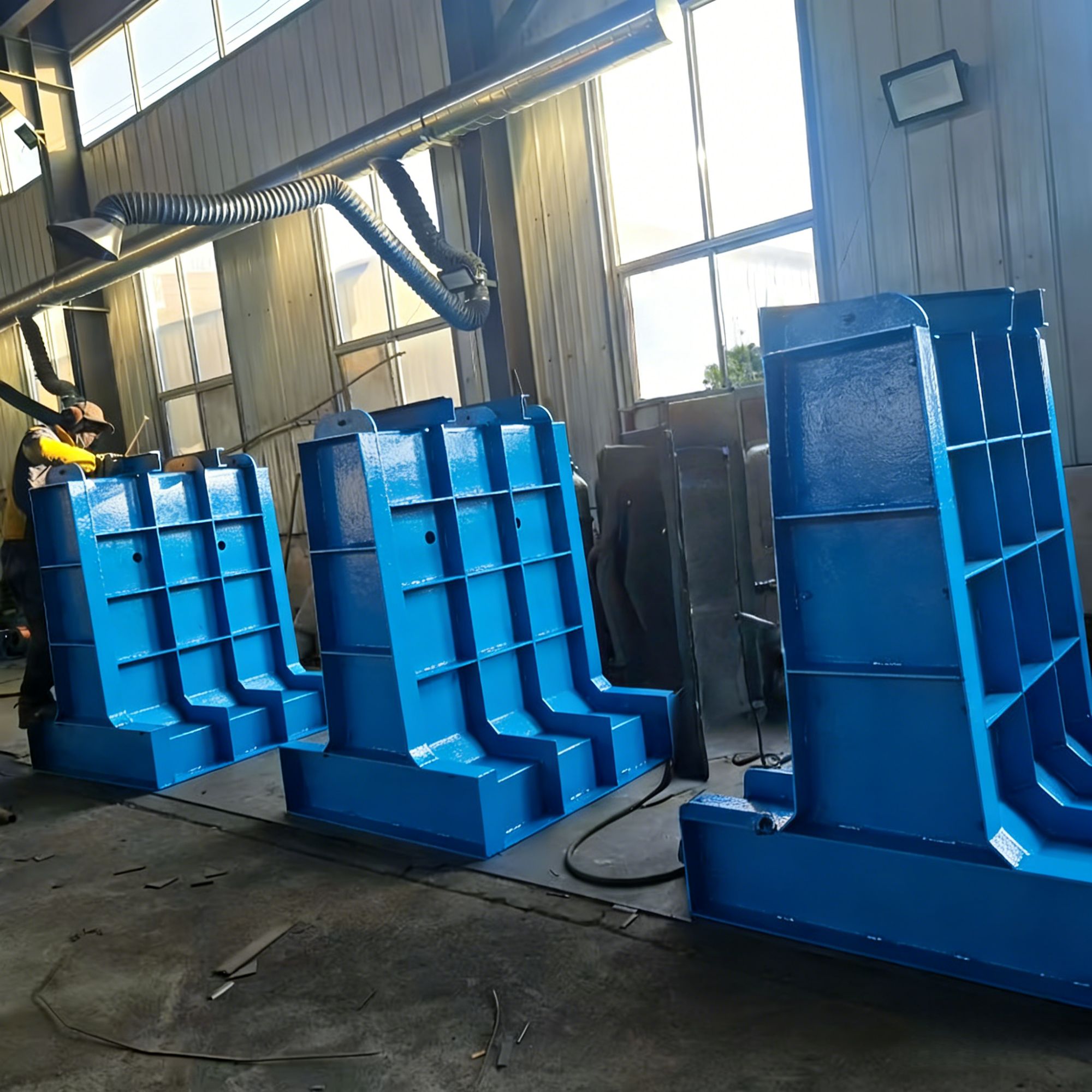
Steel thickness does more than add weight. In repeated use, the material cycles through loading, unloading, and minor impacts that gradually push thinner sections past their elastic limit. A heavier gauge delays that shift into permanent deformation, keeping uprights, beams, and deck panels straight even after hundreds of load cycles. The extra thickness also spreads point loads from pallets or tools over a wider area, which reduces the chance of localized dents that can weaken joints later.
Brace spacing matters just as much once a structure faces lateral force. Wide spacing allows the frame to twist or sway under uneven loads, and that movement concentrates stress at welds, bolt holes, and base plates. By pulling brace intervals tighter, the rack or frame stays square, so repeated forklift bumps and off-center loads do not translate into progressive joint loosening. Diagonal braces placed at regular positions turn what would be a wobbly assembly into a stable unit that holds alignment over time.
The real longevity gain comes from the relationship between these two variables. A frame with thick steel but poor brace spacing can still develop fatigue cracks at connection points, while closely spaced braces on thin metal may simply transfer stress to underbuilt members. Matching gauge to the expected load and keeping brace distances short enough to limit flex gives repeat-use equipment a much longer service window before components need straightening, shimming, or replacement.
From First Pour to Hundredth: What Actually Wears Out on an L-Shaped Mold
On an L-shaped mold, the first casualty is rarely the obvious one. Most people assume the cavity walls or the parting line will degrade first, but after a few dozen cycles, what actually starts to show fatigue are the sharp inner corners where the two legs of the L meet. That corner sees repeated thermal expansion and contraction, and if the radius wasn't cut generously, micro-cracks begin to form. The first pour to the hundredth pour is often enough to turn a hairline crack into a visible groove that starts sticking parts.
Another spot that wears out faster than expected is the ejector pin area on the shorter leg of the L. Because the part shrinks onto that leg unevenly, the pins have to push harder on one side, and over time they either bend slightly or wear the through-holes oval. Add to that the gate location—usually placed near the bend to fill both legs evenly—and you'll see erosion right at the gate land after roughly eighty to a hundred pours, especially with abrasive or filled materials. That erosion changes the fill pattern, causing short fills or flow lines long before the mold steel itself fails.
Why Field Crews Prefer Bolted Connections That Don't Loosen Mid-Pour
On a concrete pour, everything vibrates. The formwork shakes, the rebar hums, and any connection that isn't locked down will work itself loose long before the pour firms up. Field crews learn fast that a bolted joint which holds under static load doesn't mean much when a vibrator head runs inches away. That's why they reach for connections designed to stay put through both vibration and the lateral pressure of a live pour—not just something that felt tight during assembly.
The real difference shows up mid-pour. A conventional bolt can back off a quarter turn from vibration alone, and once that happens, the form starts to drift. Crews then face a choice: stop the pour, climb in, and re-tighten—or risk a bulge that turns into a finishing headache. Bolted connections with a positive locking feature, whether a wedge, a serrated flange, or a thread pattern that resists rotation, take that decision away. They stay exactly where they were torqued the first time.
There's also the time factor. Every minute spent chasing loose hardware on a pour day is a minute not spent placing and consolidating concrete. Crews prefer hardware that doesn't ask for constant babysitting because it lets them keep the hose moving and the finish on schedule. A connection that stays tight mid-pour isn't just about safety or quality—it's about keeping the entire operation flowing without surprises.
Match-Casting L-Shaped Walls Without Surface Patching or Grinding
Match-casting L-shaped walls demands a level of precision that leaves no room for post-pour surface correction. The forms are set so the two legs of the L meet at exactly the intended angle, and the concrete mix is designed to flow into every corner without trapping air. Rather than relying on grinding or patching after the fact, the focus stays on the pour itself—vibration is kept short and targeted, and the form faces are clean and treated with a reliable release agent. The result is a wall that emerges with a dense, even surface straight from the mold.
On site, this approach changes the workflow. Because the L-shaped sections are cast against a matching face or in a carefully aligned setup, adjacent pieces fit together without the usual fill work. The absence of surface patching means fewer joints to inspect and no thin overlay that could delaminate later. Crews spend less time with grinders and trowels, and the exposed concrete has a uniform look that doesn't depend on a finisher's touch-up skills. For corners and intersections, where L-walls often meet, the clean match keeps the lines true.
The real advantage shows up in scheduling and durability. Skipping the patch-and-grind stage removes a day or more from the critical path, and it eliminates the dust and noise that come with surface correction. The concrete itself is left intact, so there's no weakened zone where a patch might shrink or crack under load. When the forms are stripped, the wall is ready for whatever comes next—waterproofing, framing, or direct exposure—without any extra surface work.
A Closer Look at the Weld Seams That Outlast Standard Galvanized Forms
Weld seams are often the first place a galvanized form fails. Standard galvanizing leaves a zinc coating that is thickest at the corners and thinnest over the welded joint, where the heat of the weld has already altered the steel's microstructure. Over repeated pours, moisture and concrete's alkaline environment work into that thinner seam, starting a corrosion line that eventually cracks the form open long before the rest of the panel shows wear.
A closer look at the seam itself explains the difference. In ordinary galvanized forms, the weld bead sits slightly proud, and the zinc layer over it is frequently interrupted by microscopic pinholes left by flux residue. Our weld seams are ground flush before coating, then run through a secondary hot-dip pass with a slower withdrawal rate. That extra step lets the zinc pool into the toe of the weld instead of bridging over it. The result is a seam with a uniform coating thickness that matches or exceeds the surrounding face of the panel.
You can see the effect after a few hundred pours. On a standard form, the seam begins to show a ragged rust stain that creeps outward from the weld line. On ours, the seam remains clean and smooth, with no visible transition between the welded joint and the parent metal. It is not a cosmetic difference. The same seam that resists early pitting also holds its straightness longer, which means fewer blowouts, less form oil wasted on patching, and panels that can be re-faced instead of scrapped.
FAQ
Look at the materials and the precision of the formwork. A top-ranked manufacturer typically uses heavy-duty steel plates, reinforced ribs, and laser-cut edges so the mold keeps its shape after repeated pours. They also run deflection tests and inspect weld seams before shipping.
Ask about their testing reports and past projects. Reliable producers often provide documentation on steel grade, weld quality, and dimensional tolerance. You can also request references from precast plants that have used the molds for several years without warping or leakage.
Most ranked manufacturers handle custom dimensions. You send your shop drawings or panel schedule, and they adjust the length, height, wall thickness, and corner angles. The best ones will also suggest modifications to improve stripping and reduce cracking at the corner.
Features like integrated lifting anchors, adjustable side rails, and replaceable wear plates make a big difference. A well-built L-shaped mold also has strong corner bracing and minimal welded joints in high-stress areas, which helps prevent fatigue cracks.
They usually use CNC machining for the mold faces and maintain tight tolerances, often within 1-2 mm. After assembly, they may do a trial assembly or pre-check with a laser tracker. Consistency also comes from using the same thickness of steel plate across the mold surface to avoid uneven expansion.
Expect more than just delivery. Good manufacturers offer installation guidance, spare parts for wear components, and technical advice on mold release agents and curing. Some will send technicians to your plant for the first few pours to help adjust the mold if needed.
Yes, if the mold is rated for heavy use. Look for reinforced back ribs, hardened steel on the pouring face, and quick-release clamps. A durable L-shaped mold can easily handle hundreds of cycles per year when properly cleaned and maintained.
Compare the steel plate thickness, the type of surface treatment, and the warranty terms. Also check if they have experience with L-shaped profiles specifically, since corner design and stripping behavior differ from flat panels. Ask for a sample corner detail drawing to see how they handle stress relief.
Conclusion
The top ranking for this precast L-shaped wall mold comes from details that prove themselves after years of service, not just on a spec sheet. Corner tolerances are held tight enough that wall joints stay clean without callbacks—a single degree of slop turns into a visible patch job after the first shift. Steel thickness and brace spacing are engineered around the vibration and pressure of repeated pours, so the form holds its shape when other molds start to rack. Weld seams get more attention than usual because this is where galvanized forms typically fail first; here the seams are profiled and stress-relieved to outlast the base material's corrosion protection, not just match it.
Field crews notice the difference immediately: bolted connections stay tight mid-pour because thread engagement and locking patterns are designed for wet concrete's lateral push, not just assembly convenience. Match-casting L-shaped walls from this mold eliminates surface patching and grinding—panels come out with faces that align within the tolerance of the original setup, a direct result of corner geometry and bracing stiffness working together. Over a hundred pours, the actual wear points are tie hole inserts and lifting anchors, not the structural frame, because the manufacturer overbuilt those predictable fatigue zones. That is why the top ranking sticks: the mold doesn't gradually lose its ability to produce a sharp, true L-shape, and the crew doesn't spend the afternoon fighting the form to make the next panel look like the last one.
Contact Us
Contact Person: Bill
Email: [email protected]
Tel/WhatsApp: 8615063653526
Website: https://www.qianfengjd.com