

Photochromic Heat Transfer Labels Company: Custom UV-Reactive Branding Solutions
2026-09-19
Imagine a label that shifts from subtle to striking the moment UV light hits it. That’s the promise of photochromic heat transfer labels—a smart, interactive twist on branding that most companies haven’t tapped into yet. Victorygen heat transfer label is changing that, offering custom UV-reactive solutions that turn ordinary packaging into a memorable experience. Curious how your brand can stand out with color-changing technology? Keep reading.
When your label only shows up outdoors
There’s a peculiar moment when you bring a piece of gear inside and the label seems to vanish. It isn’t worn off or poorly printed—it simply needs direct sunlight to become legible. This kind of label is often designed with UV-reactive pigments or photochromic materials that stay nearly invisible under indoor lighting. The result looks like a blank patch at home, then reveals care instructions or safety warnings the second you step outside.
For brands, the benefit is subtlety. A tag that only shows up outdoors doesn’t clutter the clean lines of a jacket or pack while you’re wearing it around town. Instead, the information waits until conditions match its purpose—bright daylight, trailhead parking lots, or a sunny rest stop. If you’ve ever squinted at a label in a dim hallway and wondered why it’s empty, that contrast is exactly the point.
Keep in mind that these labels aren’t broken, even if they look faded indoors. The ink or coating reacts to UV exposure, not to regular bulbs. So if you need to check washing details before a trip, step near a window or take the item outside for a few seconds. The text should sharpen quickly, as long as the material hasn’t been damaged by excessive heat or harsh chemicals.
Custom UV-reactive transfers: the design conversation
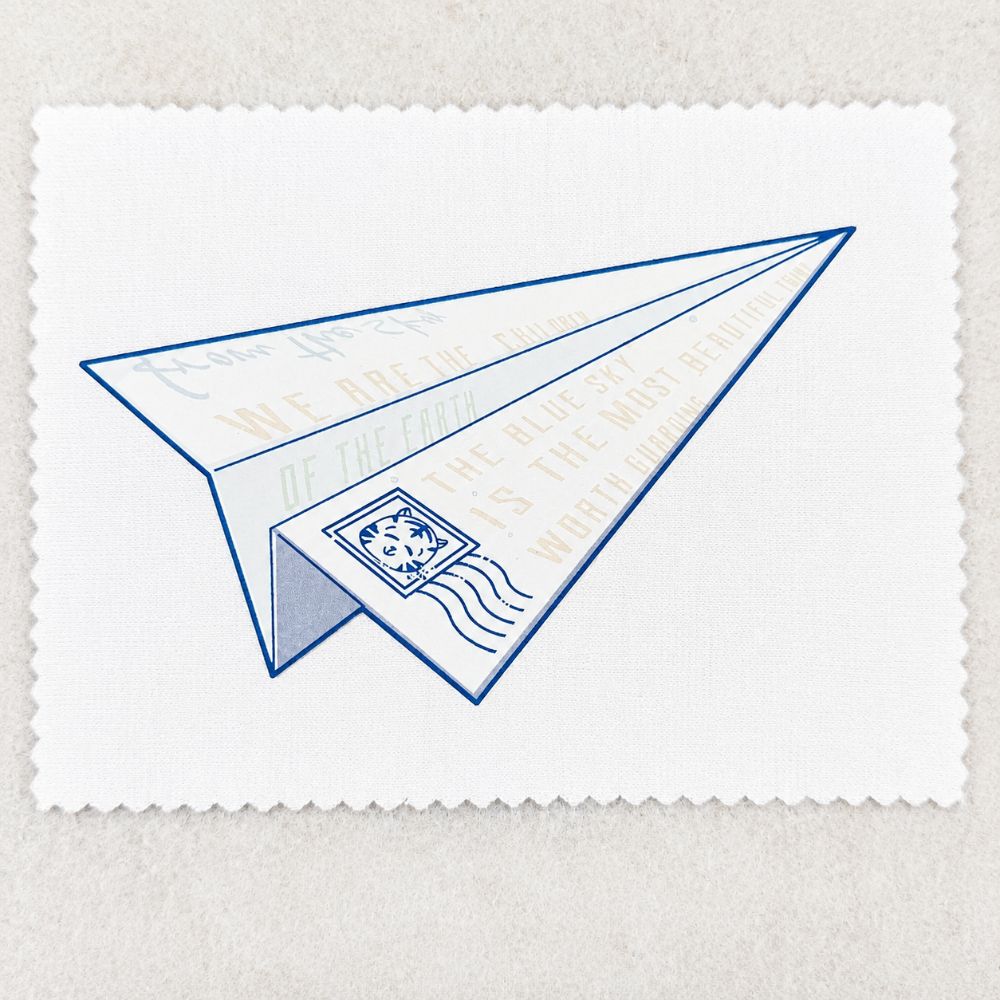
The design conversation for custom UV-reactive transfers often starts with a messy, half-formed idea. A client might message us a photo of a sun-faded sticker and say, “I want something like this, but it only shows up under blacklight.” What follows is a back-and-forth that digs into the ugly details: Does the base color need to be invisible in normal light, or can it have a slight tint? How long should the reactive effect last after exposure? Is this going on glass, fabric, or something porous? These questions aren’t just checkboxes—they dictate the ink formulation, the adhesive layer, and whether we can even use a standard transfer film.
Once we move into materials, the dialogue gets very specific and very physical. Some people want a transparent substrate so the graphic stays hidden until UV hits it, while others ask for a textured background that interacts with the reactive layer. We always push for a small test batch first, because UV intensity, angle of exposure, and even ambient temperature can shift the final look. I remember a nightclub project where we adjusted the ink concentration seven times before the logo pulsed in sync with the strobe lights—too subtle and it vanished, too strong and it stayed lit like a neon sign, killing the surprise.
By the end of the design conversation, everything circles back to context. Is this transfer going on a cocktail bottle that sits under a bar’s UV lamp all night? Or is it a hidden security mark on the back of an employee badge? Those answers determine edge-cutting tolerances and how many washes the transfer needs to survive. The best UV-reactive work isn’t about showing off the chemistry; it’s about making the color shift part of the story. Like the time we printed lyrics for an indie band’s merch that only appeared when fans pointed a UV flashlight at the shirt during the encore.
How many washes can photochromic ink really take?
That “30 wash guarantee” printed on the ink bottle usually assumes a cold-water, gentle cycle with mild detergent and an owner who never puts the shirt in the dryer. In real life, photochromic ink tends to lose its ability to shift cleanly after roughly 15 to 25 washes, though some heavy-duty solvent-based formulations will hold on closer to 40 before the color change becomes patchy.
Heat is the bigger killer than the washing machine itself. A single trip through a hot dryer can age the microcapsules by several wash cycles, and bleach or optical brighteners in many detergents will eat away at the dyes long before abrasion does. If you must launder the garment, turn it inside out, use a cold delicate cycle, and air dry it flat; that’s how people squeeze an extra season out of a print that would otherwise fade in a month of regular laundry.
Not just for t-shirts: unexpected uses for color-change labels
Think of color-change labels and the first image is often a novelty tee shifting hues with body heat. But these smart pigments have quietly moved into far more practical territory. Walk down a grocery aisle and you'll find them on milk jugs and vaccine vials, where a simple color shift can signal if the product ever broke the cold chain. It’s a silent, always-on guardian that doesn’t need batteries or an app.
The medical field has embraced this technology in ways that directly affect patient safety. Sterilization wraps and instrument pouches carry indicator strips that turn from pink to brown only when the correct temperature and steam pressure have been reached. A nurse glancing at a tray can instantly confirm whether the tools inside are safe to use, cutting down on guesswork and preventing infections.
Even everyday items are getting smarter. Takeaway coffee cups often feature a heat-sensitive band that lets you know when your drink has cooled to a comfortable sipping temperature. On sunscreen bottles, UV-reactive labels fade or change color to remind you it’s time to reapply. And in machine maintenance, small labels on motors or bearings shift from blue to red when overheating occurs, giving maintenance crews an early warning before a costly breakdown.
The chemistry behind labels that appear in sunlight
Photochromic labels rely on molecules that change structure when struck by ultraviolet light. In their resting state, these compounds—often spirooxazines or naphthopyrans—have a closed ring form that absorbs little visible light, so the printed message stays invisible. Sunlight supplies the energy to break a carbon–oxygen bond in the ring, flipping the molecule into an open, planar conformation. This new shape has a delocalized electron system that absorbs specific wavelengths in the visible spectrum, and the label suddenly appears colored against its background.
The transition is not permanent. Once the UV source fades or the label moves indoors, thermal energy gradually reverses the reaction, and the open form collapses back into its colorless closed state. Manufacturers tune this reversibility by altering substituents on the aromatic rings or embedding the dyes in polymer matrices that slow down molecular motion. That is why some labels vanish within seconds of leaving sunlight, while others hold their color for minutes—an effect often described as fatigue resistance in industrial printing.
Not all sunlight-responsive labels use organic dyes. Some rely on inorganic pigments like titanium dioxide paired with redox dyes, where UV photons trigger electron transfer rather than ring opening. Others exploit silver halide chemistry similar to old photographic paper, but with a wider spectral response. In every case, the core principle is the same: a photon of the right energy pushes a molecule into a higher-energy state, altering how it absorbs light and making the hidden text readable only when the sun is out.
Making your brand impossible to ignore, one sunny day at a time
Some brands wait for the perfect moment. Yours can show up on a clear Tuesday morning, when sunlight hits the storefront just right and a passerby slows down without knowing why. That pause is the whole game. It starts with colors and shapes that feel less like advertising and more like a signal meant for them.
A sunny day does half the work. Good design turns the rest into a quiet pull. Think of awnings that frame the entrance like an invitation, window graphics that catch the eye only when someone is already walking toward you, and sidewalk signs that don't ask for attention but earn it by being interesting at a glance.
The goal isn't to shout louder than everyone else. It's to become the thing people remember after they've seen a dozen other signs. Small, consistent choices—in type, contrast, and placement—add up to a brand that feels impossible to ignore. One bright afternoon at a time, that recognition becomes yours.
FAQ
These labels look subtle or nearly colorless indoors, then reveal vivid colors or graphics once exposed to sunlight. They rely on special photochromic inks fused into the fabric through a heat transfer process, rather than sitting on the surface like a typical print.
With high-quality photochromic pigments and proper transfer settings, the effect remains visible through many wash cycles. We recommend turning garments inside out, washing in cold water, and skipping bleach or high-heat drying to extend the label’s life.
Yes, custom graphics, logos, and color combinations are available. You can choose a base tone for indoor lighting and a different activated color for outdoor exposure, and we’ll prepare a digital proof before production.
Cotton, polyester, blends, canvas, and even some coated nylon fabrics work well. The effect tends to be most noticeable on light or white backgrounds because the photochromic layer’s transparency shift stands out more clearly.
Our typical minimum starts between 300 and 500 labels, depending on the size and number of colors involved. Smaller sample batches can be arranged before committing to a full order.
Heat press temperature and dwell time need to be controlled precisely, usually around 150–160°C for 10–15 seconds. We provide fabric-specific recommendations and can run on-site tests to ensure a clean bond without damaging the material.
After proof approval, most orders ship within 7 to 12 business days, depending on complexity and current workload. Rush options can sometimes be arranged for tighter deadlines.
The inks and adhesive layers we use are tested to meet OEKO-TEX or similar safety standards, and they are free from phthalates and other common harmful substances, making them suitable for kids’ products.
Conclusion
Photochromic heat transfer labels from this company turn ordinary apparel into a sunlight-activated statement. Instead of printing a permanent logo that competes for attention indoors and out, these transfers rely on UV-sensitive molecules that stay nearly invisible under artificial light and then shift into full color once they meet direct sun. That chemistry gives brands a chance to build a quiet indoor look while letting the design speak up outdoors, where customers actually see it in motion. The design conversation changes too. You're no longer choosing just a graphic and a placement. You're deciding which parts of the artwork should appear first, how intense the color shift should be, and whether the reveal should feel sudden or gradual. This gives creatives room to play with hidden messages, split designs, or seasonal campaigns without printing multiple versions. That turns the label into part of the experience rather than a static tag, so custom UV-reactive transfers feel less like decoration and more like a small piece of interactive branding.
Durability is a practical concern, and photochromic inks hold up better than many people assume. With proper curing and care, these transfers can survive repeated wash cycles while keeping their color-shift ability intact, though the exact lifespan depends on ink formulation and fabric type. That makes them viable beyond t-shirts. Think reusable tote bags, outdoor workwear, sports caps, festival wristbands, or even safety-oriented gear where visibility changes with sunlight. A construction vest logo that only appears outdoors, for example, adds a functional layer to branding. The real payoff is the surprise factor. When your label emerges only under the sun, it creates a small moment of surprise that people tend to remember and share. That kind of word-of-mouth does not come from a typical screen-printed logo. It comes from giving customers a reason to step outside, look down, and smile, one sunny day at a time.
Contact Us
Contact Person: Wang Song Lin
Email: [email protected]
Tel/WhatsApp: +8613751282193
Website: https://www.heat-transferprinting.com/