

OEM Transmission Line Tower Manufacturer: Engineering High-Voltage Grid Solutions
2026-06-11
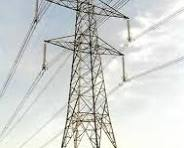
In the realm of high-voltage infrastructure, every tower must meet uncompromising standards of durability and precision. Few OEM transmission line tower manufacturers combine custom engineering with grid-tested reliability like Anbang. From extreme weather resilience to streamlined supply chains, our solutions redefine what’s possible in modern power delivery.
Tailored Tower Designs for Complex Terrain and Load Requirements
Every tower site presents its own puzzle, especially when the terrain refuses to cooperate. Sloping grades, rocky outcrops, or unstable soil demand more than a standard design—they require a structural response that reads the land itself. Instead of forcing the ground to fit the tower, the foundation and geometry are adapted, with custom footing depths, battered piles, or guyed configurations that work with the irregularities rather than against them. This kind of site-specific engineering keeps the tower stable even when the ground shifts season after season.
Load requirements introduce another layer of complexity, particularly when the tower must support an array of antennas, remote radio heads, and ice shielding. Wind pressure, seismic activity, and thermal expansion are not uniform across a tall structure; they peak differently depending on height and exposure. A tailored design slices the tower into segments, assigning targeted reinforcement and bolt specifications to each zone. The result is not a bulkier tower but a smarter one—using material exactly where the stress maps indicate, avoiding the unnecessary weight that drives up cost and foundation demands.
Combining terrain adaptation with precise load management often reveals opportunities that standard designs miss. For instance, a ridge-top tower may benefit from a shortened height if the natural elevation already provides line-of-sight clearance, cutting both wind exposure and foundation requirements. Or a steep hillside installation might incorporate a stepped mat foundation that doubles as a small retaining wall, stabilizing the slope while supporting the mast. These decisions are born from close collaboration between geotechnical surveys and structural modeling, turning apparent obstacles into integral parts of the final design.
Precision Fabrication Merging Robotic Welding with Hands-on Craftsmanship
In an era where automation often replaces tradition, our approach redefines the relationship between technology and touch. Robotic welding delivers micron-level accuracy, ensuring each joint meets exact specifications without variation. Yet the process isn't left solely to machines. Skilled artisans step in at critical stages, applying techniques passed down through generations to refine what robotics can't replicate—texture, fit, and character.
The collaboration happens in real time. Robots handle repetitive high-heat welds, maintaining consistency across large volumes, while craftsmen focus on intricate alignments and final finishing. It's not about choosing one over the other; it's about knowing when precision demands a programmed arm and when a human hand reads the material's subtle cues. This fusion cuts waste, elevates durability, and produces pieces that feel both engineered and alive.
What results is work that bears the marks of true craftsmanship without sacrificing the repeatability modern projects require. Each component carries the tension between perfect code and imperfect, deliberate touches—a balance that factories alone can't achieve. It's fabrication for people who notice the difference between something made and something merely produced.
Material Science Backbone: High-Strength Steel and Protective Coatings
The structural integrity of modern engineering marvels often hinges on the silent partnership between high-strength steel and advanced protective coatings. Steel grades like S960 and S1100, with their exceptional yield strengths exceeding 960 MPa, allow for lighter, more slender designs without compromising load-bearing capacity. These alloys achieve their properties through precise control of microstructure—often a fine-grained bainitic or martensitic matrix—combined with microalloying elements like titanium and niobium. The result is a material that can withstand immense static and dynamic forces, making it indispensable in bridges, offshore platforms, and heavy machinery.
Protective coatings serve as the first line of defense against environmental degradation, dramatically extending service life while reducing maintenance cycles. Epoxy zinc-rich primers provide galvanic protection, while polyurethane topcoats resist UV radiation and chemical attack. For extreme environments, thermally sprayed aluminum (TSA) or duplex systems fuse the benefits of metallic and organic layers. These coating systems are engineered with adhesion strength and film thickness optimized through salt spray testing and electrochemical impedance spectroscopy, ensuring durability even in marine splash zones or industrial acid-rain regions.
The real innovation lies in the synergetic design where steel and coating are treated as a unified system from the start. Surface preparation standards like near-white metal blasting (Sa 2.5) create an anchor profile that locks the primer into the steel, while modern formulations include micaceous iron oxide for added barrier effects. Recent advances incorporate self-healing microcapsules and conductive polymers that respond to micro-cracks before corrosion can initiate. By considering thermal expansion coefficients and curing kinetics during fabrication, engineers avoid premature peeling, turning a simple paint job into an integral part of the structure's long-term performance strategy.
Turnkey Solutions from Structural Analysis to Grid Commissioning
Bringing a renewable energy project from concept to full operation demands more than just component supply—it requires a partner capable of handling every phase with precision. Our turnkey approach begins with rigorous structural analysis, ensuring foundations and support systems are engineered for long-term resilience in diverse environmental conditions. From there, we manage the complete electrical design, equipment procurement, and construction, eliminating fragmented responsibilities and reducing project risk.
The journey continues seamlessly through installation, protection system configuration, and grid compliance testing. We don’t simply hand over a completed installation; we stay engaged until the facility is synchronized, stable, and feeding reliable power into the network. By overseeing grid commissioning directly, we close the loop between structural integrity and electrical performance, catching integration issues that typical multi-vendor setups miss.
What sets this process apart is the single-point accountability that runs from the first soil survey to the final switch-on. Clients get a unified workflow where structural engineers and grid specialists collaborate under one roof, accelerating timelines and avoiding the finger-pointing that often plagues traditional handoff models. The result is a project that transitions from blueprint to energized asset faster, with fewer surprises along the way.
Case-by-Case Approach to Voltage Levels from 69 kV to 1100 kV
Selecting a voltage level between 69 kV and 1100 kV isn't a one-size-fits-all decision. It depends heavily on the specific project requirements, such as transmission distance, expected load growth, right-of-way constraints, and environmental considerations. For instance, a 230 kV line might be more than sufficient for regional power transfer over moderate distances, while bulk power corridors spanning hundreds of miles often justify 500 kV or 765 kV to minimize losses. Even within the same utility's network, the optimal voltage can shift from one section to another, reflecting local geography and generation patterns.
Engineers often start by modeling a few plausible voltage options and comparing their life-cycle costs. This includes not just the upfront capital for towers and conductors, but also the long-term expenses tied to losses, maintenance, and future upgrades. A 345 kV design might look pricier initially than a 138 kV alternative, but the reduced I²R losses over thirty years can flip the math, particularly if the line is heavily loaded. Sometimes a lower voltage can win out if the terrain forces shorter spans and higher per-mile costs at the upper voltage tier.
The 1100 kV level, while rare outside a few ultra-high-voltage projects, demonstrates the extreme end of this case-by-case logic. It only makes sense when moving enormous blocks of power over very long distances, where the savings in losses and right-of-way outweigh the steep equipment costs and technical challenges. For most everyday planning, the choice hovers between 69 kV and 500 kV, with each increment bringing distinct trade-offs in capacity, corona performance, and system integration. No single voltage is inherently superior—the right answer always grows out of the local context.
Rigorous Full-Scale Testing That Simulates Decades of Environmental Stress
In many industries, products are expected to perform reliably for years, even decades, under a wide range of environmental conditions. To verify this durability without waiting an actual lifetime, engineers employ full-scale testing protocols that compress time. These tests expose complete systems—not just small material samples—to aggressive cycles of temperature swings, humidity, salt spray, vibration, and UV radiation. By pushing components far beyond normal use limits in a controlled setting, we can uncover failure modes that would typically take 10, 20, or 30 years to manifest in the real world. The goal is not merely to tick a box, but to truly understand how materials and joints degrade, ensuring that the final product can stand up to whatever nature throws at it.
One of the most demanding aspects of these evaluations is replicating the combined effect of multiple stressors. A boardwalk that bakes in the sun all day and then gets pummeled by a coastal storm at night undergoes a vastly different wear pattern than if it faced only one of those challenges. Our full-scale chambers are designed to layer these conditions—heat followed by sudden drenching, UV exposure interlaced with mechanical loading—mirroring the messy, unpredictable reality of outdoor service. This approach reveals synergistic deterioration that simpler, isolated tests would completely miss. The data harvested from such programs feeds directly into design improvements, material selection, and protective coating formulations, making the final product far more resilient than its predecessors.
What separates truly rigorous testing from cursory checks is the attention to detail before, during, and after the simulation. Every component is photographed under precise lighting, every surface is scanned for microcracking, and material hardness is charted across hundreds of points. When a test article finally comes out of the chamber, a cross-disciplinary team tears it down layer by layer. They aren't just looking for obvious failure—they're hunting for the subtle shifts that hint at future problems. That might mean a slight change in polymer flexibility or a tiny electrochemical signal of early corrosion. By catching these whispers of wear long before they become catastrophic, we give manufacturers the confidence to extend warranties and promise a longer, safer product life.
FAQ
They design and build custom steel towers for high-voltage power lines, acting as a behind-the-scenes partner for utilities and EPC contractors who need specialized structures rather than off-the-shelf options.
Through precise structural engineering and corrosion-resistant materials like hot-dip galvanized steel, they're tested to withstand wind speeds exceeding 150 mph, ice loads of over two inches, and even seismic activity depending on the region.
They get tailored designs that match specific terrain, conductor load requirements, and voltage levels—up to 765 kV or beyond—along with tighter quality control since the manufacturer often handles everything from prototyping to full-scale production.
Today's designs focus on compact lattice structures that use less land, higher-capacity conductors, and smart monitoring integration, all while maintaining the same reliability as traditional towers.
Yes, many OEM facilities maintain reserve raw material stocks and can shift production schedules within 48 hours to fabricate replacement tower sections, helping restore power much faster after natural disasters.
Beyond computer simulations, full-scale prototype testing at certified facilities subjects towers to mechanical stress, fatigue cycling, and salt-spray corrosion chambers to validate decades of service life.
Absolutely—recycled steel content, biodegradable lubricants during fabrication, and designs that minimize bird collisions and habitat disruption are becoming standard practices for forward-thinking manufacturers.
Conclusion
As an OEM transmission line tower manufacturer, we pair deep engineering insight with on-ground fabrication know-how to deliver structures that stand up to high-voltage demands. Every project begins by mapping the actual landscape—whether it’s steep mountain corridors, coastal salt flats, or earthquake-prone zones—and designing tower geometries that handle the specific load cases without overbuilding. Our drawing boards churn out tailored solutions, not off-the-shelf copies, so the final tower fits the right-of-way constraints and climate realities from day one. In the production bays, robotic welding arms run the heavy, repetitive joints to maintain micron-level consistency, while veteran craftsmen step in for the complex, one-off connections that algorithms still misread. That deliberate blend keeps productivity high without losing the nuance a fully automated line can miss.
Material selection sits at the core of durability. We rely on high-strength, low-alloy steels chosen for the specific atmospheric corrosion profile of the site, then back them with multi-layer protective systems—hot-dip galvanizing, zinc-rich primers, or nano-ceramic topcoats depending on exposure. Beyond the steel, we manage the full lifecycle: structural analysis, foundation design, tower erection, and grid commissioning as one integrated scope, so accountability never fractures across subcontractors. Voltage classes range from 69 kV to 1100 kV, and we treat each as a distinct discipline, revisiting electrical clearances, insulator coordination, and loading assumptions case by case. Before shipment, full-scale prototypes undergo accelerated aging tests that compress decades of wind fatigue, ice shedding, and UV assault into a matter of months, ensuring the towers delivered to the field already carry a proven history.
Contact Us
Contact Person: antor khan
Email: [email protected]
Tel/WhatsApp: 8613863903569
Website: https://www.qdabtower.com/