

OEM Hand Valve Selection Tips for Reliable Fluid Control
2026-11-24
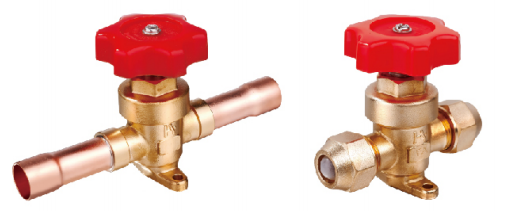
A hand valve is rarely the most expensive component in an OEM fluid system, but it is often the one that decides whether the system holds pressure, stays clean, and remains serviceable over time. Choosing the right valve means looking past basic thread size and pressure ratings—material compatibility, seal design, mounting space, and long-term cycle life all shape how reliably the system performs in the field. This post walks through practical selection tips that help you avoid costly rework and build fluid control that lasts. Along the way, we also show why HONGSEN has become a trusted source for OEM hand valves engineered around real operating conditions.
Start With the Flow Path, Not the Port Size
Most people reach for a valve or fitting based on the connection size first. That habit quietly ignores what actually determines performance. A port that matches your pipe may hide a convoluted internal passage, a sharp turn right behind the seat, or a narrow throat that chokes flow before it ever gets moving. If you start with the flow path, you look at each transition the fluid has to survive, and the port size becomes just one small detail at the end.
Flow path thinking changes the questions you ask. Instead of asking whether it fits a 1/2-inch line, you ask how the stream enters, where it accelerates, and what kind of turbulence the geometry creates. Two components can share the same port diameter and behave completely differently because one has a smooth swept passage and the other forces the fluid around an abrupt corner. That difference rarely shows up in a catalog photo.
A practical way to do this is to trace the route from inlet to outlet and mark every turn, expansion, or restriction. Estimate the velocities and pressure losses along that route before worrying about the threads or flange size. Once the path makes sense, the port size is usually just a confirmation rather than a starting point. It feels backwards at first, but it avoids selecting a component that fits the pipe and disappoints in the system.
Chemical Compatibility Charts Only Get You So Far
A compatibility chart gives you a clean yes or no for a single chemical and a single material, but real fluid streams rarely behave that politely. Add 10% of another solvent, run at 60°C instead of ambient, or introduce thermal cycling and the chart's A rating can quietly become a leak path. Polypropylene can hold up fine in a lab beaker yet craze after a few weeks under continuous stress from a fitting or clamp—something no static table will flag.
The other gap is time. Most charts are built from short-term immersion data, often under unstressed conditions. They don't capture what happens after 5,000 hours, after repeated drying and wetting, or when the chemical sits in a dead leg and degrades into something more aggressive. If you are choosing a seal or pump housing, the more useful question is not whether the material is compatible but how compatible it is at your upper temperature limit, your concentration range, and your expected service life.
Treat the chart as a screening tool, not a design guarantee. For critical joints and wetted components, run a simple immersion test with your actual process fluid and geometry. Even a two-week coupon test under process temperature and stress will tell you more than a color-coded table. If that is not possible, look for chemical resistance data from material suppliers that includes temperature and concentration, and talk to someone who has seen the failure modes charts do not show.
Catalog Pressure Ratings Are Not Your Operating Pressure
A pressure rating printed in a catalog usually comes from a controlled test setup. The medium is often clean water or air, the temperature sits at a steady reference point, and the component is assembled under ideal shop conditions. Onsite, those assumptions rarely line up. Steam, glycol mixes, dirty process fluids, and even ambient heat from nearby equipment can push the material into a different performance range long before the nominal figure is reached.
Temperature is the quiet variable that erodes catalog numbers. A fitting rated at 300 psi at 73°F may lose a large portion of that capacity once the system runs at 180°F or higher, because the metal or polymer softens and fatigue behavior changes. Pressure spikes add another layer: water hammer, fast-acting valves, or pump starts can generate brief surges that exceed the average operating pressure by a wide margin. The catalog value does not account for those repeated shocks.
A more useful approach is to read catalog pressure ratings as a starting point for comparison, not as a boundary you can safely run against in the field. Derating for actual fluid, temperature swings, corrosion allowance, and cyclic loading should happen before final selection. If the number on the sheet is treated as the operating limit, the weak link usually shows up after startup in the form of a leak, a cracked body, or a failed seal.
Seal Geometry Matters More Than Material Alone
Many engineers leap straight to elastomer selection when a seal starts leaking, but the cross-sectional profile often deserves more blame than the compound. A rounded O-ring squeezed into a sharp-cornered groove can roll, pinch, or extrude under pressure, regardless of how exotic the rubber is. Changing the lip angle, adding a back-bevel, or shifting the contact point by half a millimeter can transform sealing performance without touching the material datasheet.
Real-world failures frequently trace back to geometry that looks fine on a CAD screen but behaves badly under thermal expansion or side loading. A slightly wider dynamic lip might lower contact stress enough to cause weepage at low pressure, while a narrower heel can create a stress riser that tears after a few thousand cycles. Iterating on the shape first is cheaper, faster, and usually more effective than jumping to a premium fluoroelastomer or perfluoroelastomer.
The strongest approach treats geometry and material as a single system, but the geometry sets the baseline. If the seal cannot maintain a stable footprint and predictable deformation path, no material upgrade will save it. Before spending on special compounds, mock up a few profile variants, measure the actual contact width and squeeze, and watch how the seal behaves at the extremes of your tolerance stack.
Test the Exact Fluid Blend Before Finalizing the Valve
Material compatibility charts give you a place to start, but they rarely reflect what actually flows through the line. A field blend can contain trace additives, recycled solvents, or reaction by-products that shift how an elastomer swells, hardens, or loses its seal. Before locking in the valve trim and seal materials, run soak and cycle tests with the same fluid batch that production will use, not a generic reference mixture.
Match the test conditions to the real operating pattern, including temperature spikes, flow interruptions, and periods when the valve stays wet but idle. Some blends look harmless at room temperature and then turn aggressive after two days of continuous contact at elevated temperature. Record hardness, weight, dimensional change, and seat leakage after each interval, and repeat the test across a few production batches if the blend varies.
When the results show borderline compatibility, build in a material margin or select a more conservative seal package. The goal is not just to confirm the valve can survive a clean laboratory fluid, but to know how the exact process blend will behave over months of exposure. That final compatibility check is much cheaper than replacing a run of valves or taking a line down after installation.
Leave Room for Maintenance Without System Shutdown
Downtime rarely announces itself politely. It usually barges in during peak traffic or right when a critical update is waiting to ship. Systems that can be serviced while still running treat maintenance as a normal background task, not a scheduled emergency. That mindset changes how components are coupled, how state is managed, and how upgrades are rolled out.
One practical way to leave room for maintenance is to make individual pieces replaceable without asking the whole application to hold its breath. Load balancers, health checks, and rolling deployments let a tired instance step aside while others keep serving. The same applies to data layers: small, reversible migrations and backward-compatible reads keep old and new versions working side by side long enough to finish the change.
The real test is whether a person can perform routine upkeep during ordinary working hours without writing an incident report first. If the answer is no, the system is not resilient in any meaningful sense. Building in that room from the start costs less than retrofitting it later, and it turns maintenance from a risky event into just another item on the checklist.
FAQ
Start with the actual fluid. Note its chemical makeup, viscosity, temperature range, and whether it carries abrasives. A valve that handles clean water without issue may fail quickly on a solvent or slurry, so the fluid profile narrows material and seal choices before you even look at port size.
Match the valve's job to its internal design. Ball valves give quick quarter-turn shutoff and low pressure drop, needle valves allow fine flow adjustment, and diaphragm or pinch valves can isolate aggressive fluids. If the operator needs throttling, a ball valve is usually the wrong tool.
The body can be metal and sturdy, but the seal is the part that deforms and creates the actual shutoff. Fluids attack elastomers differently, so a stainless body with a Buna seal may still leak or swell with certain oils or solvents. Check chemical compatibility of seals, not just the wetted metal.
Don't just match the normal operating point. Consider startup spikes, thermal expansion, and pressure surges. Select a valve rated above the maximum expected pressure and temperature, and remember that some plastic bodies lose strength quickly as temperature rises.
Undersized ports create turbulence, pressure loss, and noise, while oversized valves can make fine adjustments difficult. The port should suit the line size and required flow range, with the understanding that a hand valve tuned for low-flow control may not be the best choice for full-flow isolation.
Sometimes, but OEM builds often benefit from custom stem lengths, panel-mount threads, or specific handle orientations. These small modifications reduce assembly time and operator error. If a standard design forces awkward routing or mounting brackets, a custom or semi-custom valve can pay for itself.
Look for replaceable seats and seals, a bonnet that can be serviced without removing the whole valve from the line, and smooth handle operation without excessive play. Also make sure the valve orientation does not trap fluid or debris when closed, which can shorten seal life.
Conclusion
A hand valve that looks right on a datasheet can still create a restriction where the fluid actually moves. Starting with the flow path rather than the port size means checking the internal bore, seat opening, and direction changes before assuming a half-inch connection will deliver half-inch performance. Chemical compatibility charts are useful as a first filter, but they rarely reflect what happens when a fluid blend includes trace additives, cleaners, or temperature swings. Those small differences can soften a seal or swell an elastomer even when the base chemical appears safe. Similarly, a catalog pressure rating is a static number. In a running system, pressure spikes, water hammer, and pump pulsation can push the valve well beyond that figure, so the operating envelope should be judged by the peaks the system actually sees, not by a lab rating printed on the box.
Seal reliability is often dictated by geometry as much as by material. A squeeze seal, a lip seal, and a diaphragm each behave differently under repeated cycling, and even the best material will fail early if the cross-section is too thin or the compression set is too high for the duty. Before finalizing any valve, it makes sense to test the exact fluid blend at operating temperature and pressure, cycling the valve the same way it would run in the field. This catches issues that generic compatibility data will miss. Finally, installation should leave enough clearance to remove the bonnet or replace the seal without draining the line or shutting down the entire process. A little extra space around the valve often pays for itself the first time maintenance happens under a production deadline.
Contact Us
Contact Person: KOPASS HO
Email: [email protected]
Tel/WhatsApp: 8613606566112
Website: https://www.hongsenref.com/