

OEM EPDM Granule Production Line Essentials for Consistent Quality and Output
2026-11-20
EPDM granule buyers rarely judge a supplier by a single sample. They judge by whether the same color, particle size distribution, and cure consistency show up in every shipment. That repeatability is exactly where many OEM production lines fall short. At SFC, granule line design starts with the variables that drift first—temperature control, feeding accuracy, and screening efficiency. This post breaks down the essentials that keep quality and output stable from batch to batch.
EPDM compound viscosity is rarely tracked until granule hardness shifts
In most rubber processing shops, EPDM compound viscosity gets checked at the mixer and then forgotten. A batch can drift from 70 Mooney units to 85 over a few weeks, and nobody notices because the downstream extrusion and molding lines still run. The real signal shows up later, when granule hardness begins to climb on the finished weatherstrip or hose. By that point, the mixing history is a stack of logged but unread values, and the cause of the shift is buried in filler dispersion or polymer ratio changes between lots.
The lag between viscosity movement and granule hardness response is what makes this so tricky. Hardness is a lagging indicator, buffered by cure state, carbon black structure, and even post-cure aging. A compound can sit at the upper end of its viscosity spec for a week before a Shore A reading bumps by two points. Operators then chase the hardness spike with sulfur or accelerator tweaks, while the actual viscosity creep continues underneath. The mixer records look stable because the target range is broad enough to absorb gradual drift.
A more practical approach is to stop treating viscosity as a pass/fail gate and start watching the trend of the final batch readings against a narrow internal band. When the moving average of the last five batches shifts by more than three or four Mooney units, that is the moment to check filler feed accuracy, rotor condition, or polymer melt index – not after the granules turn stiff. Granule hardness still gets measured, but it stops being the first alarm. The viscosity trend becomes the early warning, and hardness becomes a confirmation rather than a surprise.
Why barrel zone temperatures change your bulk density before you notice
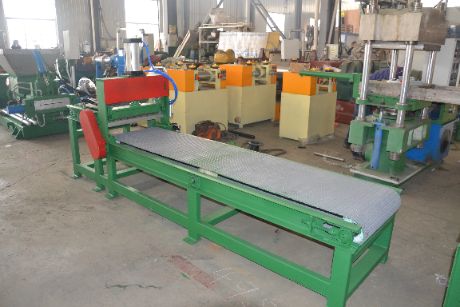
A small shift in a barrel zone temperature rarely shows up immediately on the control screen, but it works through the material long before melt pressure or motor load looks unusual. In the feed throat and first zones, even a few degrees can change how pellets stick, slip, or compact. If the barrel wall gets warmer than intended, resin softens too early and the conveying angle changes; the screw still turns, yet the spaces between pellets are no longer packing the same way. That altered packing is exactly what moves bulk density first.
Further along the barrel, zone temperatures affect local melt viscosity and backflow across the flights. A cooler zone may let the melt thicken, holding more pressure upstream, while a hotter zone can reduce drag and change how much material fills the screw channel. These shifts feed back into the solids bed and the apparent density of material in the feed section. In many cases the hopper level, feed rate, and screw speed stay constant, so the only early signal is a density change that shows up later in part weight or dimensional checks.
The reason it escapes notice is that most operators watch for a pressure spike or a visible melt quality issue. Bulk density drifts earlier because it reflects the cumulative effect of temperature on particle arrangement and pressure transmission, not a sudden process fault. By the time the barrel temperature deviation becomes obvious on a gauge, the material has already been packing differently for some time.
Cooling water temperature does more than alter surface finish
Cooling water temperature does more than alter surface finish. In most grinding and turning operations, operators treat coolant temperature as a variable that only affects cosmetic outcomes like burn marks or chatter patterns. But the thermal state of the water also shifts how the wheel or insert interacts with the workpiece at the microscopic level. When the coolant runs too warm, the abrasive grains or cutting edges retain more heat, which weakens their bond or accelerates flank wear long before any visual defect appears.
A lower, stable water temperature keeps the thermal expansion of the machine structure and the part itself more predictable. Shops that chase tight tolerances often discover that a rise of only eight or ten degrees in the cooling circuit can push a bore diameter out of spec, even when the finish looks acceptable. The effect is not linear, and it varies with material type, which is why experienced machinists watch both the chiller setpoint and the return line temperature rather than assuming a fixed value will work across jobs.
There is also a less obvious benefit to controlling cooling water temperature: it changes the way chips break and evacuate. In deep-hole drilling or creep-feed grinding, a cooler fluid increases viscosity slightly and improves chip flushing in narrow gaps. This reduces the chance of recutting swarf, which in turn lowers localized heat spikes. The result is a process that stays in control longer, with fewer unexplained shifts in tool life or dimensional drift from morning to afternoon.
Die wear and cutter gap drift are the real limits on long runs
On a short run, a dull die or a slightly loose cutter gap rarely shows up in the final part. Push the same tooling past a few thousand cycles, though, and those small changes start compounding. Die wear tends to move inward from the highest-stress edges, creating burrs, tearing, or dimensional creep long before the tool actually fails. Cutter gap drift is quieter: heat cycles, fastener relaxation, and fine debris in the slides shift the clearance a few thousandths at a time. The result is a cut that looks acceptable on the surface but leaves ragged edges or uneven trim once operators check the stackup.
What makes these two limits more decisive than press speed or material lot changes is that they are cumulative and uneven. A worn die does not degrade at the same rate on every contour; corners and narrow lands erode first, so the part may hold one critical dimension while another drifts out of tolerance. Cutter gap behaves similarly. One side of the tool can open up while the opposite side binds, producing polished slug marks mixed with torn sections. If the line is running long enough to make tooling temperature stable, the gap measured cold in the morning may no longer match the gap measured after two hours of production.
The practical fix is to track wear and gap movement as production variables rather than reacting to bad parts. Checking a few known wear points with a loupe or measuring the first and last part of a shift gives earlier warning than waiting for a visual burr. Adjusting the cutter gap in small steps, and recording those adjustments against the die’s cycle count, makes the drift pattern predictable. On genuinely long runs, that record often shows the real constraint: the tool can still cut, but the clearance no longer stays where the part needs it.
In-line sampling points that reveal quality drift before packaging
Placing sampling ports directly on the transfer line, rather than waiting for finished packs, changes how early a shift shows up. A small drop in blend uniformity or a gradual rise in moisture appears on the line monitor before it becomes a sealed defect. Operators can catch a 2% drift in fill weight or a change in particle size distribution while material is still moving toward the filler, so adjustments happen with the line running instead of after a quarantine hold.
The value is less about the number of samples and more about where they sit. Points positioned after blending, after drying, and immediately before the filling head give a time-ordered view of the process. When the same parameter drifts across three consecutive points, it usually means something upstream has shifted, such as raw material variation, screen wear, or a temperature controller losing sensitivity. That pattern is easier to act on than a single out-of-spec result at the end of the line.
For powders and granules, a sampler mounted on a dense-phase conveyor often catches segregation that only appears during transfer. For liquids, a small side-stream loop with a turbidity or density meter can reveal dilution or mixing problems long before filling. In either case, the goal is the same: make drift visible while there is still room to correct it, not after packaging has locked the problem into every unit.
Raising throughput without sacrificing batch-to-batch consistency
Scaling production while keeping every batch identical is less about chasing speed alone and more about redesigning the process around stable transfer points. When operators push line rate upward, small inconsistencies in mixing time, temperature drift, or residual material handling quickly magnify. The more practical route is to identify which steps tolerate acceleration and which ones act as anchors for consistency. Often the bottleneck is not the main reaction or blending stage but a secondary handoff, like discharging into a holding vessel or switching between container sizes. By stabilizing those transitions with better sensing and automated cutoffs, throughput rises without the usual drift in color, viscosity, or particle distribution.
A second lever involves decoupling batch identity from cycle time. Instead of forcing every unit through the same nominal duration, manufacturers can hold tighter control over the parameters that actually drive final properties, such as endpoint viscosity, moisture content, or particle size at discharge. Live measurements allow a batch to finish when it truly meets the target rather than when a timer expires. This approach removes the temptation to shorten agitation or cure times to hit a quota, which is where batch-to-batch variation usually creeps in.
Finally, consistency across shifts benefits from treating cleaning and changeover as part of the throughput equation. Residue left in shared lines, filters, or feed screws can silently shift the next batch's composition even when the recipe is identical. Investing in rapid, verifiable clean-in-place routines and documenting residue levels at each changeover keeps the line moving while preventing cross-contamination. Teams that track both output per hour and variance between consecutive batches tend to find the real ceiling: a pace where higher production no longer costs them repeatability.
FAQ
Polymer Mooney viscosity and moisture content usually have the greatest effect downstream. A batch that shears differently will not densify the same way during granulation. I also watch filler dispersion closely because poorly wetted carbon black or calcium carbonate tends to create weak granules that crumble after installation.
Color drift rarely comes from the formula alone. It is usually tied to pigment dispersion quality, masterbatch dosing accuracy, heat history in the extruder, and the ratio of regrind being added back. Even small changes in residence time can shift the shade enough for customers to notice.
The most practical approach is to monitor blade clearance and screen condition on a fixed schedule instead of waiting for off-spec material. As blades dull, the cut becomes more tearing than shearing, which widens the distribution. Adjusting feed rate and air flow through the classifier can also compensate for minor wear between service intervals.
Barrel zone stability and die head temperature are critical because they control melt viscosity and surface quality. After that, the cooling water temperature sets how well the strands hold their shape before cutting. In the curing step, an uneven temperature profile across the belt or oven leads to inconsistent crosslink density, which directly affects granule resilience.
Start by removing speed surges from the line. A steady feed rate and consistent downstream take-off speed do more for output than running the extruder at maximum rpm. Then use real-time checks on granule size and density to catch drift early, because rejects generated at high speed are much harder to quarantine.
Screen changes, cutting gap adjustments, and feeder calibration sit at the top of the list. Screens that are partially clogged change back pressure and particle size, while a small error in feeder calibration can shift the whole formulation over a long run. Gearbox oil condition and die cleaning also matter more than they are often given credit for.
The biggest ones are usually black specks from a worn die or degraded material in dead zones, wood splinters from pallets, and dust that settles in open hoppers. Cross-contamination from a previous color run is another common issue that only appears when a light-colored batch gets streaked.
Run it on the same line and the same shift length intended for production, not just a lab batch. Measure granule size distribution, bulk density, color difference under daylight and indoor lighting, and basic mechanical properties after curing. A formula that works for twenty minutes often behaves differently after six hours of steady heat and mechanical shear.
Conclusion
Most granule quality problems on OEM EPDM lines are traced back to variables that get ignored until they have already changed the product. Compound viscosity is a typical example: nobody logs it shift to shift, but once granule hardness drifts, the evidence points back to a change in mixing or raw material lot. Barrel zone temperature settings matter just as much even when the extruder appears steady, because they shift melt behavior and bulk density well before the operator notices anything at the die. Cooling water temperature is often treated as a finish issue, but it also affects how granules cut, dry, and settle in the bag. Over longer runs, die wear and cutter gap drift quietly shrink the operating window, so hardness, shape, and size begin to wander even though the settings have not moved.
Catching these shifts early usually comes down to where and how often you sample. In-line checks at the die face, after cooling, and before packaging tend to show a pattern earlier than final bag samples, and they are far cheaper than reclaiming off-spec material. Throughput increases do not have to mean wider variation if the line is set up to respond to those signals instead of relying on a fixed recipe. Small adjustments to feed rate, screw speed, or cutter timing can keep batch-to-batch consistency tight while output climbs, but only when the operators can see the drift as it happens rather than after a shift report. That combination of early sampling and controlled adjustments is what separates lines that hold a narrow spec from lines that constantly chase hardness, density, and granule shape.
Contact Us
Contact Person: Chen Zhengwei
Email: [email protected]
Tel/WhatsApp: +86-13963975727
Website: https://www.sfcrubbermachine.com