

OEM CNC Lathe Excellence: Precision Machining for Complex Parts
2026-05-14
In the world of precision manufacturing, OEM CNC lathe capabilities often make the difference between a good part and a perfect one. When complex geometries and tight tolerances collide, WINNRUI CNC lathes step up—delivering repeatable accuracy that turns challenging designs into flawless components. Discover how our advanced turning centers redefine what's possible in complex part machining.
Mastering Complex Geometries with Surgical Precision
When dealing with intricate structures that defy standard manufacturing approaches, achieving accuracy demands more than just advanced machinery—it requires a deep understanding of material behavior, tool interaction, and process control. Every contour, undercut, and internal channel becomes a deliberate exercise in overcoming physical constraints, where the line between impossible and merely difficult blurs. The real artistry lies not in following a blueprint, but in anticipating how vibration, heat, and wear will conspire to introduce errors, and neutralizing them before they manifest.
Precision in these contexts is not a single setting but a symphony of micro-adjustments. It begins with modeling the entire cutting envelope in real time, then dynamically compensating for tool deflection that varies with each change in engagement angle. Multi-axis synchronization must account for infinitesimal lags in servo response, turning what should be a fluid sweep into a stuttering approximation—unless the control algorithms are tuned with data harvested from previous operations. This iterative feedback loop turns each part into a teacher, refining the process edge-case by edge-case.
Ultimately, what separates acceptable results from flawless ones is the ability to read the subtle signatures left by the cutting process. A barely perceptible change in chip color can signal a shift in thermal equilibrium; an unexpected spike in spindle load might reveal an undetected material inclusion. Mastering these geometries means treating every sensor trace as a narrative, piecing together a real-time story of what is happening at the tool tip, and then intervening with a surgeon’s instinct—swift, precise, and informed by experience that no simulation can fully replicate.
Where OEM Expertise Meets Micron-Level Accuracy
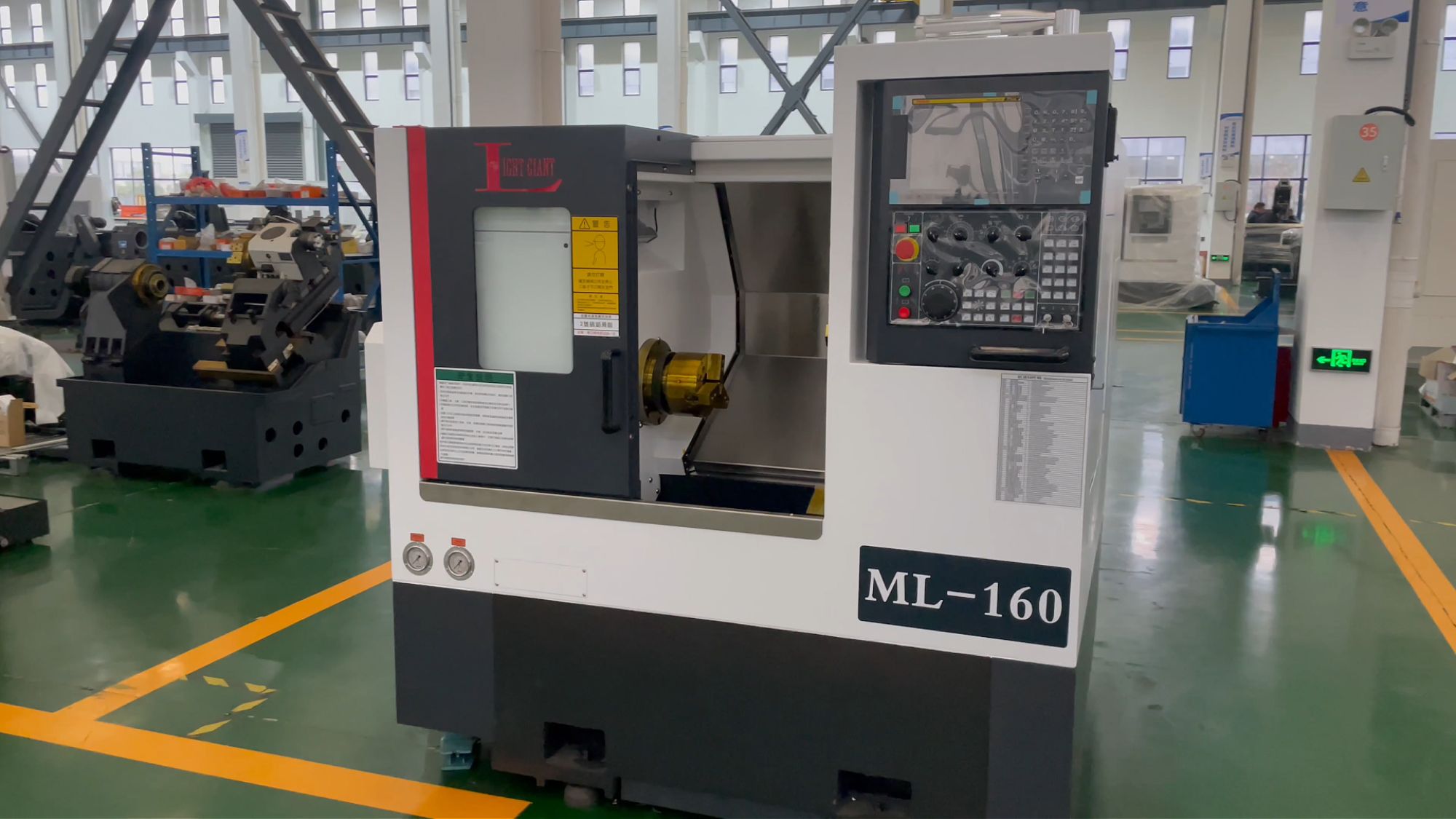
Combining decades of OEM engineering experience with the most demanding precision standards, our manufacturing processes are calibrated to deliver consistency down to the micron. Every component is born from a deep understanding of how design intent translates into real-world functionality, ensuring that even the most complex assemblies perform seamlessly.
This isn’t about simply meeting specifications—it’s about anticipating challenges before they arise. Our teams work alongside your engineers from prototype to production, refining tolerances and material choices to eliminate variability. The result is a partnership where technical ambition is matched by the reliability of parts that fit perfectly, every time.
In industries where a fraction of a millimeter can mean the difference between success and failure, our approach brings peace of mind. By embedding quality checks at every stage and leveraging proprietary measurement systems, we ensure that your supply chain delivers not just components, but certainty.
Tailored Lathe Solutions for Demanding Blueprints
When blueprints push the limits of geometry and tolerance, off-the-shelf lathes fall short. Our approach starts with the print—every curve, thread, and surface finish is dissected to engineer a turning solution that fits like a key in a lock. We don't bend your part to our machines; we adapt our machines, fixturing, and tooling strategies until the impossible becomes routine.
This isn't about bigger motors or heavier castings alone. It's about intelligent customization: spindle nose configurations that cradle fragile workpieces, tool turrets mapped to your longest tool paths, and coolant delivery drilled specifically for blind pockets. We've integrated live tooling on manual machines and built steady rests with micron-level repeatability—all because your drawing demanded it.
The result is a lathe that doesn't just cut metal; it anticipates the next cut. Operators stop fighting the machine and start hitting dimensions with confidence. When the blueprint is the only roadmap, standard equipment is just the starting point.
Advanced Material Versatility Without Compromise
Modern engineering demands materials that can do more than one thing well—without sacrificing core performance. The idea of advanced material versatility means moving beyond single-purpose solutions to create composites and alloys that adapt across industries. Consider an aerospace-grade polymer that withstands extreme temperatures yet remains lightweight enough for consumer electronics, or a metal matrix composite that offers both high conductivity and corrosion resistance in marine environments. This level of adaptability is not achieved by chance; it requires precise control over microstructure and bonding interfaces at the molecular level.
True versatility also means that designers and manufacturers don't have to choose between competing properties. Historically, increasing flexibility in a material often led to reduced strength, or improving thermal stability came at the cost of weight. Today's advanced materials break those trade-offs. For instance, ceramic-based hybrids can now deliver the hardness of traditional ceramics with the fracture toughness previously only found in metals. This opens up possibilities in medical implants, where the same material might need to be bioinert, load-bearing, and machinable into complex shapes—without any weak points.
Perhaps the most underappreciated aspect of this versatility is its impact on supply chains and production efficiency. When a single material can serve multiple functions across different product lines, inventory complexity drops and manufacturing processes become more streamlined. A specialty thermoplastic that works for both structural housings and insulating components eliminates the need for separate material qualification and stock management. In a world where speed to market and sustainability are critical, the ability to do more with less—without compromising—represents a genuine competitive advantage.
Efficiency Engineered into Every Rotation
Every spin hums with purpose. We’ve stripped away the unnecessary weight and friction that slow others down, letting momentum carry the load. The result is a fluid, almost frictionless cycle where energy isn’t wasted—it’s reinvested into the next turn.
Precision geometry does the heavy lifting. Instead of brute force, our design leans on carefully tuned arcs and balanced hubs that stabilize motion without drag. You’ll notice it in the quieter operation and the way it holds steady even under shifting loads. There’s no wasted wobble, no stray vibration—just clean, continuous movement that feels intuitive.
Over time, the difference adds up. Reduced wear on components, lower resistance, and a rhythm that rarely needs correction. This isn’t about flashy add-ons; it’s about baking efficiency into the very shape of what rotates, so every revolution pulls its weight effortlessly.
Rigorous Quality Gates from First Cut to Final Inspection
Quality doesn’t happen by accident—it’s built into every step of our process, starting the moment raw material meets the blade. That first cut sets the tone, and we don’t wait until the end to see if things went right. Instead, we’ve established a series of checkpoints that track dimensions, surface finish, and structural integrity as the piece moves from one station to the next. Each gate must be passed before anything moves forward, catching deviations early when they’re easiest to fix.
These aren’t just paperwork formalities. Our teams use calibrated instruments and practical experience to verify critical tolerances in real time. Mid-process inspections dig into weld soundness, coating adhesion, or assembly fit—whatever matters most for that particular part. If something drifts, we stop and correct it on the spot, rather than hoping it’ll be fine later. This keeps waste low and confidence high, because problems don’t cascade into costly rework downstream.
By the time a product reaches final inspection, it’s already proven itself multiple times over. That last check becomes a confirmation, not a discovery session. We review documentation from earlier gates, run any remaining functional tests, and sign off only when everything aligns with the original spec. It’s thorough without being theatrical—just a disciplined way of making sure what leaves our floor is exactly what the customer expects.
FAQ
We regularly machine parts like multi-diameter shafts, threaded couplings, valve bodies, hydraulic piston components, and surgical tool handles. The real strength is in features that demand tight concentricity, undercuts, grooves, and non-standard thread profiles. If a print calls for turning operations that go beyond simple straight cuts, our setups can handle it.
It comes down to toolpath strategy and process control. We use select cutting tool geometries and apply dynamic feed rate adjustments during operations. This keeps cutting forces consistent, reduces chatter, and delivers surface finishes that often eliminate secondary polishing. Every batch undergoes in-process probing to validate dimensions before the part ever leaves the machine.
We tool up for a broad spectrum—everything from 316L stainless and titanium alloys to brass, aluminum, and engineered plastics like PEEK. Each material gets a dedicated setup: different speeds, coolant mixes, and chip breakers. For abrasive materials, we adjust wear offsets proactively, so the 50th part matches the first one.
OEM-centric shops think beyond the print. We factor in downstream assembly, plating thickness, and stress relief requirements from the start. That means parts arrive ready for integration, not just within tolerance. You also get a single point of accountability for process validation, material traceability, and any needed EC revisions—no finger-pointing between suppliers.
We combine thermal stabilization of the machine structure with glass-scale feedback on the linear axes. For critical dimensions, we run a first article inspection on a CMM that registers hundreds of data points per feature. Throughout a run, a Renishaw probe checks key diameters and updates tool offsets automatically, keeping the process centered even as inserts wear.
Beyond standard ISO checks, we map out every feature's criticality in a bubble drawing. High-consequence features get 100% inspection, while low-impact zones shift to statistical sampling. We track surface finish with profilometer readings, verify thread fits with go/no-go gauges, and log all data per serial number. Full material certs and PPAP packages are standard offer, not an upcharge.
Absolutely. For prototypes, we use a separate cell with quick-change tooling so we can iterate fast without tying up production assets. For full runs, bar feeders and automated part catchers keep spindles turning unattended across shifts. The transition between low and high volume is seamless because we write programs that work for both—no need to re-prove the process at scale.
Conclusion
When every micron counts and blueprints demand contours that push conventional limits, OEM CNC lathe work steps into a space where engineering instinct meets relentless precision. The process of mastering complex geometries isn't a matter of standard toolpaths—it's a deliberate choreography of multi-axis synchronization, adaptive feed rates, and tool selections refined through years of tackling parts others deem too intricate. Here, surgical precision means holding roundness within mirror-finish tolerances while interpolating contours that arc, taper, and thread in ways that leave no room for error. This is where tailored lathe solutions take shape: not from a catalog, but from deep collaboration that translates demanding specifications into fixturing strategies and custom cutting cycles. The result feels less like machining and more like coaxing metal into its intended form, with each pass revealing surfaces that already mirror the final spec.
That kind of precision only holds weight when it persists across wildly different materials—from gummy alloys that tear under the wrong insert to hardened steels that laugh at timid cuts—and through shifts that never stop. Advanced material versatility isn't about having a bigger toolbox; it's about knowing exactly how chip formation changes when you move from Inconel to acetal, and adjusting damping, coolant pressure, and clearance angles on the fly without compromise. Efficiency gets engineered into every rotation not by pushing spindle speeds to their limit, but by eliminating the microscopic dwells, the unnecessary repositioning, and the second-guessing that accumulate into lost hours. And none of it matters without the rigorous quality gates that run from the first rough cut to the final tactile inspection: in-process probing that corrects offsets before deviations compound, surface finish checks under specific lighting, and a quarantine mentality that treats any anomaly as a signal to pause and verify. In these shops, excellence isn't a badge—it's the quiet rhythm of parts coming off the lathe exactly as the print demanded, every single time.
Contact Us
Contact Person: Tim
Email: [email protected]
Tel/WhatsApp: +86 15522553731
Website: https://www.winnrui-cnc.com/