

Leveling Jack Maker Selection Tips for Precision Lifting Jobs
2026-11-19
Choosing the right leveling jack can make or break a precision lifting job, yet many teams still rely on outdated rules of thumb. Whether you are aligning heavy machinery, installing sensitive equipment, or leveling an industrial platform, small deviations in jack selection often lead to costly rework and safety risks. In this guide, we break down the practical factors that matter most, from load distribution and lift height to base stability and operator control. Drawing on real job site insights from Homall Industry Limited, you will learn how to match jack features to exact lifting requirements, avoid common oversizing mistakes, and achieve repeatable, accurate results without guesswork.
Start With the Lift Envelope, Not a Maker’s Brochure
Nobody measures a shaft by opening a glossy PDF. The lift envelope — pit depth, headroom, door clearances, wall offsets — sets the real boundaries long before a manufacturer's name matters. Start there and the project stops chasing specs that were never possible on site.
A brochure will show the cleanest version of a unit: standard pit, generous headroom, a shaft that behaves. Older buildings rarely cooperate. There may be a beam cutting across the top, a pit that varies by forty millimetres, or doors that do not line up. Those quirks should drive the choice of lift, not the other way around.
Once the envelope is recorded from the building itself, the selection process becomes a process of elimination rather than wishful thinking. You give suppliers a measured box and ask what fits inside it. That flips the usual conversation, and it usually saves weeks of redesign later.
Ask How Much the Ram Settles Under an Off-Center Load
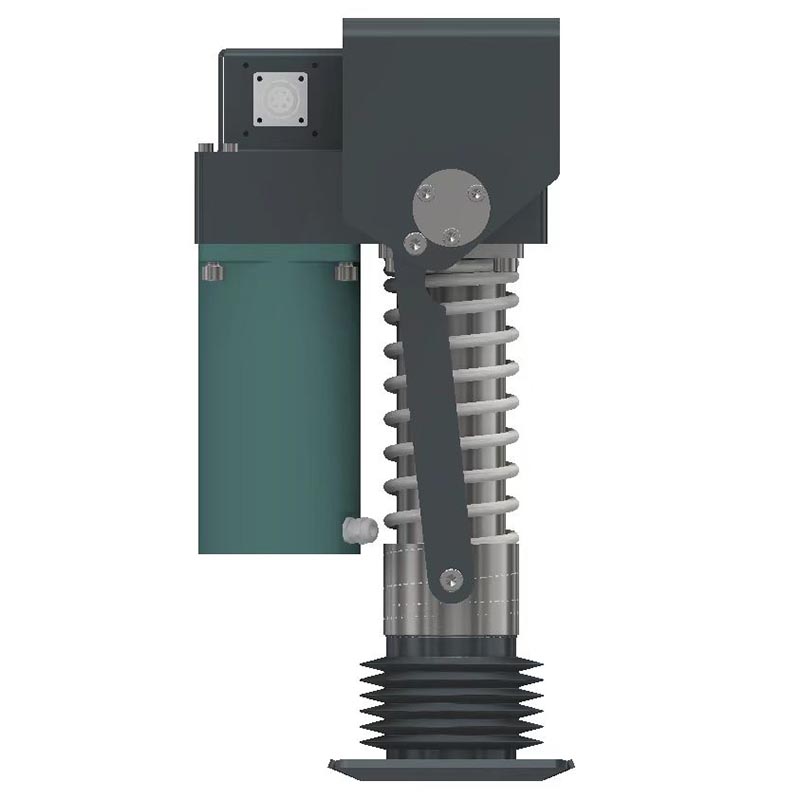
Before trusting a ram in an uneven setup, measure how far the piston actually drops once an off-center load is applied. A perfectly centered load can hide slop in the rod bearings or internal leakage, but shifting the weight toward one side puts a bending moment on the cylinder and often reveals settlement that a straight-line test misses.
Watch the ram over a short timed window instead of relying on a single instant reading. With the load deliberately offset, mark the exposed rod or use a dial indicator, then check again after five or ten minutes. Minor creep may be normal as the seals seat and the mounting points settle, but steady downward movement usually points to bypassing fluid, uneven pad contact, or a frame flexing more than expected.
Record the settlement in fractions of an inch or millimeters and compare that figure against the ram’s rated internal leakage and the job’s tolerance for drift. If the number is close to the limit, a different pad arrangement or a larger bore ram may keep the load from wandering while you work.
Look for Machined Base Plates Instead of Polished Spec Sheets
A glossy one-pager can make any machine look competent, but the base plate tells a different story. Run your hand across the underside of a unit and you will quickly feel whether the mounting surface was actually machined flat or just painted over. Cast surfaces that skip a proper facing pass often hide twist, uneven pads, and soft foot problems that no amount of shimming will fix for long.
It is worth asking how the base plate was set up during machining, not just whether it was touched by a mill. A plate that gets clamped and faced in one setup tends to sit flat on a bench without rocking. If the holes were drilled after facing, alignment with the frame usually improves. These details rarely show up in brochure photography, but they show up the first time you try to level the machine on a concrete floor.
Polished spec sheets list tolerances that may or may not reflect the part you actually receive. A machined base plate, on the other hand, is something you can inspect with a straightedge and a feeler gauge before you sign for delivery. That kind of check takes a few minutes and tells you more about how the manufacturer builds equipment than a page full of rounded numbers ever will.
Check Whether Replacement Seals Are Stocked or Special-Ordered
Replacement seals often sit in two very different supply lanes. Some are pulled from standard warehouse inventory within a day, while others are cut or molded only after an order is confirmed. Before committing to a repair window, ask the supplier to confirm stock status by exact part number and material grade, not just the general equipment model.
Special-order seals tend to carry longer lead times, and that gap can quietly disrupt maintenance schedules if it is discovered too late. It helps to ask about minimum order quantities, typical production days, and whether the seal is already on a distributor shelf in another region. A quick availability check often reveals whether an alternate size or compound can ship sooner without sacrificing compatibility.
When stock is uncertain, request a written confirmation with a realistic ship date rather than a verbal estimate. This creates a clear record and gives you time to compare options, such as sourcing from a regional warehouse or switching to a more common profile that meets the same pressure and temperature requirements.
Test the Locking Pawl Engages at Partial Stroke, Not Just Full Extension
Most bench checks only confirm the pawl drops into place when the mechanism is fully extended, but that misses the most common real-world failure point. The locking pawl should be tested at partial stroke positions, particularly at 30%, 50%, and 70% of travel, where spring tension and geometry can prevent a clean engagement. A pawl that snaps in reliably at full extension may still skate over the teeth or hang on the edge when the slide is only halfway out.
Set up the test by moving the slide or rod to a mid-stroke point by hand, then slowly releasing pressure while watching for the pawl to seat without excessive bounce. Listen for a single crisp click rather than a series of chatters. If the pawl requires a nudge or only catches after the mechanism moves another few millimeters, the engagement angle is too shallow or the return spring is weak. The same check should be repeated on both upward and downward strokes where applicable, since gravity can mask a marginal condition.
Document the partial stroke positions that pass or fail instead of relying on a simple end-of-travel verification. A unit that fails at 50% stroke but passes at full extension is not acceptable, because operators in the field rarely complete a full stroke before expecting the lock to hold. This test adds only a few minutes to the inspection routine but catches wear and misalignment long before they become field failures.
Request a Field Demo Using Your Actual Lifting Geometry
Most lifting plans look clean on a screen until the first snag on site. A field demo changes that. We bring portable load cells, inclinometers, and rigging samples to your location and run the lift geometry you actually deal with—not a sanitized version of it. That means uneven sling angles, offset center of gravity, tight headroom, and anchor points that were never quite where the drawing said they would be.
During the session, your crew can watch how small adjustments to shackle placement or sling length shift the load distribution in real time. If a particular configuration starts to twist or overload one leg, we stop and work through the correction together. The goal is not to sell hardware on the spot; it is to give you a repeatable method for checking rigging before the lift goes live.
Getting a demo scheduled is straightforward. Send us a few photos of the lifting area, the load weight and dimensions, and any drawings or previous lift plans you have. We will match the demo kit to your conditions and show up ready to test the actual geometry. You keep the measurements and the marked-up sketches afterward, whether you change suppliers or not.
FAQ
Ask about repeatability data under off-center loads. A precision-focused maker will usually talk about deflection measurements, cylinder alignment tolerances, and how they keep the saddle from tilting as pressure builds, not just tonnage capacity.
The locking collar or mechanical stop needs to be more than a safety afterthought. Makers that machine the collar teeth and cylinder threads on the same fixture tend to hold position better under sustained load than those using generic welded rings.
When your lift points are uneven or the load has a tight tolerance for tilt. Standard bases can dig into uneven flooring or walk slightly under load. A wider machined base, ball swivel saddle, or lower-profile toe may matter more than extra capacity.
Request the seal material and temperature range, then ask how the maker tests for bypass at maximum working pressure. A shop that can share actual test logs or batch numbers is usually easier to trust than one that only mentions brand-name seals.
If your job repeats the same lift gap, yes. Custom closed height reduces shimming and keeps the saddle engaged lower on its guide, which helps avoid the slight wobble that comes from running a jack near the top of its stroke.
You can spot a lot by watching how they measure saddle flatness and whether the same person checks dimensions throughout the run. If their sample test includes an off-center load at rated pressure and they show you the dial readings, that is a stronger signal than any polished brochure.
Their standard drawings include tolerances for saddle flatness, ram runout, and weld inspection notes. They also ask about floor conditions, lift point spacing, and how level the load must remain, not just the weight and lift height.
Conclusion
A more reliable way to evaluate a leveling jack maker is to start with the actual lift envelope instead of the headline numbers in a brochure. Define the required travel, closed height, access clearances, and the off-center load path the jack will see before comparing models. Once that geometry is clear, ask how much the ram settles when force is applied away from the centerline. A jack that looks stable on a centered test may drift or tilt under real eccentric loading, and that movement is often what causes misalignment in precision work. It is also useful to inspect the base plate surfaces directly; a flat, machined base usually says more about repeatability than a heavily edited specification sheet.
Pay attention to the parts and behaviors that affect long-term uptime. Confirm whether replacement seals are kept in ordinary inventory or treated as special-order items, because a routine rebuild should not turn into a multi-week wait. Check the locking pawl at partial stroke, not only at full extension, since many lifting setups require holding a load before the ram reaches its maximum travel. Finally, request a field demonstration with your actual lifting geometry, including the same brackets, offsets, and floor conditions. That kind of test reveals side-load sensitivity, creep, and control feel far better than a staged bench demonstration.
Contact Us
Contact Person: Ryan
Email: [email protected]
Tel/WhatsApp: +85259582726
Website: https://www.robomast.com/