

Laser Safety Window Manufacturer Guide: Trusted Protection for Your Facility
2026-05-27
Safeguarding your facility from laser hazards demands more than just compliance—it requires precision-engineered barriers you can rely on. In this comprehensive guide, we delve into the essentials of selecting laser safety windows, highlighting why top-tier professionals turn to LASERPAIR for protection that never compromises. Get ready to uncover the key criteria that make a critical difference in your safety strategy.
Why Laser Safety Windows Are Non-Negotiable for Modern Facilities
Laser systems have become staple tools in industries ranging from medical surgery to heavy manufacturing, but their intense light carries risks that no modern facility can afford to ignore. A single stray reflection or a misaligned beam can cause permanent eye damage in a fraction of a second, or even start a fire if it hits flammable materials. Laser safety windows are engineered to filter out dangerous wavelengths while allowing visible light through, creating a permanent barrier that works even when the operator's guard is down. Relying solely on training or protective eyewear leaves too much room for human error—windows baked into the facility's design close that gap without adding friction to daily workflows.
Regulatory bodies like the FDA and OSHA, along with international standards such as IEC 60825, aren't just bureaucratic checkboxes; they exist because incidents have already taught the industry hard lessons. A facility without proper laser guarding can face shutdowns, legal liability, and skyrocketing insurance premiums after an accident. Beyond compliance, there's the morale factor: skilled technicians and researchers simply don't want to work in spaces where their well-being feels like an afterthought. Integrating laser safety windows from the start signals a culture of responsibility that attracts top talent and keeps projects moving without interruption.
Precision and productivity don't have to be at odds with safety when the right materials are chosen. Modern acrylic and glass laminates can block specific UV, visible, or infrared laser lines with optical densities high enough for multi-kilowatt setups, yet they remain crystal clear for inspection and alignment tasks. They can even be custom-sized to fit existing enclosures or architectural quirks, so retrofitting older labs doesn't require a complete rebuild. In an era where laser applications are pushing into more sensitive and high-throughput environments, the question isn't whether you can get by without safety windows—it's why you'd ever try.
Key Materials That Define True Laser-Resistant Barriers
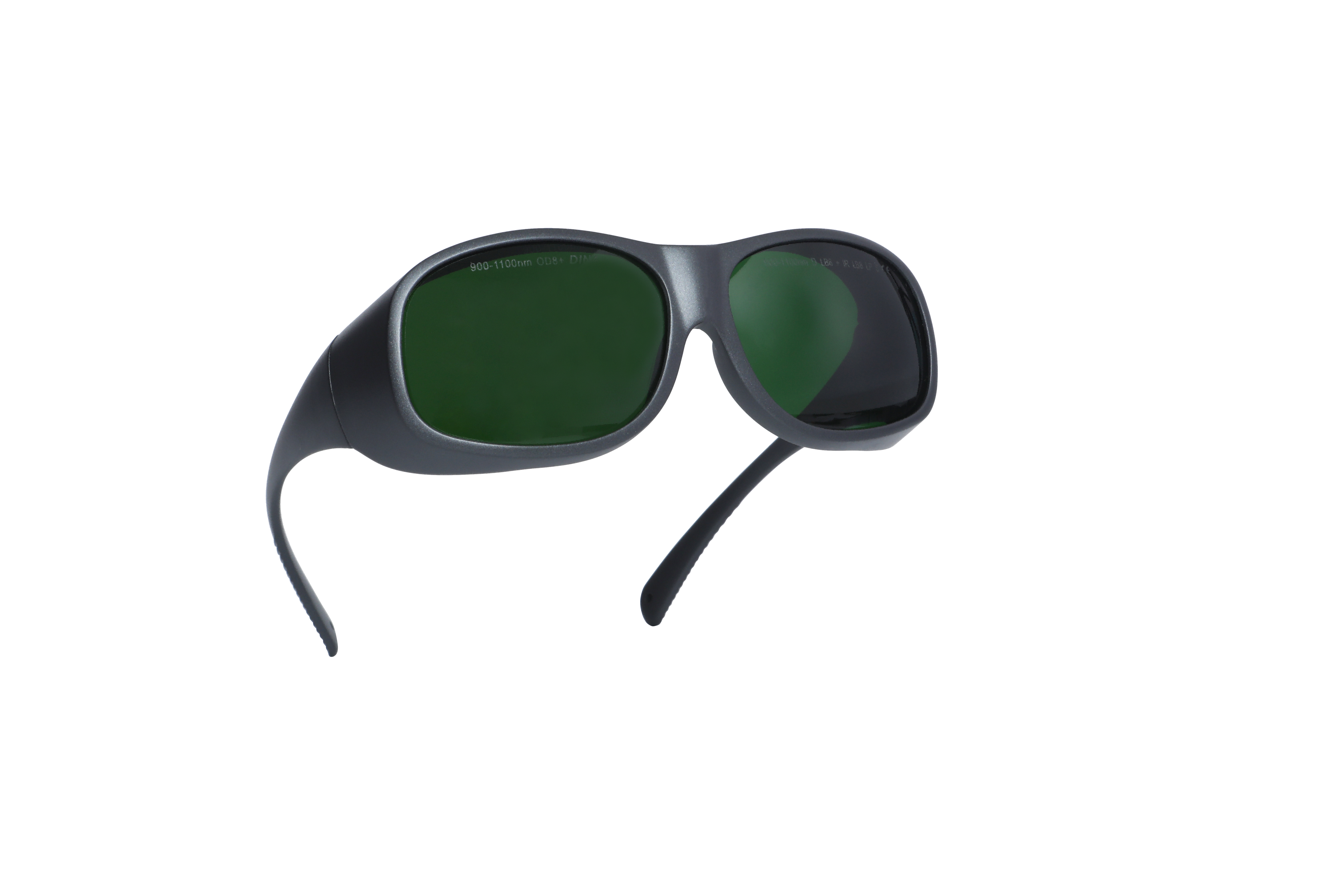
Not all materials that claim to block lasers deliver under real-world stress. The difference often comes down to how a barrier handles heat dissipation over time. A genuine solution integrates substrates with exceptionally high thermal conductivity, pulling energy away from the impact zone before it can cause structural failure. This prevents the localized melting or warping that renders cheaper alternatives useless within seconds.
Equally critical is the sacrificial layer approach. A durable outer faceplate can ablate or char in a controlled manner, forming a protective carbonized front that scatters incoming energy. Beneath it, a reflective core—often based on specialized ceramics or multi-layer dielectric films—bounces residual photons away from sensitive backing materials. This tandem strategy ensures that even as the surface degrades, the barrier’s integrity remains intact.
The final piece is optical muting through composite design. By embedding wavelength-selective absorbers within a matrix, the material can trap and neutralize specific laser frequencies without becoming overly heavy or brittle. This turns the barrier from a simple shield into an active filter, dramatically widening the range of threats it can handle without compromising portability or installation flexibility.
Understanding Industry Standards and Certifications for Laser Windows
Laser windows are more than just transparent barriers—they are precision components that must meet stringent criteria to ensure safety and performance. The standards governing these parts touch on everything from optical clarity and damage thresholds to mechanical robustness. Without a firm grasp of these requirements, even a high-quality window can fail in the field, leading to costly downtime or safety hazards.
Key certifications to look for include ISO 10110 for optical element specifications and EN 60825 for laser safety, which classifies windows based on their ability to withstand specific energy levels. In practice, this means a window rated for a 10.6 µm CO2 laser will have been tested for absorption and scattering at that wavelength, and will carry documentation affirming its optical density and power handling capacity. Third-party testing from bodies like TÜV or UL adds another layer of assurance, confirming that the product isn’t just built to a spec but has been independently verified.
The landscape gets trickier with emerging applications like ultrafast lasers, where traditional CW ratings don’t capture the peak power spikes that can cause dielectric breakdown. Here, manufacturers often lean on in-house testing protocols and niche standards such as ISO 21254 for laser-induced damage threshold. Recognizing these nuances—and reading between the lines of a datasheet—can be the difference between a window that lasts for years and one that fails on first use.
Selecting the Right Window Specifications for Your Laser Class
Laser safety windows aren’t one-size-fits-all — the required optical density directly ties to the laser’s class and output parameters. A Class 4 Nd:YAG, for instance, demands far higher attenuation than a Class 2 alignment laser, and overlooking this can lead to dangerous exposure even through “protective” barriers. Matching the OD to both the wavelength and maximum power of your specific setup is the first non‑negotiable step.
Beyond sheer blocking performance, window materials behave differently across the spectrum. Polycarbonate might handle visible diodes affordably, but near‑IR systems often call for acrylic or glass with certified coatings. If your laser operates at multiple lines, a single‑wavelength rating won’t cut it — you’ll need broadband protection that’s been tested against the full emission range of your device.
Finally, don’t assume a CE mark or ANSI labeling automatically covers your use case. Request the actual test reports and verify that the window’s stated optical density holds up under your beam diameter and pulse characteristics. Even minor scratches or angled incidence can degrade performance, so factor in your mounting geometry and maintenance routine before finalizing a specification.
Installation Best Practices to Maximize Safety and Longevity
Getting the installation right from the start makes all the difference. Even the best equipment can fail early if it's not set up correctly. Take the time to thoroughly read the manual—those small details about clearance, ventilation, and weight distribution are often overlooked but critical.
Secure mounting is non-negotiable. Use the recommended fasteners and check that every bolt is torqued to spec. Loose connections invite vibration and wear, which quietly eat away at the system's lifespan. And don't skimp on corrosion-resistant hardware if there's any chance of moisture exposure.
Finally, never skip load testing after installation. Run the system through its full range and watch for anything out of the ordinary—unusual noises, excessive heat, or wobble. Catch those early, and you'll prevent a small issue from turning into a serious safety hazard or costly repair down the line.
Routine Maintenance That Keeps Protection at Peak Performance
You wouldn’t expect a car to run forever without an oil change. The same principle applies to the systems and gear you rely on for protection. Over time, sensors can accumulate grime, seals may weaken, and electronic drift can throw off precision. Ignoring these subtle changes doesn’t just risk a lapse in performance—it invites it. Regular attention keeps every part aligned with its original design intent, so you’re never gambling when it matters most.
What does that attention actually involve? It’s not complicated. A thorough inspection catches small wear before it becomes a failure point. Cleaning removes obstructions that dull sensitivity. Calibration ensures that triggers and thresholds are exactly where they need to be. Even a simple battery check can mean the difference between a system that responds instantly and one that hesitates. These tasks take minutes but safeguard months of worry-free operation.
The real reward is confidence—knowing that your protection layer isn’t slowly slipping below its peak. You get consistent, dependable alerting and defense without the nagging doubt that something was overlooked. That predictability extends the useful life of your equipment, too, because components aren’t allowed to degrade unchecked. A small, steady effort now prevents a cascade of problems later, leaving you free to focus on everything else.
FAQ
A laser safety window is a specially engineered optical barrier designed to block or attenuate specific laser wavelengths while still allowing visible light to pass through. Unlike standard glass, which can shatter or transmit dangerous laser energy, these windows use advanced absorptive or reflective coatings and substrates like acrylic or polycarbonate to provide certified protection.
Tinted windows might reduce visible glare but usually offer no controlled attenuation at the exact laser wavelength you're working with. Laser safety windows are tested and rated with optical density (OD) values for particular wavelengths, ensuring they reduce the beam power to eye-safe levels. Using unrated materials creates a false sense of security and serious regulatory non-compliance.
Prioritize manufacturers that provide detailed spectral test reports, clearly label each window with its certified optical density and wavelength range, and comply with international standards like ANSI Z136 or EN 207/208. Also check if they offer custom sizing, quick lead times, and post-installation support—real expertise shows in how they handle technical queries.
You'll need to know your laser's wavelength, maximum output power, and the beam exposure duration. The required OD is calculated so that the transmitted energy stays below the maximum permissible exposure limit. A reputable manufacturer's technical team will often help you run this calculation rather than just selling you the highest OD available.
Absolutely. The protection is wavelength-specific. You'll find windows optimized for CO₂ lasers (10.6 µm), Nd:YAG harmonics (1064 nm, 532 nm), excimer lasers, or diode wavelengths. Some windows are broadband and cover a range, but you should always match the window's absorption curve to your laser's emission spectrum.
Yes, most experienced manufacturers offer cut-to-size services and can edge-finish the material to fit existing frames or custom enclosures. For angled installations, they can advise on beam path geometry because the effective path length through the material changes with angle, which might alter the protection level.
Inspect them regularly for scratches, pitting, or coating delamination, as damage can degrade optical density. Clean only with mild detergent and a soft lint-free cloth—avoid ammonia- or alcohol-based cleaners unless specified. Replace windows immediately if any visible damage appears within the laser viewing area, and keep a log as part of your laser safety program.
Conclusion
In any facility where lasers operate, trusting your safety to subpar window barriers is a risk no responsible team can afford. True protection begins with the selection of a manufacturer that combines deep material science with rigorous compliance. Modern laser-resistant windows rely on advanced substrates—like acrylic and polycarbonate laminates infused with wavelength-specific dyes—that physically block harmful beams rather than merely filtering them. These aren't commodity products; the precise optical density, visible light transmission, and thermal resilience must align with your equipment's exact laser class. Reputable manufacturers provide clear documentation mapping each window to standards such as EN 207, ensuring you meet not just baseline expectations but exceed them where possible. This choice becomes the quiet backbone of daily operation, letting engineers and researchers work without second-guessing their enclosure's integrity.
Beyond the initial purchase, the relationship with your window manufacturer should extend into long-term performance support. Installation isn't a one-size-fits-all task—frames must be mounted flush, gaskets checked for compression set, and interlock systems verified—details that prevent micro-gaps where scattered radiation can escape unnoticed. Even certified windows degrade over time, with UV exposure and micro-abrasions slowly shifting attenuation curves. A proactive maintenance schedule, often co-developed with the manufacturer's technicians, catches these shifts early through on-site spectrometer checks and visual inspection for crazing or discoloration. The result is more than compliance paperwork; it's a lived safety culture where every barrier is trusted. When you partner with a manufacturer that treats protection as an ongoing dialogue rather than a one-time sale, your facility gains a shield that evolves with both technology and standards, keeping everyone within securely guarded against the invisible threats that light can carry.
Contact Us
Contact Person: Jenny
Email: [email protected]
Tel/WhatsApp: +86 13537713281
Website: https://www.laserpair-safety.com/