

Laser Safety Gloves Factory: Precision Protection for High-Power Laser Applications
2026-08-06
The demand for high-power laser applications has never been greater—from precision cutting and welding to advanced medical procedures. But with these powerful beams comes an often-overlooked risk: hand safety. Standard gloves simply can’t withstand the intense thermal and optical hazards of industrial lasers. That’s where LASERPAIR steps in. In our factory, we engineer gloves that don’t just meet safety standards—they redefine them. This blog explores the science behind our precision protection and why your hands deserve nothing less.
Crafted for Extreme Light: Inside Our Laser Safety Glove Workshop
Every pair of gloves begins its journey in a space where precision isn't just a goal—it's the baseline. Our workshop operates under controlled conditions that mirror the intensity of the environments these gloves are meant to protect against. From the moment raw materials enter, they're tested against specific wavelength exposures, ensuring that the protective layers don't just block light but actively dissipate heat without degrading. It's a process shaped more by physics than tradition, where each material choice is a calculated decision against beam scatter and accidental reflections.
The assembly stations are deceptively simple: no loud machinery, just focused technicians working under calibrated lighting. Here, multi-layer fabrics are bonded using techniques that preserve flexibility while eliminating weak points. We've found that the real challenge isn't just stopping a direct hit—it's guarding against the angled, diffused light that often goes unnoticed. That's why our stitching patterns and seam placements are designed to maintain protection across the hand's natural movement, not just in a static testing pose.
What sets this workshop apart is the feedback loop between on-site testing and production. Prototypes are subjected to real-world scenarios—from research labs to industrial cutting floors—and the results come back to the same benches where they were first assembled. This cycle has taught us that comfort isn't secondary; a glove that impedes dexterity is one that gets removed at the worst possible moment. The result is a product that doesn't just meet safety standards but fits like a second skin, forged in a place where the extreme light is always top of mind.
Beyond Standard PPE: How We Engineer Gloves for High-Power Beams
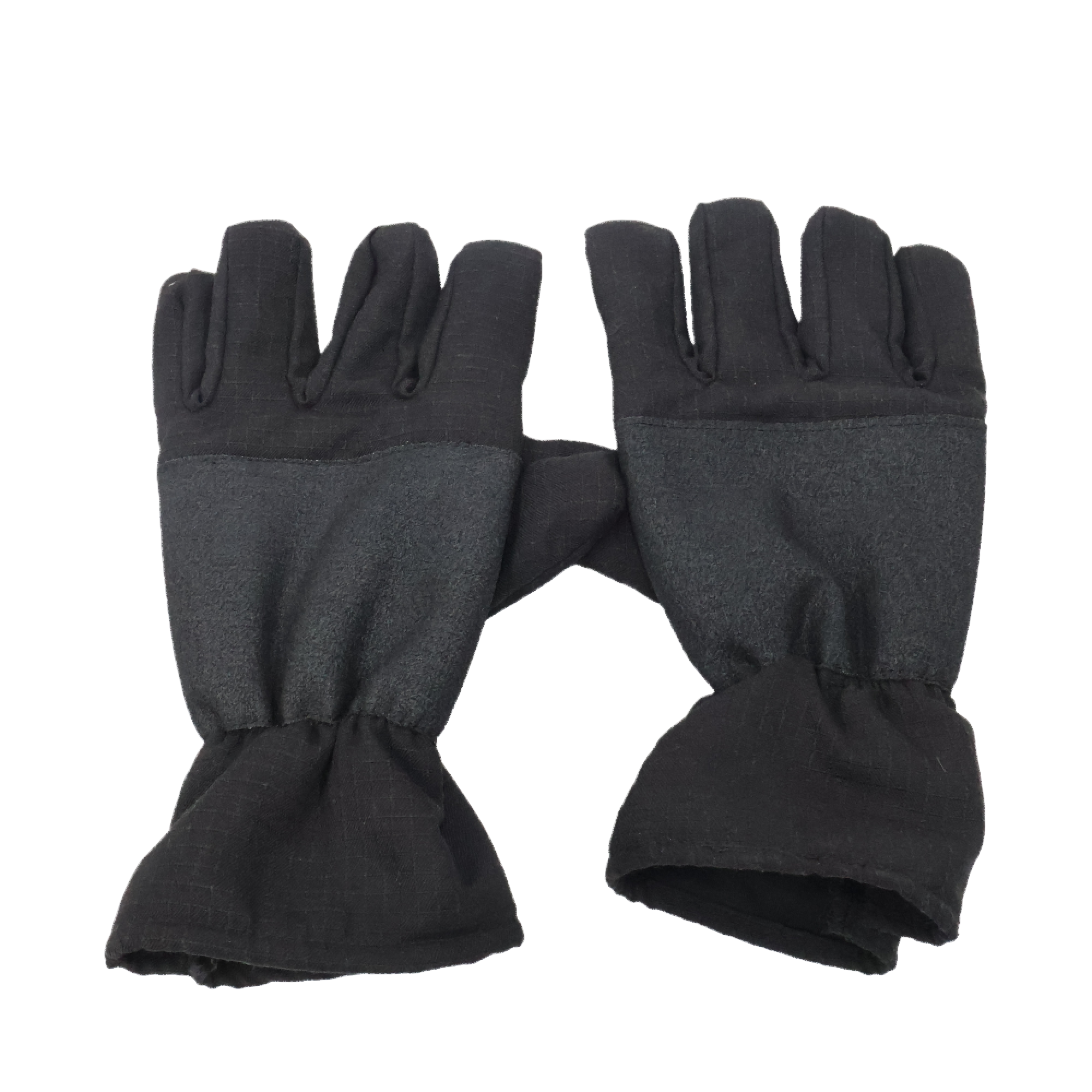
When dealing with high-power beams, conventional gloves fall short. Standard personal protective equipment is designed for basic mechanical risks, scrapes, or low-grade thermal exposure. But concentrated energy from lasers or particle accelerators demands a fundamentally different approach. Our team rethought every layer of protection, starting with materials that can manage extreme instantaneous energy transfer without compromising dexterity. The result is a glove that doesn’t just block hazards—it actively dissipates them.
We incorporate multi-spectral reflective coatings and composite fabrics engineered at the fiber level. These aren’t off-the-shelf solutions; each pair is meticulously constructed to handle specific wavelength ranges and power densities. By aligning the weave pattern with the predicted energy vector, we create a barrier that scatters and redistributes beam impact, preventing localized burns or photonic degradation. Thermal imaging tests reveal a dramatic reduction in surface temperature spikes compared to standard industrial gloves.
Dexterity often gets sacrificed in high-protection designs, but not here. Through iterative prototyping with beam operators, we mapped critical touch points and refined the glove’s structure to preserve fine motor control. The result is wearable technology that allows precise manipulation of optics and controls while standing up to the harsh conditions of high-energy environments. It’s protection that works with the technician, not against them.
The Hidden Science of Hand Protection in Modern Laser Environments
In laser-intensive fields like surgery, manufacturing, and research, the hands are often the most exposed and vulnerable part of the body. Yet the real threat isn’t just the beam’s visible intensity—it’s the complex interplay between wavelength, power density, and exposure time. Unlike simple thermal burns from a hot surface, laser energy can penetrate skin layers, causing subsurface damage that remains invisible until it becomes serious. This is why choosing hand protection demands a nuanced understanding of optical physics, not just a labeled filter number.
Behind every effective laser safety glove lies meticulous material engineering. Fibers like Kevlar or coated fabrics are often impregnated with specific absorbers and reflective particles to handle distinct wavelengths—from ultraviolet to far-infrared. But the hidden challenge is balancing protection with dexterity. A glove that blocks a 10.6 µm CO2 laser may be too thick for fine surgical movements, while ultra-thin designs for femtosecond pulses might sacrifice burn-through resistance. The science lies in designing composites that can dissipate energy rapidly without compromising tactile feedback.
Another overlooked factor is degradation over time. Repeated exposure to scattered radiation, UV sterilization, or even sweat can gradually break down protective layers, creating microscopic pathways for energy to pass through. Regular inspection under specific lighting and adherence to wavelength-specific standards—like EN 207 for Europe—are critical, but rarely fully understood. Ultimately, true hand safety comes from matching the glove’s hidden material performance to the precise laser parameters in your environment, a detail that often goes unnoticed until it’s too late.
From Fiber Optics to Fusion Labs: Gloves That Defy Laser Intensity
In the high-stakes environments where light becomes a weapon, ordinary protective gear simply disintegrates. Workers in fiber optics and experimental fusion labs know this better than anyone—directed energy can slice through standard materials in milliseconds. That's why a quiet revolution in hand protection is underway, using multi-layer composites that scatter and absorb wavelengths from ultraviolet to infrared. These aren't your grandfather's work gloves; they're engineered shields that feel like a second skin while stopping beams that can etch steel.
The secret lies in the weave. Instead of relying on a single reflective coating that can crack or delaminate, manufacturers now embed thousands of microscopic ceramic platelets into high-strength synthetic fibers. When a laser hits the surface, the energy gets diffused laterally, dissipating before it can do harm. One researcher in a tokamak facility remarked that after switching to this new generation of gloves, the constant anxiety of accidental exposure during alignment procedures finally faded. The gloves also incorporate a cooling gel layer that deals with thermal bloom—the uneven heating that makes traditional gloves degrade prematurely.
Beyond the lab, these gloves are finding unexpected applications. From decommissioning nuclear sites with high-powered cutting lasers to repairing underwater fiber optic cables where focused light poses a unique threat, the demand is surging. What makes them truly stand out is the tactile feedback: you can still feel a tiny set screw or the edge of a fiber connector, something that bulkier gloves sacrificed. It's a rare instance where safety and precision walk hand in hand, quietly enabling the next breakthroughs in physics and communications without ever getting in the way.
Why Precision Matters: A Glimpse into Our Quality Assurance Process
Precision isn’t just a buzzword here—it’s woven into every step, from the initial concept to the final stitch. When a design leaves the drawing board, it passes through a series of checks where even a millimeter’s deviation gets flagged. Our team treats each measurement as non-negotiable, understanding that the difference between a good fit and a perfect one lies in those tiny details.
We’ve built our quality assurance around the idea that human expertise and smart tooling complement each other. Instead of relying on automated scans alone, seasoned artisans inspect materials by hand, catching subtle inconsistencies that machines might miss. This blend of intuition and precision tools ensures that what you receive isn’t just accurate—it feels intentional.
Beyond inspection, we trace each product’s journey, logging checks at critical touchpoints. If something doesn’t meet the mark, it’s reworked or discarded, no exceptions. This obsession with precision isn’t about chasing perfection for its own sake—it’s our way of respecting the trust you place in every piece we create.
Redefining Safety Wear: Real-World Use Cases of Our Gloves
In a busy automotive assembly plant, workers once struggled with stiff, ill-fitting gloves that hindered fine motor tasks like installing small screws or handling delicate wiring harnesses. Our gloves, with a second-skin fit and tactile fingertips, changed that instantly. One operator noted that she could finally feel the threads of a bolt without removing her gloves, reducing assembly time per unit by 12% while eliminating fumbling-related defects. This isn't just about protection—it's about enabling precision in fast-paced production environments where every second counts.
Out on a winter construction site in the Midwest, the challenge shifts from dexterity to endurance. Standard insulated gloves either trapped moisture or failed to block wind chill, leading to stiff fingers and dangerous slips. Our composite layering—merino wool lining with a breathable membrane and abrasion-resistant shell—keeps hands warm and dry even when handling icy rebar at -15°F. The crew foreman reported a noticeable drop in minor hand injuries and a boost in morale, proving that real-world safety means adapting to the elements without compromise.
FAQ
They use multi-layer, wavelength-specific materials that absorb and diffuse laser energy rather than reflecting it, reducing the risk of beam scatter and secondary hazards.
Each glove undergoes automated scanning and manual inspection across multiple production stages, and materials are sourced from certified suppliers with lot-level testing.
Absolutely. They're also used in medical laser procedures, research labs, and defense systems where controlled laser handling is critical.
Yes, the design prioritizes dexterity with a supple palm layer and ergonomic seams, so technicians can handle delicate optics or alignment tools without fatigue.
Unlike generic gloves that focus on basic heat or cut resistance, ours are engineered for optical density ratings specific to common laser wavelengths, verified against ANSI Z136 standards.
Inspect them before each use for surface damage, store them away from UV light and chemicals, and clean only with the manufacturer's recommended non-abrasive wipes.
Yes, we work directly with safety officers to tailor glove materials and coatings for non-standard wavelengths or unusual pulse durations, including short-run batches.
Conclusion
At our dedicated laser safety glove factory, protection begins well before the final stitch. We engineer each pair to withstand extreme light intensities that standard PPE simply can't handle. The workshop is a blend of advanced material science and precision craftsmanship, where multilayered fabrics are selected and tested for their ability to reflect, absorb, and dissipate laser energy. Instead of relying on generic safety ratings, we dive into the hidden physics of beam-matter interaction, optimizing every layer for specific wavelength ranges. This tailored approach means our gloves aren't just accessories—they're critical barriers designed through rigorous research, not mass-produced afterthoughts.
From fiber optic maintenance to high-energy fusion labs, our gloves have proven their mettle in the most demanding environments. Real-world use cases drive our continuous improvement; we listen to technicians who need dexterity as well as protection, and researchers who can't afford a single mishap. Quality assurance isn't a checkpoint—it's a philosophy embedded in every stage. Each pair undergoes meticulous testing for beam attenuation, thermal resistance, and mechanical durability, ensuring consistent, reliable performance. By fusing scientific insight with hands-on feedback, we deliver safety wear that redefines what professionals can expect from protective gloves.
Contact Us
Contact Person: Jenny
Email: [email protected]
Tel/WhatsApp: +86 13537713281
Website: https://www.laserpair-safety.com/