

IEC Standard MNS Switchgear Essentials for Modern Power Distribution
2026-10-15
Modern power distribution demands more than just reliable switchgear—it needs systems engineered for precision, safety, and adaptability. While IEC-standard MNS switchgear has long been the backbone of low-voltage distribution, few truly grasp the design essentials that separate a robust installation from a maintenance nightmare. From busbar configuration to compartmentalization and arc-fault containment, each detail shapes how your facility handles load changes, faults, and future expansion. At MOLDVOLT, we've seen how overlooked specifications can quietly erode uptime. This post unpacks the core essentials of MNS switchgear that modern power engineers can't afford to ignore—and why getting them right matters more than ever.
Why MNS Switchgear Still Dominates Modern Low-Voltage Power Distribution
Walk into any industrial plant or data center today, and you'll spot the familiar modular frame of MNS switchgear almost immediately. Its staying power isn't about nostalgia or habit—it's about how the design keeps solving real headaches. The withdrawable functional units let technicians swap a faulty feeder or motor starter in minutes, not hours, while the rest of the board stays live. That's the kind of uptime guarantee that other architectures struggle to match, especially when a single shutdown can cost more than the entire switchgear lineup.
Beyond serviceability, the MNS platform has quietly evolved without losing its core identity. Modern versions embed smart sensors and communication modules right into the compartments, so operators get load profiling, thermal monitoring, and predictive maintenance alerts without retrofitting. The busbar system, already renowned for its short-circuit withstand, now supports higher density and better heat dissipation. Competitors offer similar specs on paper, but the sheer installed base and proven compatibility across decades of upgrades give MNS a practical edge that fresh designs can't replicate overnight.
Perhaps most telling is how the platform adapts to changing power demands. Renewable integration, harmonic-heavy loads, and bidirectional flows were never part of the original specification, yet the modular structure and standardized interfaces make adding active filters or advanced protection relays a straightforward task. That flexibility means an MNS board commissioned ten years ago can be upgraded to meet tomorrow's grid code without a complete teardown. For facility managers who think in decades rather than quarters, that long-term resilience is exactly why MNS remains the default choice.
Reading Between the Lines of IEC 61439 for MNS Panels
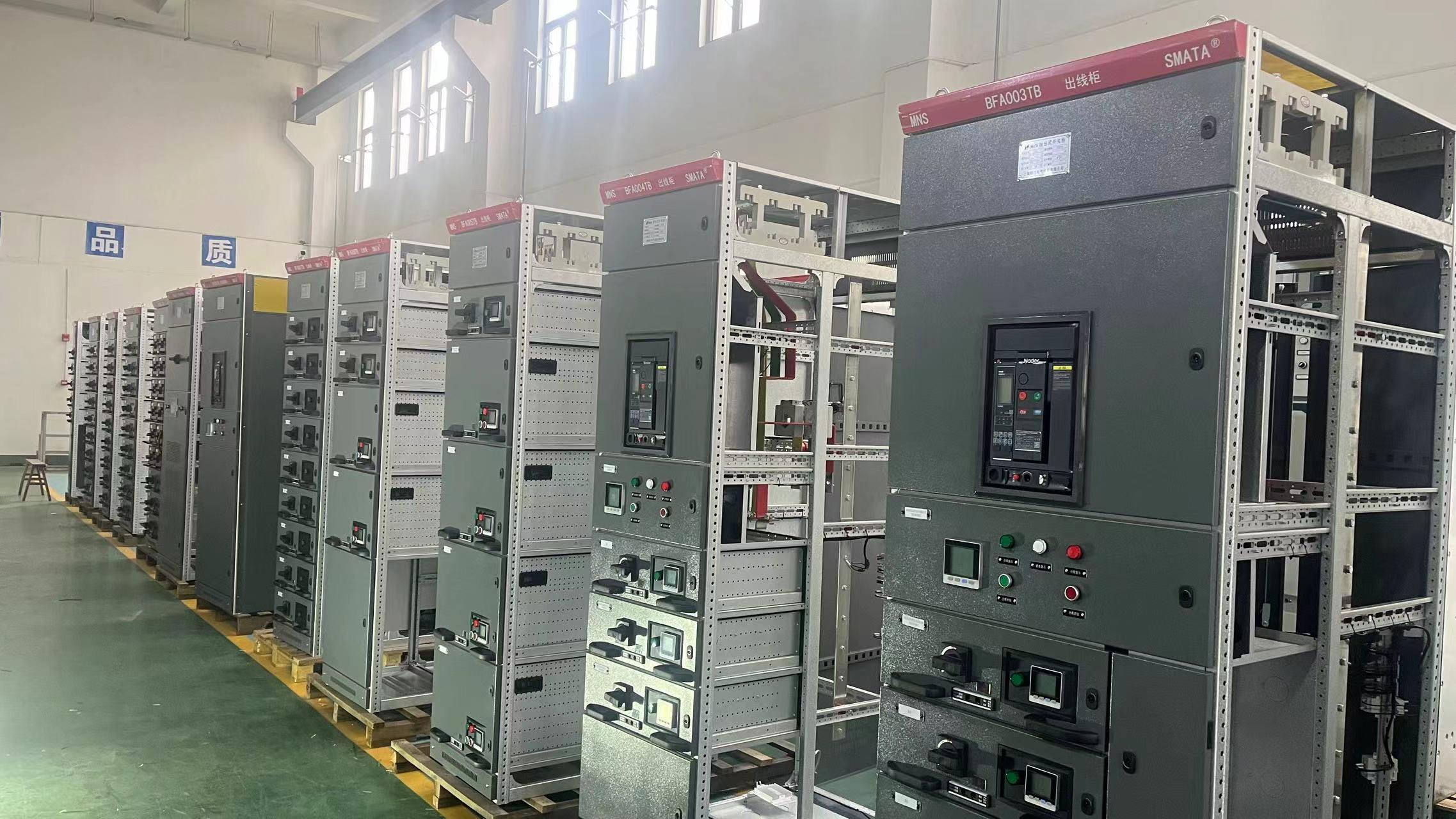
When specifying or inspecting MNS switchgear, the real value of IEC 61439 lies not in the headline ratings but in the distinction between design verification and routine verification. Too many project documents focus solely on the main busbar current, yet clause 10.10 on temperature rise imposes limits on connection points and internal air temperature that often force derating. A proper MNS design verification file should spell out the derating factors for each IP degree and internal separation form; without that, the on-site continuous current can fall noticeably short of catalogue values.
Short-circuit withstand verification (clause 10.11) is another area where reading between the lines matters. The standard permits referencing test data from a similar design, but the dynamic and thermal stress behaviour of MNS withdrawable drawers differs from fixed partitioned arrangements. If a manufacturer presents a type-test report for a single feeder cubicle and then extends it by "reference" to a densely packed motor control centre, that creates a blind spot. The responsible review is to check the coordination between the prospective short-circuit current of each outgoing circuit and the breaking capacity of its protective device, not just glance at the busbar's rated short-time withstand current.
Verification clauses for EMC, mechanical operation, and protection degree are often reduced to tick-box exercises. An MNS panel installed in a dusty or mildly corrosive environment will live or die by its gasket quality and paint durability, regardless of the IP54 on the nameplate. Understanding the standard means mapping each verification item to the actual cubicle structure, busbar layout, and operating conditions rather than resting on generic catalogue promises.
Modular Busbar Design: The Hidden Advantage in MNS Systems
Most discussions of MNS switchgear focus on withdrawable drawers and compact footprint, but the busbar system quietly does the heavy lifting. Instead of a single continuous bar, MNS uses short, standardized busbar sections bolted together in a rear compartment. This segmentation lets engineers add, replace, or reroute a section without dismantling the entire panel. The real advantage is not convenience during initial assembly; it is the ability to extend the switchboard on site with simple hand tools and no special alignment jigs.
Thermal behavior is where the modular design earns its keep. Each joint uses silver-plated copper contacts with controlled bolt torque, keeping contact resistance low and stable over years of thermal cycling. Because the busbar compartment is physically separated from cable and device chambers, heat from a heavily loaded feeder does not bleed into adjacent control circuits. Fault containment improves as well: an arc in the busbar zone stays within that compartment, reducing collateral damage and shortening repair time.
From an operational standpoint, the hidden payoff appears during upgrades. Rather than scheduling a full shutdown, technicians can isolate a single busbar section, add a tap-off unit, and re-energize within hours. This flexibility changes how plants plan capacity increases; they can buy a smaller initial lineup and expand incrementally, matching capital outlay to actual load growth. Over a 15-year service life, that incremental expansion capability often saves more than the initial purchase price of the gear.
Compartmentalized Safety Features That Go Beyond Standard Checklists
Most safety programs stop at ticking boxes on a clipboard. But compartmentalized safety means treating each risk zone as its own sealed system, with dedicated controls that don't bleed into one another. Instead of one generic checklist for the whole site, we isolate high-voltage areas, confined spaces, and chemical storage into separate protocols, each with failure points that trigger immediate shutdown before a hazard can migrate.
The difference shows up in real time. A standard checklist might note that a valve is closed, but a compartmentalized system verifies the closed position against the upstream sensor, locks out the energy source, and physically blocks access to the adjacent line until the compartment is cleared. No single person has to remember every rule; the compartment itself enforces the boundary.
This isn't about adding more paperwork. It's about designing safety so that a lapse in one area can't cascade. When each compartment carries its own independent verification and trip logic, the overall system tolerates human error far better than any checklist ever could.
Thermal Management and Fault Containment in Everyday Operation
In everyday operation, thermal buildup often goes unnoticed until it starts degrading performance. Rather than waiting for alarms, many systems now adjust cooling effort based on real-time temperature readings from embedded sensors. This keeps components within safe ranges during peak loads and avoids sudden throttling that users can feel.
Fault containment works best when it is designed as a series of independent zones. A failing power supply or a shorted bus bar can be isolated quickly by automatic breakers or solid-state switches. This prevents a local problem from spreading into a wider outage, especially in facilities where continuous uptime is expected.
The overlap between thermal management and fault containment shows up during abnormal events. A blocked air filter may raise temperatures in one rack, and the system responds by shifting workloads or increasing fan speed while flagging the maintenance issue. If a component actually fails, the same zoning that limits heat buildup also limits the blast radius of the fault, allowing the rest of the system to keep running without interruption.
Practical Configurations: Matching MNS Layouts to Facility Load Profiles
Real-world MNS layouts rarely follow a one-size-fits-all scheme. The first step is to map the facility's load profile: continuous base loads, intermittent motor starts, harmonic-rich drives, and standby feeders each have distinct thermal and fault-current characteristics. A row of compartments that treats a 200 A lighting feeder the same as a 900 kW compressor starter will either waste copper and panel depth or create hotspots during peak demand.
One practical arrangement places the largest motor feeders closest to the incoming breaker and busbar riser. This shortens the high-current path, keeps joint temperatures lower, and leaves the far end of the lineup for smaller, less demanding circuits. Facilities with frequent across-the-line starts benefit from grouping those starters in adjacent compartments with reinforced bus supports, while soft-starter and VFD sections get separated to limit conducted noise and heat buildup.
Spare capacity should not be treated as an afterthought. A load profile with planned expansion favors reserving one or two full-height compartments near the middle of the lineup instead of scattering empty buckets. That location balances future breaker addition without extending the main bus, and it avoids the temptation to overload an end section just because a blank space is convenient.
FAQ
MNS assemblies stand out because their fully bolted, modular frame allows busbars, functional units, and cable compartments to be reconfigured without welding or drilling. This means a panel that starts as a motor control center can be extended or repurposed on site with minimal downtime, which suits facilities that face changing load profiles.
MNS designs are typically verified to IEC 61439-2, which replaced the older IEC 60439 series. The updated standard requires design verification through testing or calculation for temperature rise, short-circuit withstand, dielectric properties, and mechanical operation. This gives users confidence that the assembly will perform as a system, not just as a collection of certified components.
The compartmentalized design uses standardized busbar risers and plug-in functional units. When new feeders or motor starters are needed, you can insert additional modules into reserved slots without interrupting power to existing circuits, provided the incoming section and bus rating have spare capacity. This reduces plant shutdowns and keeps expansion costs predictable.
Key safety features include internal arc-fault containment, insulation or separation of busbars from cable compartments, and mechanical interlocks that prevent door opening while circuits are energized. Many MNS designs also offer optional arc detection relays and remote racking devices, so operators can perform switching and maintenance from outside the arc-flash boundary.
Verification follows IEC 61439-1 design verification methods. The assembly is either type-tested at a recognized laboratory or verified by comparison with a tested reference design. The short-circuit withstand capability is expressed as a rated conditional short-circuit current or rated short-time withstand current. End users should request the verification report to confirm that internal separation, busbar bracing, and breaker mounting match the tested configuration.
Yes, modern MNS assemblies can accommodate electronic metering modules, communication gateways, and motor protection relays with fieldbus or Ethernet interfaces. This lets facility teams read energy consumption, load balance, and temperature data from each feeder, and even open or close selected breakers after verifying safe conditions. Such integration supports predictive maintenance without adding a separate control cabinet.
Routine maintenance includes thermal imaging of busbar joints and cable terminations, torque checks on bolted connections, cleaning of ventilation filters, and functional testing of interlocks and protection relays. Because MNS uses draw-out modules, individual feeders can be withdrawn for inspection or replacement while the rest of the board remains energized, which reduces planned downtime.
Conclusion
MNS switchgear has earned its place at the heart of modern low-voltage distribution not through marketing buzz but through a quiet, structural reliability that specifiers keep returning to. The IEC 61439 framework demands more than a type-test sticker; it asks designers to verify current-carrying capacity, short-circuit strength, and temperature rise under real combinations of devices. MNS panels meet this by treating the modular busbar system as a load-bearing spine rather than an afterthought. Copper runs are sized and braced not just for nominal current but for the moment when a downstream fault tests every joint. The compartmentalized form, often up to Form 4, means a flash in one feeder does not become a building-wide shutdown. Thermal behavior is handled at the design stage, with ventilation paths and derating curves that account for harmonics and densely packed breakers instead of relying on post-installation tweaks.
Beyond compliance, the practical strength of MNS shows in how easily layouts follow a facility's actual load profile. A hospital with mixed critical and non-critical circuits, a water treatment plant with heavy motor starts, or a data hall with high neutral currents can all be addressed by regrouping functional units without changing the busbar orientation. Maintenance teams value that outgoing feeders can be isolated, tested, and re-energized while the rest of the board stays live. That kind of operational continuity is rarely captured in a checklist, but it is exactly what keeps MNS relevant when newer architectures claim to be more compact or more digital. IEC 61439 asks for verification by comparison or by calculation; MNS delivers it through decades of proven short-circuit and temperature records, turning the standard's intent into day-to-day dependability rather than a paper exercise.
Contact Us
Contact Person: Hellen
Email: [email protected]
Tel/WhatsApp: 86-13634205622
Website: https://www.voltcabinet.com