

How OEM Swiss-type Machine Factories Excel in Precision Manufacturing
2026-05-17
Precision manufacturing demands more than just machinery—it requires mastery. In the world of OEM Swiss-type machining, some factories transcend the ordinary, turning micron-level challenges into everyday achievements. But what truly sets the leaders apart from the followers? At WINNRUI CNC, the answer lies in a blend of relentless innovation, artful engineering, and an almost obsessive commitment to tolerances that redefine 'close enough.' This blog peels back the curtain on how elite OEM Swiss-type machine factories raise the bar, and why the right partner might be the difference between a component that merely fits and one that performs beyond expectation.
The Art of Micro-Machining: Where Precision Meets Practicality
Working at scales where a single human hair dwarfs a finished part, micro-machining blends disciplined engineering with a craftsperson’s sensibility. The process isn’t simply about making things smaller—it’s about rethinking how material responds when tool diameters shrink below a millimeter. Chatter, thermal drift, and grain structure fallout behave differently here, often defying intuition shaped by conventional milling. That’s why setups lean heavily on vibration damping, climate-controlled rooms, and spindles that can hit 60,000 rpm without flinching. Every pass demands a feel for the invisible, a kind of dialogue between machinist and metal that no CAM simulation fully captures.
Practicality surfaces the moment you look at modern medicine or consumer electronics. Tiny insulin pump components, hearing aid receiver shells, and the miniature lens mounts in smartphone cameras all depend on this intersection of precision and utility. Yet the same techniques that carve delicate bone screws also shape micro-molds for high-volume plastic production—where a 10-micron deviation can scrap an entire batch. The real art is balancing cost and tolerance: knowing when to push for sub-micron accuracy and when a slightly looser spec won’t affect function. Shops that stay busy treat this as a moving target, continuously refining toolpaths, chip evacuation, and metrology feedback loops.
Material choice amplifies both the challenge and the payoff. Exotics like nickel alloys, ceramics, and even un-sintered carbide punish mistakes but reward durability in the final part. More mundane metals—stainless steel or brass—can become quirky at micro scales, revealing internal stresses that macro-cutting never activates. Success usually comes down to treating the machine as a hyper-accurate sculpture studio, not a brute-force subtractive device. Peel away excess in barely-there increments, monitor edge condition under magnification, and you’ll find that the boundary between art and practicality blurs into a skillset that’s hard to automate and even harder to master.
Material Mastery: Selecting the Right Alloys for Flawless Outputs
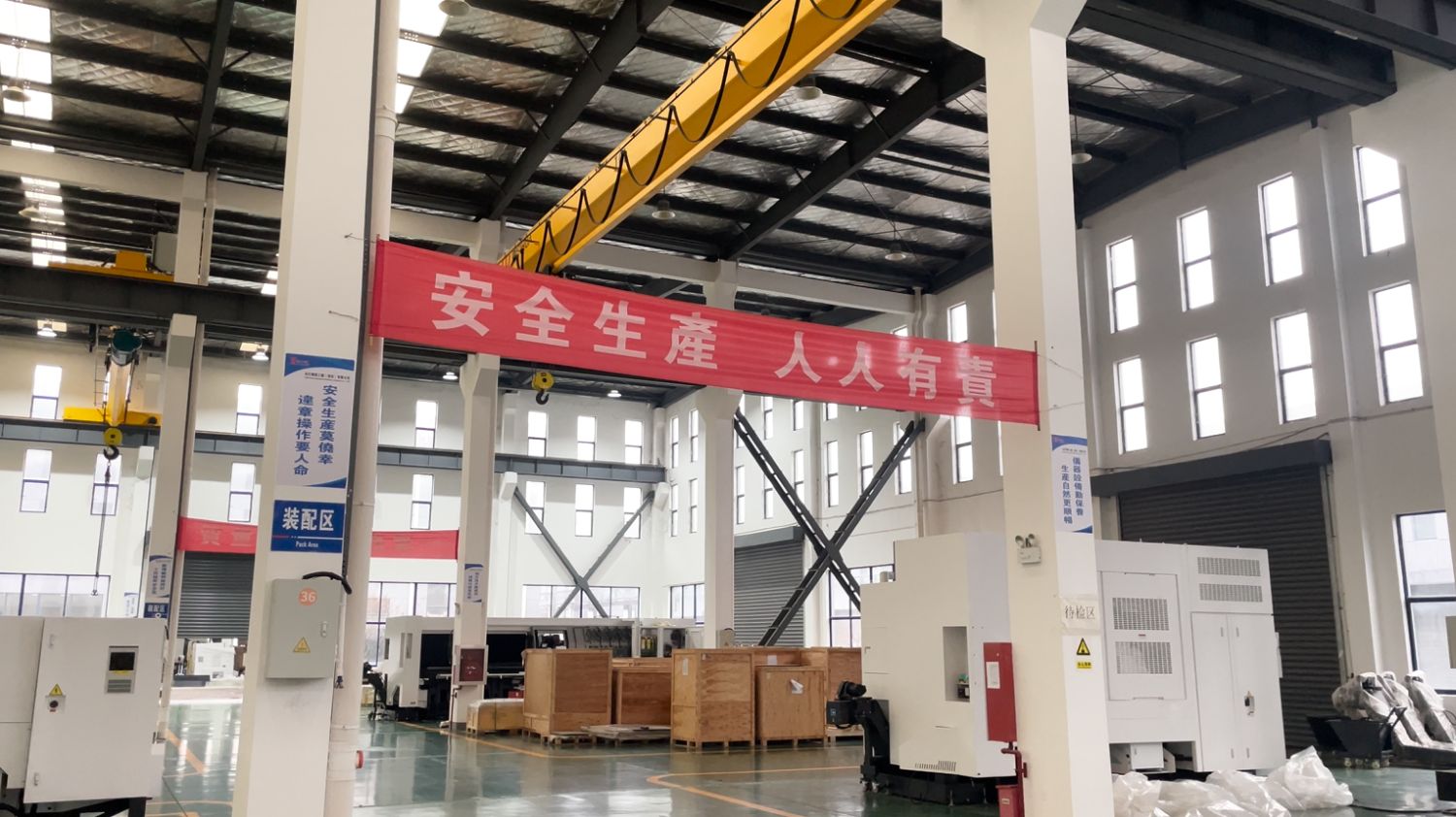
Every manufacturing process starts with a choice that echoes throughout the final product. When it comes to alloys, this isn't just a matter of picking a metal off a list. It's about understanding the delicate interplay between strength, corrosion resistance, and machinability. The right selection can mean the difference between a component that withstands years of stress and one that fails prematurely, costing time and reputation.
We often see engineers trapped between competing priorities: a high-strength alloy that's a nightmare to machine, or an easily worked material that lacks the necessary durability. The key is to look beyond standard grades and consider how specific alloying elements interact under real-world conditions. For instance, subtle increases in chromium or molybdenum can transform a mediocre steel into a corrosion-fighting powerhouse, but only if the carbon balance is precisely managed.
Flawless outputs don't come from blindly following specifications; they demand a deeper engagement with material behavior. This means examining not just the alloy's static properties, but how it responds to heat treatment, welding, and the unique stresses of your application. The mastery lies in matching the alloy's personality—its quirks and capabilities—to the demands you're placing on it. When that alignment is perfect, reject rates vanish and performance becomes predictable.
Beyond Tolerances: How In-Process Monitoring Elevates Quality
Traditional quality checks often focus on final measurements—catching defects only after they've happened. That approach wastes material and time. In-process monitoring flips the script: sensors and real‑time analysis intercept deviations as parts are being made. Instead of merely sorting good from bad, the process itself becomes self‑correcting, adjusting tool paths or parameters on the fly to keep every piece within spec long before a tolerance boundary is threatened.
The magic lies in how this continuous feedback loop refines the definition of quality. It’s no longer about passing a static gauge; it’s about consistency, stability, and the ability to spot subtle drifts—like tool wear or thermal expansion—that would otherwise go unnoticed until a batch fails inspection. Operators are freed from frantic post‑production sorting and can instead fine‑tune upstream variables, turning quality assurance into a proactive, deeply integrated function rather than a final hurdle.
What elevates this approach beyond mere tolerance‑holding is the data it generates. Every micron of variation becomes a story: why it moved, when it started, and how to prevent it next time. That intelligence accumulates into a living process signature, making builds repeatable even across different machines or shifts. In‑process monitoring doesn’t just raise the quality ceiling—it builds resilience and learning directly into the manufacturing flow.
Engineering Agility: Custom Solutions Without Compromise
Agility in engineering isn’t just about speed—it’s the fusion of rapid iteration with unwavering standards. We craft bespoke frameworks that adapt as your challenges evolve, never sacrificing robustness for velocity. Each solution is a living architecture, refined through real-world feedback loops and meticulous attention to edge cases that generic tools overlook.
Where off-the-shelf products force you into uncomfortable trade-offs, our custom-built systems embrace your unique constraints. From legacy integration puzzles to bleeding-edge scalability demands, we design with surgical precision—every component justified, every dependency intentional. The result isn’t just functional; it’s the exact fit your technical landscape requires.
Compromise isn’t in our vocabulary. We apply rigorous modeling and incremental validation to deliver solutions that stand the test of shifting requirements. This means transparent performance benchmarks, proactive fault tolerance, and architectures so clean they become your team’s competitive advantage—not a maintenance burden.
The Efficiency Edge: Streamlining Production from Setup to Shipment
Getting a product out the door involves countless small steps, each one a chance for delay to creep in. We focus on tightening the front end—setup procedures that used to eat up hours are now dialed in so repeatable that new operators hit their stride within minutes. It’s not about rushing, but about removing guesswork and letting the right tooling do the heavy lifting.
From there, the flow through assembly and finishing is rethought as one continuous pulse rather than isolated stations. Visual cues, simple kanban signals, and floor layouts that cut transit distance keep work moving without anyone having to chase it. Bottlenecks surface early because the system itself makes them obvious, and that means they get resolved before they can snowball.
When it comes time to ship, the advantage carries right through to labeling, palletizing, and load planning. Batch packing errors drop when each order’s path is pre-mapped based on real-time line output, and carriers are updated before the last box is sealed. It’s a chain of small wins that adds up to a week shaved off lead times, every single run.
Crafting Consistency: Why Swiss-Type Machines Dominate Complex Parts
When you’re turning out thousands of tiny bone screws or hydraulic valve spools, having even a few microns of deviation between parts can scrap an entire batch. Swiss-type lathes sidestep this headache by gripping the bar stock right next to the cutting zone with a guide bushing, eliminating the long overhangs that plague conventional lathes. That rigidity means tools engage the material under nearly identical conditions on every pass, so features like deep cross-holes, stepped threads, and slender profiles come out dead-on, part after part.
The machine’s sliding headstock architecture does more than just shrink deflection—it lets you stage multiple tools in overlapping positions. While one tool finishes a back chamfer, another can start roughing the next segment, all without unclamping the workpiece. This choreography slashes cycle time, but more importantly, it locks in dimensional relationships. Once the program is dialed in, the machine doesn’t second-guess itself; the sequence stays crisp, and thermal drift gets pushed to the margins because the cutting load is spread across short, intense bursts rather than long, continuous cuts.
Beyond the hardware, Swiss machining thrives on process discipline. Bar feeders and high-pressure coolant become partners in crime—the former delivering material with metronomic regularity, the latter flushing chips before they can tangle around fine details. When you combine that with sub-spindle pickoffs and live tooling, you can mill, drill, and back-turn in a single handoff. No stack-up errors from multiple setups, no operator-dependent adjustments. It’s this locked-in methodology that lets shops churn out surgical threads or watch components with tolerances that barely budge from the mean, even at volumes that would make a standard lathe’s tool wear visible by lunchtime.
FAQ
They keep the workpiece close to the guide bushing, minimizing deflection and vibration, which is essential for tight tolerances on slender parts.
These factories integrate multi-axis machining, live tooling, and sub-spindles, allowing them to complete complex parts in one setup without sacrificing accuracy.
The sliding headstock design feeds bar stock through a fixed bushing, so cutting always happens right at the point of support. That stability is the secret behind repeatable micron-level precision.
They excel in mid to high volumes where consistent quality across thousands or millions of pieces is non-negotiable, especially for industries like medical devices and aerospace.
From stainless steel and titanium to brass and plastics, Swiss-types are adept with a broad range of materials, often running unattended thanks to automatic bar feeders.
Automated tool presetters, in-process probing, and robotic part handling push utilization rates sky-high, letting factories pump out precise parts around the clock with minimal human intervention.
Conclusion
In OEM Swiss-type machine factories, precision manufacturing is not just a goal but a deeply ingrained practice that begins with the art of micro-machining. Here, tolerances are pushed to sub-micron levels while maintaining practicality for mass production. The selection of alloys becomes a critical science—engineers match materials like stainless steel, titanium, or exotic alloys to the exact demands of each component, ensuring flawless surface finishes and mechanical integrity. Beyond static tolerances, in-process monitoring systems continuously track tool wear, temperature shifts, and vibration, automatically adjusting parameters to prevent defects before they occur. This real-time vigilance transforms quality control from a reactive checkpoint into a proactive, integrated process, allowing even the most intricate medical or aerospace parts to be produced with unwavering reliability.
Engineering agility sets these factories apart: they rapidly configure Swiss-type lathes with custom tooling and multi-axis attachments to deliver bespoke solutions without sacrificing repeatability. This flexibility is underpinned by streamlined workflows that trim setup times and synchronize material handling from raw stock to final shipment, slashing lead times while maximizing machine uptime. The inherent design of Swiss-type machines—with guide bushings that support workpieces right at the cut—naturally dominates the production of long, slender, and complex parts, minimizing deflection and vibration. By merging this mechanical advantage with rigorous process control and material expertise, OEM Swiss-type factories achieve a harmony of speed, accuracy, and consistency that redefines what’s possible in high-stakes manufacturing.
Contact Us
Contact Person: Tim
Email: [email protected]
Tel/WhatsApp: +86 15522553731
Website: https://www.winnrui-cnc.com/