

Heterocyclic Intermediate CDMO: Accelerating Complex Drug Development
2026-07-25
In the fast-paced world of pharmaceutical innovation, the path from molecule to medicine is often paved with intricate heterocyclic intermediates. These molecular building blocks are the unsung heroes behind many life-saving therapies, yet their synthesis demands a rare blend of precision, scalability, and speed. That's where a specialized CDMO becomes a game-changer. DSL Chemicals doesn’t just manufacture intermediates; we co-engineer solutions that untangle the most complex synthetic challenges. Dive into how our heterocyclic expertise is reshaping timelines and unlocking new possibilities in drug development.
Why Heterocyclic Intermediates Anchor Modern Drug Discovery
A glance at the top-selling pharmaceuticals reveals a striking pattern: the vast majority contain at least one heterocyclic ring. From the beta-lactam core of penicillin to the imidazoline scaffold in certain antihypertensives, these nitrogen-, oxygen-, or sulfur-laced cycles are not mere structural ornaments but central pharmacophores. Their ability to engage in hydrogen bonding, π-stacking, and dipole interactions allows them to slot precisely into enzyme active sites and receptor pockets. This molecular recognition is what transforms a simple organic compound into a potent and selective drug. Without these heterocyclic building blocks, medicinal chemistry would lose its most versatile toolkit for modulating biological targets.
Beyond binding affinity, heterocyclic intermediates offer medicinal chemists a remarkable capacity to fine-tune physicochemical properties. By swapping one heteroatom for another or adjusting the ring’s saturation, scientists can dramatically alter solubility, metabolic stability, and membrane permeability. Consider the evolution of antiviral nucleoside analogs: a single nitrogen substitution in the purine base can shift a compound from a toxic liability into a lifesaving therapy. This modularity means that heterocyclic scaffolds serve as the pivot point around which entire lead optimization campaigns revolve. They are the chassis upon which we build balanced drug candidates that survive the journey from pill to systemic circulation.
The synthetic accessibility of heterocycles has further cemented their role at the heart of drug discovery. Classic reactions like the Fischer indole synthesis, the Biginelli reaction, and modern cross-coupling strategies have made libraries of diverse heterocyclic intermediates available at unprecedented speed. Parallel synthesis and automated methods now churn out thousands of variants, each a potential starting point for structure-activity relationship studies. This marriage of synthetic efficiency and biological relevance explains why the pharmaceutical industry’s compound collections remain heavily skewed toward heterocyclic frameworks. They are, quite simply, the most productive bridge between a chemical idea and a therapeutic reality.
Solving Synthetic Bottlenecks with Specialized CDMO Insight
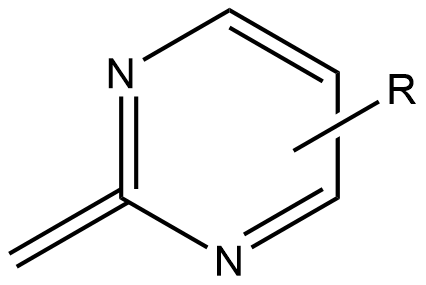
Navigating complex synthesis often means hitting walls that delay timelines and inflate costs. Specialized CDMO teams dig into these pain points with a level of depth that generic providers rarely offer, spotting route inefficiencies or purification headaches early. By matching deep technical acuity with hands-on bench experience, they rethink disconnects, swap out temperamental intermediates, or introduce enabling technologies that turn a sluggish step into a robust, scalable process.
Insight goes beyond troubleshooting—it’s about anticipating where bottlenecks will appear before they stall production. With a portfolio spanning diverse chemistries, a CDMO that lives and breathes complex molecule development can design out problems from the start. Whether it’s a capricious coupling, a stubborn crystallization, or a regulatory starting material that’s suddenly out of reach, their teams pivot fast, leaning on in-house knowledge that no amount of AI-based retrosynthesis can replicate.
What sets this apart is the combination of scientific rigor and practical flexibility. Rather than forcing a project into a standard playbook, the right CDMO crafts a tailored path that respects the molecule’s quirks while keeping manufacturing reality in check. This approach not only clears immediate hurdles but also streamlines downstream transfer and scale-up, ultimately compressing the journey from gram to kilogram without sacrificing quality or control integrity.
From Lab Curiosity to Clinical Reality—Faster
The journey from a spark of scientific curiosity to a tangible clinical solution has often been measured in decades. Yet today, that timeline is collapsing. What was once a slow, methodical process of discovery, validation, and translation is now being propelled by advances that fuse computational modeling, real-time data sharing, and agile development frameworks. This isn't just about speeding up—it's about removing the artificial barriers between bench and bedside that have long stifled progress. The result is a new ecosystem where ideas born in the lab can mature into therapies, diagnostics, or devices with unprecedented momentum.
Take the way we're reimagining the research pipeline itself. Instead of linear sequences—hypothesis, experiment, analysis, repeat—cross-disciplinary teams now operate in overlapping sprints. A bioengineer's prototype can be tested in a simulated physiological environment within days, not months. Meanwhile, clinicians feed back real-world observations almost instantly, shaping the next iteration before the first one even finishes validation. This tight feedback loop blurs the line between inquisitive exploration and practical application, turning curiosity into a continuous engine of refinement.
Perhaps most transformative is how we're democratizing the tools of acceleration. Cloud-based platforms let academic labs access high-throughput screening capabilities once reserved for industrial giants. Open-source protocols and shared data repositories mean that a novel finding in one corner of the world can be replicated, challenged, or built upon elsewhere within hours. The old gatekeepers of clinical translation—lengthy grant cycles, siloed expertise, proprietary barriers—are giving way to a more fluid, connected model. And in that model, the question isn't just "What can we discover?" but "How soon can we make it matter?"
Tailored Process Chemistry That Defies One-Size-Fits-All
Every compound has its own story, and forcing it through a generic synthetic route often leads to unnecessary complications. We believe that process chemistry should adapt to the molecule, not the other way around. Our approach begins with a deep dive into the specific reactivity, stability, and scalability challenges unique to your target. Rather than reaching for a standard playbook, we design each step from the ground up, selecting reagents, conditions, and purification strategies that align perfectly with the compound’s personality.
This philosophy pays off when timelines tighten and yields matter. By avoiding rigid templates, we sidestep the tedious trial-and-error that comes with retrofitting a molecule into a mismatched process. Instead, we uncover unconventional disconnections or catalytic shortcuts that might be overlooked in a conventional workflow. The result is a streamlined synthesis that not only meets purity and cost targets but often exceeds them, with room to maneuver when scale-up surprises arise.
Collaboration sits at the heart of this tailored strategy. Our chemists work closely with your team to understand the nuances of your project—whether it’s a delicate natural product derivative or a high-energy intermediate. This partnership ensures that the final process isn’t just a technical solution, but a practical bridge between discovery and manufacturing, built with your specific constraints in mind. No two molecules are alike, and we wouldn’t have it any other way.
Precision Purity and Regulatory Foresight in Action
The drive for precision purity reshapes how we validate every molecule and material, transforming quality control from a final checkpoint into a continuous, embedded discipline. Rather than chasing specifications after the fact, processes now incorporate real-time spectral fingerprinting and sub-visible particle analysis that flag deviations long before they reach a critical threshold. This approach slashes rejection rates and builds a data-rich trail that makes purity a measurable constant, not an aspirational line on a certificate.
Regulatory foresight moves beyond ticking boxes; it means anticipating where standards are headed and reverse-engineering compliance into the earliest design stages. Teams interpret emerging ICH guidelines and regional pharmacopoeia updates not as hurdles but as blueprints for stronger filings, aligning analytical method development with future monograph expectations. As a result, shelf-life justifications and impurity profiling become proactive narratives that withstand scrutiny because they were built with tomorrow’s questions in mind.
When precision purity and regulatory vision operate in tandem, the result is a seamless cadence where lab batches, pilot runs, and commercial scale-ups share the same rigorous DNA. Stability studies reveal fewer surprises, and tech transfers lose their customary friction because the methods have already been stress-tested against global compendial shifts. It is this fusion—exacting science paired with a clear-eyed reading of the regulatory horizon—that turns compliance into competitive momentum rather than a recurring cost of doing business.
Co-Creating Pathways to Expedite Complex Molecules
The quest to assemble intricate molecules—whether for novel therapeutics, advanced materials, or agrochemicals—often stalls at the limits of conventional synthesis. Traditional linear approaches, while reliable, struggle to keep pace with the growing demand for structural complexity and speed. Co-creating pathways reframes this challenge as a collective endeavor, merging synthetic chemistry with insights from computational modeling, automation, and parallel experimentation. By integrating these perspectives early, teams can preempt bottlenecks and design routes that are both elegant and executable.
This collaborative model thrives on iterative feedback. Data from high-throughput screening informs retrosynthetic analysis, while machine learning algorithms suggest unorthodox disconnections that a lone chemist might overlook. Engineers and material scientists partner to scale up promising leads without sacrificing yield or reproducibility. The result is a shared roadmap where each discipline contributes a crucial layer of expertise, ultimately shortening the journey from concept to pure compound.
Beyond accelerating timelines, co-creation fosters a culture of resilience. When a route fails—as many inevitably do—the distributed knowledge base accelerates troubleshooting. What might have taken weeks of solo tinkering becomes a rapid, cross-functional diagnosis. In practice, this means faster access to compounds that can unlock biological studies, feed structure-activity relationship campaigns, or reach the marketplace with a competitive edge.
FAQ
Heterocyclic intermediates are core structural motifs in many active pharmaceutical ingredients, contributing to biological activity, metabolic stability, and target selectivity. Their incorporation is critical for developing antivirals, kinase inhibitors, and CNS drugs.
Partnering with a specialized CDMO allows innovator companies to leverage deep expertise in complex ring construction, scale-up know-how, and regulatory compliance, bypassing internal bottlenecks and reducing time-to-clinic.
A skilled CDMO brings established route-scouting protocols, high-throughput screening of reaction conditions, and parallel process development, enabling rapid identification of viable synthetic pathways and quicker scale-up from grams to kilograms.
Common heterocyclic systems include pyridines, pyrimidines, indoles, quinolines, imidazoles, and triazoles, along with fused or spirocyclic variants demanded by emerging drug modalities like PROTACs and ADC payloads.
They implement robust quality-by-design principles, rigorous ICH guideline adherence, and thorough analytical characterization — including HPLC, GC, NMR, and mass spectrometry — to meet pharmacopeial standards and support IND/NDA filings.
The leading partners combine deep heterocyclic chemistry expertise with process engineering, dedicated project management, intellectual property protection, and a track record of seamless tech transfer, enabling a true extension of the client's development team.
Involving a CDMO during preclinical stages helps derisk the supply chain, optimize synthetic efficiency, and align material production with toxicology studies and early clinical trials, often shaving months off critical-path milestones.
Challenges include hazardous reagents, violent exotherms, sensitive functional groups, and low solubility. Specialized CDMOs mitigate these through continuous flow chemistry, cryogenic capabilities, and advanced process safety assessments, ensuring safe and scalable production.
Conclusion
Modern drug development leans heavily on heterocyclic intermediates, the structural cores found in most small-molecule therapeutics. Their intricate ring systems often dictate potency and selectivity, but synthesizing them at scale remains a formidable challenge. A specialized CDMO steps into this breach, turning synthetic bottlenecks into streamlined processes. By marrying deep heterocyclic chemistry expertise with industrial pragmatism, these partners transform lab curiosities into robust, scalable routes—slashing development timelines and costs while sidestepping the trial-and-error that plagues in-house teams facing unfamiliar reactions.
Beyond mere synthesis, a true CDMO collaboration brings tailored process chemistry that defies one-size-fits-all approaches. Early engagement allows for route scouting that anticipates regulatory hurdles, enforces precision purity from the start, and weaves in phase-appropriate analytical strategies. This foresight prevents late-stage surprises, ensuring that complex molecules move from preclinical promise to clinical reality with fewer setbacks. The result is a co-creative partnership where scientific agility meets manufacturing discipline, delivering speed without sacrificing quality—ultimately accelerating the journey of vital heterocyclic-based drugs to patients who need them.
Contact Us
Contact Person: Wei Zhang
Email: [email protected]
Tel/WhatsApp: 862163529955
Website: https://www.dslchem.com