

Fiberglass Geogrid Factory: Durability and Innovation at Scale
2026-05-22
In the world of civil engineering and large-scale construction, the demand for materials that combine exceptional durability with forward-thinking innovation has never been greater. Fiberglass geogrids have emerged as a cornerstone of modern infrastructure, offering unparalleled reinforcement for roads, retaining walls, and soil stabilization. But what truly sets a top-tier fiberglass geogrid factory apart is its ability to deliver these qualities at scale, without compromising on performance. As a leading force in this domain, WEN FENG STONE has mastered the art of blending longevity with cutting-edge production techniques. Discover how this commitment to excellence is reshaping landscapes and setting new benchmarks for the industry—one engineered layer at a time.
Built to Last: Reinforcing Infrastructure with Fiberglass Geogrids
Fiberglass geogrids are quietly reshaping the way we think about roads, retaining walls, and embankments. Unlike traditional steel reinforcement, these high-strength grids resist corrosion, chemicals, and UV degradation, making them a smarter choice for projects that demand decades of service without invasive maintenance. Their open mesh structure interlocks with soil and aggregate, distributing loads more evenly and reducing the risk of rutting or cracking over time.
What sets them apart is how effortlessly they handle tension. When layered beneath asphalt or within reinforced slopes, fiberglass geogrids absorb tensile stress that would otherwise tear through weaker materials. This not only extends pavement life but also allows engineers to reduce base thickness—cutting material costs without sacrificing structural integrity. Installations in coastal areas or industrial zones, where aggressive soils eat away at metal, have shown remarkably consistent performance year after year.
Beyond just strength, the real advantage is predictability. Fiberglass creeps very little under constant load, meaning designs can be optimized with confidence. Whether it's stabilizing a railway bed or reinforcing a mechanically stabilized earth wall, the grid provides a stiff, reliable backbone that keeps everything aligned. It's a simple, almost invisible upgrade that practically pays for itself in delayed repairs and longer replacement cycles.
Innovation in Every Strand: Advanced Manufacturing Techniques
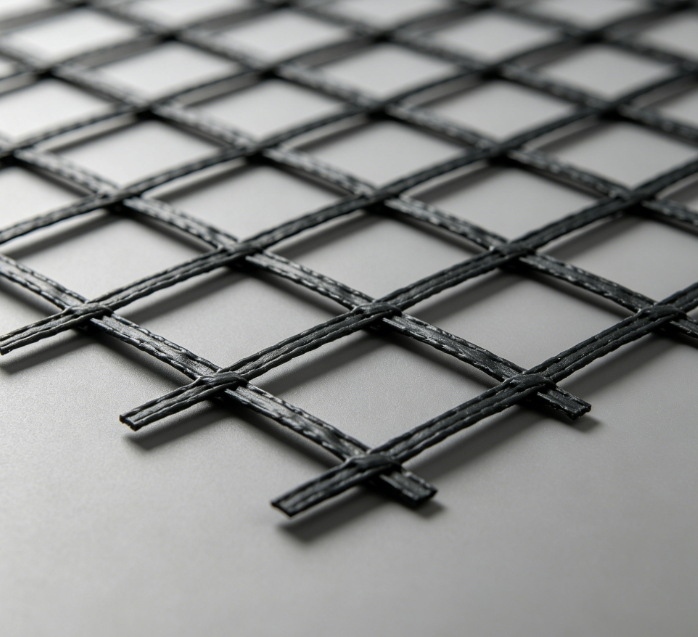
Every filament tells a story of precision engineering. We’ve moved beyond conventional extrusion, adopting techniques that manipulate polymer chains at the molecular level. This isn’t just about melting and shaping—it’s about coaxing materials into configurations that deliver unrivalled strength, flexibility, or conductivity. The result? Strands that perform consistently, batch after batch, in ways traditional methods simply can’t match.
Our manufacturing floor is a playground of additive and subtractive processes working in tandem. Laser-assisted deposition merges with real-time spectral analysis to detect anomalies the human eye would miss. Inline micro-coating stations apply functional layers just microns thick, transforming an ordinary thread into a smart sensor or a self-healing conduit. It’s this marriage of robotics, optics, and material science that gives each strand its extraordinary capabilities.
What truly sets our approach apart is the feedback loop between design and production. Generative algorithms simulate the end-use environment before a single meter is run, tweaking parameters on the fly. That means we can create tailored monofilaments for everything from deep-sea cables to surgical sutures—each one embodying the exact mechanical, thermal, or chemical properties required. Innovation isn’t just a buzzword here; it’s woven into every millimeter.
Scaling Quality: Production Capacity Meets Global Demand
When a brand outgrows its local roots, the real challenge isn’t just making more units—it’s making them with the same exacting standards that built the reputation in the first place. We’ve seen too many companies scale by cutting corners, swapping premium materials for cheaper alternatives the moment order volumes spike. That’s a race to the bottom we refuse to join. Our approach bakes quality into the expansion blueprint itself, so that a product assembled ten thousand miles away feels indistinguishable from one crafted in our original workshop.
This obsession with consistency means rethinking supply chains from the ground up. Instead of relying on a single mega-factory prone to bottlenecks, we’ve cultivated a decentralized network of vetted manufacturing partners, each specializing in a core component. It’s a model that not only multiplies total output but also creates natural checks—if one node drifts from spec, the others keep the line steady while we correct course. The result is a capacity curve that climbs without the usual dips in quality, letting us absorb sudden demand spikes without flinching.
The hidden advantage? Resilience. By designing for distributed production early, we turned what could have been a weak point into a moat. While competitors scramble to qualify new suppliers during crises, our partner ecosystem simply flexes. It’s how we’ve quietly become the reliable choice for clients who need scale without sacrificing the tactile perfection their customers expect—whether that’s a boutique distillery ramping up holiday gift sets or a tech brand launching a accessory line across three continents simultaneously.
Engineering Excellence: Custom Solutions for Complex Projects
True engineering excellence isn't about off-the-shelf answers—it’s about shaping solutions that fit the unique contours of each challenge. When projects grow in complexity, standard approaches often fall short, revealing gaps that demand more than just technical skill. They call for a mindset that embraces constraints as catalysts, turning tight timelines, harsh environments, or novel requirements into opportunities for innovation. This is where custom engineering thrives: not by applying pre-built templates, but by listening closely to the problem, questioning assumptions, and crafting a response that feels almost inevitable in hindsight.
At the heart of this approach lies a deep integration of disciplines—mechanical, electrical, software, and systems engineering woven together from the start. Instead of passing designs over a wall, teams work in fluid collaboration, iterating rapidly and testing early to expose flaws while they’re still cheap to fix. The result isn’t just a working product; it’s a solution that performs with precision under real-world stress, often exceeding what the original specifications anticipated. Whether it’s a mission-critical component for aerospace or a resilient infrastructure system for a remote site, the outcome reflects a relentless commitment to reliability, safety, and efficiency.
What sets such solutions apart is the quiet confidence they instill. There’s no excess, no patchwork—just an elegant alignment of form and function that speaks to the care invested in every detail. Through a process that blends creativity with rigorous analysis, complex projects become stories of problem-solving where the final deliverable doesn’t merely meet the brief; it redefines what was thought possible. That’s the mark of engineering excellence: not just solving problems, but dissolving them in ways that feel seamless and enduring.
Sustainable Strength: Eco-Friendly Materials and Processes
The notion that durability and sustainability sit at odds has quietly crumbled in recent years. Today’s innovations prove that high-performance materials don’t need to be extracted from virgin resources or bound to carbon-heavy manufacturing. Instead, we’re seeing remarkable strength emerge from reclaimed ocean plastics that rival virgin nylon, mycelium-based composites that outperform lightweight woods, and bio-resins that cure with minimal energy. These materials aren’t compromises; they’re deliberate upgrades—engineered to last longer, resist wear, and close loops that once seemed unbridgeable.
Behind the materials lies an equally critical shift in how things are made. Cold-pressing techniques eliminate the need for energy-intensive kilns, while enzyme-assisted dyeing erases the toxic baths that used to define textile production. Closed-loop water systems in tanneries and pulping facilities now recover over 90% of process water, turning a once-wasteful step into a regenerative cycle. These aren’t add-ons or marketing bullet points; they’re foundational rethinks that embed resilience into everyday goods without the hidden environmental debt.
What’s most striking is how this quiet revolution redefines longevity. A jacket that sheds microplastics every wash is no longer truly durable, even if the fabric holds up. An outdoor chair that leaches preservatives into soil fails the long-term test. Strength, it turns out, is inseparable from ecological intelligence—choosing materials that age gracefully, processes that honor local waste streams, and design that anticipates disassembly. It’s a gritty, unglamorous kind of progress, but the result is tangible: products that earn their place not just through brute resilience, but through a stubborn commitment to leaving things better than they were found.
From Factory to Field: Reliable Supply Chain and Support
Every piece of equipment we deliver begins its journey in a tightly controlled manufacturing environment, where precision engineering meets rigorous testing. Our production lines are structured to maintain quality consistency, ensuring that each unit that leaves the factory is ready to perform under real-world conditions. This careful orchestration eliminates wasteful downtime and builds trust from the very first deployment.
Beyond the assembly floor, our logistics network is designed to navigate diverse geographies and unpredictable conditions. From streamlined packaging to climate-aware transportation, we tailor delivery strategies so that your machinery arrives intact and on schedule, whether it’s headed to a remote farm or a high-capacity processing center. We track every shipment proactively, adapting routes and methods to avoid delays.
Once equipment reaches the field, our support infrastructure steps in immediately. Local support teams, stocked parts depots, and accessible training resources ensure that questions are answered and issues are resolved without prolonged disruption. This holistic approach bridges the gap between the workbench and the worksite, giving you the confidence to focus on productivity rather than logistics.
FAQ
The factory integrates advanced alkali-resistant coatings and UV stabilization directly into the fiberglass yarns during pultrusion, which dramatically slows degradation even in aggressive soil environments. Independent lab tests show a tensile strength retention above 90% after 25 years, outperforming standard polyester grids.
They use distributed optical fiber sensors embedded in the production line that monitor tension and resin impregnation in real time. This closed-loop feedback adjusts parameters within milliseconds, allowing a single line to produce over 50 million square meters per year without the typical batch variances seen in manual inspections.
One notable development is their crimp-free warp-knitting technique that aligns continuous glass filaments in a multi-axial layup. This eliminates stitch points that normally cause stress concentrations, resulting in a geogrid with junction efficiency exceeding 95%, which is rare for mass-produced grids.
Yes, the factory operates a rapid re-tooling cell that switches between mesh sizes (12.5 mm to 100 mm) and tensile strengths (20 kN/m to 1200 kN/m) in under 20 minutes. They've supplied grids with integrated drainage cores and even fiber-optic sensing capabilities for smart infrastructure monitoring.
The interlock coefficient is exceptionally high due to the ribbed surface texture applied in a secondary heating step. This texture grips aggregate so effectively that base course thickness can often be reduced by 15-20% while maintaining equivalent structural numbers, saving on aggregate costs.
Every roll carries a QR code linking to a digital twin that records raw material batches, production shifts, and individual test results. This blockchain-based system allows contractors to verify specifications on-site with a scanner, meeting the strictest documentation requirements without generating paper trails.
The plant runs on a closed-loop water system and recaptures styrene emissions through catalytic oxidizers. Over 30% of the E-glass cullet comes from internally recycled offcuts, and they offer a take-back program where end-of-life grids are reclaimed and co-processed into raw meal for cement kilns.
They maintain a strategic buffer stock of six high-demand SKUs ready to ship within 48 hours. The modular line design also enables surge production by activating idle stations, so within five days they can output enough geogrid to re-stabilize over 120 kilometers of compromised roadbase.
Conclusion
Our fiberglass geogrid factory is more than a manufacturing facility—it’s where durability and innovation converge to reinforce the world’s infrastructure. The grids are engineered to outlast the structures they support, thanks to inherent resistance to moisture, chemicals, and fatigue. Advanced production techniques, including high-speed weaving and robotic coating application, ensure that each unit meets exacting standards. Innovation isn’t just a buzzword here; it’s woven into every strand through real-time monitoring and adaptive tension systems that yield a product with consistently high tensile strength and dimensional stability. This precision allows us to scale output seamlessly, fulfilling orders for massive highway expansions in one region while simultaneously supplying niche reinforcement grids for coastal erosion control in another. Capacity keeps pace with ambition, backed by efficient manufacturing that reduces waste and maximizes throughput.
But volume never comes at the cost of customization. Our engineering team collaborates directly with contractors and engineers to develop tailored solutions—be it high-strength grids for earthquake-prone zones or lighter variants for green roof assemblies. Sustainability is a core thread: we source eco-friendly raw glass with high recycled content and operate energy-efficient furnaces, while our products themselves extend infrastructure lifespans, cutting repair-related carbon footprints. From the factory floor, a tightly coordinated supply chain ensures on-time delivery, with regional hubs offering technical support and just-in-time inventory. The result is a continuous commitment to reliability, from initial design through decades of service.
Contact Us
Contact Person: Jennifer LEE
Email: [email protected]
Tel/WhatsApp: 8618553418999
Website: https://vip.e-baixing.com/wenfengshitong