

Export PPGI with Confidence A Practical Guide for Global Suppliers
2026-10-07
PPGI export mistakes rarely announce themselves—they hide in coating thickness tolerances, unclear surface treatments, and mismatched paperwork that only surface at the destination port. If you’re a global supplier, you don’t need another generic checklist. You need a practical path from mill to customs clearance without the usual guesswork. Drawing on hard-won insights from LANYUN, this guide shows you how to align production specs, packing, and documentation so every shipment clears with confidence.
了解目标市场的涂层偏好与标准差异
Market research often misses the subtle ways local coating preferences shape buying decisions. What sells in one region can feel off in another, not because of quality but because of expected finish, texture, or even application method. Spending time upfront to map these preferences keeps product development from chasing the wrong benchmark.
Standard differences create another layer. A coating that passes one country's abrasion test may not line up with another's chemical resistance requirements. These gaps aren't just paperwork—they affect formulation, cost, and lead time. Teams that treat standards as a design input rather than a final hurdle avoid costly rework later.
The real advantage comes from pairing preference data with standard mapping early. It lets you adjust gloss level, cure time, or pigment choice before sampling begins, so the first prototype already feels native to the target market.
建立可追溯的预处理与涂装质量记录
A traceable record for pretreatment starts with the actual bath parameters, not a generic checklist. Every shift should log the cleaner concentration, tank temperature, immersion time, and rinse water conductivity, each tied to the specific work order or part serial range. When a coating adhesion problem shows up later, those values let you rule out or confirm the chemical line in minutes instead of guessing across days of production.
For the coating step, the record must capture material batch numbers, mix ratios, pot life timers, and the full cure profile—not just "oven set to X." Include measured dry film thickness per rack or hanger, along with any rework or touch-up events. A quick barcode scan at the spray booth or dip tank can attach these readings to the exact component, removing the gap between what was supposed to happen and what actually did.
Reviewing these records on a fixed weekly cadence keeps the system honest. Pull five random work orders, check for missing timestamps or out-of-range entries, and compare the logged parameters with the reject rate from the same period. Store the raw files for at least the warranty period plus one extra year, and version any procedure change so old records still make sense when someone opens them a decade later.
应对海运腐蚀风险的包装与装箱策略
Treating an ocean shipment like a domestic one is the quickest way to end up with rusted parts. Salt spray, high humidity, and temperature swings turn a closed container into a slow corrosion chamber. Instead of relying on a single wrap, build the barrier in layers: apply VCI film or paper directly against the metal surface, then enclose the bundle in a sealed moisture-barrier bag. The desiccant load should match the expected voyage time and container atmosphere, not just the cubic volume, otherwise you are simply trapping humid air inside.
How the crate sits inside the container matters as much as the wrapping. Keep the cargo off the container floor with dry wood or polymer dunnage so it does not absorb standing moisture. If you use wooden crates, make sure the lumber has been properly heat-treated and dried to a moisture content below 20%; wet wood acts like a sponge and releases vapor throughout the trip. Inside the crate, metal components should be braced firmly but not so tightly that vibration rubs through the protective coating.
Condensation control has to be planned for the worst leg of the voyage, not the average. Desiccants such as silica gel or montmorillonite clay should be placed where airflow is limited, especially near the top corners where “container rain” tends to form. In routes with large day-night temperature differences, adding an absorbent layer above the cargo or using an anti-condensation film on the container ceiling helps prevent drips from landing on metal. Do not seal every vent unless you have enough desiccant to hold the dew point well below the lowest expected temperature.
谈判中如何用第三方检测数据打消买方疑虑
Instead of repeating that your product is reliable, pull out the independent lab report and point to the exact figures that matter for the buyer's use case—whether that's load tolerance, chemical resistance, or shelf-life under specific temperatures. Reference the testing methodology briefly so they see the conditions were not handpicked to make you look good.
When a buyer raises a specific objection, flip to the corresponding section in the report and review it together. Treat the third-party data as a neutral witness: "This isn't our internal claim—this is what the accredited lab measured under the same stress you're describing." That framing often lowers resistance faster than any sales pitch.
If they remain skeptical, compare the third-party results against publicly available industry benchmarks or typical competitor specs without naming anyone. Let the numbers create the contrast, then ask if their current supplier can produce equivalent documentation for the same test parameters. The silence that follows is usually more persuasive than another argument.
从询盘到提单:避开常见单证与付款陷阱
Mistakes in the early inquiry stage often come back to haunt you long after the contract is signed. Buyers and sellers rush to agree on price and quantity, but leave payment terms vague or conditional on verbal assurances. When the documents are finally prepared, those gaps turn into disputes—especially if the letter of credit calls for details that were never discussed. Get the payment method and required documents in writing before any goods are packed.
Document discrepancies remain the biggest reason banks reject presentations under letters of credit. A misspelled company name, a port of discharge that doesn't match the bill of lading, or an invoice total that differs from the packing list can stall payment for weeks. Many exporters also overlook the consignee field on the bill of lading. Using "to order" instead of naming a specific buyer gives you more control until payment is secured.
On the payment side, open account terms may look attractive to win a new client, but they expose you to default with little recourse. If you do offer open account, at least require a partial advance payment or use trade credit insurance. For letter of credit transactions, insist on irrevocable, confirmed L/C from a bank you trust, and check every clause for "soft" conditions that let the buyer reject documents without clear reason. Small extra checks at quotation and shipping stage prevent most of the costly traps that surface only at the port.
维护长期客户:建立售后反馈与快速补货机制
After-sales feedback shouldn't wait for customers to complain on their own. Set up monthly phone check-ins or a short online survey asking how the latest shipment performed. Sort the collected issues and route them to the right team, making sure a preliminary response goes out within three days. This kind of ongoing conversation shows clients you genuinely care about their day-to-day operations.
A rapid replenishment mechanism has to run on real-time data. Share inventory levels with key accounts, and when any SKU drops below a preset threshold, the system automatically creates a restock order and alerts the warehouse. For unexpected large orders or sudden demand spikes, keep an emergency restock lane open and commit to shipping within 24 hours. That way, customers never have to halt their own production because of a stockout.
When after-sales feedback and fast restocking work together, switching suppliers becomes costly for clients. They get a stable supply chain and know that any issue will be resolved quickly. You can go further by offering customized replenishment rhythms for long-term partners, such as pre-stocking before their peak sales season. This deep coordination turns one-off purchases into multi-year collaborations.
FAQ
Verify the dry film thickness at three points per coil width, run a crosshatch adhesion test on each heat number, and confirm the chromate-free passivation layer matches the destination country's REACH or RoHS limits. Missing any of these usually means rejected consignments at the port.
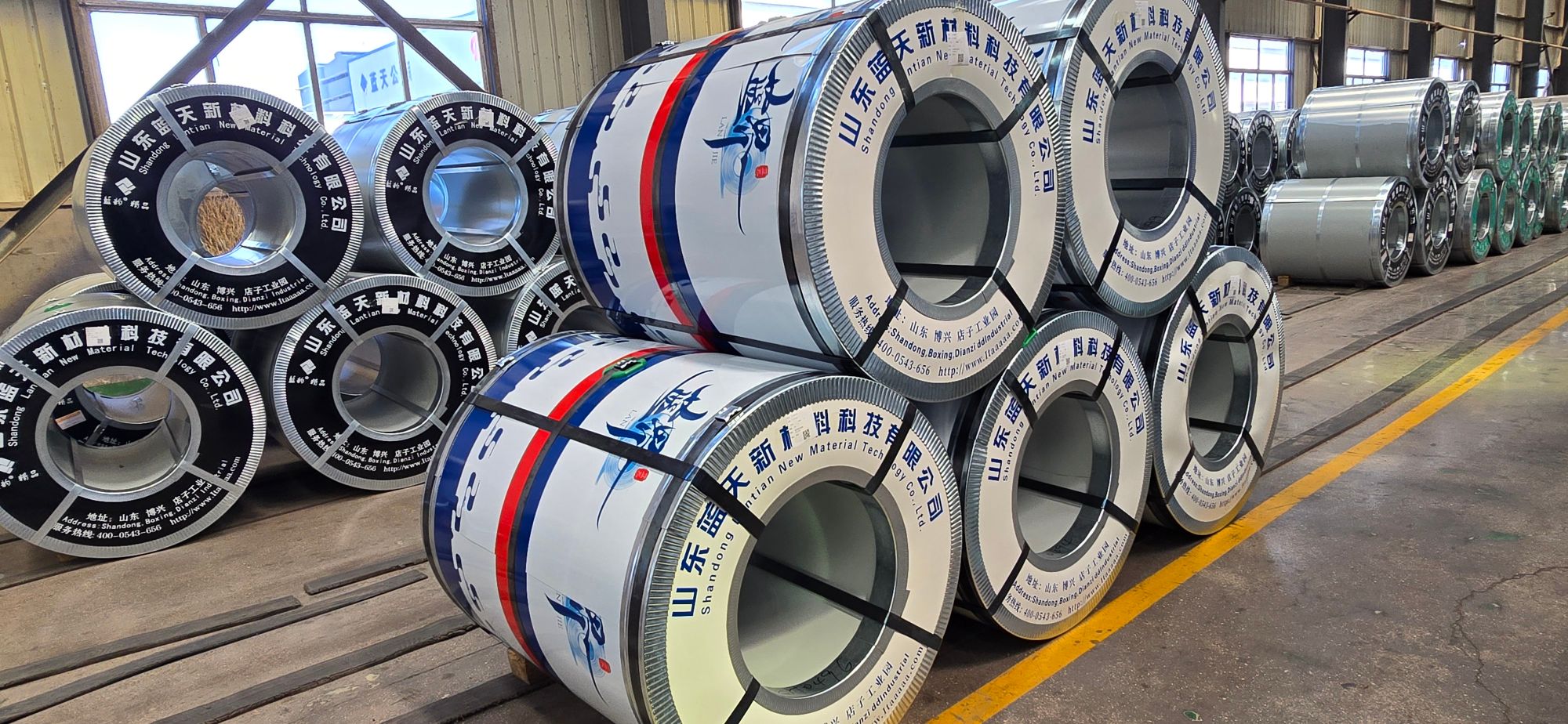
Use VCI paper plus a sealed polyethylene wrap with desiccant bags inside the coil eye. Avoid packing coils while the metal is warmer than the dew point, and add edge protectors before strapping. These steps keep moisture from condensing on the zinc layer.
A polyester topcoat over a 5% aluminum-zinc alloy layer works for moderate exposure, but high-humidity salt spray demands a PVDF or silicone-modified polyester finish with at least 20 microns dry film thickness. Ask for a 1000-hour neutral salt spray test report.
Store a physical master panel from the first approved batch in a dark, climate-controlled cabinet. When reordering, compare new samples against the master under D65 lighting and measure Delta E with a spectrophotometer. Keep the Delta E below 1.0 for architectural projects.
Mill test certificates for substrate and paint, a declaration of performance under EN 10169, and a safety data sheet for the coating system. Some importers also request a REACH compliance statement and a packing list itemized by coil number and weight.
This often comes from shearing without a deburring pass or from leaving cut edges exposed in storage. A thin touch-up pen with matching primer and topcoat applied within 24 hours of slitting stops most edge creep, especially on galvanized substrates.
SMP offers a harder surface and better cost control for wall cladding, but PVDF resists chalking and gloss loss far longer under intense UV. For high-end projects in the Middle East or Australia, PVDF is the safer choice even though it costs more per square meter.
Use a magnetic thickness gauge calibrated with certified foils, take readings on both sides at three points across the width, and average them. For a Z275 coating, the triple-spot average should not fall below 275 g/m² per side. Record the values on the inspection certificate.
Conclusion
Selling PPGI overseas means more than quoting a competitive price. The first step is knowing what your buyer's market actually demands, not just in color or gloss but in coating chemistry and test standards. A distributor in the Gulf may accept a standard polyester topcoat, while a Scandinavian buyer will push for high-build PVDF and documented resistance to UV and salt spray. Before production begins, pin down the exact specification—primer type, zinc coating mass on the substrate, dry film thickness—and confirm which national or regional standard applies. Keeping batch-level records of pretreatment chemicals, oven profiles and final inspection data is not bureaucratic overhead; it is your best defense when a container arrives with edge rust or color variation. Those records, tied to coil numbers and production dates, let you trace a defect in hours rather than weeks.
Then think like a logistics manager, not just a salesperson. Coils that leave your plant spotless can still arrive with white rust if moisture gets trapped under packaging or if the container was loaded in high humidity without desiccants. Use VCI paper, edge protectors and steel strapping, and photograph every step of loading. When the buyer questions quality, don't argue—offer the third-party inspection report from SGS or Bureau Veritas alongside your own mill certificate. It shifts the conversation from opinion to evidence. Equally important is the paperwork flow: a letter of credit that demands a document you cannot produce, or a bill of lading dated after the latest shipment date, can erase your margin. Read every clause before accepting the order, and build in buffer days for inspection and courier delays. After delivery, don't disappear. Set up a simple feedback loop for coating performance and damage rates. Keep a small buffer stock of the exact paint system and gauge so a repeat order or a warranty claim can be handled in days, not months. That kind of reliability is what turns a one-time buyer into a long-term account.
Contact Us
Contact Person: Nia
Email: [email protected]
Tel/WhatsApp: +86 18954360337
Website: https://www.sdppgi.com