

Ergonomic Office Chair Exporters: What to Look for in a Reliable Supplier
2026-10-06
Sourcing ergonomic office chairs from overseas shouldn’t feel like rolling dice. Yet too many buyers learn the hard way that a polished catalog and quick sample don’t guarantee consistent quality, honest lead times, or real lumbar support. Before you commit to an exporter, you need to look past the spec sheets. This post walks through the signals that separate dependable suppliers from costly shortcuts—and why OFCJNS has become a benchmark for buyers who refuse to compromise on comfort or reliability.
Tour the production floor remotely before committing
You don't need to board a plane to see how your products are actually made. With a live video walkthrough, you can watch raw materials move through cutting, stitching, and packing stations in real time, from anywhere. Ask the floor manager to pause at any machine, zoom in on QC checkpoints, or show you the lighting and storage conditions. This kind of unfiltered access often reveals more than a polished audit report.
A remote tour also lets you compare multiple suppliers on the same day, without the jet lag. Have each facility show the same three things: where defects are logged, how workers handle rush orders, and what happens on the line during shift change. You'll quickly notice who improvises and who follows a rhythm. That distinction rarely shows up in email chains or spec sheets.
Finally, use the tour to test communication. Ask for a close-up of a label file you sent last week, or request they tilt the camera toward the ceiling joints near the loading dock. If the person on the other end hesitates, loses connection, or can't find the right section without a scripted script, treat that as a signal. The floor you see on screen is the floor you'll get when problems arise at 11 p.m. your time.
Check for ergonomic certifications that actually matter
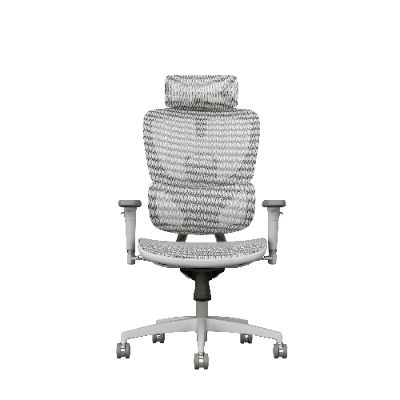
A quick scan of any office chair listing will surface a parade of badges, logos, and claims—many of them invented by the manufacturer to imply scientific backing. Terms like “ergonomically certified” or “doctor recommended” often carry no third-party weight. Before you trust a sticker, flip it around: who issued it, what test methods did they use, and can you find the actual certificate number? If the answer is vague or points only to the seller’s own website, treat that certification as decoration, not evidence.
The certifications that actually hold up tend to come from independent bodies with published criteria. For seating, BIFMA’s level program covers sustainability and durability, but for ergonomics specifically, look for compliance with ANSI/HFES 100 or the European EN 1335 series—though even these are baseline standards, not guarantees of comfort. GREENGUARD or Indoor Advantage Gold address chemical emissions, which matters for indoor air but says little about your lower back. A chair can pass all of them and still be miserable to sit in for eight hours.
So treat certifications as a filter, not a final verdict. Pull the actual test report if you can, and cross-check the chair’s adjustability range against your own body dimensions. A genuinely useful ergonomic label will reference measurable things like seat depth range, lumbar height adjustment, and recline tension—not just “contoured foam.” If the brand can’t point you to those numbers, the badge on the armrest is probably worth less than the plastic it’s printed on.
Confirm their ability to adapt designs to your market's needs
Ask for concrete examples that move beyond portfolio screenshots. A reliable partner walks you through how they adjusted typography, color contrasts, or layout rhythms for a specific region. For example, they might explain why a text-heavy market needed denser information architecture, or how they reworked visual hierarchy for audiences that scan pages in a non-linear way. The key is hearing about trade-offs: what they changed, why it mattered, and how the final design performed after launch.
Push past the vague promise of localization and get into the mechanics. Do they talk about flexible components, spacing systems that survive longer words, or image choices that respect local norms? Can they show one design system that flexes across multiple markets without breaking? Strong teams treat market adaptation as a constraint from the first wireframe, not as a correction after testing.
Finally, pay attention to the questions they ask. Partners who adapt well want to know about purchase habits, trust signals, color associations, and the exact phrases customers use when describing the product. If their first instinct is to ask rather than assume, that is the clearest sign they can shape the design around how your market actually behaves.
Review packaging methods to prevent costly transit damage
Start by mapping where damage actually happens. Pull carrier claims, warehouse photos, and customer unboxing complaints for the last six months; a clear pattern usually points to a single weak point—often the same corner or edge taking repeated hits.
Then test current packaging with a drop-and-vibration sequence that mimics real handling, not just a lab standard. Switch to double-wall corrugated at high-impact zones, use suspension inserts or foam-in-place for fragile items, and close the gap between product and box so movement is limited to less than 10 mm in any direction.
Finally, review pallet loading and strapping. Even the best carton fails when a pallet shifts during braking or forklift transfer, so edge protectors, anti-slip sheets, and balanced stacking often prevent more damage than upgrading the box itself.
Evaluate response time and problem-solving in early emails
When looking back at the first few exchanges, pay attention to how long it took for each reply to land. A quick turnaround often signals engagement and a sense of priority, but don't mistake speed for quality. Someone might respond within minutes with a vague one-liner, while another takes a few hours to send a detailed, actionable answer. The key is whether the delay was reasonable given the complexity of the question and whether the sender set clear expectations about when they'd get back.
Problem-solving in early emails goes beyond simply answering the question. Look for evidence that the person actually understood the issue before jumping to a solution. Did they ask clarifying questions? Did they break the problem into smaller parts? Or did they just paste a generic fix without addressing the root cause? A strong early response often includes a brief summary of what they think is wrong, a proposed next step, and an offer to adjust if that doesn't work.
Also consider how they handled uncertainty or mistakes in those first messages. If they didn't know the answer, did they say so plainly and point to another resource? If they made an error, did they correct it quickly without being defensive? These early signals tell you a lot about whether the person will be reliable and easy to work with later on.
Pin down warranty and spare parts availability upfront
Warranty terms often look solid on a brochure but fall apart in the field when a motor fails or a controller board dies. Before signing anything, get the supplier to state exactly which components are covered, for how long, and whether on-site labor is included or billed separately. A vague promise of 'full support' means nothing if the fine print excludes seals, bearings, or software updates.
Spare parts availability is where downtime gets expensive. Ask for a written commitment on how long critical spare parts will remain stocked, and what the guaranteed dispatch time is for non-stocked items. If the manufacturer discontinues a model, you need to know whether compatible parts will still be produced or sourced for a set number of years. Some suppliers keep regional depots; others ship from overseas, which can add weeks to a repair.
Push to have these details written into the purchase agreement, not just mentioned in a sales call. Include penalty clauses for missed spare-part delivery windows and a clear escalation path for warranty claims. The goal is to lock down the total cost of ownership before the equipment is bolted to your floor, not to discover after the first breakdown that a $20 sensor has a six-week lead time.
FAQ
Ask for detailed product cut sheets showing adjustable lumbar depth, seat pan slide, synchro-tilt mechanisms, and armrest articulation. A supplier with real ergonomic expertise will be able to explain the biomechanical reasoning behind each feature and share test results from BIFMA X5.1 or EN 1335. If they only talk about mesh color and headrest height, you are likely dealing with a generic trading company.
A third-party audit is non-negotiable. Insist on a report that covers assembly line flow, raw material storage conditions, QC checkpoints, and worker training records. If possible, send your own inspector or hire a firm like SGS or Bureau Veritas to walk the floor while a real production run is happening, not a staged sample line.
Certifications are a starting point, not a guarantee. I have seen suppliers wave an ISO 9001 certificate while shipping chairs with cracked bases. Dig into their rework rate, ask for recent customer references in your target market, and order a pre-production sample that you actually sit in for a week. Check how quickly they respond when you report a defect during sampling.
Ask for a portfolio of past customization projects, including 3D drawings, mold modifications, and fabric or mesh substitutions. A capable exporter will walk you through their tooling lead time, explain the minimum order quantity for custom components, and be upfront about setup fees. If they hesitate to share CAD files or keep referring to their standard catalog, they lack true R&D depth.
Be wary of vague answers on weight capacity ratings, foam density, or gas lift class. A price quote that is 30 percent below competitors is usually a sign of substandard materials. Avoid suppliers who refuse to provide a factory address, delay sending certification documents, or switch sales representatives mid-negotiation without explanation.
It matters more than most buyers realize. You need a clear warranty policy on mechanisms, gas lifts, and mesh fabric, plus a commitment to stock spare parts for several years. A reliable exporter will provide installation videos, troubleshooting guides, and a named contact for warranty claims. If they cannot tell you the expected failure rate of their tilt mechanism, treat that as a warning.
Ergonomic chairs have many moving parts and large curved backrests, so packaging design directly affects damage rates. Confirm whether they use molded foam inserts or double-wall cartons, and ask for drop test data. You also need to compare full container load versus LCL costs, check if the chair base can be nested to save space, and clarify who handles port clearance and last-mile delivery.
Conclusion
A dependable ergonomic chair exporter rarely looks impressive only in a catalog. Before placing a first order, ask for a live video walkthrough of the production floor—not a polished promo clip—so you can see how frames are welded, foam is cut, and final assembly is handled. That glimpse tells you more about quality control than any spec sheet. Next, push for certifications that carry real weight in your target market, such as BIFMA X5.1 in North America or EN 1335 in Europe. A supplier that treats these as baseline rather than optional extras is usually serious about compliance. Also test how willing they are to adjust seat depth, lumbar tension, armrest height, or upholstery options to match regional body types and local office norms. If they only offer one fixed design, you will end up fighting the product in every sales conversation.
Packaging deserves just as much attention as the chair itself. Ask for photos or videos of export cartons, internal bracing, corner protectors, and the exact drop-test standards they follow; a chair that survives a container voyage without scuffs or cracked bases saves you thousands in returns. Early email exchanges are equally revealing. A supplier that answers specific questions within a day, proposes solutions instead of excuses, and flags potential delays before you ask is far more likely to handle real problems well. Finally, lock down warranty terms and spare parts availability before signing anything. A five-year warranty means little if replacement gas lifts or casters take three months to ship. The most reliable exporters keep common parts in stock and can send them with your next order, which keeps your customers running and your reputation intact.
Contact Us
Contact Person: Diff Wang
Email: [email protected]
Tel/WhatsApp: +8613650281199
Website: https://www.ofcmeshchair.com/