

EPDM Granule Production Line Company: How to Evaluate Quality and Long-Term Performance
2026-11-24
Most EPDM granule production line buyers find out too late that a low purchase price isn't the same as long-term value. Bearings wear faster, output drifts, and support goes quiet after commissioning. If you're comparing suppliers now, the real question isn't just who can build the line—it's who builds it to stay predictable years down the road. That's the lens SFC uses, and it's what the evaluation framework below is built on.
Where Raw Material Discipline Shows Up First
Raw material discipline rarely announces itself in a boardroom. It shows up at the receiving dock, in the first cut, and in the quiet of a batch that runs without adjustment. The earliest sign is often the way incoming lots are checked against the actual spec sheet, not just the certificate that arrived with them, and whether a questionable lot is quarantined before it can reach the line.
It also appears in how operators handle material transitions. When a new supplier shipment behaves slightly differently, disciplined teams catch the shift in viscosity, grain size, or moisture before it becomes a downstream defect. They log the variation, adjust the process within agreed limits, and feed that data back to purchasing instead of silently compensating on the floor.
The clearest evidence is traceability under pressure. If a defect emerges later, teams with raw material discipline can trace the issue to a specific lot, a specific silo, or a specific delivery window in minutes rather than days. That speed comes from habits built long before anything went wrong.
Signs a Production Line Will Hold Its Specs Over Time
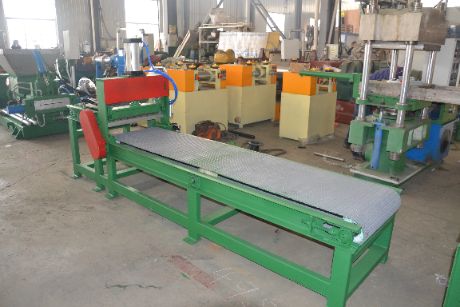
A line that will hold its specs usually stops generating small surprises. Offset adjustments become rare, and when they do happen, they trace back to something concrete—a tool change, an incoming material lot, a note from the previous shift—not a vague sense that a dimension wandered. The measurement history flattens into a narrow, predictable band instead of the slow sawtooth pattern that comes from chasing drift. That quiet, uneventful stretch is easy to ignore, but it often means the process has settled into a stable center.
Maintenance and setup records tell a similar story. Calls shift from urgent correction to scheduled inspection, and the setup sheet stops changing from week to week. First-piece results stay dull enough that nobody forwards them around the team anymore. When the same fixture, operator, and material lot keep producing nearly identical numbers without special intervention, the controls in place are proving they can carry the line.
Listen to how people talk about the process. If veterans no longer begin a run by pointing out the dimension that always moves, and a new operator can hit nominal values by following the standard work instructions alone, the knowledge has moved out of a few experienced heads and into the process itself. A line that leans less on individual heroics and more on repeatable settings is the one most likely to keep holding its specs months down the road.
Maintenance Details That Reveal Long-Term Thinking
The first thing worth checking is whether routine upkeep was designed into the space instead of bolted on later. Look at how a filter sits in a mechanical system: if the housing faces an open aisle, has a drip tray within reach, and uses a common cartridge size, the person who planned it was thinking about the next ten services, not just the installation day. The same shows up outdoors when deck boards are gapped to shed debris, fasteners are spaced to let a single board lift out cleanly, and the end grain is sealed before it ever sees weather.
Small material choices often expose the deeper intent. Stainless hardware in hidden joints, UV-stable zip ties instead of basic nylon, touch-up paint stored with the original batch code, and an extra loop of cable behind a junction box all point to a mindset that expects seasons, vibration, and human error. These are not upgrades a visitor notices; they are quiet allowances for the fact that everything drifts out of alignment and eventually needs attention.
The clearest signal, though, is usually written down. A maintenance log that says “cleaned filter, will watch next month” is far less useful than one that notes the pressure drop, the replacement part number, and the exact torque needed to reseat the cover. When labels, diagrams, and spare parts are kept close to the equipment rather than in a forgotten folder, future work becomes faster and less destructive. That kind of thinking treats maintenance not as a chore to survive, but as a design requirement that continues long after the build is finished.
Questions to Ask About Heat, Speed, and Wear
Before you settle on a unit, get specific about thermal behavior under your actual workload. Ask what the case temperature reaches after a steady four-hour run, how much of that heat transfers to nearby components, and whether the cooling assumptions match a clean environment or a dusty one.
Speed questions should go beyond the headline number. Find out if the rated speed holds up with frequent starts and stops, whether rapid cycling introduces extra stress on seals or bearings, and how much the performance drops when lubrication temperature changes.
For wear, request the first failure point in field use rather than the best-case lab estimate. It is useful to ask which surfaces develop measurable wear first, how contamination affects that timeline, and what audible or visible cues appear before replacement becomes urgent.
How to Spot Overbuilt vs. Underbuilt Equipment
A quick way to separate overbuilt gear from underbuilt gear is to look at the joints, welds, and material thickness relative to the intended workload. Overbuilt equipment often carries extra reinforcement plates, heavier gauge steel, or oversized bearings that seem out of proportion for a light-duty task. Underbuilt machines, by contrast, reveal themselves through thin sheet metal, small fasteners that loosen quickly, or pivot points that flex under normal force. Run your hand along the frame edges and feel for sharp transitions or uneven gaps; this tactile check often tells you more than a spec sheet.
Another signal appears during routine maintenance. Overbuilt equipment tends to shrug off minor impacts and keeps working even when filters are dirty or lubricant is a little low. Underbuilt equipment, on the other hand, shows early wear on bushings, belts, and seals after only a few hours of typical use. Pay attention to how the machine responds to a sudden load: an overbuilt unit may feel slightly sluggish because of the extra mass, while an underbuilt unit will vibrate, chatter, or make a high-pitched strain sound that fades quickly as parts deflect.
Finally, compare the manufacturer's stated duty cycle with the physical size of the cooling system, motor mounts, and structural members. Overbuilt equipment often has a cooling fan, radiator, or heat sink that looks one size too large for the engine or motor. Underbuilt equipment cuts corners here, using minimal fins, thin shafts, or compact gearboxes that run hot and wear fast. If the machine weighs noticeably more than a similar model from another brand, that extra mass is usually a sign of overbuilding; if it feels unusually light for its rated capacity, you are probably looking at an underbuilt design.
What Real Operating Costs Look Like After the First Year
Once the first-year honeymoon ends, the costs that were easy to ignore start showing up as line items. The card processor drops its intro rate, insurance renews higher after a small claim, and the software that was “free for the first year” becomes a monthly bill. Even small equipment begins to need replacement parts, cleaning supplies, or calibration, and none of that was in the original launch budget.
Operational spending also shifts from one-time setup to recurring upkeep. If you handle physical goods, boxes, tape, labels, storage, and return processing add up faster than expected. If you run a service business, scheduling tools, mileage, client communications, and the occasional refund or dispute quietly raise the cost of doing business. These are not signs of failure; they are simply what it costs to keep the doors open after the excitement fades.
What changes in year two is that you can finally separate fixed overhead from variable spending. Some costs can be cut without much damage, others can be renegotiated, and a handful are worth keeping because they save time or prevent larger problems. Watching the actual monthly outflow for a few months tells you more than any first-year projection.
FAQ
The clearest sign is how the line handles thermal load in the extruder and curing unit. Look for barrel liners made from nitrided steel or bimetallic alloys, not standard 38CrMoAl with thin hardening. Check whether temperature control zones are independent and whether the screws are ground rather than milled. In long runs, small gaps in machining lead to inconsistent shear heating, which quietly shortens the life of EPDM granules. Ask the maker for hardness test reports of critical wear parts, not just photos of shiny equipment.
Focus on whether the PLC records material temperature, screw torque, and cooling air humidity as a continuous curve rather than just showing setpoints. A line that saves batch profiles lets you compare every shift and catch drift before it becomes rejected product. Also check if the supplier can grant remote diagnostics with different access levels. That often indicates the control logic was developed in-house instead of pieced together by a third-party integrator. The practical difference shows up in lower deviation across batches and faster troubleshooting.
Ask for the working days, shift pattern, and actual uptime used to calculate that number. Many suppliers quote theoretical capacity at 24 hours and 365 days, which no plant achieves. Request three references that have run the same model for more than five years and ask those plants about their average output, not their best month. Better still, have the supplier walk you through a full recipe cycle from feeding to packing and identify where waiting time occurs. That reveals whether the bottleneck is in the machine or in the upstream material handling.
EPDM is sensitive to heat history. If granules leave the curing zone too warm or are cooled unevenly, residual heat continues crosslinking inside bags or silos, leading to color shift, hardening, or clumping months later. A well-designed line uses staged cooling with airflow that penetrates the granule bed rather than just blowing across the top. Ask the supplier about temperature at the discharge point across the full bed width. A difference of more than a few degrees is a warning sign for later quality complaints.
Beyond the obvious screen packs and cutting blades, plan for screw elements, barrel bushings, die plates, and conveyor belts exposed to heat. Ask the supplier to list the expected service life of each under your target compound hardness and filler loading. A responsible company will give ranges in operating hours and include those figures in the technical proposal. If they hesitate to commit numbers, maintenance costs can easily outgrow the original purchase price. Also confirm that spare parts remain backwards-compatible if minor design updates occur.
Request a detailed installation and commissioning schedule with named engineers, not just a promised start date. Then ask what happens in week two if output is below acceptance criteria. The supplier's answer should identify measurable limits, correction deadlines, and penalty terms. Also check whether they offer training in troubleshooting and recipes, not just button-pushing. A company that pushes its engineers to transfer know-how is far more valuable over a 10-year lifecycle than one that only sends technicians for a week.
Energy per ton, spare parts after the warranty, and downtime waiting for imported components can outweigh a low initial price. Look at installed motor efficiency, heat recovery from the curing section, and whether key sensors are standard industrial brands available locally. Ask the supplier how long it takes to deliver a replacement screw segment or control module in your region. If the answer is measured in months rather than weeks, factor that into your risk assessment. Lifetime cost is decided by the worst downtime event, not by average performance.
Conclusion
A production line that holds up over time rarely hides its weaknesses once you look past the polished exterior. Start where raw material discipline appears first: feed hoppers, dosing screws, and mixing chambers should show evidence that the company understands EPDM particle size variation, moisture sensitivity, and the way recycled rubber behaves under shear. If those early contact points are flimsy, difficult to clean, or lack adjustment range, downstream consistency will drift. Long-term spec retention also tends to show in places like bearing housings, temperature control loops, and drive couplings. Ask how the line behaves when granulate feed changes by ten percent, when ambient temperature climbs, or when a batch runs twenty minutes longer than planned. The answers reveal whether the design has actual thermal and mechanical headroom instead of a narrow comfort zone.
Maintenance details are equally telling. Grease points that require a ladder to reach, wear plates that cannot be shimmed or rotated, and proprietary parts with long lead times all point to equipment that was not designed around real operating life. Overbuilt machines are not necessarily better; extra mass in the wrong places adds energy cost without improving output, while underbuilt frames transfer vibration into drives, dies, and electrical cabinets. The most useful evaluation balances these two extremes by checking where steel thickness, motor sizing, and cooling capacity actually match the rated throughput. After the first year, the honest operating picture includes not just power consumption and spare parts, but also scrap rates, unscheduled downtime, and the labor needed for cleaning between color changes. A line that looks cheap at commissioning often becomes expensive once those hidden costs are measured monthly.
Contact Us
Contact Person: Chen Zhengwei
Email: [email protected]
Tel/WhatsApp: +86-13963975727
Website: https://www.sfcrubbermachine.com