

Double Jacketed Gaskets: China's Top 10 Trusted Suppliers for Industrial Sealing
2026-07-07
In the world of industrial sealing, double jacketed gaskets quietly handle extreme pressures and temperatures that would ruin ordinary components. But choosing the right supplier can make or break your system's reliability. China has emerged as a hub for top-tier gasket manufacturing, and among the trusted names, Kaxite stands out for its precision engineering. In this article, we pull back the curtain on China's 10 most reliable double jacketed gasket suppliers—each offering something unique for demanding applications. Stick around; the list might surprise you.
Why Double Jacketed Gaskets Dominate High-Pressure Sealing
At pressures that turn ordinary seals into liabilities, the double jacketed gasket operates on a fundamentally different principle—one that leverages mechanical interlock and elastic recovery in a single, compact profile. Unlike solid metallic rings that demand excessive bolt loads to conform, or soft cut gaskets that extrude under relentless stress, this design layers a pliable filler within two metallic skins. Under compression, the jacket deforms just enough to fill flange imperfections while the core provides the resilience to rebound during thermal cycling. It’s this combination of immediate adaptability and long‑term memory that makes it indispensable in oil refineries and chemical plants where 1500‑class flanges are routine.
The true edge, however, appears in the stability it maintains when systems oscillate between hot and cold. A corrugated metal core, often graphite‑infused, distributes stress evenly across the sealing face and prevents the localized collapse that plagues simpler constructions. Test data from independently‑operated labs often shows leak rates staying orders of magnitude below those of spiral‑wound alternatives after aggressive temperature swings. Field engineers we spoke with consistently pointed to this robustness as the difference between a scheduled outage and unplanned downtime—a critical metric when lost production is measured in thousands of dollars per minute.
What rarely shows up on datasheets, though, is the forgiving nature during installation. Even when flange alignment isn’t perfect—and it seldom is on aging equipment—the double jacket’s contoured surface compensates without demanding the painstaking surface-prep rituals that solid metal gaskets require. Crews working turnaround shifts regularly cite this as a deciding factor; a gasket that seats reliably the first time, with standard torque patterns, removes one more variable from a high‑stakes process. The savings compound when you factor in reduced inventory complexity, since a single well‑chosen style often covers multiple service conditions that would otherwise require separate gasket types.
Inside China's Manufacturing Hubs for Industrial Gaskets
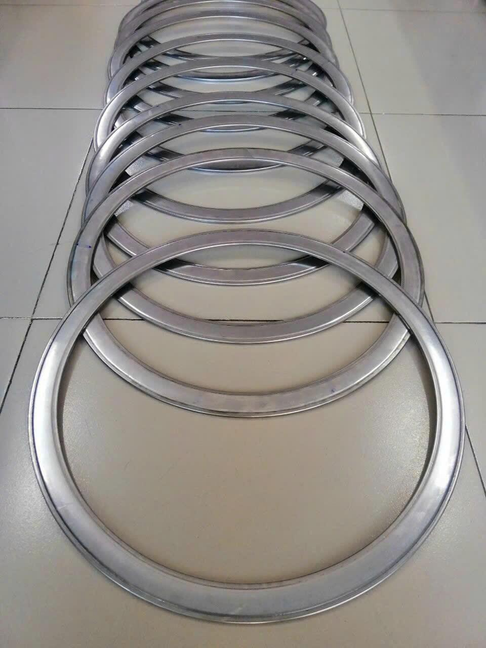
Walking through the sprawling industrial parks in Ningbo or Wenzhou, the rhythmic hum of hydraulic presses and the faint scent of rubber and graphite signal that you’ve entered the heart of gasket production. Here, generations of family-run workshops have evolved into modern factories, yet many still hand-finish spiral-wound gaskets with the same meticulous attention their grandfathers practiced. The combination of low-cost raw materials, a deep pool of skilled labor, and a logistics network that can ship container loads to any port within days has turned these coastal cities into the world’s go-to source for sealing solutions.
Moving inland, clusters around Tianjin and Hebei focus on high-volume, standardized products—cutting gaskets from compressed fiber sheets by the million each month. But the real gems are the smaller firms that specialize in custom jobs: oversized PTFE gaskets for chemical reactors, or exotic alloy rings machined to tolerances few Western shops would attempt at the same price. Walk into one of these shops, and you’ll often find the owner on the floor, caliper in hand, debating with a long-time client over a slightly imperfect edge. It’s this blend of precision and personal stake that keeps buyers coming back.
Quality control has quietly improved across the board, driven less by formal certificates than by the relentless feedback loops of global customers. Many hubs now house their own testing labs—not just for show, but because they’ve learned that a failed seal can cost a repeat order. From graphite laminate to metal jacketed designs, the region thrives on turning around custom samples in days rather than weeks. If you’re sourcing industrial gaskets today, chances are your supply chain weaves through one of these bustling districts, where tradition and technology share the same workbench.
Materials and Design: What Makes a Gasket Truly Reliable
The reliability of a gasket hinges on a delicate interplay between the chosen material and the design geometry. High-performance applications demand more than just a soft, compressible filler; they require a material that can chemically and thermally withstand the media while maintaining a consistent seal under fluctuating pressures. For instance, expanded PTFE offers near-universal chemical resistance and conforms to irregular flange surfaces, but its cold flow tendencies must be compensated by a robust design—often integrating a densified outer layer or a rigid core. Similarly, graphite excels at extreme temperatures yet relies on a metal reinforcement, such as a spiral wound or corrugated core, to prevent fragmentation during thermal cycling. Without this synergy, even the most durable material will fail if the gasket shape doesn't evenly distribute bolt load or accommodate flange rotation.
Design specificity goes beyond generic standards; it considers the flange type, bolt layout, and operating dynamics. A raised face flange, for example, benefits from a gasket with a slightly narrower contact ring to concentrate the available seating stress and ensure a tight seal without crushing the material. In contrast, a flat face flange demands full face coverage to prevent bending and leakage across the entire surface. Stress relaxation, a common pitfall, can be mitigated by incorporating a serrated or camprofile design on metal gaskets, which creates multiple high-pressure zones that adapt to micro-movements. Additionally, the choice between a homogeneous or layered structure affects recovery—laminated graphite gaskets with adhesive-free lamination retain resilience better than a single pressed sheet under continuous compression cycles.
The most reliable gaskets emerge when material science and mechanical design are treated as a unified system rather than separate choices. For example, in oxygen service, the material must avoid any combustibility risk, prompting the use of metal-jacketed gaskets with a soft inert filler, but the jacket's edge geometry must avoid crevices that could promote ignition. In cryogenic applications, materials like PTFE or flexible graphite must pair with a design that allows for contraction without losing sealing stress, often solved by using a wave spring or a living-hinge effect in the profile. As a result, field-proven reliability comes from iterative validation testing—heat aging, thermal shock, and relaxation trials—ensuring that the final design predicts performance over years of service, not just initial installation.
Top-Notch Quality Control Practices Among Chinese Suppliers
Many top-tier Chinese suppliers have moved far beyond simplistic end-of-line checks, weaving quality control into every stage of production. Raw materials are rigorously inspected upon arrival, with some factories maintaining approved vendor lists and conducting periodic audits of their own suppliers. Production lines often feature real-time monitoring tools and statistical process control, allowing operators to catch deviations before they result in defects. This process-focused mindset ensures consistency from batch to batch, rather than relying on final inspection alone.
Collaboration with international clients has driven the adoption of globally recognized standards like ISO 9001, IATF 16949, or GMP, but the best factories go further. They invest in sophisticated testing equipment—such as coordinate measuring machines, environmental chambers, and automated optical inspection systems—that rivals what’s found in Western facilities. Cross-functional teams analyze quality data regularly, using root cause analysis and corrective action plans to solve recurring issues permanently. The goal isn’t just to meet specifications, but to anticipate potential failure points before they impact a shipment.
What sets leading Chinese manufacturers apart is a cultural commitment to quality that extends beyond the factory floor. Operators receive ongoing training, and many companies implement reward systems for defect reduction and process improvements. Documentation is meticulous, with detailed records traceable from raw material to finished product. During third-party audits or client visits, this transparency becomes immediately apparent. It’s this blend of advanced technology, systematic methodology, and human accountability that enables Chinese suppliers to deliver finished goods with a defect rate approaching zero—even under tight deadlines and cost constraints.
Real-World Applications Where Double Jacketed Gaskets Shine
In the demanding environment of petrochemical plants, double jacketed gaskets are the unsung heroes preventing leaks in heat exchangers and reactor flanges. Their ability to withstand extreme temperature swings—from cryogenic to over 1000°F—while maintaining a tight seal under fluctuating pressures makes them indispensable. The interlocked jacket design with a soft filler adapts to slight flange irregularities, reducing the need for constant retorquing that plagues standard gaskets. This reliability translates directly to reduced downtime and safer operations in processes handling aggressive hydrocarbons.
Power generation facilities rely on double jacketed gaskets in critical steam and gas turbine connections, where failure is simply not an option. The cladded construction resists both the corrosive attack of superheated steam and the mechanical stress of vibration, outlasting spiral-wound alternatives in these high-cycle applications. Maintenance teams favor them for boiler manways and valve bonnets because they cut inspection frequency without compromising safety—a practical advantage when every hour of shutdown costs thousands.
Double jacketed gaskets also prove their worth in marine and offshore systems, where salt spray and constant motion challenge conventional seals. Ballast water line flanges and deck penetrations stay leak-free season after season, thanks to the gasket's ability to handle misalignment from hull flexing. The metallic covering provides a sacrificial layer against atmospheric corrosion, while the filler compensates for the uneven surfaces common in welded ship assemblies, eliminating the need for custom machining before installation.
How to Choose the Right Supplier for Your Sealing Needs
Picking a sealing partner goes way beyond comparing price tags. You want a supplier who genuinely understands the pressures—literally and figuratively—your application faces. Start by digging into their material expertise: do they offer uncommon elastomers or custom compounding for aggressive chemicals or extreme temperatures? A supplier that asks about your operating environment, media compatibility, and dynamic movements before quoting is usually one worth keeping.
Then, test their responsiveness and service lifecycle. Do they maintain regional support staff who can visit your site, or are you stuck waiting on hold with a call center? The best relationships form when a supplier can offer design-for-manufacturability feedback early on, helping you avoid costly prototyping delays. Also check if they stock commonly needed profiles or provide vendor-managed inventory—these quiet logistics perks often prevent production stoppages down the line.
FAQ
Double jacketed gaskets consist of a soft filler material fully enclosed by a metal jacket, typically stainless steel. The metal outer layer provides structural integrity and resistance to high temperatures and pressures, while the inner filler—often graphite or PTFE—offers excellent conformability to flange irregularities. This combination creates a reliable seal in demanding applications like heat exchangers, pressure vessels, and piping systems, effectively preventing leaks even under fluctuating thermal and mechanical loads.
China has grown into a global hub for industrial sealing components, offering a blend of advanced manufacturing capabilities and cost efficiencies. Many Chinese suppliers have invested heavily in automated production lines and rigorous testing protocols, delivering gaskets that meet international standards such as ASME and DIN. The ability to customize dimensions, materials, and coatings quickly, along with competitive pricing and reliable logistics, makes Chinese manufacturers a practical choice for both large-scale projects and niche requirements.
The choice of filler hinges on the operating environment. Graphite fillers excel in high-temperature services (up to 600°C in steam) and provide excellent chemical resistance, making them ideal for refineries and chemical plants. PTFE fillers are preferred for aggressive chemical media and applications requiring purity, such as pharmaceutical or food processing. Some manufacturers also offer mica-based fillers for extreme fire safety scenarios. Always match the filler to the temperature range, chemical compatibility, and pressure cycling demands of the system.
Trustworthy suppliers typically hold certifications like ISO 9001, API 6FA, or specific pressure equipment directives. Requesting sample batches for third-party testing—checking compression recovery, sealability, and corrosion resistance—is a straightforward way to validate quality. Visiting the factory or conducting live video audits of their production and quality control processes also reveals a lot about their operational standards. Established suppliers will openly share test certificates and reference projects without hesitation.
One persistent myth is that lower cost automatically means lower quality. In reality, many Chinese manufacturers have upgraded their facilities to match or exceed western standards, and the price advantage often comes from integrated supply chains and lower overheads rather than compromised materials. Another misconception is that customization is difficult—most top suppliers actively welcome tailored orders, from unusual shapes to hybrid metal jacket designs, often delivering faster than overseas counterparts.
Proper installation is half the battle: flanges must be clean, aligned, and torqued evenly in a star pattern to prevent jacket damage. Regular inspection for signs of creep, erosion, or flange face corrosion helps catch issues early. Re-torquing after the first thermal cycle is advisable for some systems. Storing unused gaskets in a dry, cool environment and avoiding stacking heavy objects on them preserves the metal jacket's shape and filler integrity between uses.
They are a staple in oil and gas, petrochemical, power generation, and shipbuilding industries. These environments often involve high pressures, temperatures, and aggressive media that would degrade standard non-metallic gaskets. Double jacketed gaskets reliably seal pipe flanges, heat exchanger joints, and valve bonnet connections where safety and minimal downtime are critical. Their durability under thermal cycling and vibration also makes them popular in steam systems and turbine assemblies.
The decision comes down to operating conditions and flanges. Double jacketed gaskets are preferred for flat-face flanges and lower bolt load scenarios because they require less compressive force to seal effectively. Spiral wound gaskets, with their alternating metal and filler windings, handle higher pressures and wider temperature swings better but need raised face flanges and sufficient bolt loading. Considerations like gasket seating stress, fugitive emission standards, and ease of removal should guide the final choice—double jacketed gaskets often win on reusability and simplicity in moderate services.
Conclusion
In the demanding world of industrial sealing, double jacketed gaskets have emerged as the undisputed champions of high-pressure environments. Their remarkable ability to withstand extreme temperatures, aggressive chemicals, and intense mechanical stress stems from a layered construction that pairs a soft filler material with a robust metal sheath. This design not only ensures an exceptionally tight seal but also provides outstanding resilience and longevity, reducing maintenance downtime and equipment failure risks. China has solidified its position as a global hub for manufacturing these critical components, with clusters of expertise concentrated in regions like Zhejiang and Hebei. The top suppliers differentiate themselves through a relentless focus on materials science and design innovation, selecting optimal combinations such as graphite, PTFE, or ceramic fillers encased in stainless steel or exotic alloys. They leverage advanced R&D to refine the geometry of the jackets, ensuring uniform compression and minimal leakage paths. The result is a product line that consistently outperforms conventional gaskets in the most unforgiving industries, from oil refineries and chemical plants to nuclear power stations.
What truly sets China's ten most trusted suppliers apart is a deep-rooted commitment to quality control that permeates every stage of production. These companies employ a battery of sophisticated testing protocols—such as helium leak detection, hydrostatic shell tests, and high-temperature compression cycling—to verify that each gasket meets or exceeds international standards like ASME, API, and EN. Real-world applications provide the ultimate testament: whether sealing flange joints in a subsea pipeline, containing superheated steam in a power turbine, or preventing fugitive emissions in a petrochemical facility, these gaskets deliver unfaltering performance. Choosing the right partner, however, requires looking beyond technical specifications. The best suppliers offer comprehensive technical support, including on-site engineering guidance, custom design services, and rapid prototyping. They maintain robust inventories and responsive logistics to minimize lead times, and many hold key environmental and safety certifications, reflecting a holistic dedication to excellence. By combining cutting-edge craftsmanship with customer-centric service, China's premier double jacketed gasket manufacturers provide not just a product, but a guarantee of safety, efficiency, and peace of mind for the world's most critical sealing challenges.
Contact Us
Contact Person: Kaxite
Email: [email protected]
Tel/WhatsApp: 0086-574-87527771
Website: https://www.seal-china.com