

DIN Rail Power Supply Supplier Guide: Top Choices for Reliable Industrial Solutions
2026-05-25
When industrial automation demands unwavering reliability, the power supply you choose can make or break your entire system. DIN rail power supplies are the unsung heroes of control cabinets, yet finding a supplier that balances performance, durability, and cost is a challenge. In this guide, we cut through the noise to spotlight the top contenders—and you’ll quickly see why TPS stands out among them. Whether you’re upgrading legacy equipment or designing a new line, the right choice starts here.
How to Spot a DIN Rail Power Supply That Won’t Fail in Harsh Environments
When you’re installing power supplies in places like wind-swept offshore platforms or grimy factory floors, the first thing that separates a long-lasting unit from a quick failure is the attention to thermal design. Look for a generous heatsink that actually does something—fin spacing and orientation that encourages airflow, not just a chunky piece of metal slapped on for show. A supply that runs its key components cool at full load, even when the ambient temperature pushes past 60°C, is one that’s been engineered with component margins that matter. If the datasheet proudly lists an operating range down to –40°C, check if that’s just survival or full performance; a well-designed unit will start up reliably and hold regulation without derating curves that fall off a cliff.
Conformal coating isn’t just a buzzword—it’s the silent defender against the slow death caused by humidity, salt spray, and airborne contaminants. Peer into the unit’s specs to see if the PCB has a thick, even coating that extends to connectors and can handle condensing atmospheres. Better yet, some manufacturers pot the entire board in thermally conductive compound, which kills two birds with one stone: sealing out moisture and moving heat away from the hotspots. But coatings and potting are only as good as the enclosure that protects them. A flimsy plastic case with a poor IP rating will let in dust and liquid through seams and screw holes. Look for an ingress protection level that matches your worst-case scenario—IP67 means it laughs at temporary submersion, while IP20 is basically indoor jewelry. Don’t forget the terminal blocks; they should be shrouded and screw-clamp style, or better, spring-loaded to keep their grip when vibration tries to shake every connection loose.
Finally, trust in a power supply is built on testing, not marketing claims. The ones that survive the brutal shock and vibe profiles of MIL-STD-810 or EN 61373 have proved they can take the hits. A component derating that never exceeds 70% of its rating, even under transient overloads, is a sign that the engineers prioritized long-term drift over squeezing every last watt from a cheaper BOM. Check if the electrolytic capacitors carry a 105°C rating and a useful lifetime measured in years at full tilt, not just a cherry-picked benchmark. And when you hold the unit, it should feel dense and solid—a pressed steel or extruded aluminum case with secure mounting flanges that don’t flex. If the manufacturer is proud of their work, they’ll offer detailed application notes and won’t hide the warranty terms in fine print. A supply that’s truly rugged doesn’t need a glossy brochure; its build quality speaks for itself the moment you take it out of the box.
Brands That Consistently Deliver Clean, Stable Output for Sensitive Equipment
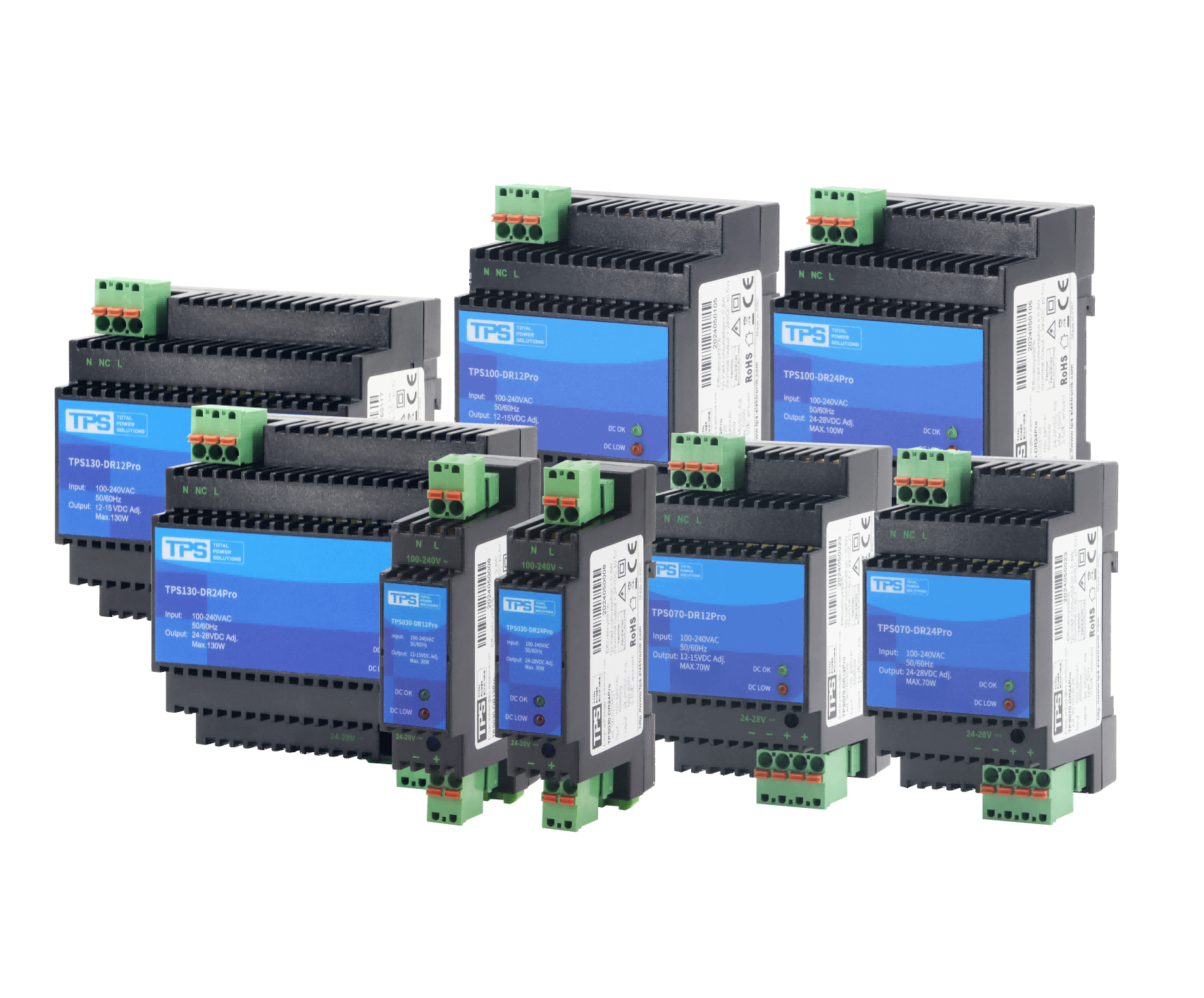
Finding a brand that truly understands the demands of sensitive electronics isn’t always straightforward. Many manufacturers claim to offer clean power, but only a few back it up with engineering that filters out noise and keeps voltage tightly regulated. These companies design their products around the needs of laboratories, medical equipment, and high-end audio systems where even minor fluctuations can cause problems.
What sets these brands apart is their attention to detail in the power path. From high-quality transformers to advanced filtering circuits, they invest in components that actively shape the output waveform. This means less harmonic distortion and fewer unexpected shutdowns, which can be critical for research instruments or production machinery that require hours of uninterrupted operation.
Over time, users come to rely on certain names because they deliver consistent performance season after season. Instead of flashy specs, the focus is on reliability metrics and real-world testing under various load conditions. Whether it is a precision power conditioner or a double-conversion UPS, these manufacturers have earned trust by ensuring that sensitive equipment receives exactly what it needs to run smoothly.
The Hidden Costs of Cheap Units: What Suppliers Don’t Advertise
When a price seems too good to be true, it usually is. Budget-friendly units often come with a quiet but costly catch: a lifespan that’s measured in months rather than years. The materials inside—from thinner wiring to lower-grade compressors—are optimized for initial performance, not longevity. What suppliers rarely mention is that the real expense isn’t the purchase price, but the sudden failure when you need it most, followed by repair bills that quickly erase any upfront savings.
Energy consumption is another silent drain on your wallet. Those attractively priced units tend to lack the efficiency of their mid-range or premium counterparts, running harder and longer to achieve the same result. Over time, the incremental jump in your utility bills can surpass the difference you thought you saved at checkout. It’s a deliberate design choice—cut corners on insulation and components, pass the long-term cost to the buyer—and it’s rarely spelled out on the spec sheet.
Then there’s the inconvenience you can’t put a price on: the noise, the inconsistent performance, and the shortage of spare parts when something does go wrong. Suppliers bank on you not noticing these drawbacks until you’ve already unboxed the unit and discarded the receipt. A cheap unit might solve an immediate problem, but the hidden premiums—time wasted, comfort compromised, and early replacement—create a cycle of spending that the initial advertisement conveniently omits.
Installation Blunders That Can Turn a Reliable Power Supply into a Fire Hazard
Power supplies are built to stringent safety standards, but even the best unit can become a serious fire risk if it’s installed without care. One of the most common mistakes is blocking ventilation. When a power supply is crammed into a tight space with its fan pressed against a solid panel or buried under a pile of cables, heat builds up rapidly. Over time, that trapped heat degrades internal components, melts insulation, and can eventually ignite nearby materials. It’s a slow, silent process that gives no warning until it’s too late.
Another frequent blunder is using mismatched or damaged cables, especially with modular power supplies. It’s tempting to grab a cable from a different brand because it fits, but pinouts vary wildly. Plugging an incompatible cable into your supply can send voltage to the wrong pin, shorting out the system and potentially sparking a fire right at the connector. Frayed or pinched cables pose a similar threat—exposed wires touching the case can cause arcing, and that arcing generates more than enough heat to start a fire inside seconds.
Lastly, ignoring the environment around the supply is a recipe for disaster. Installing a PSU in a workshop full of conductive dust, or in a place where moisture is likely to condense, invites corrosion and shorts. Even a tiny drop of water bridging two contacts can trigger a cascade of failures. It’s not just about the unit itself—the screws that mount it matter, too. Over-tightening can crack the PCB, while loose mounts lead to vibration that wears through insulation. Each of these oversights stacks the deck against safety, turning a trustworthy workhorse into a hidden hazard.
Future-Proofing Your Control Panel with the Right Voltage and Communication Features
Choosing a control panel that can adapt to tomorrow's demands starts with voltage flexibility. A design that accepts a wide input range—say, 100 to 240V AC—eliminates the need for external transformers or rewiring when your facility upgrades its power infrastructure. More than just tolerance, smart voltage sensing and auto-switching capabilities keep the panel stable during brownouts or surges, reducing downtime in unpredictable electrical environments.
Communication features are equally vital for staying ahead of the curve. Opt for panels that natively support industrial protocols like Modbus TCP, EtherNet/IP, or CAN bus while leaving room for future additions through modular expansion slots. This dual approach lets you integrate with legacy systems today and adopt IoT or edge-computing standards later without ripping out the entire cabinet. The ability to push data to cloud platforms or receive remote firmware updates quietly turns a static control panel into a connected, serviceable asset for years to come.
Ultimately, the right combination of voltage versatility and open communication turns your panel from a one-time purchase into a long-term investment. Instead of reacting to technology shifts with costly overhauls, you gain a platform that evolves alongside your operations. Every engineering decision made with flexibility in mind—from broad-spectrum power supplies to agnostic protocol stacks—directly cuts total cost of ownership while keeping your processes online through whatever changes the next decade brings.
When Standard Specs Aren’t Enough: Custom Solutions from Niche Manufacturers
Off-the-shelf specifications are designed to meet broad demands, but they often fall short when a project requires a precise fit, a unique material, or an unconventional function. Standard parts can force compromises in design, performance, or longevity, leaving engineers cobbling together workarounds that never quite feel right.
Niche manufacturers thrive where large suppliers see impracticality. They bring deep expertise in a focused domain—be it miniature high-torque gears, biocompatible seals, or ultra-low-outgassing components—and treat every order as a chance to refine a bespoke solution. The back-and-forth is collaborative, not transactional; they ask about operating environments, load cycles, and failure modes because their reputation is built on making the exact thing you need, not something close.
The result is a component that drops seamlessly into your assembly, often with unexpected improvements: weight savings from a smarter alloy choice, longer service intervals thanks to a proprietary coating, or a simplified interface that cuts assembly time. When the standard playbook ends, these specialists take the constraints you’ve been working around and turn them into the blueprint for a part that feels inevitable once it’s in your hands.
FAQ
Focus on wide temperature tolerance, rugged enclosures, and protections against shock and vibration. Also check for conformal coating to guard against humidity and dust.
It depends on your facility's power distribution and load size. Single-phase units suit lighter loads and standard wall outlets, while three-phase models offer better efficiency and balance for heavier machinery.
Yes, many come with built-in hold-up time or can be paired with buffer modules or external capacitors to bridge short outages and prevent system resets.
They save space, allowing more components in the same footprint, and often have better heat dissipation due to optimized layouts. This simplifies scaling up without redesigning the panel.
Certainly. Models with communication interfaces like IO-Link or Ethernet let you track voltage, current, and temperature in real time and set alarms for predictive maintenance.
Look for UL 508, CE, and ATEX or IECEx if used in hazardous areas. Marine certifications like DNV-GL may be needed for offshore applications.
Calculate the total steady load, then add an adequate buffer for startup surges—typically 20-30% overhead—or choose supplies with enhanced peak current capability.
Premium brands often include advanced diagnostics, tighter regulation, longer warranties, and higher efficiency at partial loads, while budget options cover basic needs reliably at a lower upfront cost.
Conclusion
Selecting a DIN rail power supply that endures harsh industrial conditions starts with looking beyond basic specs. Seek out units with wide temperature ratings, conformal coating against moisture and dust, and active power factor correction to maintain stability during input fluctuations. Trusted brands often subject their designs to rigorous burn-in testing and offer detailed MTBF data, which separates them from lesser-known suppliers pushing low-cost alternatives. Those cheap units may seem attractive initially, but hidden penalties emerge fast—poor efficiency generates excess heat, flimsy terminals loosen over time, and lack of overload protection leads to cascading failures. In sensitive setups like sensor networks or PLC racks, even minor ripple or noise from a subpar supply can corrupt signals, making clean, stable output non-negotiable.
Proper installation is the next line of defense against costly downtime. Mounting spacing for airflow, securing wires with correct torque, and verifying the ground connection prevent many ignition risks that turn a reliable unit into a hazard. Future-ready panels benefit from supplies featuring communication interfaces like IO-Link or Modbus, enabling remote diagnostics and predictive maintenance. Voltage flexibility also matters as machines evolve—wide-range inputs and adjustable outputs keep designs adaptable. When off-the-shelf models fall short—be it for ultra-compact footprints, DC-UPS integration, or ATEX zones—niche manufacturers excel at delivering custom solutions without the lead-time nightmares. A thorough supplier evaluation that balances upfront cost against lifecycle reliability, support responsiveness, and ease of customization ultimately pays for itself through uninterrupted operations and longer equipment life.
Contact Us
Contact Person: Lily
Email: [email protected]
Tel/WhatsApp: +49 (0) 2161 49526-0
Website: https://tps-elektronik.com/en/