

Detailed Import Export Data by Country: Your Key to Global Trade Insights
2026-05-08
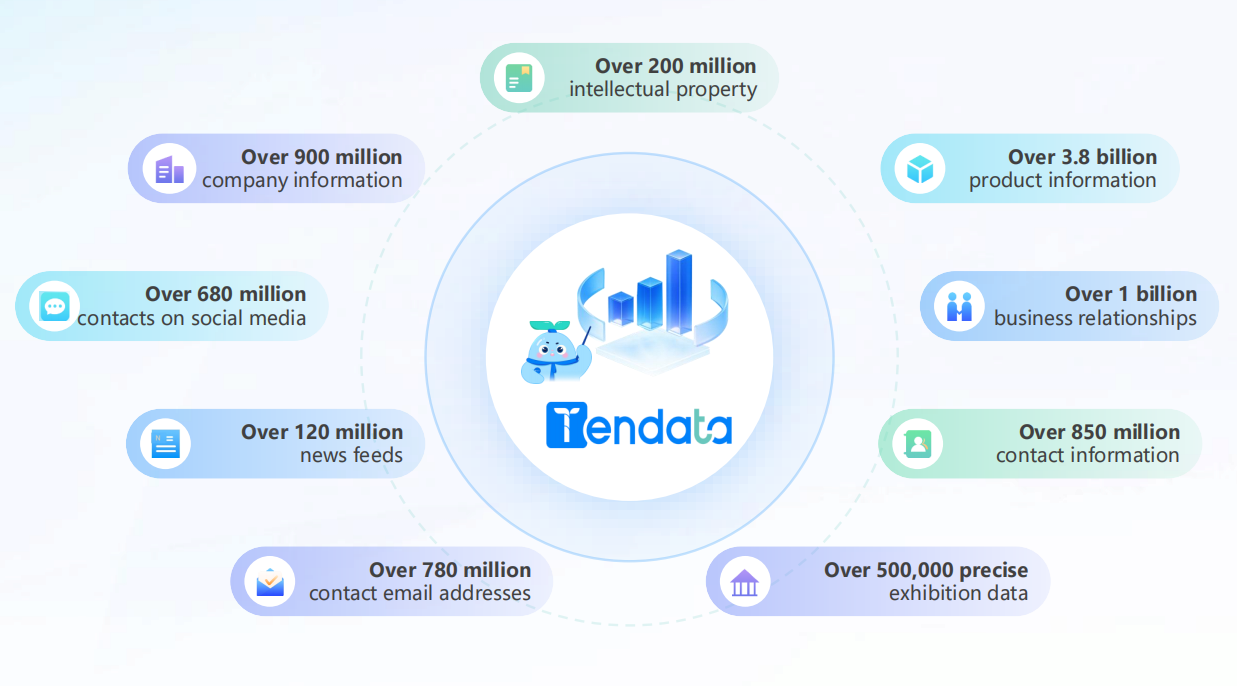
Picture unlocking the full map of global trade—knowing exactly which countries buy what, when, and in what quantities. With Tendata's detailed import export data by country, you move beyond guesswork. Every shipment record becomes a clue to untapped markets, competitor moves, and supply chain gaps. This isn’t just data; it’s your backstage pass to the deals shaping your industry. Ready to see how country-level insights can redefine your strategy? Let’s dive in.
How granular trade data exposes underserved markets
Aggregated trade statistics often mask pockets of demand hiding beneath broad product categories. Drilling into six- or eight-digit HS codes reveals import flows for specific goods that face shortages in certain regions. These narrow data slices spotlight niches where local supply gaps persist, giving exporters a first-mover advantage if they can meet the exact specification required. Without that fine-grained view, companies routinely overlook profitable micro-markets buried inside conventional trade summaries.
Beyond the tariff line, granularity extends to shipment-level details like quantity, unit price, and origin-destination pairs. Analyzing this data strips away averages and exposes outliers—a rural port suddenly importing high volumes of a previously absent component, or a steady rise in small-batch shipments signaling latent demand from underserved SMEs. Such patterns rarely surface in top-line reports, yet they reveal the true fragmentation of global trade and the opportunities it contains.
Firms that integrate transactional customs data into market mapping can pinpoint not just which products but also which cities, seasons, and buyer types show unmet needs. This laser focus prevents wasteful broad-brush campaigns and instead supports tailored offerings for clusters of overlooked buyers. Granular trade data transforms intuition into evidence, converting shadow demand into concrete sales channels that competitors still blindly ignore.
Using shipment records to trace competitor sourcing
Examining shipment logs offers a practical way to map out how competitors structure their supply chains. Customs manifests, bills of lading, and container tracking data open a window onto overseas factories, shipment volumes, and seasonal ordering patterns. Instead of relying on guesswork, companies can piece together who supplies their rivals and how those relationships shift over time. Even partial records, when analyzed carefully, reveal strategic sourcing decisions that would otherwise stay hidden.
Beyond identifying suppliers, the rhythm of incoming freight tells its own story. A competitor receiving small, frequent deliveries might be running a just-in-time operation, while bulk, irregular shipments point to cost-driven bulk buying. Noticing these patterns helps benchmark your own logistics and spot inefficiencies you can exploit. For instance, if a rival suddenly changes ports or starts routing through an unexpected hub, it often signals a new supplier agreement or a disruption you can capitalize on.
Of course, raw shipping data rarely comes clean. Traders frequently hide behind freight forwarders, third-party logistics firms, or consolidated containers to blur the picture. Effective tracing means cross-referencing everything: container numbers, vessel schedules, consignee addresses, and even trade lane anomalies. This isn’t about uncovering one perfect lead; it’s about assembling fragments until a coherent supplier map emerges. Done methodically, these transactional clues turn into a living record of competitive moves, giving you lead time to react before market positions shift.
The blind spots in aggregated economic indicators
Aggregated economic indicators like GDP or unemployment rates are often treated as definitive scorecards for a nation’s health, but they fail to capture the texture of everyday economic life. A headline GDP growth figure can mask the fact that gains are concentrated among the top income brackets, while broad segments of the population see little to no improvement in their purchasing power. Similarly, the official unemployment rate excludes discouraged workers who have stopped looking for jobs, painting an incomplete picture of labor market distress.
Regional disparities and informal economic activity are two further blind spots that national averages simply erase. A country may boast strong export-led growth while its rural hinterlands languish with crumbling infrastructure and limited access to credit. In many economies, the massive informal sector—street vendors, domestic workers, smallholder farmers—operates outside official statistics, making it impossible to gauge true employment or output. These omissions can lead to policy decisions that overlook the needs of millions, reinforcing structural inequality rather than addressing it.
Even well-established indicators like the Consumer Price Index struggle to reflect the real cost pressures faced by different demographic groups. A uniform inflation basket cannot account for the fact that lower-income households spend a larger share of their budget on essentials such as food and energy, whose prices often swing more dramatically. When aggregated data hides these divergent experiences, the public discourse becomes disconnected from the lived reality of ordinary people, eroding trust in the institutions that rely on such metrics.
Spotting tariff-driven shifts before they impact margins
Tariff shifts rarely announce themselves with fanfare. They surface in subtle data: a surge in container bookings from alternative ports, a sudden reclassification of goods on customs forms, or a quiet spike in warehousing demand along less obvious trade corridors. Companies that rely solely on headline rate announcements are already behind. The real advantage lies in detecting these tremors early—tracking bill of lading volumes, monitoring real-time freight rate indices, and analyzing trade policy whispers from advisory bodies. When you see a competitor’s cost structure suddenly soften or raw material lead times stretch unexpectedly, that’s not market noise; it’s a signal. By building a detection system that synthesizes these disparate signals, businesses can anticipate the impact on landed costs weeks before official tariff tables are updated.
The next critical step is mapping exposure with precision. Most organizations think in broad categories—“we import steel”—without realizing that a single Harmonized System code change can shift a product’s duty rate by double digits. The complexity compounds when components cross borders multiple times; a seemingly small tariff on an intermediate part can cascade through the value chain, eroding margins at each step. Forward-thinking teams run “tariff stress tests” on their bills of materials, simulating scenarios like a sudden 10 percent duty on subassemblies from a key origin country. They also scrutinize free trade agreement qualification rules, often discovering that minor adjustments in sourcing or documentation can unlock preferential treatment. This isn’t just defensive—it’s a proactive way to protect profitability and even seize competitive ground while others scramble to react.
Finally, turning early detection into action requires agility that most legacy supply chains lack. Long-term contracts and entrenched supplier relationships can become anchors if tariff landscapes shift abruptly. The companies that weather these changes best are those that have already diversified their supplier bases and logistics options, not as a cost-savings exercise but as a strategic hedge. They maintain warm relationships with secondary suppliers, regularly audit alternative transportation modes, and use flexible clauses in procurement agreements that allow for tariff-related renegotiation. When the pressure hits, they can redirect shipments through third-country fulfillment centers, leverage bonded warehousing to defer duties, or quickly shift final assembly to a more favorable jurisdiction. The goal isn’t just to sidestep a tariff increase; it’s to reconfigure the entire cost structure so that margin erosion becomes a non-event, transforming a potential threat into a competitive advantage.
Why port-level detail matters for logistics planning
Ports aren't monolithic hubs where a single metric tells the whole story. Within a single facility, the ability to offload a container in two hours versus two days can depend entirely on which berth the vessel calls. Berth depth, crane availability, and yard congestion often vary drastically across a terminal, creating micro-environments that shape turnaround times. A planning model that treats a port as a uniform data point misses these fissures, treating a weekend bottleneck at one wharf the same as a smooth weekday operation at another a kilometer away.
When scheduling inland distribution, knowing exactly which terminal or quay a shipment will hit unlocks a different caliber of decisions. An arrival through a shallow-draft berth might force lighter stowage plans and affect onward barge connections, while a neighboring deep-water face could accept the same vessel fully laden. Without that fidelity, planners bake in unnecessary buffer stock, inflate safety lead times, and often route cargo through the wrong gate, adding internal drayage costs that erode margins. The detail turns vague risk into a stack of known variables you can actually trade off.
This granularity also reshapes how you react to disruptions. A closure at one pier doesn’t paralyze an entire port call if the planning already distinguishes between berth 23A and 23B. Teams can quickly pivot to alternate terminal options, reassign trucking pools, and validate if another quay has the draft and gear to handle the cargo. Over time, patterns emerge: certain berths consistently see weekend labor shortages, others have faster gate processing. Layer that into allocation logic and suddenly you're not just reacting to alerts—you're anticipating where the friction will be before the ship even ties up.
Linking currency volatility to concrete import swings
When a country’s currency loses value, the immediate assumption is that imports become more expensive and demand falls. But the real-world connection between exchange rate shifts and the physical flow of goods is far messier. Importers often have contracts locked in months ahead, hedging strategies that delay the impact, or inventory buffers that absorb short-term price jumps. It’s not until those layers are stripped away that a sustained depreciation begins to bite, quietly reshaping the volume of container ships and bulk cargo entering a port.
The chain from a volatile currency to concrete import swings also depends heavily on the type of goods. Commodities priced in dollars, like oil or metals, can see an instant cost shock for importers, but substitution and demand elasticity muddy the picture. Meanwhile, finished goods from consumer electronics to machinery might exhibit a much slower reaction, as brand loyalty, long-term supplier relationships, and the complexity of switching supply chains override short-term price signals. That’s why a 10% currency move rarely triggers a 10% drop in import volumes—it’s more like a dimmer switch than an on-off toggle.
Central banks and trade economists watch this relationship closely, not just for forecasting but for understanding how monetary policy transmits into real activity. A sudden bout of currency turbulence can compress import margins so tightly that businesses start canceling orders preemptively, creating a lagged but sharp trough in official trade data. The result is that by the time policymakers see the import slump, the currency has often already moved again, making the link look loose in revision. Recognizing that disconnect is key to grasping why trade flows don’t simply dance to the forex tune.
FAQ
It’s a dataset that tracks the flow of goods across borders, broken down by country, commodity code, value, quantity, and trading partners. This information usually comes from customs declarations and is updated monthly.
You can spot which countries are major suppliers or buyers of specific goods, see seasonal demand fluctuations, and identify emerging markets. Analysts use it to map supply chains or assess trade dependencies.
Logistics firms, market researchers, economic development agencies, and companies involved in sourcing or exporting goods. Even academics and journalists rely on it to study trade policy impacts.
Most sources provide historical data going back five to ten years, with the latest month typically available within 4–6 weeks after it ends. Some offer annual summaries stretching further back.
Yes, data is often available at the HS code level, sometimes down to 6, 8, or even 10 digits depending on the country. This lets you isolate a very specific product category.
Free sources might give you aggregate totals or limited time series. Paid services usually offer more frequent updates, deeper detail (like port-level info), and tools for visualization and custom reports.
Yes, mirror data comparison is possible. Values often differ due to freight, insurance costs, timing gaps in reporting, or different valuation methods used by each country. Analysts use this to spot discrepancies or transshipment issues.
Start with a clear question—like “where does my country import furniture from?”—then download a sample dataset from a trusted source. Many platforms have dashboards that let you explore without coding, though knowing SQL or Python helps with larger sets.
Conclusion
Relying on broad economic snapshots often obscures the real story behind global trade flows. By drilling into detailed import-export records at the country and even port level, businesses can uncover underserved markets that aggregated figures simply ignore. For instance, a dip in total machinery imports might hide surging demand for a specific component in a secondary city—a pattern only visible when you examine granular shipment data. This same granularity lets you trace competitors’ supply chains through shipping manifests, revealing their sourcing shifts before they become industry news. Instead of reacting to headlines, you can anticipate moves and secure alternative suppliers early. Moreover, high-level trade statistics suffer from blind spots: they miss the nuances of seasonality, regional bottlenecks, or sudden inventory buildups at specific ports, all of which signal pending demand changes that aggregate trade balances never capture.
The real-time texture of trade data also shields you from policy and currency shocks. Monitoring port-level detail helps logistics planners avoid congestion hotspots and reroute cargo before delays cascade into weekend surcharges. When tariffs shift, granular records immediately show which product codes are being frontloaded or diverted, giving you weeks of lead time to adjust pricing or sourcing before your margins erode. Similarly, linking currency volatility to concrete import swings—like a 15% drop in euro-denominated electronics orders after a sudden exchange rate move—turns macroeconomic noise into actionable intelligence. By rejecting broad indices and embracing the messy, high-resolution detail of per-country, per-port, per-shipment data, you replace guesswork with a real-time map of global trade that keeps your supply chain agile and your market strategy sharp.
Contact Us
Contact Person: Grace
Email: [email protected]
Tel/WhatsApp: +86 18721992033
Website: https://www.tendata.com