

D Rings Wholesaler Tips for Choosing the Right Supplier
2026-09-24
Choosing a D rings wholesaler isn’t just about the lowest price—it’s about finding a partner who won’t let you down when orders get serious. Too many buyers learn that lesson the hard way. That’s why we’ve put together these straightforward tips to help you cut through the noise and spot a supplier worth keeping. Whether you’re sourcing for marine, pet, or industrial hardware, the right choice saves time, money, and headaches. At Kingming, we believe transparency and quality should be the baseline, not a bonus. Curious what separates a reliable D rings wholesaler from the rest? You’re in the right place.
Material Integrity: What Your D Rings Are Actually Made Of
Walk into any hardware aisle and you'll see rows of D rings that look nearly identical. The real differences hide in the alloy blend, the heat treatment, and the surface finish. A cheap zinc die-cast ring might survive a few light pulls on a keychain, but expose it to salt air or a sudden load and it will crack without warning. Solid forged steel or stainless steel, on the other hand, bends before it breaks, giving you a visible clue that failure is coming.
Most reputable D rings start as a single piece of bar stock, not a bent wire or a cast shape. Forging aligns the metal's grain structure along the curve of the ring, eliminating weak spots that develop at sharp corners. Then the ring goes through normalizing or quenching and tempering to balance hardness with toughness. Stainless variants like 304 or 316 resist rust without any coating, while carbon steel often receives a zinc-nickel or black oxide finish that wears off at contact points, revealing bright metal underneath.
Don't confuse thickness with strength. A thick cast ring can hide porosity and brittle inclusions, while a slightly thinner forged ring might hold twice the working load. Check for a manufacturer's load rating stamped or laser-etched on the ring itself, not just on the packaging. And if the surface feels rough, flaky, or has visible seams from a mold, that's a sign the material was chosen for cost, not for keeping your gear attached when it matters.
Customization Without the Headaches: Molding, Plating, and Beyond
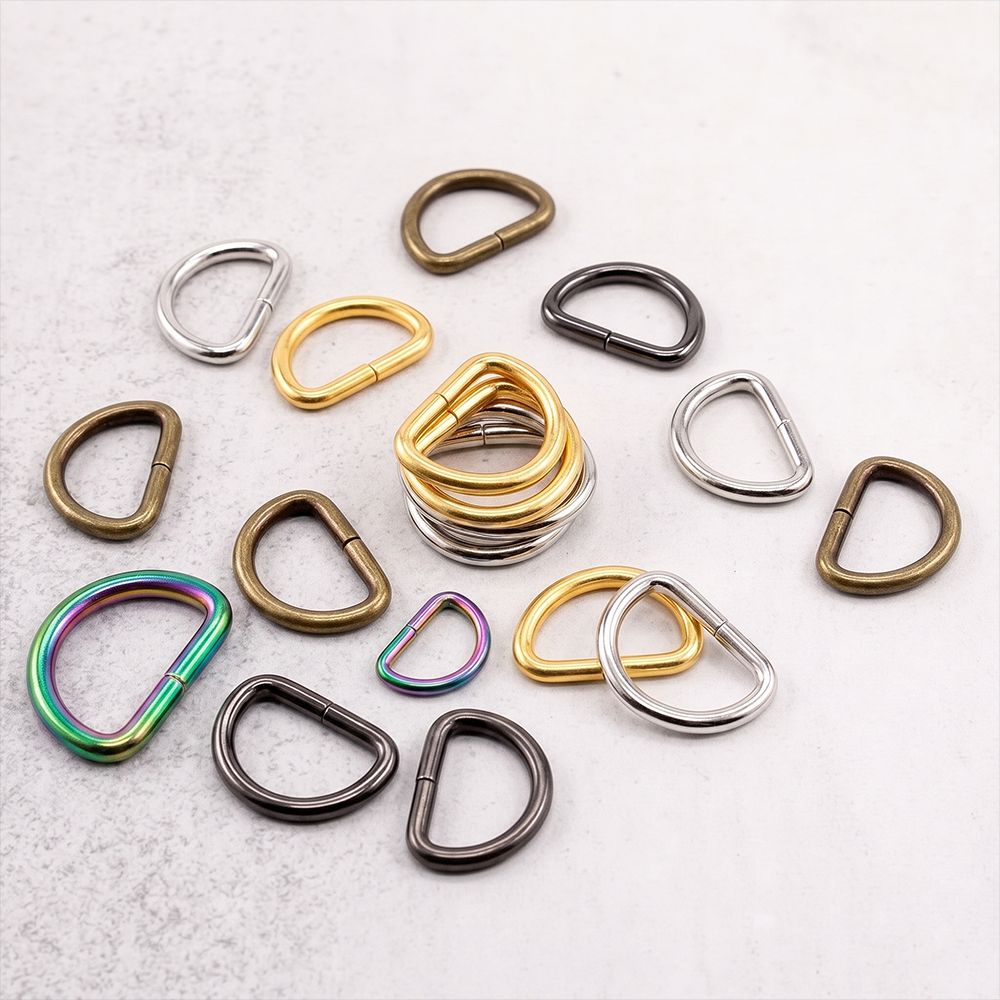
Molding gets a bad rap when customization enters the conversation—people picture weeks of tooling changes, warped prototypes, and endless back-and-forth with suppliers. The reality is quieter. Modern low-volume molding leans on modular cavities, CNC-machined aluminum tooling, and rapid heat-cycle control, which means a design tweak on Tuesday can be in your hand by Friday without a six-figure steel mold. It's not magic; it's just better process control.
Plating is the step where custom projects often stall, but it doesn't have to. The secret is treating surface preparation as part of the design, not an afterthought. A part with sharp internal corners, deep recesses, or mixed polymers will fight you at the plating tank, leading to peeling, pitting, or uneven luster. Swap in a slightly rounded edge, specify a plating-friendly resin (ABS or PC/ABS blends work well for electroplating), and suddenly the same nickel-chrome finish goes on smooth and stays put.
Beyond molding and plating, the real headache-killer is sequencing. Get the mechanical team, the finishing vendor, and the assembly line talking before the first render is approved. A two-minute conversation about snap-fit clearances or masking points can eliminate three rounds of sampling. Add a small pilot run with the actual plating chemistry you'll use in production, and customization becomes less of a gamble and more of a repeatable recipe.
MOQ Reality Check: Balancing Inventory and Cash Flow
Most MOQ conversations start with the supplier's spreadsheet, not your warehouse. A manufacturer might insist on 2,000 units because that's what keeps their line running, but if you only sell 80 units a month, you're signing up for two years of storage costs, shrinkage risk, and dead capital. The first reality check is simple: divide the MOQ by your average monthly velocity. If the result is more than six months of cover, the discount isn't saving you money—it's buying you a future clearance sale.
Cash flow doesn't care about unit cost. A 15% lower per-unit price on a large order sounds great until the invoice arrives and you realize your operating cash is now locked in pallets. For smaller brands especially, a supplier's MOQ can quietly shift the balance from growth to survival. One practical lever is phased delivery: agree to the total quantity but request monthly or quarterly releases against the same purchase order. You still give the factory volume, but you keep inventory turns closer to what your demand actually supports.
The smarter approach treats MOQ as a negotiation starting point rather than a fixed constraint. Ask what creates the factory's minimum—raw material runs, setup time, packaging, or freight. Sometimes paying a slightly higher unit price with a lower MOQ actually improves net margin because carrying costs drop faster than gross margin shrinks. Run the numbers with holding cost included, not just landed cost. If the math doesn't work, walk away or find a consolidator who can split the minimum across multiple buyers. The goal isn't to avoid inventory; it's to own the right amount without letting a supplier's efficiency dictate your cash cycle.
Delivery Promises vs. Actual Lead Times
When a supplier quotes a lead time of two weeks, that number often carries more optimism than reality. The gap between what gets promised and what actually happens can quietly erode trust, especially for businesses that depend on predictable replenishment.
Several forces widen this gap. Raw material shortages, customs delays, or even a sudden spike in demand can push shipments well past their original window. Meanwhile, sales teams might lean on best-case scenarios to close a deal, leaving operations to explain the shortfall later.
Tracking the difference between promised and actual lead times isn't just about measuring disappointment. It helps identify which suppliers consistently overpromise, which product lines suffer the most variability, and where buffer stock or alternate sourcing becomes necessary.
Price Per Unit Isn't the Whole Story: Hidden Costs to Watch
A low sticker price can feel like a win until the delivery charges, handling fees, and small-print add-ons arrive at checkout. Many suppliers quietly shift logistics costs onto the buyer, so what looked like a bargain per unit suddenly balloons once freight, packaging, or even payment processing fees are tacked on. Before committing, ask for a full landed-cost breakdown rather than relying on the headline number.
Bulk discounts often hide less obvious traps, like minimum order quantities that force you to buy more than you need or subscription models with auto-renewal clauses that are painful to cancel. Some vendors also charge restocking fees for returns or require you to cover return shipping, which can erase any savings if the product doesn't work out. Watch for contracts that lock you into future purchases at gradually higher rates.
The real cost of ownership includes everything that happens after the purchase: replacement parts, routine maintenance, energy consumption, calibration services, or even disposal fees for used components. A cheaper unit might require expensive proprietary consumables, while a slightly pricier alternative runs for years with minimal upkeep. Comparing total cost over the expected lifespan—not just the initial price—often reveals which deal is genuinely better.
When Things Go Wrong: How Suppliers Handle Returns and Defects
Every supplier relationship gets tested the moment a shipment arrives with crushed cartons or a batch of components fails on the line. What separates reliable partners from those you quietly stop calling isn’t the absence of problems—it’s how quickly and cleanly they own the mess. A decent supplier won’t make you chase them for an RMA number; they’ll have a clear, written returns process that kicks in before you finish your morning coffee. Look for vendors who ask for photos of the defect, issue a credit or replacement without a court battle, and then actually follow up to make sure the fix worked.
The best suppliers treat defect handling as a feedback loop, not a blame game. Instead of hiding behind fine print about “acceptable tolerance,” they pull a sample from the failed lot, run their own root-cause analysis, and tell you what changed on their end—a new packing method, a different adhesive, a tighter QC gate. That transparency is rare, but it’s what turns a one-time purchase into a long-term partnership. If a vendor’s idea of handling returns is a shrug and a restocking fee, you’re not buying products; you’re buying headaches.
Practical detail matters too: does the supplier cover return shipping for defective goods, or do they expect you to pay freight on their mistake? Is there a time window for reporting damage that’s realistic for your receiving team, not just convenient for their accounting department? The answers tell you how much they respect the downstream cost of their errors. When things go wrong—and they will—the supplier’s response should feel less like a negotiation and more like a shared problem being solved.
FAQ
Ask for a small batch of samples and check the finish, weld points, and coating thickness. A reliable supplier won't hesitate to send physical samples, and you can use them to test load capacity and corrosion resistance before committing.
Look for a supplier with in-house tooling or a flexible production line. Share your exact specs like inner diameter, wire thickness, and plating type, and see if they respond with technical questions rather than generic price quotes.
Many wholesalers set MOQs between 500 and 2,000 pieces, but some will negotiate lower quantities for a first trial order. Don't accept an MOQ that forces you into excess inventory before you've validated the product.
Request a written production schedule that includes raw material procurement, forming, plating, and packing. Then ask for a reference from a recent client who ordered a similar volume. Delays often hide in plating or surface treatment stages.
For outdoor or marine use, look for 304 or 316 stainless steel, or zinc-plated carbon steel with a clear or yellow chromate conversion coating. Powder coating adds extra protection but can chip if the surface prep is poor.
Compare not just unit price but also scrap rate, rework costs, and hidden charges like tooling or packaging. A slightly higher unit price from a supplier with consistent tolerances often saves money over a cheap batch with high rejection rates.
Vague answers about tolerances, reluctance to provide material certifications, constantly changing account managers, or an unwillingness to allow third-party inspection before shipment are all warning signs.
For larger orders, yes. Hire an agency to check dimensions, coating thickness, and packaging at the factory. This is cheaper than returning a defective container and gives you leverage if there's a dispute.
Conclusion
Finding a D rings wholesaler who won't let you down starts with what's actually in the metal. Ask for mill certificates or batch test reports instead of taking 'zinc alloy' at face value—cheap pot metal with inconsistent plating strips fast and leaves your product looking tired. Customization should be a conversation, not a maze. If a supplier pushes back on mold fees, finish options, or even small tweaks to the inner diameter, that's a signal they're reselling generic parts rather than making them. And don't ignore minimum order quantities: a low MOQ might feel safe, but it often carries a higher per-unit price or forces you into stock colors nobody wants. The best suppliers explain how their MOQ balances setup costs against your cash flow instead of hiding it in fine print.
Delivery promises mean little until you've seen how a supplier behaves when a container is delayed or a plating bath goes wrong. Request real lead times from current customers and compare them to the sales pitch—many wholesalers quote production days but forget about port congestion or inspection hold-ups. Price per unit is only the entry fee; freight, wire transfer charges, customs brokerage, and the cost of reworking defective pieces add up fast. Ask for a landed cost breakdown before you commit. Finally, test the returns process early with a small batch: do they replace, credit, or argue? A wholesaler who fixes problems without making you chase them is worth more than a slightly cheaper quote.
Contact Us
Contact Person: Jamie Zeng
Email: [email protected]
Tel/WhatsApp: +86 13728219269
Website: https://www.kmhardware.com