

Custom Rolling Mill Engineering: Advanced Solutions for Precision Metal Processing
2026-02-03
In the demanding realm of precision metal processing, achieving consistent quality and efficiency often hinges on the engineering behind rolling mills. While standard solutions can fall short, custom rolling mill engineering offers a path to superior performance. At GRM, we specialize in designing and implementing advanced, tailored systems that address unique operational challenges. This blog explores how our innovative approaches can transform your metalworking processes, driving productivity and precision to new heights. Discover the insights and strategies that set GRM apart in this specialized field. To learn more about our solutions, visit GRM and see how we can elevate your operations.
Innovative Custom Rolling Mill Designs for Enhanced Metal Processing
Tailored rolling mill configurations are revolutionizing metal processing by offering bespoke solutions that optimize productivity and material properties. These designs integrate advanced control systems and modular components, allowing manufacturers to fine-tune operations for specific alloys or end-use requirements, such as in aerospace or automotive sectors where precision is paramount. By moving beyond standard setups, companies can achieve superior surface finishes and tighter tolerances, directly impacting product durability and performance in competitive markets.
One standout approach involves incorporating real-time monitoring and adaptive technologies that adjust rolling parameters on-the-fly based on sensor feedback. This dynamic adjustment minimizes defects like edge cracking or uneven thickness, which commonly occur in traditional mills. Such innovations not only enhance metal quality but also reduce waste and energy consumption, aligning with sustainability goals while boosting overall efficiency in high-volume production environments.
Furthermore, custom designs often feature hybrid or multi-functional capabilities, such as combining hot and cold rolling stages into a single streamlined process. This integration accelerates throughput and allows for more complex material transformations, like creating specialized microstructures that improve strength-to-weight ratios. As industries demand more versatile and efficient metalworking solutions, these innovative mills are becoming key differentiators, driving advancements in everything from consumer electronics to renewable energy infrastructure.
Precision Engineering Solutions in Modern Rolling Mill Technology
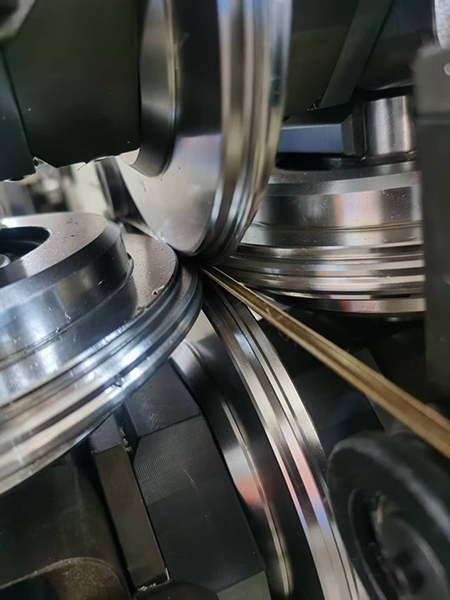
In today's metalworking landscape, precision engineering solutions have redefined the capabilities of rolling mills, enabling manufacturers to produce materials with tighter tolerances and enhanced structural integrity. By integrating advanced sensors like laser micrometers and thermal cameras, mills can now monitor key parameters—such as temperature gradients, thickness deviations, and surface finish—in real-time. This not only optimizes the entire production cycle for materials like advanced high-strength steel used in automotive applications but also reduces waste. As a result, these innovations allow for the creation of components that meet the stringent demands of aerospace and energy sectors, where even minor imperfections can compromise performance, thus pushing the boundaries of what is achievable in metal forming.
Innovative control systems, including AI-driven algorithms and adaptive feedback loops, play a pivotal role in fine-tuning operational efficiency within modern mills. For example, in the production of specialized alloy strips for electronics, these systems adjust rolling speeds and pressures dynamically to maintain consistency across batches. This adaptability ensures that each coil meets exact specifications, from width to hardness, which is crucial for industries requiring high reliability, such as medical device manufacturing. By minimizing human intervention, these solutions enhance productivity while maintaining a high level of repeatability, ultimately leading to cost savings and faster time-to-market for new products.
Beyond automation, the emphasis on precision extends to the design of rolling equipment itself, with modular components and digital twin simulations enabling predictive maintenance and customization. In settings where mills process corrosion-resistant alloys for marine environments, engineers leverage these tools to preemptively address wear and optimize material flow, preventing downtime and extending machinery lifespan. This holistic approach not only boosts output quality but also supports sustainable practices by reducing energy consumption and material scrap. As a result, manufacturers can achieve a competitive edge, delivering superior metals that align with evolving global standards for durability and efficiency.
Tailored Rolling Mill Systems for Diverse Metal Applications
At the core of precision metal manufacturing, our tailored rolling mill systems are meticulously designed to meet the specific demands of various metals, from high-strength steels to lightweight alloys. Unlike one-size-fits-all solutions, these systems incorporate advanced technologies like dynamic gap control and adaptive material handling, ensuring optimal performance across diverse applications. This approach not only enhances material quality and consistency but also boosts productivity by minimizing waste and downtime, making it ideal for industries ranging from automotive to aerospace where material properties are critical.
What sets these systems apart is their deep customization, which goes beyond simple adjustments. Engineers work closely with clients to analyze factors such as alloy composition, thickness tolerances, and production volume, integrating features like real-time monitoring and automated feedback loops. For instance, in applications involving copper or aluminum, it prevents surface defects and ensures uniform grain structure, while in harder metals like titanium, it manages deformation stresses to avoid cracking. This level of tailoring helps clients achieve superior results without the need for costly retrofitting or excessive manual intervention.
In practical terms, tailored rolling mill systems drive innovation by enabling more efficient processing of emerging materials, such as advanced composites or specialty alloys used in renewable energy projects. By focusing on adaptability and precision, they allow manufacturers to stay competitive in rapidly evolving markets, delivering products that meet stringent industry standards and client specifications with ease.
Advanced Control Mechanisms in Custom Rolling Mills
In the realm of custom rolling mills, advanced control mechanisms have evolved beyond standard automation to incorporate real-time adaptive systems. These mechanisms dynamically adjust parameters like roll gap, speed, and tension based on sensor feedback, enabling precise customization for diverse materials, from specialized alloys to high-strength composites. This shift minimizes human intervention while enhancing product consistency, particularly in high-precision applications such as aerospace or automotive components, where even minor deviations can impact performance.
One standout feature is the integration of artificial intelligence and machine learning algorithms, which analyze historical production data to predict optimal settings and prevent defects before they occur. Unlike conventional systems, these AI-driven controls learn from each rolling cycle, continuously refining their models to adapt to new materials or changing environmental conditions. This proactive approach not only boosts efficiency but also reduces downtime and scrap rates, offering a competitive edge in fast-paced manufacturing sectors that demand rapid adaptation and innovation.
Moreover, these advanced controls often incorporate robust safety and communication protocols, ensuring seamless interaction between hardware components and centralized management systems. By leveraging technologies like edge computing and IoT connectivity, mills can achieve greater transparency and control over the entire production line, from raw material input to final product output. This holistic management fosters a more resilient and scalable operation, capable of meeting stringent quality standards while supporting sustainable practices through optimized energy and resource usage.
Efficiency and Sustainability in Rolling Mill Operations
When we talk about rolling mill operations, it's impossible to ignore how efficiency and sustainability now go hand in hand, shaping the very core of modern steel production. Gone are the days when speed alone defined success; today, operators are balancing throughput with a keen eye on resource conservation. By integrating smart sensors and real-time data analytics, mills can predict equipment wear before failures occur, slashing downtime and cutting energy waste. This proactive approach not only keeps the line humming but also reduces the environmental footprint, as less energy is squandered on avoidable repairs and inefficient cycles. It's a shift that's turning traditional mills into adaptive, leaner systems where every roll counts toward a greener outcome.
Sustainability in rolling mills isn't just about reducing emissions; it's woven into the lifecycle of the steel itself. Innovations like regenerative braking systems capture energy during deceleration, feeding it back into the grid or powering auxiliary processes, which dramatically lowers electricity costs. Meanwhile, water recycling initiatives have transformed cooling systems, minimizing freshwater withdrawal and discharge. These practices showcase a dual benefit: they don't just tick regulatory boxes but also boost profitability by trimming operational expenses. It's a win-win where environmental stewardship enhances the bottom line, proving that conscientious operations can drive both ecological and economic gains.
Looking ahead, the fusion of AI and IoT is set to redefine efficiency and sustainability further. Imagine mills where predictive algorithms optimize heating profiles based on incoming scrap quality, ensuring minimal energy use while maintaining steel integrity. Add in closed-loop material flows that reclaim and reuse every ounce of metal, and you've got a nearly waste-free operation. This evolution moves beyond compliance, fostering a culture where every operator is empowered to spot inefficiencies and innovate on the fly. In essence, rolling mills are becoming living ecosystems of technology and responsibility, setting new benchmarks for the industry at large.
Future Trends in Custom Rolling Mill Development and Integration
The evolution of custom rolling mills is increasingly driven by a push toward smarter, more connected systems that adapt in real-time to production demands. Instead of relying solely on traditional mechanical upgrades, manufacturers are integrating AI-driven analytics directly into mill controls, allowing for predictive maintenance and optimized processing conditions. This not only slashes downtime but also tailors output to specific material properties, enhancing both quality and throughput without the need for manual overrides. As a result, mills become not just tools of production, but dynamic partners in manufacturing, capable of learning from each cycle to refine operations seamlessly.
Another key trend involves the full-scale integration of rolling mills into broader digital ecosystems, where data flows between equipment, suppliers, and end-users. Through IoT-enabled sensors and cloud-based platforms, mills can communicate with upstream and downstream processes, enabling a more cohesive supply chain. This connectivity allows for real-time adjustments based on market fluctuations or customer specifications, making custom rolling more responsive and efficient. Gone are the days of isolated machinery; today's mills are essential nodes in a networked production environment, fostering agility and reducing waste across the board.
Looking ahead, sustainability and energy efficiency are reshaping custom rolling mill development, with a focus on minimizing environmental impact while maximizing performance. Innovations like regenerative braking systems and advanced cooling technologies help reduce power consumption and emissions, aligning with global green initiatives. Moreover, the use of lightweight, durable materials in mill construction enhances longevity and reduces maintenance needs. By prioritizing eco-friendly designs, the industry is not only future-proofing equipment but also appealing to a growing market segment that values sustainable manufacturing practices, setting new standards for integration in the process.
FAQ
Custom rolling mills offer tailored solutions that enhance precision, efficiency, and material quality, allowing for better control over production parameters compared to standard equipment.
Advanced techniques, such as real-time monitoring and automated adjustments, optimize mill operations, reduce downtime, and ensure consistent product dimensions and surface finishes.
Yes, these mills are designed to process a wide range of metals, including alloys, stainless steel, and non-ferrous materials, by adapting rolling forces and speeds to specific requirements.
Precision is critical for achieving tight tolerances and uniform properties, which is essential in industries like aerospace and automotive where component reliability is paramount.
By analyzing specific needs, custom mills can incorporate features like specialized cooling systems or advanced tooling to overcome obstacles like high-temperature deformation or surface defects.
Key factors include production volume, material types, desired precision levels, and long-term maintenance costs to ensure the mill meets both current and future processing demands.
While initial costs may be higher, custom mills often lead to savings through reduced waste, lower energy consumption, and improved product quality, providing a better return on investment.
Conclusion
Custom rolling mill engineering represents a sophisticated approach to metal processing, offering advanced solutions that prioritize precision and adaptability. Innovative designs for custom rolling mills have revolutionized the industry by integrating cutting-edge technologies and materials to enhance metal processing capabilities. These mills are not one-size-fits-all; instead, they are precision-engineered solutions built to meet specific operational requirements, ensuring high accuracy and consistency in output. By focusing on tailored systems, manufacturers can address diverse metal applications, from ferrous to non-ferrous alloys, with optimized performance and reliability. This customization extends to advanced control mechanisms that provide real-time monitoring and adjustments, significantly improving process stability and product quality. As a result, these engineering advancements contribute to more efficient and sustainable operations, reducing waste and energy consumption while maintaining high throughput.
Looking ahead, future trends in custom rolling mill development emphasize further integration of automation, data analytics, and artificial intelligence, driving continuous improvement in metal processing. Efficiency and sustainability remain at the forefront, with innovations aimed at minimizing environmental impact and enhancing resource utilization. The synergy between advanced control systems and tailored designs ensures that these mills can adapt to evolving industry demands, supporting industries such as automotive, aerospace, and construction with higher-quality metal products. By embracing these trends, custom rolling mill engineering not only meets current challenges but also sets the stage for long-term growth and innovation in precision metal processing, solidifying its role as a key enabler of modern manufacturing excellence.
Contact Us
Contact Person: Rayna
Email: [email protected]
Tel/WhatsApp: 86 -173 1474 6343
Website: https://www.grmrollingmill.com/