

Custom D Rings for Straps, Bags, and Outdoor Gear Projects
2026-09-03
Tired of D-rings that snap under load or rust after one trip? Your straps, bags, and outdoor gear deserve better. Kingming offers custom D-rings designed for real-world projects—strong, precise, and built to last. Here’s what to expect.
Why Custom D Rings Beat Standard Hardware on Heavy-Duty Straps
Standard D rings are stamped out by the thousands with little thought given to how they actually behave under load. The edges often have a slight burr, the weld point sits right where the strap folds, and the opening is rarely sized for anything thicker than a basic polyester ribbon. On a heavy-duty strap that gets dragged across rough surfaces, cinched down with a bar, and hit with sudden jerks, those small imperfections turn into wear points fast.
A custom D ring flips that logic. You choose the wire diameter to match the strap's working load, you specify a smoother inner radius so the webbing doesn't kink at the fold, and you can have the ring welded shut and ground flush instead of left with a sharp seam. That means less friction on the fibers, no pinch points that fray the edge, and a far more predictable failure mode when the strap finally reaches its limit.
There's also a fit issue that rarely gets talked about. Off-the-shelf hardware assumes a generic strap thickness, maybe two to three millimeters. Heavy-duty straps often run five, six, even eight millimeters thick with a coarse weave. A standard ring forces that thick strap to bunch and twist as it passes through. A custom ring with a wider gap lets the strap lay flat, so the full width carries the load instead of just the center fibers. That single change can add hundreds of cycles to the life of a strap before you see any real damage.
Add Secure Attachment Points to Any Bag Without Sewing
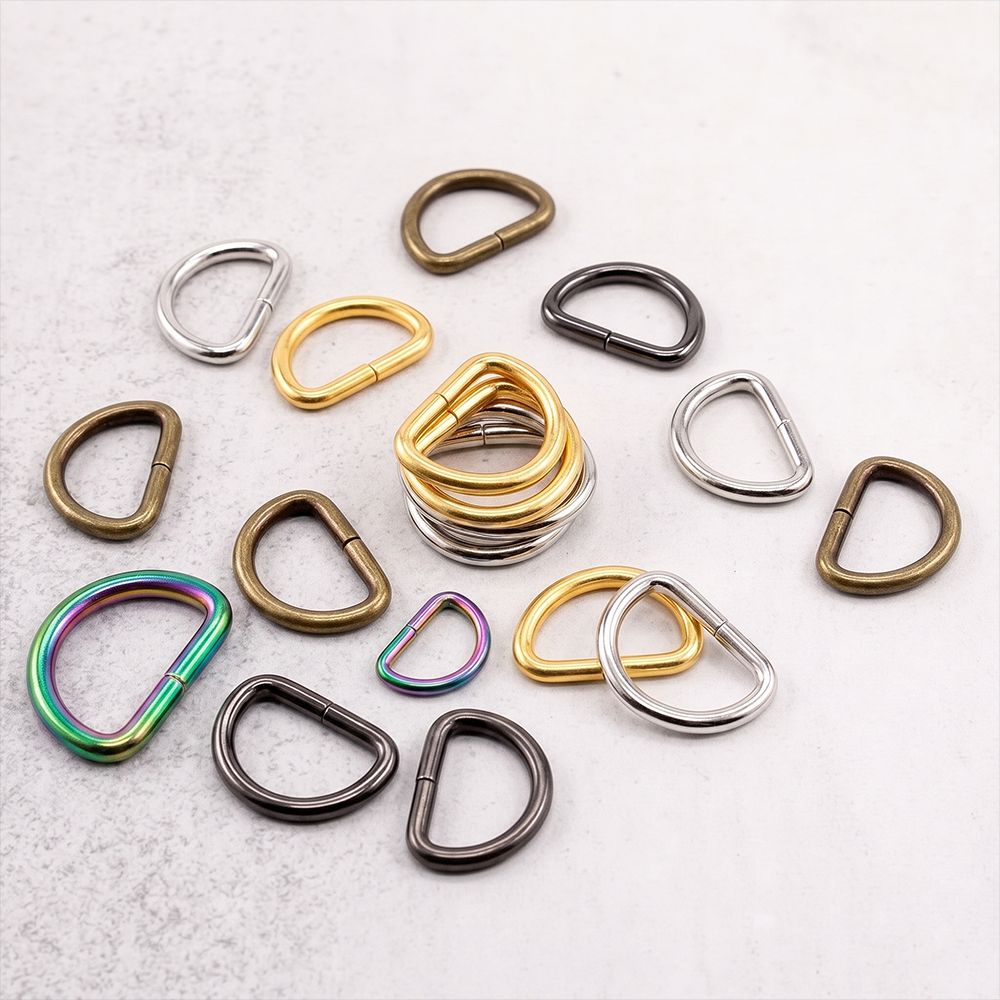
Turning a flimsy tote into a gear-ready carryall doesn't demand a needle and thread. A few well-chosen hardware pieces can give you solid lash points on nearly any fabric, from canvas to ripstop nylon. Think split rings, carabiners, or even plastic D-rings that clamp or screw into place. The trick is to position them where the bag already has reinforced seams or folded hems, so the added hardware doesn't tear through under load.
For bags with existing loops or webbing, you can attach a small carabiner or key ring directly—no tools needed. If the bag lacks any anchor points, try a no-sew grommet kit. These kits use a punch and setting tool to install metal eyelets through a single layer of fabric. Reinforce the spot first with a peel-and-stick fabric patch on both sides, then set the grommet. The result is a clean, durable hole that can hold a carabiner, bungee cord, or strap.
Another low-effort option is a magnetic or snap-on utility loop. These fold over the bag's edge or strap and lock shut with a strong magnet or heavy-duty snap. They're easy to move around and won't leave permanent marks. Just double-check the weight rating before dangling a water bottle or wet shoes. With a bit of experimentation, you can add secure attachment points to any bag in minutes, keeping your hands free and your gear accessible.
Small Hardware, Big Impact: Outdoor Gear Fixes You Haven't Tried
A bent paperclip can do more than hold papers together. Slide one through the zipper pull on a stubborn jacket, twist it into a loop, and you’ve got a makeshift tab that’s easier to grab with gloves on. For trekking pole tips that keep slipping, cut a two-inch piece of heat-shrink tubing, slide it over the worn carbide, and hit it with a lighter. The tubing shrinks down tight, giving you fresh bite on slick rock without replacing the whole tip.
Next time a side-release buckle cracks mid-trip, don’t lash the strap together with cord. Take a small rectangle of leather from an old belt or a gear patch, punch two parallel slits, and thread the webbing through. The leather flexes just enough to keep tension while acting as a friction lock. It holds better than duct tape, and if you wax the leather first, it won’t soak up water and stretch out overnight.
Tent pole splints usually mean bulky repair sleeves, but a pair of nylon zip ties and a split washer can get you through a windy night. Snap the broken section back into alignment, place the washer over the crack, then cinch two zip ties on either side of the washer to keep it centered. The metal washer spreads the load so the pole doesn’t kink again, and the whole fix weighs less than the extra stake you probably left at home.
3 Details Most People Overlook When Picking Custom D Rings
Most people focus on the outer shape and size, but the inner edge finish is what actually touches your strap or webbing. A rough seam or an unfinished bend will quietly chew through nylon or leather within weeks. Run your thumb along the inside of a sample before committing—if it feels sharp, it will fray whatever you attach. Also ask whether the ring is forged as one piece or welded from separate ends; a poorly dressed weld becomes a weak point long before the metal itself fails.
Another detail that gets skipped is the true usable clearance inside the D. The listed inner width often doesn't account for coating thickness or the angle of the bend, so a strap that should fit on paper ends up too tight to slide. Bring the actual webbing or buckle you plan to use and test it with the ring, not against a ruler. Even a millimeter of extra material thickness matters when the strap has to pass through at an angle under load.
Finish quality is usually judged by looks, but durability comes down to what happens at friction points. Cheap zinc plating may shine on day one and then flake off where the D rubs against a metal clip. If the rings will see rain, salt, or repeated movement, specify a stainless alloy or ask for a salt spray test result. A light tumble polish also makes more difference than most people realize—it rounds micro-burrs and lets webbing glide instead of catching on tiny high spots.
From Shoulder Straps to Guy Lines: Unexpected Uses for Custom D Rings
A custom D ring sewn into a backpack strap does more than hold its shape. On a long hike, it gives you a spot to clip a water bottle, a pair of gloves, or a small dry bag without taking the pack off. The best part is that the ring stays put—no swinging or sliding—so you can grab what you need one-handed and keep moving.
Around camp, the same D rings turn into anchor points for guy lines. Instead of tying a loop around a pole or stake, you can run the line through the ring and adjust tension in seconds. They also handle small jobs like hanging a lantern from a tarp edge or stringing a clothesline between two trees, which keeps gear off damp ground.
It does not stop with hiking and camping. A small D ring on a dog collar holds tags without jingling as much as a split ring, and one mounted inside a truck bed gives ratchet straps a fixed point that will not slide. Once you start noticing them, you find custom D rings doing quiet, useful work in places you would never expect.
Test Before You Bulk Order: A Practical Custom D Ring Sampling Guide
Ordering a few sample D rings before committing to a large production run isn't a formality—it's how you catch issues while they're still cheap to fix. A single sample lets you check the weld point, the thickness of the coating, and whether the inside radius is smooth enough for your webbing or strap. If the ring binds, scratches, or flexes under load, you'll know long before thousands of units arrive at your warehouse.
Ask your supplier to send samples from the same tooling and finishing line that will handle your full order. Then put them through the exact conditions they'll face in real use: thread your strap, hang a weighted load, run a few cycles, and check for deformation or finish wear. Keep one unused sample as a reference so you can compare future production pieces against what you approved.
Document everything—material grade, surface treatment, dimensions, even the date you received the sample. If the bulk order later shows a different colour or a sharper edge, that reference and your notes become the basis for a clear conversation with the supplier instead of a vague complaint.
FAQ
For a 1-inch strap, go with a D-ring that has an inner width of at least 1 inch, but slightly larger is better to let the strap slide and fold without binding. A 1.25-inch inner width usually works perfectly if you plan to double over the webbing.
They can, but you need to pay close attention to the material and welding. For hammocks, stainless steel or powder-coated steel with a solid weld is a safe bet. For climbing or anything with dynamic loads, always check the manufacturer's working load limit and never use a decorative ring for life safety.
The cleanest way is to sew a fabric tab or loop first, then thread the D-ring through that loop and fold the tab over to stitch it down. This gives you a secure anchor point without ugly stitching around the metal, and it's easier to replace the ring later if needed.
Electroplated finishes like zinc or nickel work fine for light use, but for constant exposure to rain, salt, or abrasion, a hot-dipped galvanized or stainless steel ring will outlast anything. Powder coating adds color but can chip if the rings rub against metal buckles or carabiners.
Yes, a big one. Cast D-rings are made in a mold and can have tiny internal voids that weaken them under load. Welded rings start as a bent rod with the ends fused together, which generally gives a more consistent strength. For gear that gets yanked or loaded, welded is the safer choice.
Many manufacturers offer custom die-casting or CNC machining for small batches. You can get a raised logo on the flat side, choose an unusual shape like a rounded triangle, or specify a non-standard thickness. Just be ready for minimum order quantities, usually starting around 500 or 1000 pieces.
The flat side acts as a built-in stop, so the ring sits snug against the strap or fabric without rotating too much. Fully round D-rings are better when you need the ring to move freely, like at the end of a dog leash or a key clip. It really depends on whether you want fixed positioning or full rotation.
Conclusion
Custom D rings offer a level of durability that molded or standard hardware simply cannot match when you are working with heavy-duty straps. The extra thickness and reinforced weld points keep buckles from deforming under load, which matters more than most people expect. You can also add secure attachment points to any bag without cutting into fabric or sewing a single stitch; just slide the D ring onto a loop, tab, or existing webbing channel. This small hardware creates a surprisingly big impact for outdoor gear fixes, from replacing broken plastic clips to adding a quick lash point on a pack. However, three details often get overlooked: the inner diameter must clear your intended strap or rope, the finish should resist abrasion and corrosion, and the weld must be smooth with no sharp edges that can wear through nylon.
Beyond shoulder straps and guy lines, custom D rings work well for hammock suspension, camera strap anchors, dog leashes, tarp tie-outs, and even key chains. Their simplicity invites improvisation, but the wrong size or coating can turn a useful part into a failure point. Before you bulk order, get a few samples in your planned sizes and finishes. Load them with the actual webbing or cord you use, check for any pinching or friction, and leave one outside for a couple of weeks. A practical sampling step costs little and prevents a large batch of hardware from ending up in a drawer. Once you confirm the fit and finish, custom D rings become a reliable upgrade for almost any strap, bag, or outdoor gear project.
Contact Us
Contact Person: Jamie Zeng
Email: [email protected]
Tel/WhatsApp: +86 13728219269
Website: https://www.kmhardware.com