

Container Refrigeration Room Compressor Manufacturer Reveals Key Factors for Reliable Performance
2026-11-27
A compressor rarely fails on its own—usually, the warning signs were hiding in the system long before the temperature alarm goes off. That is why PAULAIR, a container refrigeration room compressor manufacturer, is laying out the factors that genuinely decide whether a unit runs reliably or becomes a recurring headache. The details below cover what spec sheets often miss.
Compressor Ratings Fall Short When the Container Becomes a Heat Trap
A compressor's published rating usually comes from a test bench with open airflow and a mild ambient temperature. Move that same unit into a sealed enclosure or a tight machine room and the numbers stop matching reality. Heat soaks into the motor, the cylinder head, and the intake air, so the pump has to work with thinner air while shedding less of its own waste heat. The result is lower delivered flow, higher discharge temperatures, and a motor that can trip on thermal overload before the rated pressure is ever reached.
That gap between catalog performance and installed performance widens once the container starts acting as a storage battery for heat. Even if the intake is outside the box, radiated heat from the tank and aftercooler raises the temperature of every component nearby. Short cycling makes it worse: each start dumps heat into the windings, and if the enclosure does not exchange enough air between cycles, the next start begins from a hotter baseline. Users often blame the compressor for being undersized, when the real problem is that the enclosure has turned it into a heat trap.
Ventilation fixes need to move air across the unit, not just into the room. An exhaust fan near the top of the enclosure helps, but it works only if there is a clear inlet low on the opposite side. Ducting the compressor intake to outside air is another direct fix, since cool dense intake air improves mass flow more than most people expect. Without those changes, no rating on a nameplate will hold up once the door is closed.
Sump Heating Keeps Oil Viscosity Low Enough for Reliable Cold Starts
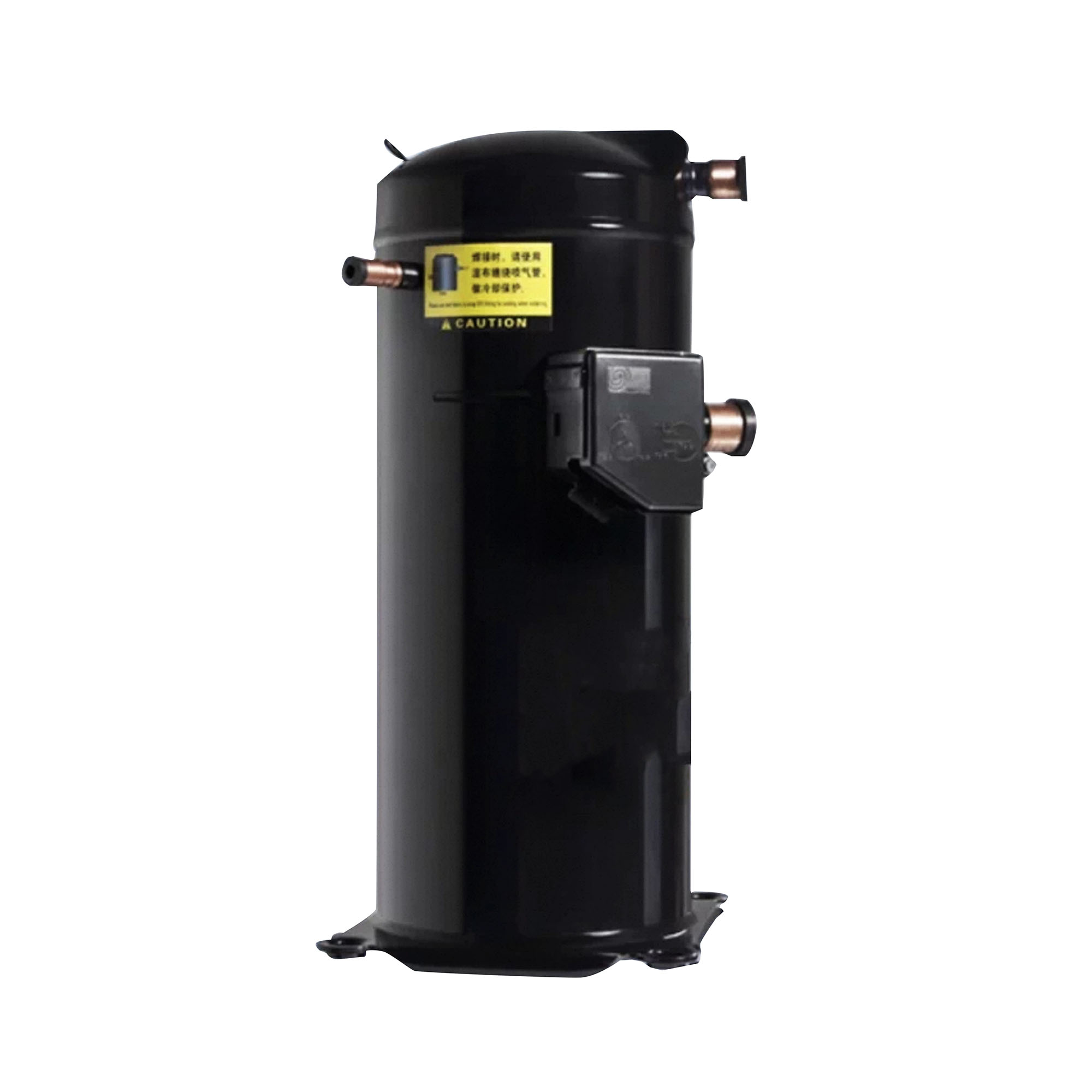
In subzero conditions, even a 5W-40 or 0W-20 oil can thicken to the point where cranking speed drops and the pump struggles to move fluid through the galleries. Sump heating attacks that problem at the source by holding the oil in the pan warm enough to remain pumpable, usually somewhere between 40°F and 60°F depending on the setup. The result is a faster crank, lower load on the starter, and oil pressure that builds before metal-to-metal contact has a chance to do real damage.
A block heater alone does not solve this because it warms the coolant, not the lubricant lying at the bottom of the pan. In many engines, the oil can stay cold and thick long after the water jacket has reached a comfortable temperature. A sump heater—whether an adhesive pad, a magnetic unit, or a cartridge-style element—places the heat directly under the fluid, so the oil entering the pickup tube is already close to a flowable consistency.
For machinery parked outdoors, the practical difference shows up as fewer dead batteries, less starter wear, and reduced scoring on bearings during the first seconds of operation. Instead of asking the starting system to overcome congealed oil and then waiting for lubrication to arrive, the operator begins with the fluid already behaving like oil. That makes cold starts less of an event and more of a routine.
Discharge Temperature Limits Are the Difference Between Long Valve Life and Early Failure
Most compressor failure investigations start with pressure, vibration, or oil analysis. Discharge temperature rarely gets the same attention, but it should. A valve that runs a few degrees over its designed discharge temperature may not trip any alarm, yet the damage is already underway. Seats and sealing elements expand at different rates, clearances tighten, and the thin edges of valve plates begin to lose their original hardness. What looks like a sudden failure at 2 a.m. is often the final result of weeks or months spent just past the thermal limit.
The tricky part is that discharge temperature limits are not a single number copied from a general manual. They vary with gas composition, valve design, and operating pressure. In sweet natural gas service, carbon deposits can accelerate above 300 degrees Fahrenheit, turning soft residues into abrasive particles that erode sealing surfaces. In hydrogen-rich streams, the same nominal temperature may be far less forgiving due to hydrogen embrittlement. Operators who treat the discharge temperature limit as a hard boundary and tune capacity, cooling, and clearance accordingly tend to get far more hours from their valves than those who treat it as a guideline.
Temperature trending also reveals trouble before a wreck. A gradual climb of five or ten degrees across a shift often means a valve is starting to leak internally, a cooler is fouling, or a pocket of gas is recirculating too long. Correcting the root cause at that stage is cheap compared with replacing a plate, seat, or entire cage after thermal deformation sets in. The valves that survive the longest are usually found on machines where discharge temperature is monitored with the same seriousness as bearing vibration.
Vibration Isolation Prevents Fatigue Cracks Before the Journey Begins
Fatigue cracks rarely start from a single violent impact. They build up as equipment is subjected to thousands of low-amplitude vibrations during transit. Engine idle, axle resonance and wind-induced motion all push energy into frames, weld seams and stress risers, producing cyclic loads that can open micro-fractures long before delivery. Vibration isolation placed in the transport cradle or packaging absorbs and redirects that energy, keeping sensitive assemblies close to a mechanically quiet state while the truck, railcar or vessel keeps moving.
A well-chosen isolator does not merely soften movement; it interrupts the path that vibration energy takes toward vulnerable areas. Elastomeric mounts or wire rope isolators tuned below the natural frequency of the load turn harsh input into dispersed low-level motion. Over a multi-day haul, this can be the difference between an asset that arrives within tolerance and one that carries invisible damage which shortens service life on site.
Project schedules benefit just as much. Equipment that has been isolated from the start arrives without the need for strip-down inspections, rework or unexpected downtime caused by transit-related defects. For components exposed to high-cycle fatigue, the most practical repair is to prevent the first crack from ever having a chance to form.
Open Coil Access Can Cut Cleaning Time by More Than Half
Reaching the coil usually eats up most of a maintenance visit. With an open coil access design, the panel swings or lifts away and the whole surface is right there, so a technician can move straight into vacuuming, brushing, or washing instead of wrestling with fasteners and nearby piping. What used to take forty minutes can often be finished in fifteen or twenty.
That direct access also changes how thorough the cleaning can be. Instead of working blind around edges or rinsing through a narrow gap, the entire depth of the coil remains visible and reachable. Build-up gets removed more completely, which helps keep airflow and heat transfer closer to design levels between scheduled cleanings.
For buildings with multiple units, the savings add up quickly. Fewer labor hours per unit mean more equipment can be serviced in one shift, and less time is lost to tenant disruptions or cooling outages.
Service Layout Turns a Potential Unload Into a Ten-Minute Diagnosis
The moment the truck pulled into the bay, the familiar signs were there: a rough idle, an occasional stutter under load, and the driver already talking about trading the rig in. Instead of heading straight for the headache of a full teardown, the crew leaned on the layout of the service floor. The diagnostic station sat right beside the parts bench, and the lift controls were within arm's reach of the scan tool. That arrangement wasn't accidental. It meant one person could watch live data, grab a sensor, and run a compression check without walking fifty feet between steps. What looked like a likely unload turned into a focused series of checks that ruled out the injectors, showed a weak coil on cylinder three, and pointed to a cracked vacuum line near the firewall. Ten minutes after the hood went up, the problem had a name.
A lot of shops treat the bay layout as an afterthought, just a place to park vehicles and store equipment. But when the flow of the workspace matches the flow of the diagnostic process, the difference shows up right away. Here, the tool cart was positioned so the ignition tester and the multimeter faced the engine bay, not the wall. A small whiteboard hung near the lift post, already listing the common fault patterns for that engine family. This small setup meant no one had to back the truck out, reshuffle toolboxes, or wait for another bay to open. Every movement had a purpose, and every step fed the next one. The rough idle became a data point, then a test result, then a confirmation. The driver, who had expected to leave the truck overnight, stood by the coffee machine watching the fix unfold in less time than it takes to fill out a work order.
The real payoff wasn't just speed. It was the confidence that came from a layout built around diagnosis rather than storage. When the bay itself supports fast hypothesis testing, mechanics stop guessing and start verifying. The coil was replaced, the vacuum line patched, and the truck fired clean on the first turn of the key. No parts cannon, no repeated test drives, no second trip into the shop. The driver left with a ten-minute diagnosis and a story about a shop that actually had its act together. Meanwhile, the next vehicle rolled into the same bay, and the same quiet efficiency started over again, proving that a well-arranged space can turn potential disaster into routine precision.
FAQ
It usually comes down to how well the unit handles thermal cycling, vibration, and voltage swings. A dependable compressor maintains oil return at low load, keeps discharge temperatures within safe limits, and doesn't lose capacity after long idle periods in humid or salty air.
The suction screen design, bearing material choice, and how the motor is cooled often matter more than the overall housing size. For example, a compressor with a generously sized suction screen and a refrigerant-flooded motor tends to cope better with particles and high ambient heat.
Listen for changes in sound at startup, watch for slowly rising discharge temperatures under the same load, and check oil color during scheduled service. A compressor that needs more frequent resetting of the high-pressure switch or shows darker oil with a varnish smell is usually giving early warning.
It's mostly about oil management. At part load, refrigerant velocity drops, and oil can pool in the evaporator. Designs with better oil separation, smaller dead zones in the crankcase, and controlled refrigerant feed keep the oil moving back to the compressor instead of starving the bearings.
A lot. Testing that includes rapid pull-down, high-ambient start-stop cycles, and low-voltage restarts exposes weaknesses that steady-state lab runs miss. If a factory runs every compressor through a hot gas bypass test and checks vibration at multiple mounting angles, field failures tend to drop noticeably.
Yes. Undersized wiring, poor condenser airflow, and mounting the unit where salt spray collects on the electrical box are common. Also, charging by sight glass alone without checking superheat can lead to liquid slugging or oil dilution later.
Replacing filter driers before they reach full moisture capacity, keeping condenser fins clean, and recording steady-state pressures and temperatures twice a month. These simple habits catch slow refrigerant loss and airflow problems before they force the compressor to run hotter than necessary.
Conclusion
Reliable performance in container refrigeration rooms depends on more than a compressor's catalog rating. Once the unit is installed inside a tight metal box, airflow changes and heat soaks through the walls, so nominal capacity can vanish under real conditions. Manufacturers point out that selecting equipment based on lab numbers alone often leads to overheating and nuisance trips, because the enclosure itself becomes a heat trap that pushes operating temperatures beyond expected limits. A practical design handles this by recognizing the container environment, not an open test bench.
Cold starts present a separate problem. Without sump heating, oil thickens when the room sits idle in low ambient temperatures, making the first start hard on bearings and valves. Keeping the oil warm enough preserves viscosity and allows the compressor to reach lubrication quickly. Discharge temperature limits also matter for valve durability; staying within a defined ceiling prevents carbon deposits and early reed failure. Vibration isolation is another overlooked safeguard, reducing stress on pipes and welds before road or sea movement turns small flexing into fatigue cracks. In daily upkeep, open coil access makes cleaning much faster, and a well-arranged service layout means a technician can read pressures and reach key components without unloading the entire unit. These details separate a compressor that runs steadily from one that fails early.
Contact Us
Contact Person: Jack
Email: [email protected]
Tel/WhatsApp: +86-13335127698
Website: https://www.paulair-refrigeration.com