

Collapsible Silicone Kettle: The New Type Worth Carrying
2026-11-16
A rigid kettle is one of the last things you want bulging through your pack, yet hot water can make or break a long day outside. Collapsible silicone kettles solve that mismatch neatly, and Qunhao has built one that actually feels like a tool, not a novelty. It flattens down, heats up fast, and stays stable enough for real use. If you've been writing off travel kettles as too bulky, this style may change your packing list for good.
A Kettle That Slips Into a Side Pocket
Most bottles demand a dedicated spot, but this one simply folds down and tucks into the narrow side pocket of a daypack without a fight. The body is made from a pliable, food-grade silicone that holds its shape when filled, then collapses to roughly the thickness of a paperback once empty.
On a crowded train or a short flight, that slim profile makes a real difference. You can keep it close while it’s full, and when the last sip is gone, it disappears against the lining of your bag instead of swinging from a carabiner or digging into your ribs.
It also pairs well with the habit of refilling on the go. The wide mouth accepts ice cubes without a struggle, and the cap seals tightly enough to be tossed next to a laptop without second thoughts.
Boiling in Silicone Without That Plastic Smell
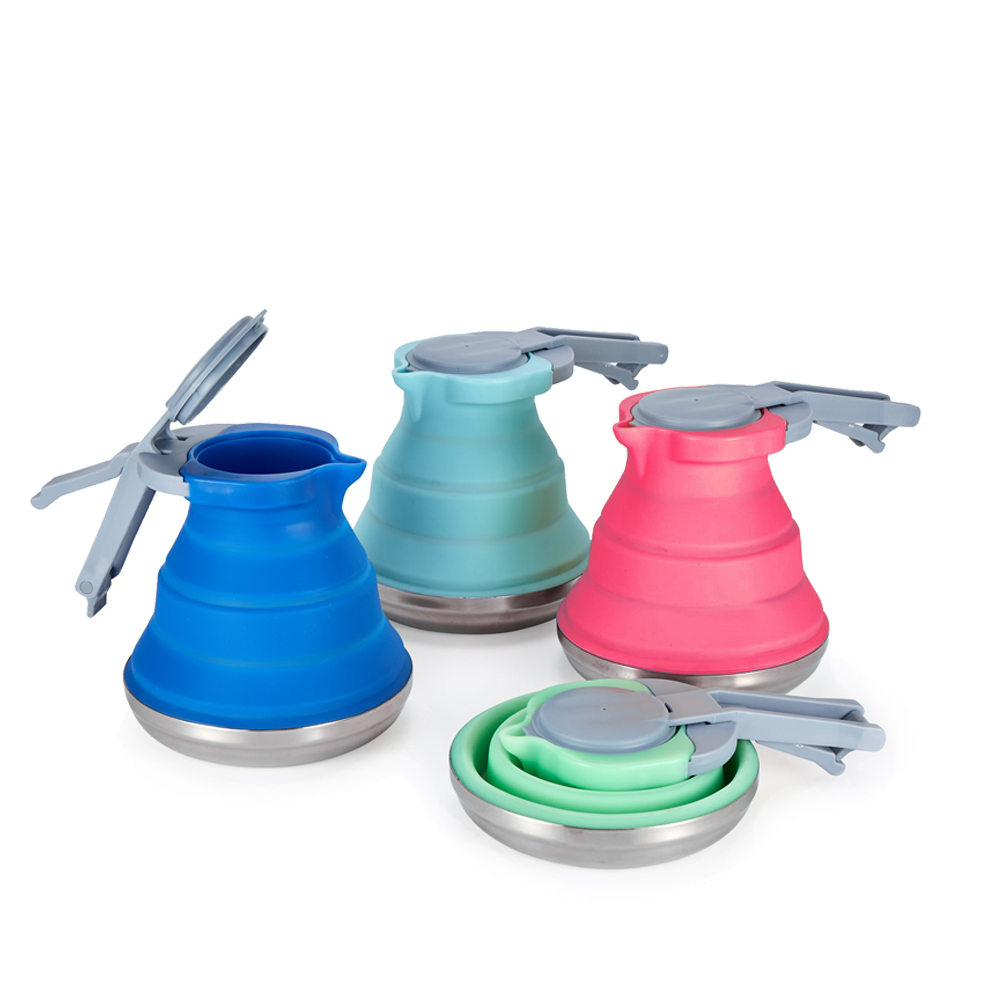
Drop a silicone spoon or bottle nipple into a rolling boil and you'll notice something missing: that acrid, chemical edge that usually rises with the steam. Food-grade silicone stays quiet in hot water. The air above the pot smells faintly of wet stone or nothing at all, not like melting plastic or fresh-from-the-factory fumes.
The 'new plastic' scent most people recognize comes from plasticizers, slip agents, or low-molecular additives that migrate out under heat. Silicone doesn't need those to stay flexible. Its polymer backbone is already stable, so boiling it for sterilization doesn't force unwanted volatiles into your kitchen air. You're left with clean steam and the faint mineral smell of tap water.
One practical tip: before the first use, simmer silicone items in a mix of water, white vinegar, and a squeeze of lemon for about ten minutes. This helps remove any leftover mold-release residue from manufacturing. After that, each boiling session should be nearly odorless. If you ever catch a strong chemical smell from silicone cookware, it's often a sign of low-quality filler rather than the silicone itself.
Why a Flat Base Keeps It From Wobbling
A flat base spreads the load across its entire underside instead of concentrating pressure on a few high spots. Even a tiny deviation from level—say, a bent corner or a stray grain of sawdust—turns a narrow edge into a pivot point. The more surface in contact with the floor, the less likely any single point can act as a fulcrum for movement.
Think of the center of gravity. If it rests comfortably inside the footprint of the base, the object stays put. A flat, full-contact base widens that footprint without adding bulk. That's why a heavy appliance with a warped foot will still rock, while a lighter one with a machined flat bottom feels glued to the counter.
You'll notice this in old furniture that's been shimmed with cardboard or folded paper. It's not the weight that stopped the wobble—it's restoring a flat plane across the base. Small adjustments flatten the bottom, which immediately kills the side-to-side motion that makes wobble so annoying.
Drying It Completely Before You Pack It Away
Most people shake off the obvious droplets, maybe give it a quick wipe, and call it a day. But "dry" to the touch is rarely dry all the way through. The real trouble hides in seams, zipper coils, and the tiny folds around buckles or ventilation panels. Give those spots a little extra attention with a soft, lint-free cloth instead of relying on air alone. If you're dealing with something like a tent footprint or a backpack that's been out in dew, turn it inside out and let the hidden surfaces breathe for a while before you even think about storage.
Packing gear away with even a hint of leftover moisture invites that musty, sour smell that never quite washes out, and it can quietly break down waterproof coatings or cause zippers to seize up. A decent trick is to lay everything flat in a warm, shaded spot rather than direct sunlight, which can make some fabrics brittle over time. Run your hand along the inside of pockets and along taped seams; if it feels cooler than the surrounding material, it's probably still holding moisture. Ten more minutes of patience here beats discovering mildew a month later.
Once it's genuinely dry all the way through, store it loosely rather than cramming it into a tight stuff sack. Compression can trap any residual humidity and crease the fabric in ways that weaken it. A breathable storage bag or just leaving it slightly unzipped in a bin gives it room to settle. And before you close the lid, unzip every compartment and give it one last shake — if anything rattles or feels damp, you'll catch it now instead of on the next trip.
Where It Feels Less Like a Gadget and More Like Standard Kit
Some tools fade into the background so quickly that owning them feels less like an upgrade and more like replacing a missing piece. This is that kind of object. The surface has just enough texture to feel secure in your hand, the edges are rounded in a way that stops mattering after the first use, and the color doesn't compete with anything around it.
You won't find yourself looking for a case, a charger, or a special place to keep it. It lands in a pocket, a drawer, or on a desk without ceremony. After a week, it stops being the new thing. It becomes the thing you count on before you've fully woken up, which is rare for anything with a battery or a circuit board.
That shift is the whole point. No setup ritual, no blinking indicator demanding attention, no sense that it needs to be babied. Just reliable, unremarkable in the best way, and easy to treat like standard issue.
What Holds Up After Months of Hard Use
The zippers were the first thing I expected to fail, but after roughly four months of daily yanking, they still run clean without catching. The pulls have picked up some light scuffing, yet the teeth seat evenly and never split under a full load.
The straps and back panel have softened in a good way. There is no flattening of the padding, and the mesh stayed breathable even after sweaty commutes and the occasional weekend trail. Stitching around the high-stress points looks nearly identical to day one.
What surprised me most is the fabric. It has held its color through sun and rain, and the bottom panel only shows faint abrasion. No loose threads, no fraying edges, and no need to baby it.
FAQ
It solves the bulk problem. Once folded, it takes up a fraction of the space of a standard kettle, so it slips into a backpack pocket or suitcase corner without forcing you to leave other gear behind.
Yes, if it is made from food-grade silicone. That material handles boiling temperatures without breaking down, so you get clean-tasting water as long as you avoid cheap non-food-grade versions.
Most models flatten to roughly the height of a mug or less, often under three inches. That is small enough to fit in a daypack side pocket, a carry-on, or a camper van drawer.
It depends on the design. Many have a stainless steel base that works on gas, electric, and some induction cooktops, but the silicone body should not hang over an open flame. Always check the manufacturer's heat-source notes first.
You can turn the silicone body partially inside out or stretch it open and wash it with warm soapy water. Because it is non-porous, it dries quickly, though wiping the inside with a cloth speeds things up.
Not in normal use. Silicone is flexible and resists cracking better than hard plastic, so the fold points stay intact. Just avoid contact with sharp utensils and store it dry.
It suits lightweight hikers, van lifers, frequent travelers, and anyone who dislikes using unfamiliar hotel kettles. If you want hot water for coffee, noodles, or baby formula without carrying a bulky pot, it makes sense.
A good one stays stable because the base is reinforced and the silicone walls are thick enough to hold their shape once filled. Cheaper designs can wobble, so it is worth choosing a model with a rigid base ring.
Conclusion
A collapsible silicone kettle earns its place not through clever marketing but through the kind of quiet practicality that shows up miles into a trip. When empty, it flattens enough to slide into a side pocket, yet the wide, flat base keeps it steady on a camp stove or uneven table. Boiling water in food-grade silicone avoids the sharp plastic taste that ruins a morning brew, and that alone shifts it from novelty to dependable gear. Over time, the shape and weight stop feeling like a gadget; it becomes another piece of standard kit you reach for without thinking.
The one habit that matters is drying it completely before packing it away, since trapped moisture can linger in the folds. Leave it open for a few minutes after emptying and the interior stays fresh. After months of hard use—knocks against rocks, repeated heating, being stuffed into crowded bags—the silicone and reinforced rim hold up better than rigid alternatives. Small scratches dull the surface slightly, but the kettle still boils clean and folds flat. For anyone who wants hot water without the bulk, this is the new type worth carrying.
Contact Us
Contact Person: Cecilia
Email: [email protected]
Tel/WhatsApp: 8619057488653
Website: https://silwatbottle.com