

Chinese Powder Valve Solutions for Reliable Material Handling
2026-08-22
When powders refuse to flow predictably, every downstream process suffers. That’s why engineers are turning to Chinese powder valve solutions built for tight shutoff, minimal dead space, and repeatable dosing—especially from AVM, a name gaining traction in demanding material handling environments. But not all valves handle abrasive or cohesive media the same way. Before you spec another rotary valve or butterfly, it’s worth asking what a purpose-built powder valve can actually change on your line.
When Powders Behave Badly, Valve Design Matters
Fine powders have a nasty habit of defying expectations. They pack, bridge, rat-hole, and sometimes flow like water — until they don't. When that unpredictability meets a standard valve, the result is usually a clog, a cloud of dust, or a slow, grinding halt to production. The problem isn't the powder itself; it's that most valves are designed for liquids or coarse granules, not for the weird, cohesive, and often abrasive nature of fine bulk solids. A valve that works beautifully on paper can become a maintenance nightmare once it meets a powder that compacts under its own weight or jams at the slightest provocation.
This is where thoughtful valve design stops being a detail and starts being the difference between uptime and downtime. A well-designed powder valve accounts for things like shear sensitivity, particle size distribution, and the tendency of powders to pack into every crevice. Features like full-bore openings, gentle handling, and minimal internal dead zones become non-negotiable. Flexible sleeves that massage rather than crush, inflatable seals that wipe clean instead of trapping material, and geometries that encourage mass flow rather than funnel flow — these aren't luxuries, they're survival tactics. Even the choice between a butterfly, pinch, or dome valve can determine whether a process runs for months without intervention or needs weekly teardowns.
The real art is matching the valve to the powder's personality, not forcing the powder to adapt to the valve. A cohesive powder might need a valve that actively breaks bridges during discharge, while a fragile powder might need one that avoids shear and drop impact. Abrasive materials demand hard-facing or replaceable liners, and hygroscopic powders need seals that don't let moisture sneak in and turn everything to cement. Ignoring these quirks leads to leaks, cross-contamination, and product loss. Paying attention to them leads to a system that runs quietly, reliably, and without constant poking and prodding from operators who have learned to expect trouble.
Inside a Typical Chinese Powder Valve: What Actually Counts
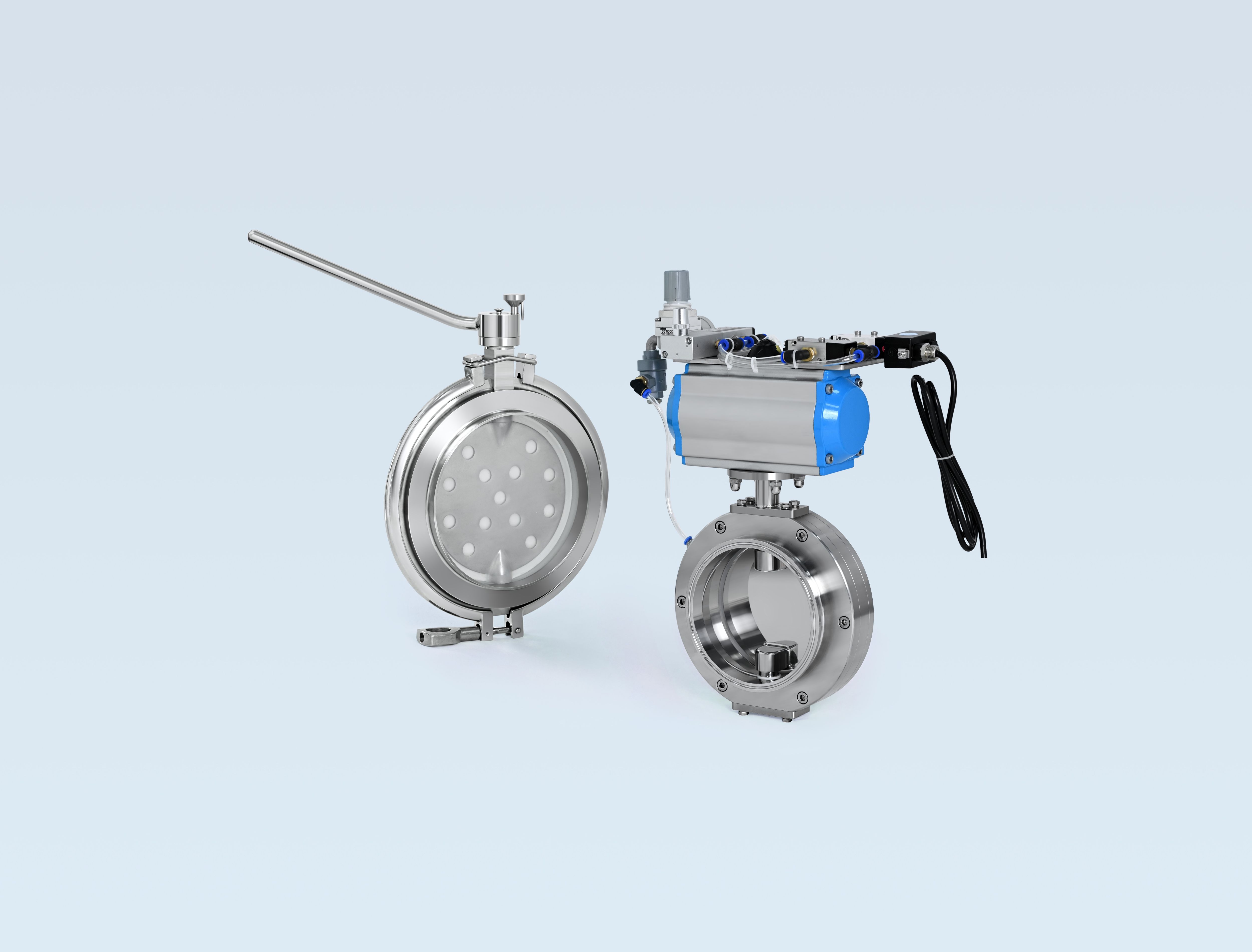
Most people assume a powder valve is just a metal body with a flap, but the real story is hidden in the gap between the rotor and the seat. On a mid-range Chinese valve, that clearance often gets specified as “tight” on the drawing, yet nobody checks the actual runout after welding the flanges. A deviation of 0.02 mm at the bearing shoulder can change the wear pattern entirely. If you want to know whether the valve will handle abrasive silica fume or sticky calcium carbonate, don’t look at the datasheet—look at how the internal lips are chamfered and whether the seal ring sits flush without any adhesive squeeze-out.
Another quiet killer is the spring stack. Many local suppliers use a single coil spring that loses tension after a few thousand cycles, especially when the powder works its way into the guide. A better design loads the rotor with three short wave springs in a staggered pocket, which keeps the closing torque predictable even after the seat wears in. And don’t ignore the purge port: if it’s drilled at a 90-degree angle instead of tangential to the bore, fine powder will pack into the threads and seize the stem. Those two details—spring preload distribution and purge angle—tell you more about the valve’s real lifespan than any polished logo on the nameplate.
Sealing Methods That Survive Fine Dust and Abrasion
Fine dust and abrasive particles silently destroy ordinary seals within weeks. Standard rubber lips wear down, harden, or get cut by dust trapped at the contact edge. A better approach starts with selecting materials that resist both erosion and embedding. Polyurethane and high-nitrile compounds outperform generic NBR because they stay flexible while offering high tear strength. But material alone is not enough — the seal geometry needs to shed particles rather than collect them.
One proven method is a labyrinth or excluder lip placed ahead of the primary sealing surface. This extra barrier spins off larger debris before it reaches the main seal. For extremely fine dust, a dual-lip design with grease packed between the lips works like a wet trap: dust sticks to the grease film instead of migrating along the shaft. The key is selecting a grease with low thickener content, as thickeners themselves can act as abrasives when mixed with fine particles.
Heavy abrasion calls for hard-faced seals or ceramic coatings on the shaft contact area. Tungsten carbide or chrome oxide layers prevent grooves from forming on the shaft, which is the usual failure point. Another option is to reverse the seal orientation so the lip points outward, letting gravity and rotation throw dust away from the interface. In all cases, periodic purging with low-pressure air or clean fluid removes accumulated dust before it can grind into the seal face.
Material Choices for Sticky, Abrasive, or Delicate Powders
Sticky powders tend to cling to metal surfaces, so look for feeders with textured or coated interiors that reduce adhesion and promote smooth flow. For abrasive materials, hardened alloys or ceramic liners extend equipment life without constant replacement. Delicate powders, on the other hand, demand gentle agitation systems such as low-shear augers or vibratory trays to avoid particle breakdown.
In practice, combining the right material with the appropriate feeder geometry makes a noticeable difference. A sticky powder paired with a flexible hopper and a non-stick paddle can move steadily, while an abrasive compound flows better through a wear-resistant rotary valve than through a standard screw conveyor. Delicate flakes or granules often benefit from a loss-in-weight feeder using a slow, controlled belt instead of a high-speed auger.
Your specific formulation will guide the final decision. Test small batches with different surface finishes and feed mechanisms to observe buildup, erosion, and particle integrity. Sometimes a simple change, such as switching from stainless steel to a PTFE-coated chute or adjusting the feed rate, solves persistent jamming or dusting issues without overhauling the whole line.
Installation and Maintenance Without the Usual Headaches
Most people expect installation to involve a pile of cryptic instructions, misplaced screws, and at least one trip back to the hardware store. This system flips that expectation on its head. The components come pre-aligned and clearly labeled, so you spend less time decoding diagrams and more time getting things running. A single person can complete the basic setup in under an hour, using only the included tools — no specialized equipment or call to a technician required.
Once everything is in place, the maintenance routine stays refreshingly simple. Instead of a long checklist of greasing, tightening, and replacing parts every few months, you only need to inspect two accessible points and wipe them down occasionally. The design intentionally uses self-lubricating joints and sealed bearings, which means common wear-and-tear issues are designed out rather than patched over. If something does need attention, the modular layout lets you swap a part in minutes without disassembling the entire unit.
Homeowners often worry that low-maintenance promises come with hidden costs or proprietary parts. Here, the opposite is true: standard fasteners and off-the-shelf replacements keep long-term ownership straightforward. The included manual skips the jargon and focuses on plain-language steps with large, clear illustrations. Even if you have never handled a similar product before, you can diagnose a loose connection or minor adjustment without calling support — and get back to your day without the usual frustration.
Matching Valve Type to Your Powder Flow Characteristics
Powder flow isn't a single trait—it sits on a spectrum from dry, free-flowing granules to sticky, cohesive fines. A valve that performs beautifully with one powder may jam or leak with another, and the mismatch typically shows up as bridging, segregation, or premature seal wear. Before selecting a valve, take stock of the powder's angle of repose, moisture sensitivity, abrasiveness, and particle friability. These characteristics, more than line size or pressure rating, should guide the valve type.
For cohesive or hygroscopic powders, rotary valves often become a maintenance headache because fines pack into the rotor pockets and clearances, reducing feed accuracy and eventually stalling the drive. In those cases, a full-bore pinch valve or a purpose-built slide gate gives the powder less surface to cling to and allows a sharp, self-cleaning open/close stroke. Abrasive powders call for hardened or ceramic-lined internals, but also for a valve that keeps the material stream away from the seal faces during cycling. A knife gate valve with a deflector sleeve or a segmented ball valve designed for slurry-like powders handles this better than a standard butterfly valve, whose disc and seat sit directly in the flow path.
Friable particles—think spray-dried agglomerates or delicate crystals—need a valve that adds as little shear and impact as possible. Avoid rotary valves and high-turbulence diverters that grind product against housing walls. A full-port ball valve or a slide gate that opens completely out of the product stream preserves particle size distribution. In every case, the goal is to match the valve's closing mechanism, dead space, and material contact surfaces to the powder's behavior, not to force a familiar valve design onto an unfamiliar powder.
FAQ
They typically combine abrasion-resistant materials, tight sealing geometries, and adaptable flange standards, so operators can handle fine or granular powders without frequent jamming or leakage.
Rotary airlock valves, butterfly valves with inflatable seals, slide gate valves, and dome valves appear frequently, each chosen for specific flow characteristics and pressure conditions.
Many use hardened internals, replaceable wear liners, or ceramic-coated surfaces, and the design often keeps the sealing area away from the direct material stream.
Yes, suppliers commonly offer stainless steel bodies, food-grade seals, and mirror-polished contact parts, along with easy-clean designs that meet basic hygienic requirements.
You can often specify inlet and outlet sizes, flange standards, shaft seal types, rotor configurations, and even surface finish, which helps the valve match existing equipment rather than forcing a layout change.
Many provide detailed installation drawings, spare part kits, and responsive technical support through local distributors or direct factory contacts, reducing downtime when maintenance is needed.
Yes, especially rotary valves and diverter valves designed for pressure or vacuum conveying, with clearances and sealing options adjusted to maintain system airlock performance.
Focus on material bulk density, particle size, moisture content, and expected pressure differential, then ask the supplier to confirm the valve's sealing type and wear protection match those conditions.
Conclusion
Getting powders to move reliably through a valve is rarely as simple as opening and closing a port. When powders behave badly—bridging, flooding, or packing into dead zones—the internal geometry of the valve becomes the deciding factor between consistent flow and constant stoppages. A well-thought-out Chinese powder valve doesn't rely on a single universal design; instead, it incorporates features like a full-bore opening with minimal ledges, a polished contact surface, and an actuator stroke that clears the seat without shearing fragile particles. Inside, the components that actually count are the disc or gate profile, the shaft seal arrangement, and the clearance between moving parts. Sealing methods must survive fine dust that works its way into every gap, as well as abrasive wear that can ruin a soft seat within weeks. Hard-faced seats, inflatable seals, or purge-assisted packing glands are common answers, each chosen for the specific dust load and particle hardness. Material selection follows the same logic: sticky powders demand low-friction coatings or mirror-finished stainless steel, while abrasive materials require hardened alloys or ceramic liners. For delicate or heat-sensitive powders, gentler contact surfaces and slower closing speeds prevent degradation.
Installation and maintenance without the usual headaches depend on how the valve is designed to be accessed—split bodies that allow seat replacement without removing the whole assembly, or top-entry bonnets that let operators inspect internals in place. Matching the valve type to powder flow characteristics means first identifying whether the material is free-flowing, cohesive, fluidizable, or prone to segregation. A butterfly valve may handle free-flowing granules, but a slide gate or dome valve often works better for fine, aeratable powders. The most reliable Chinese powder valve solutions don't force a single style onto every process; they offer a range of sealing and actuation options so the valve can be tuned to the powder's actual behavior, reducing downtime and extending service life far beyond a generic off-the-shelf unit.
Contact Us
Contact Person: Ananda
Email: [email protected]
Tel/WhatsApp: 8619016718200
Website: https://www.wzaomi.com