
Chinese Plastic Corrugated Boxes: Durable, Lightweight Solutions for Modern Packaging Needs
2026-06-11
In today's fast-paced supply chains, packaging must do more than just protect—it needs to cut costs, reduce weight, and withstand harsh conditions. Chinese plastic corrugated boxes are emerging as the smart answer, blending surprising strength with featherlight construction. At ShiTeng Packaging, we're helping businesses tap into this durable, lightweight revolution that's quietly reshaping modern logistics.
The Rise of Chinese Plastic Corrugated Boxes in Modern Supply Chains
For years, traditional materials like cardboard and wood dominated the packaging landscape, but a shift is underway. Plastic corrugated boxes—made from polypropylene—are now making serious inroads, and a huge portion of that momentum originates in China. Manufacturers there have refined the extrusion and fabrication processes, turning out strong, lightweight containers at a pace that keeps up with global demand. It’s not just about volume; the quality has reached a point where these boxes routinely outperform their paper-based cousins in harsh environments.
What makes them so attractive in modern supply chains? Think moisture, dust, and repeated handling. A plastic corrugated box won’t weaken when wet, won’t shed fibers, and can be sanitized easily—crucial for food, pharmaceuticals, or sensitive electronics. Chinese suppliers have pushed versatility further, offering custom sizes, dividers, and even anti-static versions. Logistics managers are noticing that a single box might replace dozens of disposable cardboard ones, cutting down on waste and reorder headaches. The durability also means fewer damaged goods, which quietly improves a company’s bottom line.
Beyond performance, there’s a sustainability angle that’s often overlooked. When these boxes reach the end of their long—and I mean long—life, the polypropylene can be ground up and reformed. China’s closed-loop recycling infrastructure for industrial plastics is maturing, turning spent containers back into raw material. It’s not a perfect circle yet, but it’s a practical step that resonates with businesses trying to reduce their environmental footprint without sacrificing operational efficiency. As supply chains grow more complex and eco-conscious, it’s no wonder these unassuming boxes are becoming a quiet staple.
Lightweight Yet Tough: The Engineering Behind These Boxes
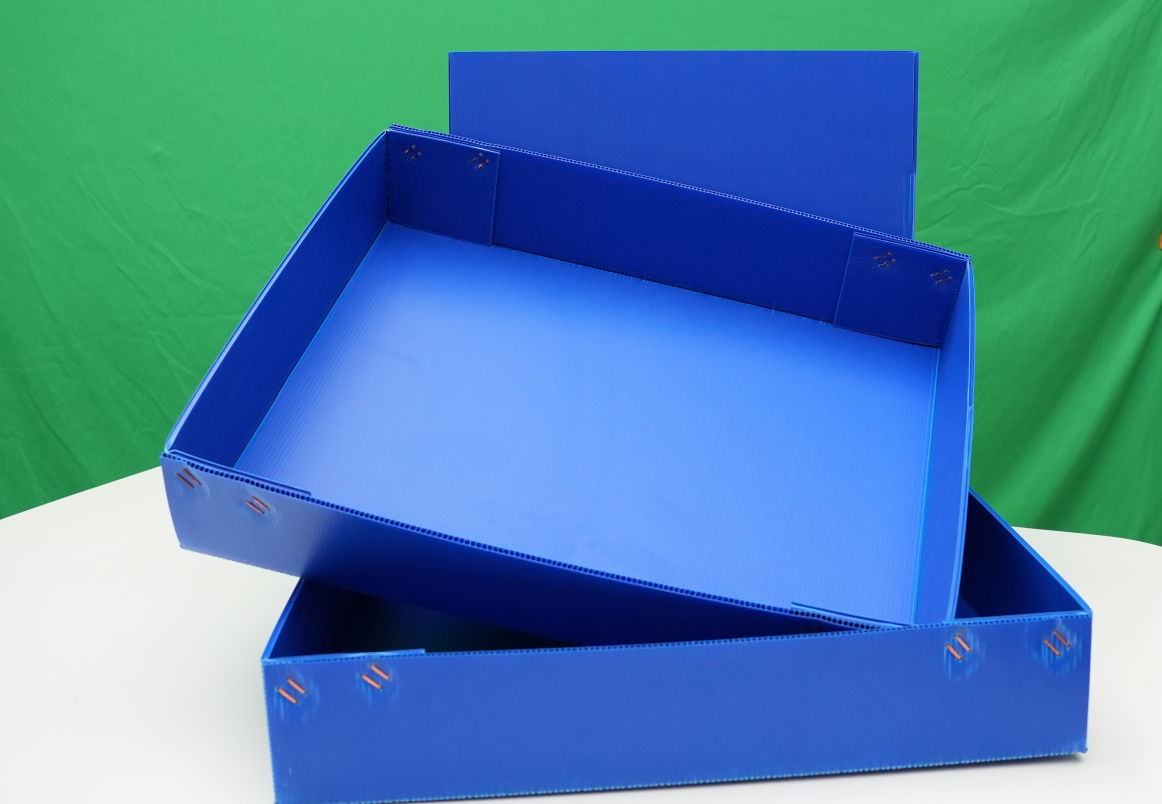
The secret lies in the clever use of fluted polypropylene sheets, a material that mimics the hollow-core structure of a bird’s bones—maximizing strength while minimizing mass. Unlike solid plastic or metal, these twin-wall panels create rows of parallel tunnels that absorb and distribute stress across the surface, so a box weighing under a kilo can support over a hundred times its own weight. It’s not just about stacking high; the same design shrugs off sideways knocks and rough handling without denting or splitting.
Beyond the core material, the corners tell their own story. Every edge is reinforced with an extrusion-welded polymer bumper that’s angled to deflect impact away from the contents inside. The lids don’t just sit on top—they lock in place with a compression latch that pulls the whole structure taut, turning a collection of panels into a single rigid shell. Even the hinges are over-engineered: glass-filled nylon pins run through oversized sockets, so they won’t shear off under heavy torsion.
What really ties it together is the manufacturing precision. Each panel is die-cut and then hot-knife sealed along the flutes to prevent moisture ingress, a step most budget cases skip entirely. The final assembly involves ultrasonic bonding at key stress points, creating a monocoque-like frame without a single rivet or screw that could work loose over time. The result feels impossibly light when you pick it up, yet it endures drops, vibration, and decades of use without complaint—an engineering sleight of hand that makes you rethink what a tough box should weigh.
Versatile Applications That Go Beyond Simple Storage
Often, when we think of storage, we imagine dusty boxes and forgotten items. But the right storage solution can become the backbone of a dynamic lifestyle. Consider how a well‑designed shed transforms into a private workshop, where creativity sparks amidst tools and materials, far from household distractions. Or picture a compact outdoor unit serving as a pop‑up retail space during local markets, turning a simple structure into a revenue stream. It's this adaptability that turns four walls into something far more valuable.
The real magic lies in modular designs that welcome change. One season, a storage container might house garden equipment; the next, it becomes a serene yoga studio with just a few thoughtful additions. Families repurpose these spaces into playrooms, home offices, or even guest quarters, proving that function follows imagination. By choosing flexible layouts and durable materials, you create a canvas that evolves with your needs—without expensive renovations.
Beyond personal use, these spaces foster community and connection. Shared storage areas in residential complexes are being reimagined as co‑working nooks or hobby hubs, encouraging neighbors to interact. Small businesses, from florists to bike repair services, find affordable micro‑warehouses that double as storefronts. It’s about seeing potential where others see limits, and in doing so, crafting spaces that are not just for keeping things, but for living and growing.
A Cost-Effective Alternative to Traditional Cardboard
Switching to reusable packaging has transformed how we handle shipments. Instead of constantly buying and discarding cardboard boxes, our system relies on durable containers that can be used hundreds of times. This drastically cuts per-use costs, especially for businesses with frequent, predictable delivery routes. The initial investment pays for itself within months, and the savings only grow over time.
What truly sets this apart is the reduction in hidden expenses. Corrugated boxes require tape, fillers, and disposal fees—all of which add up. Our alternative needs none of that, and because the containers are stackable and collapsible, warehouse space is used more efficiently. Plus, they're designed to withstand moisture and rough handling, so product loss from packaging failure becomes virtually nonexistent.
Customers also appreciate the clean, professional presentation that reusable packaging delivers. It signals a commitment to sustainability without the greenwashing that often accompanies single-use materials. Over time, this approach not only trims operational budgets but also builds brand loyalty among those who value practical, eco-conscious solutions.
How Businesses Are Cutting Shipping Expenses with Smarter Packaging
Many companies are realizing that the key to lowering freight costs isn't just negotiating better rates, but rethinking how products are boxed. By switching to custom-sized packaging that fits items more precisely, businesses cut down on dimensional weight charges and eliminate the need for excess void fill. This not only reduces the bill per shipment but also means more units can fit into a single truckload, amplifying savings across the supply chain.
Beyond resizing boxes, some are investing in packaging design software that models the most efficient arrangement of multiple items. Others are experimenting with lightweight, durable materials that maintain protection while shedding ounces. Even small tweaks—like opting for padded mailers instead of boxes for small, non-fragile items—are adding up to significant annual savings. Ultimately, smart packaging is turning shipping from a fixed cost into a lever for profitability.
Endless Customization for a Perfect Fit Every Time
Tailoring your experience shouldn’t feel like a one-size-fits-all compromise. We built our customization engine to let you tweak every detail until it matches your exact needs—whether that means adjusting sizing, materials, or functional add-ons. No two bodies or preferences are the same, and your final setup should reflect that.
What sets this apart is how effortless the process becomes once you dive in. The interface responds in real time, showing you exactly how each change looks and feels before you commit. It’s like having a craftsman at your fingertips, ready to reshape product features on the fly, ensuring that the final result sits comfortably in your daily life from day one.
FAQ
They are typically produced from polypropylene or polyethylene, giving them a hollow fluted structure similar to cardboard but far more resistant to water, chemicals, and impacts. Unlike cardboard, they won't absorb moisture or lose strength when wet.
Their combination of light weight, high strength, and reusability meets the demands of fast logistics, automated handling, and sustainability goals. They also offer better protection for goods during transit and can be sanitized easily.
They are widely adopted in automotive parts, electronics, agriculture, pharmaceuticals, and food processing, where hygiene, stackability, and durability are critical.
They can withstand repeated impacts, heavy loads, and rough handling without cracking or deforming, often outlasting cardboard by years and performing better than many rigid plastics in terms of shock absorption.
Absolutely. Manufacturers can adjust dimensions, color, wall thickness, and add features like dividers, lids, or printing for branding, making them a flexible solution for specific supply chain requirements.
Yes, since they are reusable many times and fully recyclable at the end of life. Many producers use recycled content, and the long lifespan significantly reduces waste versus single-use alternatives.
It varies by design and thickness, but standard models can handle dynamic loads of 20–40 kg, while heavy-duty versions support over 60 kg without buckling, making them suitable for industrial use.
They remain structurally stable in temperatures ranging from -20°C to 80°C and are inherently waterproof, so they won't soften in rain, humidity, or washdown environments, unlike fiber-based packaging.
Conclusion
Chinese plastic corrugated boxes are reshaping the way businesses approach storage and transport by merging surprising strength with remarkably low weight. Unlike traditional cardboard, these containers resist moisture, chemicals, and repeated impacts without losing shape, making them ideal for rugged supply chain cycles. The engineering relies on a twin-wall polypropylene structure that absorbs shock while staying light enough to slash freight costs. Their adoption has spread far beyond basic warehousing—industries now use them for automotive parts, fresh produce, electronics, and even pharmaceutical distribution, where cleanliness and durability are non-negotiable. This shift reflects a broader move toward reusable, long-lasting materials that lower per-use expenses and reduce waste.
Businesses are discovering that custom sizing, foldable designs, and vibrant branding directly on the box eliminate the need for extra labels or inserts. By tailoring dimensions precisely to product lines, companies minimize void fill and optimize container loads, cutting shipping expenses significantly. The initial investment is quickly offset by the boxes' extended lifespan and the drop in damaged goods returns. Combined with the ability to add dividers, anti-static coatings, or secure locking mechanisms, these packaging solutions adapt to almost any requirement. Chinese manufacturers have made such versatility accessible at competitive prices, turning what was once a niche industrial item into a mainstream packaging choice that keeps supply chains lean, agile, and cost-conscious.
Contact Us
Contact Person: Mr. Ge Man
Email: [email protected]
Tel/WhatsApp: 8613710506492
Website: https://www.shitengzx.com