

China Three-Phase Asynchronous Motor Manufacturer Delivers Reliable Industrial Power Solutions
2026-10-20
Industrial motors rarely get the attention they deserve—until a production line stalls or a pump fails. In China's competitive manufacturing landscape, a dependable three-phase asynchronous motor is the quiet backbone of countless operations. That's where Chuangjuman stands out: a manufacturer focused not just on moving air and torque, but on delivering power solutions that keep industries running without surprises. This post explores how their motors balance rugged construction, energy efficiency, and real-world reliability to become the go-to choice for engineers who can't afford downtime.
Engineering High-Torque Motors for Demanding Conveyor Systems
Conveyor systems in mining and bulk handling rarely offer gentle starts. They demand motors that can deliver high breakaway torque without sacrificing thermal headroom. One practical approach is to oversize the rotor's copper cross-section and pair it with a forced-ventilation scheme that keeps winding temperatures stable during stalled or crawling conditions. This matters because a motor that overheats at low speed forces operators into short duty cycles, which no amount of control tuning can fix.
Gear reduction choices also shape how well a high-torque motor survives. A deep ratio can multiply torque at the drum, but it also increases reflected inertia and potential backlash. Using a stiff, low-backlash planetary stage ahead of the conveyor drive pulley reduces peak stress on couplings and bearings. At the same time, the motor's shaft and keyway should be treated as wear items: induction-hardened surfaces and generous fillet radii prevent fatigue cracks when the belt stalls and then suddenly releases stored tension.
Finally, torque control is not just about the drive. The motor must tolerate uneven loading from material slugs and tripper cars. Winding insulation with high thermal class and moisture-resistant varnish helps in washdown or dusty environments. Field experience shows that pairing a dedicated encoder with a torque-limiting drive parameter set keeps the motor from fighting momentary jams, which extends both belt splices and gearbox life.
Inside the Winding Process That Reduces Heat and Extends Lifespan
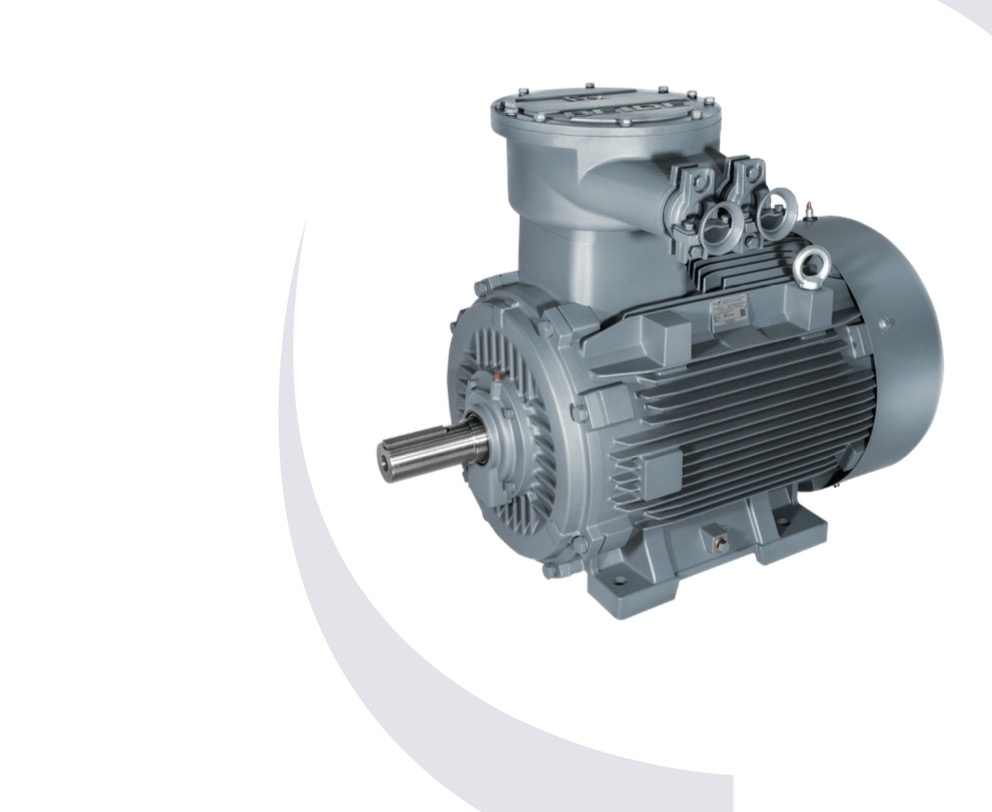
At the core of every high-performance motor lies a winding technique that rarely gets the attention it deserves. Instead of simply packing copper into slots, the process begins with precision tension control. Each strand is pulled at a consistent force, preventing microscopic gaps that would otherwise create hot spots under load. The turns are layered in a specific offset pattern, allowing heat to escape through the enamel rather than becoming trapped between adjacent conductors. This isn't just about neatness—it's about changing how thermal energy moves through the structure from the very first layer.
What makes this approach distinct is the way it treats insulation as an active participant rather than a passive barrier. After each coil is formed, a low-pressure impregnation step forces varnish deep into the microscopic voids between windings. Unlike traditional dip-and-bake methods that only coat the surface, this technique fills the interior channels, creating a solid thermal bridge from the copper to the stator core. The result is a winding that sheds heat continuously, lowering the average operating temperature by a measurable margin—and that directly translates to slower insulation aging and fewer stress fractures over thousands of hours.
The final stage involves controlled compression and curing, where the windings are pressed to a uniform density before the resin sets. This removes residual air pockets that would otherwise act as insulators, trapping heat exactly where it does the most damage. By the time the motor enters service, the winding behaves less like a collection of individual wires and more like a single, thermally efficient mass. The payoff isn't just a cooler running temperature on paper—it's a lifespan that stretches well beyond conventional expectations, driven by the simple idea that heat, if given a clear path out, never gets the chance to do its worst.
Why Chinese Factories Lead in Cost-Effective Motor Customization
The edge Chinese manufacturers hold in motor customization isn't rooted in a single breakthrough, but in a layered ecosystem built over decades. Component suppliers cluster within a few industrial zones, so a design tweak to a stator lamination or a custom winding pattern doesn't trigger a cross-border logistics puzzle. Engineers can walk a prototype across the street to a winding shop, get feedback over lunch, and have a revised sample by the next morning. That physical proximity collapses iteration cycles that elsewhere stretch into weeks, and the savings from fewer idle lines and faster turnarounds quietly show up in the final quote.
Beyond infrastructure, the approach to engineering itself differs. Many plants maintain libraries of proven motor subassemblies—frames, rotors, terminal boxes—that can be mixed and matched rather than designed from scratch. When a buyer asks for a slight change in torque curve or a different mounting flange, the factory reaches for an existing module, adjusts a few parameters, and runs a small batch for validation. This re-use of validated pieces lowers both engineering hours and the risk of field failures, which is precisely why customized units often come at prices close to standard ones.
Flexibility in production is the third pillar. Lines are frequently arranged for quick changeovers, with operators cross-trained on multiple stations. This means a run of 200 specialized motors doesn't require stopping a high-volume line for days or building a separate cell. Labor costs remain competitive, but the real advantage is adaptability: a factory can accept a mixed order—say, three variants with different voltages and enclosures—and deliver all of them within a single production window. That blend of dense supply networks, modular design habits, and nimble scheduling is hard to replicate elsewhere, and it keeps Chinese factories as the default choice for buyers who need motors tailored to a niche without paying a premium for the privilege.
Voltage Tolerance Design for Unstable Industrial Power Grids
Unstable industrial grids rarely fail in clean, predictable ways. Voltage sags caused by large motor starts may dip only 8% for two cycles, while capacitor bank switching can produce a 20% overshoot with ringing that confuses phase-locked loops in power supplies. A tolerance design based solely on steady-state nominal ±10% limits often misses these transient distortions, leading to nuisance trips or slow degradation of DC bus capacitors. Field recordings from plants with frequent tap changer operations show that the actual voltage envelope is far more chaotic than any single standard suggests, so the first step is to characterize the site-specific disturbance signature rather than rely on generic utility norms.
A practical design approach separates the problem into three domains: ride-through, conditioning, and immunity. Ride-through means the control electronics must keep logic rails stable during short interruptions—often achieved with hold-up capacitors sized for at least 50 ms at full load, not just the 20 ms commonly assumed. Conditioning involves active front ends or dynamic voltage restorers only where the process cannot tolerate any deviation, instead of blanketing the entire facility with expensive equipment. Immunity is built into every connected device: switch-mode supplies should accept a wide input window (e.g., 85–264 VAC) and recover gracefully after a brownout without rebooting, while motor drives need adjustable undervoltage trip delays coordinated with actual fault clearing times.
Validation must go beyond bench testing with a clean programmable source. Hardware-in-the-loop playback of recorded grid events reveals resonances that synthetic waveforms miss, especially when multiple drives share a DC bus or when line reactors interact with power factor correction capacitors. After commissioning, periodic re-measurement is essential because industrial loads evolve: a new compressor or a changed production schedule can shift the harmonic spectrum enough to violate previously safe margins. Treating voltage tolerance as a living parameter, updated with actual disturbance logs, keeps the design robust even as the grid becomes more polluted by neighboring facilities and intermittent renewable sources.
Matching Slip and Load Characteristics to Avoid Energy Waste
In motor-driven systems, slip is not inherently wasteful, but it becomes a hidden drain when it fails to match the actual torque demand of the load. Constant-torque applications, for example, often run at partial load yet still exhibit a relatively high slip because the motor was sized for peak conditions. This excess slip translates directly into rotor copper losses and unnecessary heat, requiring more cooling fan energy and shortening insulation life. The waste is easy to overlook because the motor appears to be running fine, but the accumulated kilowatt-hours show up clearly on the utility bill.
The real key is understanding the load's torque-speed curve before committing to a slip characteristic. Pumps and fans follow a variable-torque profile where power demand changes with the cube of speed, so a small slip-induced speed reduction can cause a disproportionate drop in flow while the motor continues drawing near-rated current at lighter load. Matching a low-slip motor to such a load, or using an adjustable-speed drive to actively manage slip, keeps the electrical input aligned with the mechanical output. This avoids the common scenario where a high-slip motor spends hours churning against a throttled valve or damper, converting useful energy into warm air.
Field verification matters more than catalog data. Logging slip and input power across typical operating cycles reveals whether the motor is coasting with excessive rotor loss during off-peak periods. If the data shows sustained light-load running with elevated slip, it may be time to downsize the motor, switch to a lower-slip design, or enable slip compensation in the drive. Some modern drives can dynamically adjust the voltage-to-frequency ratio to hold slip within a narrow efficient band, reducing rotor heating and directly cutting energy consumption without sacrificing control responsiveness.
Thermal and Ingress Protection for Harsh Operating Environments
Equipment deployed in extreme settings faces relentless thermal swings and the constant threat of dust, moisture, and chemical intrusion. Rather than relying on generic sealing, robust designs integrate phase-change materials and vented enclosures that actively regulate internal pressure while blocking fine particulates. This approach prevents condensation buildup during rapid temperature shifts—a common failure point in desert nights or arctic mornings—and keeps sensitive electronics dry without sacrificing heat dissipation.
Ingress protection goes beyond simple gaskets. A dual-stage barrier system, combining hydrophobic nano-coatings with labyrinth-style mechanical seals, resists water jets and fine dust even when housings flex under thermal stress. In practice, this means a device can survive a sudden rainstorm after hours of direct sun exposure, or withstand salt spray near coastal installations, without corrosion creeping into connectors or degrading thermal pads.
The real test comes in long-term reliability. By pairing conformal-coated circuit boards with thermally conductive potting compounds, engineers create a monolithic core that sheds heat efficiently while remaining impervious to humidity and abrasive airborne particles. Such integrated protection not only extends service intervals but also allows equipment to operate in environments where conventional IP-rated enclosures would eventually fail—from foundry floors to offshore wind turbines.
FAQ
They focus on heavy-duty build quality, using high-grade copper windings and precision-balanced rotors. The motors maintain stable torque even during voltage fluctuations, which helps avoid unexpected downtime in factories.
You will often see them driving pumps, compressors, conveyors, and fans in sectors like water treatment, mining, cement, and textile production. Their simple, rugged design suits continuous operation.
Every motor undergoes insulation resistance testing, vibration analysis, and a full-load heat run before leaving the plant. They also use sealed bearings and reinforced end shields to protect against dust and moisture.
Yes, the factory can adapt winding configurations and terminal boxes for different voltage and frequency combinations, including 50Hz and 60Hz systems. They also offer special mounting arrangements to match existing equipment.
The lineup includes IE2, IE3, and IE4 efficiency classes, with options for variable frequency drive compatibility. Higher efficiency models reduce operating costs over time without sacrificing starting torque.
They maintain regional service partners and keep common spare parts like bearings, fans, and terminal blocks in stock. Technical engineers can assist with installation guidance and troubleshooting via remote video or on-site visits.
The motors are typically certified to ISO 9001 and CE, and often comply with IEC standards. Many are also tested according to NEMA MG1 for customers exporting equipment to North America.
Conclusion
Eastern China's motor workshops have turned three-phase asynchronous design into a quiet specialty. For conveyor systems that run twenty hours a day under abrasive dust, engineers size rotor bars and stator slots not from generic catalogs but from actual load curves—high starting torque without wasted slip, so a loaded belt accelerates smoothly instead of jerking or stalling. The winding process gets the same attention: vacuum-pressure impregnation forces varnish deep into the coils, cutting hot spots and internal partial discharge that normally shorten insulation life. That one step, repeated across thousands of units, explains why these machines survive years on unstable grids where input voltage can sag to 340 V at 3 a.m. or spike during shift changes. Because the factories own their casting, stamping, and winding lines under one roof, a change in shaft length, mounting face, or terminal box does not trigger a ten-week wait or a tooling surcharge—it is a drawing revision and a same-week pilot run.
Thermal design leans on cast iron frames with oversized cooling fins and internal air circuits that keep bearing temperatures below 70°C even inside a steel mill. Ingress protection is not an afterthought: junction boxes get double-layer gaskets, shaft seals are specified for washdown, and winding leads are potted against moisture. Matching slip to the driven load means a fan or crusher does not consume energy heating the rotor; the motor runs close to its rated slip under full load and drops current when demand falls. The result is a machine that plant managers treat as infrastructure—installed, wired, and forgotten until scheduled maintenance. Chinese factories have made that reliability affordable not by cutting material quality but by eliminating the overhead between design and production, which is why the same rugged asynchronous motor now drives conveyors in Chile, cement plants in Vietnam, and cold storage warehouses in Poland.
Contact Us
Contact Person: Jony
Email: [email protected]
Tel/WhatsApp: 086-0571-86161808
Website: https://en.hzcjm.com/