

China Melamine Cyanurate: Unlocking Its Industrial Potential and Safety Profile
2026-07-27
As industries worldwide strive for safer and more efficient materials, China’s melamine cyanurate emerges as a versatile flame retardant with untapped potential. This compound is revolutionizing fire safety in polymers, coatings, and textiles, yet its full industrial promise often remains overlooked. In this post, we’ll explore how melamine cyanurate works, its robust safety profile, and why innovative brands like X.X.F.R are leveraging it to set new standards in flame retardancy. Join us as we unlock the secrets behind this remarkable substance and its growing role in sustainable manufacturing.
The Structural Edge of Melamine Cyanurate
Melamine cyanurate’s structural advantage lies in the highly ordered, two-dimensional hydrogen-bonded network formed between melamine and cyanuric acid. This planar, sheet-like assembly arises from a precise triple hydrogen-bonding motif, where the complementary donor–acceptor sites of each component align to create a robust supramolecular lattice. The resulting layers are not only exceptionally stable but also impart a high degree of crystallinity that is rare among organic salts. Such an arrangement ensures minimal defects and a uniform surface, which is critical for applications demanding consistent physical properties.
Beyond mere stability, the geometric precision of this network endows melamine cyanurate with a distinct edge in thermal and mechanical performance. The extensive in-plane hydrogen bonds effectively dissipate energy, granting the material a high decomposition temperature and notable flame-retardant synergy when incorporated into polymers. At the same time, the weak interlayer interactions allow the sheets to slide or exfoliate under shear, yielding a self-lubricating behavior that reduces wear in composite formulations. This anisotropic architecture thus bridges the gap between rigid thermoset-like integrity and the processability of layered additives.
A further consequence of this structural motif is the ability to host or template other functional species without collapsing the framework. The regular nanochannels and exposed terminal groups on the sheet edges serve as nucleation sites for metal nanoparticles or as anchors for grafting organic modifiers. This versatility transforms melamine cyanurate from a passive filler into an active building block for advanced hybrids, where its structural edge is amplified by synergistic combination rather than compromised by dilution.
Inside China’s Production Powerhouse
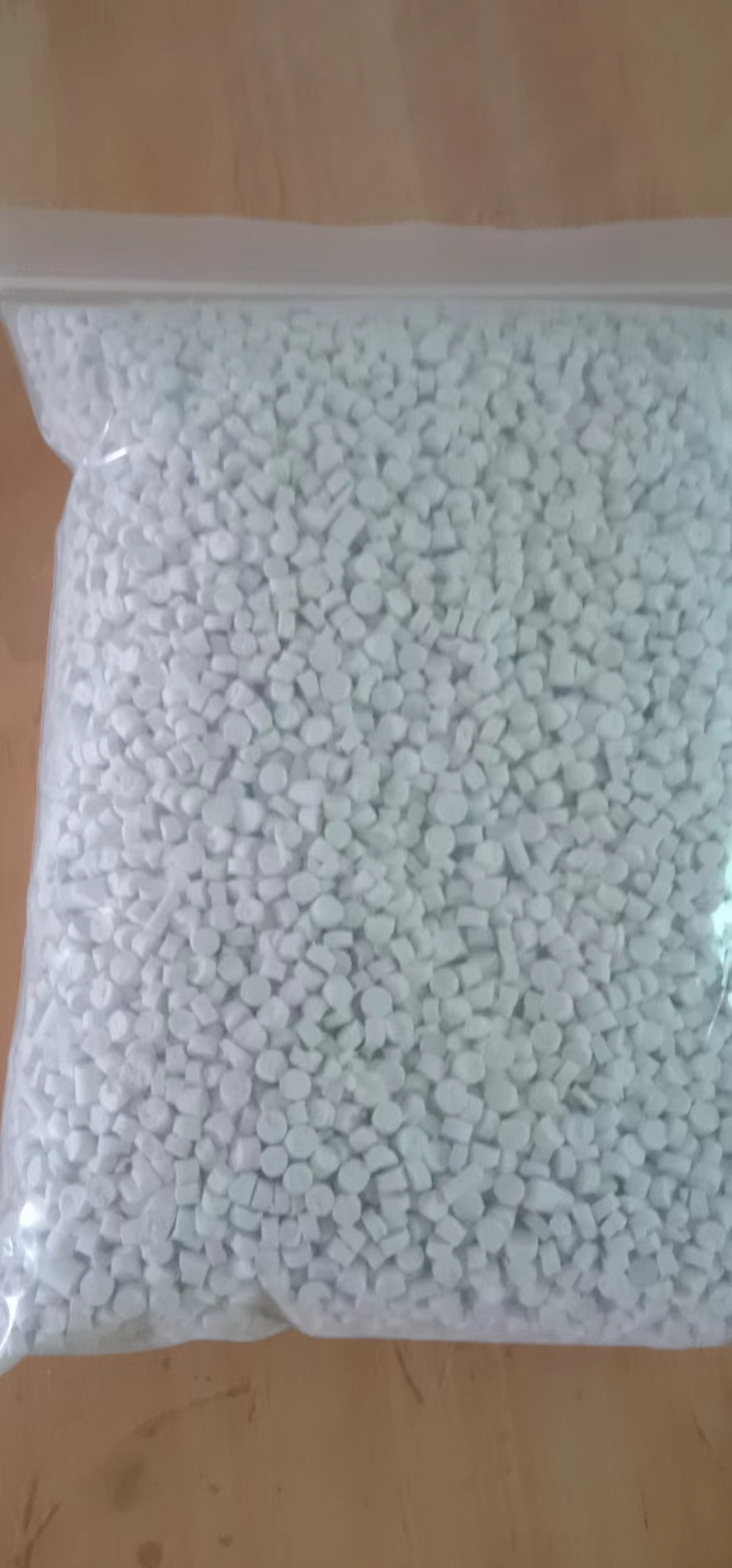
Walking onto a factory floor in the Pearl River Delta feels like stepping into the pulse of global commerce. Conveyor belts hum nonstop, carrying components that will soon be part of smartphones, sneakers, or EV batteries. Workers in blue uniforms move with practiced precision, while robotic arms weld and assemble at speeds once unthinkable. It’s not just the scale that hits you—it’s the relentless tempo, a rhythm that has powered supply chains from Berlin to Buenos Aires for decades.
Beyond the assembly lines lies a dense ecosystem of suppliers, logistics hubs, and prototyping shops that can turn a sketch into a shipping crate within weeks. Need a custom microchip or a thousand meters of dyed fabric by Thursday? Someone within a five-kilometer radius probably has it in stock. This elasticity is what sets China’s production engine apart—a blend of deep specialization and sheer proximity that no other nation has fully replicated. It’s the reason startups and legacy brands alike keep coming back, even as geopolitics shift.
What’s often missed in the headlines is the quieter revolution happening inside these facilities. Gone are the days of mere copycat widgets; today’s workshops are doggedly chasing precision and original design. Engineers huddle over CAD models, tweaking tolerances by microns. Quality control rooms bristle with laser scanners. The story is no longer just about cheap hands—it’s about nimble minds reshaping what “Made in China” stands for, one innovation at a time.
Flame Retardancy That Goes Further
Most flame retardants stop at the surface—ours works deep within the material’s structure. By integrating phosphorus-nitrogen synergists directly into the polymer backbone, we create a protective char layer that regenerates under fire, buying precious extra seconds.
This isn’t just about passing a test; it’s about real-world resilience. The formulation resists dripping, suppresses smoke, and maintains mechanical integrity even after prolonged heat exposure, so safety doesn’t come at the cost of performance.
From thin-walled electronics to structural composites, we tailor the chemistry to the application—ensuring flame retardancy adapts, rather than forcing the material to compromise.
Sorting Fact from Fiction on Safety
Safety advice often comes wrapped in confident statements, but not everything you hear holds up under scrutiny. Take the belief that natural products are always safer than synthetic ones—this ignores the fact that many natural substances can be toxic while synthetic compounds undergo rigorous testing. The real question isn't the source but the dose and context of use.
Another common myth is that if something hasn't caused harm yet, it's inherently safe. This overlooks long-term effects and low-level exposures that accumulate over time. Real safety assessment relies on scientific study, not just the absence of immediate red flags. Understanding the difference between anecdotal evidence and peer-reviewed research can help separate fact from fiction.
People also tend to equate familiarity with safety, assuming that traditional or long-used practices are risk-free. Yet history is filled with examples where accepted habits turned out to be harmful once properly examined. Critical thinking, not just tradition, should guide how we evaluate safety claims in everyday life.
Eco-Friendly Pathways in Manufacturing
Shifting toward renewable energy sources marks a foundational step in reducing manufacturing's environmental footprint. Facilities are increasingly integrating solar arrays, wind turbines, and geothermal systems directly on-site, cutting dependence on fossil fuels. Beyond simply offsetting grid consumption, these installations often yield long-term cost stability and can buffer against volatile energy markets. Advances in battery storage now allow excess power to be saved for peak demand hours, smoothing out production schedules while lowering emissions. Some plants even funnel surplus clean energy back into the local community, creating shared benefits that extend beyond the factory walls.
Material innovation is reshaping product life cycles from start to finish. Biodegradable polymers, reclaimed metals, and mycelium-based composites are moving from lab benches to assembly lines, replacing resource-intensive inputs. Closed-loop systems take this further by designing waste out of the equation—scrap from one process becomes feedstock for another, often within the same facility. Companies are also experimenting with modular designs that simplify disassembly, allowing components to be refurbished or recycled rather than discarded. This approach not only conserves raw materials but frequently unlocks new revenue streams through take-back programs and remanufactured goods.
Digital tools provide the precision needed to slash resource use without sacrificing output. Smart sensors track energy, water, and material flows in real time, flagging inefficiencies the moment they arise. Predictive maintenance algorithms anticipate equipment failures before they happen, preventing the waste of both parts and production time. Meanwhile, additive manufacturing techniques deposit material only where it's needed, drastically reducing offcuts compared to traditional subtractive methods. These technologies, paired with workforce retraining programs, enable a culture of continuous improvement where sustainability targets become achievable operational goals rather than distant aspirations.
Where Melamine Cyanurate Is Heading Next
The evolution of melamine cyanurate is being shaped by demands for higher thermal stability and finer particle sizes. Manufacturers are refining synthesis methods to produce grades that disperse more uniformly in polymer matrices, unlocking performance gains in thin-wall injection molding and high-temperature thermoplastics. These advancements are quietly expanding its use beyond traditional intumescent coatings into niche electronic components and precision automotive parts.
Regulatory pressures around halogen-free flame retardants continue to steer interest toward nitrogen-phosphorus synergies. Melamine cyanurate, often paired with metal phosphinates, is proving effective in glass-fiber-reinforced polyamides where UL 94 V-0 ratings are critical. At the same time, its low smoke and low toxicity profile is drawing attention from railway and mass transit interior applications, a segment increasingly governed by EN 45545 standards.
Looking ahead, the compound’s inherent lubricity could open doors in tribological plastics and additive manufacturing filaments. Early-stage work on surface-modified variants suggests improved compatibility with polyolefins, a space where melamine cyanurate has historically been underutilised. If these innovations translate into cost-effective commercial products, the material’s footprint could shift meaningfully toward engineering polymers and sustainable lightweight designs.
FAQ
Melamine cyanurate serves as a highly effective flame-retardant synergist, especially in polyamide and thermoplastic formulations. Its nitrogen-rich composition promotes char formation, interrupting combustion and improving fire resistance without relying on halogenated additives.
China dominates the manufacturing of melamine cyanurate, benefiting from integrated upstream raw material access and large-scale synthesis capabilities. This concentration ensures cost-efficient bulk availability, though it also makes global supply chains sensitive to regional energy policies and environmental compliance shifts.
Yes, when used within regulatory frameworks like REACH or TSCA, it presents a favorable toxicological profile. Migration studies show negligible leaching under normal service conditions, and it poses minimal risk during handling if basic industrial hygiene is practiced.
Its decomposition behavior is notably endothermic, absorbing heat and diluting flammable gases with inert nitrogen species. Unlike phosphorus-based alternatives, it does not plasticize the polymer matrix, preserving mechanical integrity while delivering UL 94 V-0 ratings at lower loadings.
Recent advances explore its utility in intumescent coatings for steel structures, textiles for public seating, and 3D-printing filaments. Its white color and fine particle engineering also make it suitable for light-colored compounds without sacrificing aesthetics.
Melamine cyanurate sublimes around 350°C without melting, which requires careful temperature control during extrusion to avoid plate-out and nozzle blockage. Pre-dispersion techniques and optimized screw designs help mitigate these challenges in high-throughput manufacturing.
By enabling thinner-gauge components that meet stringent fire standards, it reduces material consumption. Additionally, its nitrogen-based chemistry avoids persistent organic pollutants, aligning with circular economy principles where mechanical recycling remains feasible.
Critical factors include residual melamine and cyanuric acid content, particle size distribution (typically D50 between 2–10 μm), whiteness index, and thermal stability under nitrogen. Reputable producers provide lot-specific certificates of analysis that confirm batch-to-batch consistency.
Conclusion
Melamine cyanurate has carved out a distinct niche in advanced materials thanks to its unusually stable crystalline structure, where melamine and cyanuric acid molecules lock together through a robust hydrogen-bonded network. This molecular architecture not only imparts remarkable thermal endurance but also makes it a highly efficient halogen-free flame retardant, outperforming many conventional alternatives at lower loadings. China has rapidly evolved into the global epicenter of its production, leveraging integrated supply chains, precision synthesis techniques, and economies of scale that few other regions can match. The country’s manufacturers have fine-tuned particle size distributions and purity levels to meet demanding specifications in electronics, automotive, and construction industries, where consistent quality isn’t negotiable. Beyond mere volume, Chinese producers are embedding smart manufacturing and real-time quality analytics to push MC’s performance envelope further, enabling formulations that resist ignition longer and suppress smoke more effectively than earlier generations.
Safety concerns around melamine-based compounds often resurface, yet the distinction between industrial-grade MC and past contamination incidents is stark. Rigorous toxicological assessments and global regulatory endorsements confirm that, when used as intended in polymer composites or coatings, it poses negligible risk to human health or the environment under normal handling. China’s leading producers are equally focused on rewriting the manufacturing narrative, adopting closed-loop water systems, reclaiming by-product nitrogen, and shifting toward bio-based precursors to shrink the carbon footprint. Far from being a static commodity, melamine cyanurate is now finding its way into intumescent coatings, high-performance thermoplastics, and even emerging sectors like EV battery housings, where flame protection and electrical insulation intersect. The interplay between structural chemistry, industrial scale-up, and a maturing emphasis on sustainability suggests that China’s melamine cyanurate sector isn’t merely supplying a raw material—it’s shaping a safer, cleaner material future.
Contact Us
Contact Person: Guohua Wang
Email: [email protected]
Tel/WhatsApp: 8613003442895
Website: https://www.xxflameretard.com