

China Crane Gantry Crane: Mastering Heavy Lifting with Precision and Power
2026-07-23
In the demanding world of heavy industry, precision and power are not just goals—they are necessities. Enter the China crane gantry crane, a marvel of engineering that redefines lifting capabilities. Whether navigating tight spaces or hoisting colossal loads, this equipment delivers unwavering performance. At the forefront of innovation, LugongMachinery designs gantry cranes that blend robust construction with intelligent control. Discover how these machines master the art of heavy lifting, turning impossible tasks into routine operations while setting new standards for safety and efficiency.
Behind the Steel Giants: What Makes a Gantry Crane Truly Perform
Beneath the towering frames and roaring motors lies a precision ecosystem that few ever see. A gantry crane doesn't simply lift—it negotiates load distribution, structural resonance, and millimetric control in real time. The true performance comes from how seamlessly these mechanical, electrical, and structural elements converse. When a crane picks up a 200-ton load, every beam and bearing must share the burden with an almost musical harmony, or the entire system risks catastrophic imbalance.
It's easy to credit raw horsepower, but the real differentiator is often in the anti-sway algorithms and the feedback loops hidden in the control cabinet. Advanced drives now sample motor currents thousands of times per second, predicting and counteracting pendulum motion before the hook even deviates. This intelligence transforms a potentially violent operation into a glass-smooth maneuver, letting operators place massive components with the delicacy of a watchmaker. Pair that with regenerative braking that feeds energy back to the grid, and you have a machine that's as efficient as it is controlled.
Materials and fabrication tolerances play an equally quiet role. The best gantry cranes use fined-grained steels with exceptional toughness at low temperatures, welded under strict protocols that eliminate the microcracks invisible to routine inspection. Combine this with box-section girders designed via finite element analysis, and you get a structure that's not just strong, but resilient—able to shrug off years of cyclic loading without fatigue failure. Performance, in the end, isn't just about what's visible on the spec sheet; it's about how deeply integrated these invisible factors become over decades of silent service.
When Every Millimeter Counts: The Art of Precision Load Control
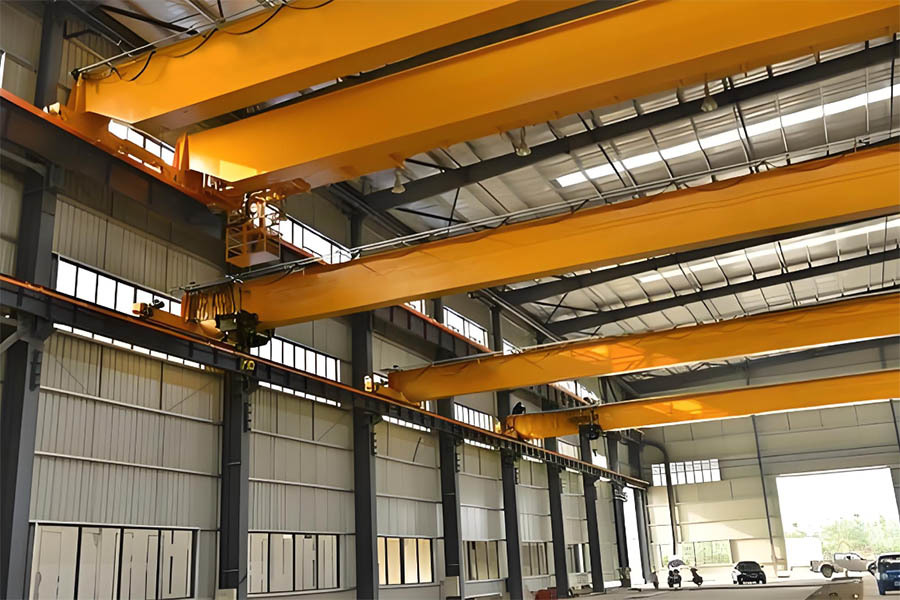
In the world of heavy lifting and material handling, the margin for error is often measured in fractions of an inch. A load that shifts just a few millimeters can throw off an entire operation, causing alignment failures, equipment strain, or even catastrophic accidents. Precision load control isn't just about strength; it's about the delicate balance between power and finesse. Every movement must be calculated, every adjustment immediate, and every response calibrated to the unique demands of the load.
Operators who master this art understand that the key lies in the interplay of technology and human touch. Advanced systems now offer micro-speed adjustments and real-time feedback, allowing for movements so subtle they’re almost imperceptible. Yet, the true artistry emerges when the operator anticipates the load’s behavior, compensating for factors like wind, inertia, or uneven terrain before they become problems. It’s a skill honed through experience, where a steady hand and a sharp eye transform a machine into an extension of the body.
Ultimately, precision load control is about more than just placing an object; it’s about safeguarding assets, timelines, and lives. In industries where every second counts and every component is critical, the ability to maneuver with millimeter accuracy separates the exceptional from the merely adequate. This relentless pursuit of exactness drives innovation, pushing the boundaries of what’s possible and elevating everyday tasks into the realm of engineering excellence.
Power Meets Adaptability in Hostile Industrial Landscapes
Industrial environments aren't forgiving. When temperatures swing from deep freeze to blistering heat and dust fills every crevice, equipment failures become the norm. That’s where adaptable power solutions earn their keep. Whether it's a motor that ramps torque on demand or a drive system that tweaks its output curve in real time, the ability to shift performance profiles keeps production humming. Engineers talk about resilience, but on the floor, it's simply about machines that don't quit when conditions turn sour. The real magic happens when that adaptability is built into the power electronics themselves—solid-state controls that remap parameters on the fly, managing thermal stress and unpredictable loads without breaking stride.
In places like chemical plants or remote mining operations, there's no room for rigid designs. A generator might need to deliver clean power one minute and handle a massive inductive kickback the next. The best systems sense what's coming and adjust before the fault even registers. This isn't about brute force; it's about intelligent distribution. Load sharing across parallel units, frequency conditioning that never misses a beat, and power factor correction that adapts to whatever mix of equipment is running. The result is a plant that rarely sees unplanned downtime—not because the machines are indestructible, but because they're smart enough to sidestep their own breaking points.
But adaptability isn't just about surviving extremes. It's also about fitting into spaces where conventional equipment would struggle. Think modular converters that can be stacked in a sea can or slip behind existing switchgear without a total rewire. This kind of physical flexibility means upgrades happen incrementally, without halting production for weeks. When a new production line is added or a critical pump needs backup, the power architecture expands to match, reconfiguring on its own. It's this blend of ruggedness and plasticity that defines modern industrial power—where what doesn't bend, breaks, and what can't think, stops.
From Shipyards to Skyscrapers: Stories of Unstoppable Strength
In the heart of industrial cities, shipyards once hummed with the rhythm of riveters and welders, forging vessels that braved the open seas. These colossal structures were not just made of steel; they were monuments to human perseverance, where every weld held a story of grit and determination. The men and women who toiled in these yards faced harsh conditions, yet their spirit remained unbreakable, laying the foundation for a new era of construction.
That same relentless drive soon migrated from the docks to the city centers, as architects and engineers began to reach for the heavens. Skyscrapers rose like tempered steel dreams, each beam and column echoing the craftsmanship once reserved for ocean liners. The transition was seamless—the ingenuity that kept ships afloat now dared to pierce the clouds, proving that the strength forged in salt and sweat could conquer any vertical frontier.
Behind every towering facade is a lineage of unstoppable force, a legacy carried by generations who refused to be anchored by limitations. From the humble keel to the soaring spire, these stories remind us that true strength isn't just about materials—it's about the resolve to build something greater, against all odds.
Smart Lifting: How Automation Redefines the Heavy-Duty Game
Heavy lifting has always been a cornerstone of industry, but the days of manual muscle and guesswork are fading fast. Automation isn't just a buzzword here—it's a fundamental shift in how we move, position, and manage massive loads. Modern systems integrate sensors, real-time data, and adaptive controls to turn what was once a brute-force operation into a precise, predictable process. Instead of relying solely on operator intuition, these smart solutions continuously adjust to variables like load distribution, environmental conditions, and equipment wear. The result is a lift that's not only powerful but also intelligent, minimizing risk and maximizing efficiency from the first inch to the last.
What really sets automated lifting apart is its ability to learn and optimize over time. Traditional equipment performs the same motion repeatedly, regardless of context. In contrast, smart lifting systems use machine learning algorithms to analyze past operations and fine-tune their performance. They can predict maintenance needs before a breakdown occurs, recommend the most energy-efficient path for a lift, and even coordinate with other automated machinery on site. This level of coordination turns a single lift into part of a seamless workflow, where delays and bottlenecks are all but eliminated. It's no longer about just getting the job done—it's about doing it better with every cycle.
The real-world impact is already visible across construction, logistics, and manufacturing. Sites that have adopted smart lifting report fewer accidents, lower operational costs, and drastically reduced downtime. The technology also opens doors for remote operation, allowing experts to oversee lifts from thousands of miles away. As these systems become more accessible, the heavy-duty game is being redefined: automation is no longer a luxury for the few but a practical tool that reshapes what's possible in load handling.
Built to Last: The Engineering Secrets Behind Decades of Reliability
True longevity in engineering isn’t an accident. It begins with a refusal to compromise on materials. When every bearing surface, seal, and structural member is spec’d beyond the expected load, the system quietly absorbs decades of stress without complaint. The secret often lies in the margins—designing not just for the worst-case scenario on paper, but for the undocumented abuse that real-world use inflicts. Choosing alloys that shrug off corrosion, polymers that don’t embrittle with age, and surface treatments that reject wear forms a foundation that time can’t easily erode.
Another layer is mechanical sympathy through redundancy. Rather than relying on a single load path or a lone electronic watchdog, circuits and structures are laid out so that a partial failure only degrades performance gracefully—never catastrophically. Combine this with exhaustive, multi-generational testing cycles that mimic decades of vibration, temperature swings, and humidity in a matter of months, and defects surface long before the first unit leaves the factory. It’s a quiet discipline: knowing that the only way to guarantee a decade of trouble-free operation is to break things intentionally in the lab, over and over, until failure becomes a predictable, avoidable event.
Finally, the designs that truly persist are those refined by a feedback loop that spans years, not project deadlines. Field returns get dissected with the same rigor as prototype failures; every cracked solder joint or fatigued spring is a lesson fed back into the next revision. This institutional memory, paired with an almost stubborn refusal to retire proven architectures, creates products that evolve without losing their core identity. What looks from the outside like simple reliability is often just the result of engineers who listened to the metal and silicon, letting real-world experience quietly sculpt something robust enough to be forgotten about—until someone realizes the device has outlived its warranty by a generation.
FAQ
A gantry crane is a type of overhead crane with legs that support the bridge, trolley, and hoist, running on rails or wheels at ground level. Unlike overhead cranes that are fixed to building structures, gantry cranes are freestanding and can be moved or repositioned, making them super versatile for outdoor yards, construction sites, and shipyards.
Chinese gantry cranes have earned a solid reputation for combining advanced engineering with cost-effectiveness. They often incorporate the latest automation, high-strength materials, and precision controls, all while being competitively priced. Plus, many manufacturers offer extensive customization, so you get a machine tailored exactly to your load and site requirements without breaking the bank.
It comes down to high-quality components and smart control systems. Most modern Chinese gantry cranes use variable frequency drives, laser positioning, and anti-sway technology that let operators land loads within millimeter accuracy. The controls are often intuitive, with joystick interfaces and real-time monitoring, so even complex picks feel smooth and predictable.
They range widely—from smaller units that handle 5 tonnes up to massive shipbuilding cranes capable of lifting over 2,000 tonnes. The span can also be customized, commonly from 10 meters to over 100 meters, depending on the application. Whether you need to lift a generator or position a yacht, there's likely a configuration that fits.
Absolutely. They're the backbone of shipbuilding and marine repair, where huge blocks need precise assembly. You'll also see them in steel yards, precast concrete plants, wind turbine manufacturing, and even rail yards for handling heavy containers. Any place that requires moving large, awkward loads repeatedly benefits from a gantry crane setup.
The power isn't just about engine size—it's engineered reliability. These cranes often feature heavy-duty gearboxes, oversized brakes, and robust structural welds to handle continuous use. Many are designed with redundancy in critical systems, and the steel structure is typically treated against corrosion, so they keep performing in harsh environments like ports or foundries with minimal downtime.
Conclusion
China Crane gantry cranes don’t simply lift heavy loads—they orchestrate raw force with a finesse that few machines can match. Beneath each steel giant lies an intricate fusion of structural integrity and control intelligence, where every millimeter of movement is governed by drives and algorithms that respond instantly to shifting weight distributions. The real mastery emerges in harsh industrial landscapes: salt-laden shipyard air, foundry heat, or sub-zero construction sites. These cranes adapt without compromise, their drive systems and corrosion-resistant components working in unison to maintain peak performance when conditions turn hostile. A defining leap has been the integration of smart lifting technologies—automated sway suppression, anti-collision sensing, and real-time diagnostics—transforming what was once a purely manual trade into a precision discipline where human skill is amplified by digital oversight.
That precision finds its ultimate expression in the stories of monumental lifts that define modern infrastructure. From positioning massive ship hull blocks with pinpoint accuracy to hoisting steel frameworks onto soaring skyscrapers, China Crane gantry cranes have become the silent backbone of projects that demand unstoppable strength. But brute force alone isn’t enough to sustain decades of relentless use. The engineering secrets lie in fatigue-resistant welded structures, oversized bearings, and modular designs that simplify maintenance while never sacrificing rigidity. Every gearbox, every load cell, and every meter of cable is chosen for a lifecycle that stretches across generations. It’s this marriage of power, finesse, and endurance that allows a single gantry crane to witness a shipyard transform, a city skyline rise, and still be ready for the lift that matters next.
Contact Us
Contact Person: Zhang Zhenlai
Email: [email protected]
Tel/WhatsApp: 8618563210000
Website: https://en.lugongmachinery.com/