

Charging Hose Company: How to Choose Dependable Hoses for HVAC and Refrigerant Work
2026-11-22
When a charging hose fails on a hot rooftop or inside a cramped mechanical room, every lost minute hits the service ticket and your reputation. The difference between a clean pull and a frustrated callback often comes down to one overlooked component: the hose itself. In this guide, we break down what actually matters for HVAC and refrigerant work—from burst pressure and permeation to fitting compatibility—and show why teams that demand consistency look to HONGSEN when building a kit that has to perform on the worst days, not just the easy ones.
High Burst Ratings Can Hide Weak Crimps
A one-time burst figure can look impressive on paper while saying very little about the consistency of a crimp. The test pushes an assembly until it fails, but the failure usually starts at the hose body or a fitting thread before a marginally compressed collar ever shows itself. As a result, a high burst rating becomes a license to overlook the small variations that accumulate on the production line.
Weak crimps rarely announce themselves through immediate leakage. More often they show up as uneven grip on the reinforcement layer, microscopic gaps around the ferrule, or a slightly oval profile that passes visual inspection. These flaws settle into fatigue failures, pressure spikes, and slow weepage weeks after the assembly has been put into service. The burst test simply never asks the right question.
Strong crimp validation means cutting samples open, checking compression ratios, and watching for bellmouthing or sharp edges that concentrate stress. If the only evidence of quality is a big burst number, the process has already lost its diagnostic value.
Inner Liners Matter More Than Outer Color
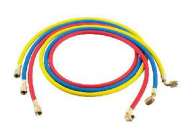
When choosing cookware, most people get distracted by the shade of the exterior enamel or the brushed finish on the lid. That surface appeal fades once the pan hits a hot burner and real ingredients land inside. The inner liner is the part that touches your food, reacts with acids like tomatoes or wine, and determines whether eggs slide out or cling desperately to the surface. A beautiful outside hides nothing when the inside scorches, stains, or imparts a metallic tang to a delicate sauce.
Think of the liner as the engine rather than the paint job. Stainless steel liners resist discoloration and let you build fond without fear. Enameled cast iron liners with a light, smooth glaze offer gentle heat distribution and easy cleanup, while uncoated cast iron demands seasoning but rewards with a naturally nonstick patina over time. Nonstick liners, often PFAS-free nowadays, are judged not by their glossy black appearance but by how evenly they release food after hundreds of cycles. If the liner warps, scratches, or wears thin, no amount of cheerful exterior red or cobalt blue will salvage the meal.
Next time you lift a pot from the shelf, turn it over in your hands and inspect the cavity rather than the coat. Run your fingers along the interior rim, check for rough spots near rivets, and imagine simmering an acidic braise for three hours. The color on the outside might match your kitchen, but the liner is the only surface that has to earn its keep every single day.
Tiny Permeation Losses Change System Performance
Most engineers treat permeation as a rounding error, yet a few grams of refrigerant lost through elastomer seals each year can quietly reshape system behavior. A heat pump that works perfectly on day one may show reduced evaporator pressure, higher discharge temperatures, and a compressor that runs longer than expected by the second summer. These are not catastrophic failures, but slow drifts that get blamed on sensor calibration or ambient swings. What actually changes is the balance between high and low sides—because the lost charge is not just missing mass, it is missing from the exact circuit leg where pressure ratios matter most.
Seal compounds with marginally different permeation rates produce distinct operating fingerprints. A nitrile O-ring and an HNBR gasket in the same housing will lose charge at different speeds, but the more interesting effect is compositional: certain refrigerants fractionate as they permeate, so the blend left inside the system no longer matches the original spec. That shifts glide, alters the dew and bubble points, and forces the expansion valve into a hunt cycle. Field data from rooftop units shows that a 3 percent charge loss through permeation can cut seasonal COP by 6 to 9 percent, even though no leak detector ever trips.
The practical takeaway is not to find a better leak detector, but to treat permeation as a design variable with a tolerance band. Running accelerated cup tests on candidate seal materials under actual temperature cycling reveals that some compounds hold steady for years, while others shed refrigerant in a nonlinear way—flat for months, then accelerating as the polymer matrix relaxes. Matching the seal material to the refrigerant blend, oil type, and operating envelope prevents those long, silent performance slides that no amount of commissioning can fix later.
Swivel Ends Shift Stress Away From the Fitting
A fixed connection turns every slight twist or repositioning into a slow attack on the fitting. Swivel ends change that by letting the hose rotate at the connection point, so movement never gets a chance to settle where the metal meets the hose. The stress gets redirected into motion instead of concentrated fatigue.
Once torque stops collecting at the fitting, cracks and leaks become far less common. Operators can adjust hose routing, reposition tools, or change angles without putting the assembly into a bind. It is a simple mechanical shift, but it moves the wear away from the most failure-prone spot in the system.
Refrigerant Blends Demand a Closer Compatibility Check
Blends rarely behave like the single-compound refrigerants many technicians grew up with. A 400-series blend can shift composition if a slow leak favors one component, leaving the remaining charge with different pressure-temperature characteristics than the original spec. That alone changes the conversation around elastomer seals, sight glass moisture indicators, and even the lubricant circulating through the compressor.
Field experience shows that the usual shortcut of “close enough” becomes risky here. Polyol ester oils may accept one blend without issue, while a slightly different formulation pushes viscosity and miscibility into a range where oil return suffers on low-load days. Gaskets and O-rings that held up for years with R-22 can swell, shrink, or harden when exposed to the new blend’s components, especially at discharge temperatures that fluctuate more than expected.
A closer compatibility check means looking beyond the compressor nameplate. It involves verifying the expansion valve’s capacity across the blend’s temperature glide, confirming the filter drier core is rated for the specific refrigerant and oil combination, and checking every soft polymer in the liquid line. Skipping any of these details may not show up immediately, but the resulting failures tend to be expensive and easy to misdiagnose.
Jobsite Habits Age a Hose Faster Than Time
Rubber and polyurethane break down on their own eventually, but most hoses never get the chance to die of old age on a jobsite. They get yanked around corners, run over by loader tires, snagged on rebar, and left coiled under a pile of lumber. Each of those small insults cuts the working life far shorter than UV exposure or ozone ever could.
The worst habits usually look harmless in the moment. Dragging a coupled hose across gravel instead of carrying it, letting a machine rest on the line while you grab a fitting, or folding it sharply at the inlet when the pump is already hot all create concentrated wear. Chemical residue left inside after a pour or a spray job does more damage overnight than a week of normal use.
Storage and shutdown routines matter just as much. A hose blown down, drained, and hung loose on a wide saddle will outlast one that stays pressurized, kinked behind a gang box, or baked against a south-facing wall. Time alone wears the outer cover. The way the crew handles the hose between shifts determines whether the inside fails first.
FAQ
Look at burst pressure ratings, crimp quality at the fittings, inner liner material, and whether the hose is rated for the refrigerant and oil you use. A dependable hose usually has a multi-layer barrier liner to limit permeation and a working pressure clearly marked on the cover, not just a generic 'HVAC hose' label.
You can, but only if the hose carries a working pressure rating high enough for R-410A. Many older R-22 hoses were built for lower pressures and will balloon or burst when exposed to 410A pressures. Check for at least 800 psi working pressure and 4000 psi burst rating before using them on high-pressure systems.
That is permeation. Lower-cost hoses often use a single-layer liner that lets refrigerant molecules pass through the wall over time. Barrier hoses with a nylon or similar inner layer reduce this dramatically and are worth the extra cost if you work with newer refrigerants or do precision charging.
Every extra foot adds internal volume that traps refrigerant and oil. That can throw off a critical charge, especially on small systems. Keep hoses as short as practical for the job, and account for hose volume when using a scale or charging chart rather than relying only on gauge pressure.
They are worthwhile for regular service work. A good low-loss fitting lets you disconnect with minimal refrigerant spray, which protects your skin and reduces refrigerant loss. The downside is added bulk and the need to keep the internal seals clean, but that maintenance is less trouble than constantly venting refrigerant.
Replace them every two to three years under normal use, sooner if they have been kinked, run over, exposed to extreme heat, or show cracks at the crimp. A visual check misses internal liner damage, so if a hose has been used for high-pressure work or mixed refrigerants, put it on a tighter replacement schedule.
Conclusion
A hose with an impressive burst rating can still fail early if the crimp is weak, so it pays to look past the headline number and ask how the coupling is attached. The inner liner does the real work of containing refrigerant and resisting oil, while the outer cover is mostly there for abrasion protection—color tells you almost nothing about performance. Even a liner that looks solid can allow enough permeation to shift system charge or alter refrigerant composition over time, and with today’s blends that small loss may affect pressures and capacity more than many technicians expect.
Swivel ends help by letting the hose settle into a natural position instead of twisting the fitting every time the manifold moves, which reduces stress at the crimp. Refrigerant blends also demand more careful compatibility checks because different lubricants, seal materials, and hose compounds react differently with each component in the blend. Finally, how a hose is handled on the job usually matters more than its age: dragging it across concrete, kinking it near the fitting, leaving it in direct sun, or coiling it too tightly can break down the liner and cover long before the hose reaches its rated life. Buying dependable hoses means matching the liner and end style to the refrigerant, then treating them like precision instruments rather than disposable lines.
Contact Us
Contact Person: KOPASS HO
Email: [email protected]
Tel/WhatsApp: 8613606566112
Website: https://www.hongsenref.com/