

Bulk Microcrystalline Wax Supplier for Industrial and Commercial Applications
2026-07-06
In the world of industrial waxes, microcrystalline wax is often the hidden workhorse—its flexibility, adhesion, and moisture resistance are vital for everything from laminating to cosmetics. But finding a supplier who can consistently deliver high-purity bulk quantities without compromising on quality? That’s a challenge. XUSHI has built its reputation on meeting that challenge, offering expertly refined microcrystalline wax tailored to demanding commercial and industrial applications. Let's explore why their approach stands out in a market flooded with generic suppliers.
Sourcing High-Volume Microcrystalline Wax Without Supply Chain Snags
Locking in reliable suppliers for microcrystalline wax at scale means digging deeper than glossy brochures and sample batches. You need boots on the ground—or at least a trusted local partner—to vet facilities, check their raw material sources, and verify that production capacity isn’t just claimed but actually measurable. It’s surprising how many operations look robust on paper until a spike in demand reveals their meltdown point. Ensure your potential partners have backup power, redundant refining lines, and a track record of riding out crude oil price swings without passing every hiccup on to you.
Relying on a single supplier is a gamble that’s rarely worth it, especially when you’re moving containers rather than pails. Spread your sourcing across at least two geographically distinct producers, and structure contracts so that volume commitments are mutual, not one-sided. This way, when a port strike or a seasonal wax shortage hits one region, you’re not left scrambling. Frame these agreements around long-term partnerships rather than transactional spot buys—it incentivizes suppliers to give you preferential allocation when supply tightens and opens doors to cost sharing on logistics.
Where buyers often stumble is underestimating how logistics shape the reliability of high-volume wax supply. This isn’t a drop-in-the-mail product; melting points, ambient temperatures during transit, and container conditions can silently ruin a batch before it reaches your door. Work backward from your production schedule to map out lead times, and keep a rotating safety stock that accounts for the worst-case ocean freight delay you’ve actually measured, not the theoretical one. And don’t let the quality conversation end at the spec sheet—insist on retaining samples from every lot and running them through your own application tests, because congealing point and oil content variations always matter more after the fact than they ever do on a certificate of analysis.
Why Industrial Operations Prefer Custom-Blended Micro Wax Solutions
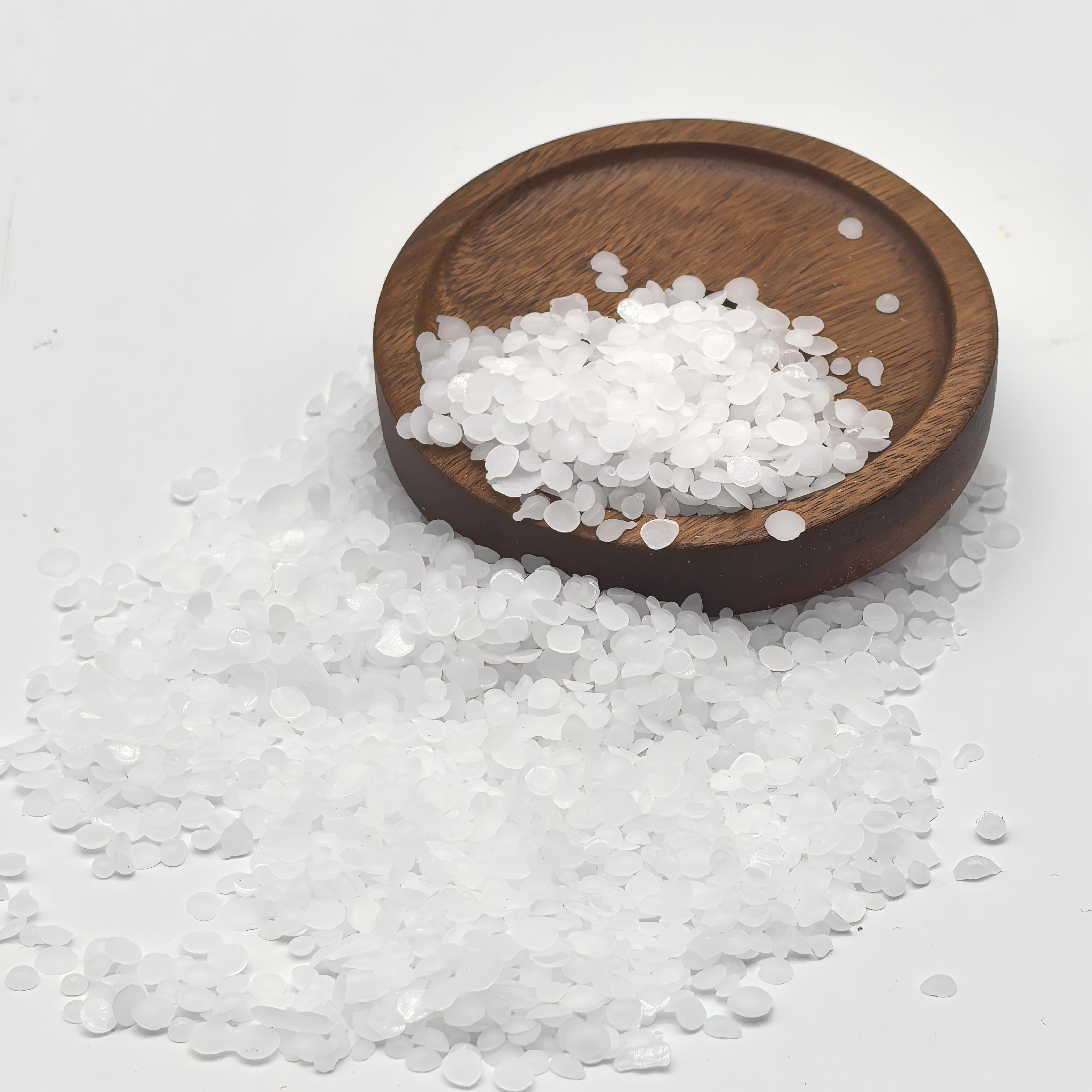
Off-the-shelf waxes often force operations to adapt their processes around the product, rather than the product fitting seamlessly into existing workflows. Custom-blended micro wax solutions flip that dynamic. By tailoring melt points, hardness, and viscosity to precise specifications, they integrate directly into coating, laminating, or release applications without demanding temperature tweaks or speed adjustments. This eliminates trial-and-error downtime and lets production lines maintain steady throughput while hitting exact performance targets—whether the goal is a high-gloss finish or a controlled coefficient of friction.
Beyond process fit, custom blends solve the headache of managing multiple additives. A single, purpose-designed micro wax can combine lubricity, anti-blocking, and water repellency in one package, replacing a cocktail of generic waxes and secondary chemicals. Operators gain a cleaner inventory and fewer variables to monitor, while reducing the risk of incompatible interactions that lead to surface defects. The result is not just a simpler bill of materials, but a more consistent output that quality control teams can trust batch after batch.
Long-term supply stability also tilts the scale toward custom formulations. When a unique blend becomes a critical component of a high-value product, it’s protected from the commoditized price swings and shortages that plague standard grades. Partnering with a knowledgeable producer ensures that the solution can evolve alongside changing regulations or substrate shifts, without forcing a full reformulation. That kind of adaptive partnership turns a specialty wax into a strategic asset, rather than just another consumable on the purchasing list.
Meeting Food-Grade and Pharma Standards in Bulk Wax Shipments
Ensuring that bulk wax shipments meet the rigorous demands of food-grade and pharmaceutical applications requires a comprehensive approach that starts at the source. Raw material selection is critical—only waxes derived from carefully vetted feedstocks, free from contaminants and heavy metals, are considered. Every supplier undergoes thorough qualification, and incoming lots are tested against a strict set of purity specifications before they even enter the production stream. This upstream vigilance sets the stage for a supply chain that prioritizes safety and consistency.
During processing and transport, dedicated clean-room environments and stainless-steel equipment minimize the risk of cross-contamination. Temperature-controlled logistics play a pivotal role, as even minor fluctuations can compromise the crystalline structure and, in turn, the purity profile of the wax. Real-time monitoring systems track conditions from the melt stage all the way to delivery, alerting operators to any deviation that might breach Good Manufacturing Practice guidelines. These measures go beyond regulatory checkboxes—they reflect an operational philosophy where product integrity is non-negotiable.
Documentation and traceability complete the circle of compliance. Each shipment is accompanied by a comprehensive certificate of analysis that goes further than mere batch numbers, detailing the full chain of custody and the specific test methods employed. Digital lot tracking allows customers to drill down into the provenance of their wax, reinforcing trust in a marketplace where audits are frequent and expectations are uncompromising. By embedding quality assurance into every link of the supply chain, stakeholders can confidently navigate the intersection of high-volume logistics and exacting certification standards.
Cost-Efficient Logistics for Large-Scale Wax Distribution
Managing the transportation of wax on a massive scale demands a sharp focus on route optimization and load consolidation. By analyzing shipping lanes and warehouse locations, we’ve been able to slash empty miles and combine partial shipments into full truckloads, directly cutting per-unit freight costs. Temperature-controlled logistics, while necessary for certain wax grades, are applied judiciously—only where product integrity is at risk—to avoid unnecessary expenses. Partnering with regional carriers who understand local infrastructure further trims transit times and fuel consumption, turning logistics from a cost center into a competitive edge.
Technical Specs That Matter: Viscosity, Hardness, and Purity Levels
Viscosity isn't just a number on a datasheet—it's the heartbeat of how a material flows and fills a mold, coats a surface, or settles into place. For formulators and engineers, the real story lies in how viscosity shifts under shear, temperature, or time. A resin that stays put during application but snaps into a smooth, even coat under the brush or blade can make or break a production line. It's this dance between resistance and flow that separates a functional material from a headache.
Hardness often gets reduced to a single letter on the Rockwell scale, but scratch resistance, indentation recovery, and case depth tell a richer tale. The real test is how a surface endures daily abuse—the scrape of a chair leg, the jab of a dropped tool, the slow wear of constant friction. Marrying toughness with enough give to avoid brittleness creates a protective skin that lasts years, not months. It's about balancing the material's inner structure so it pushes back without shattering.
Purity levels can sound like a lab exercise until you see what a few parts per million of contaminants do to clarity, conductivity, or cure speed. High-purity feedstocks keep optical fibers transmitting photons without scatter, stop semiconductor wafers from shorting, and prevent unwanted color shifts in medical-grade plastics. Chasing those last few nines—99.9% to 99.999%—is where subtle performance leaps hide, turning a decent raw material into a precision enabler that downstream processes rely on without a second thought.
Unseen Applications: How Micro Wax Enhances Everyday Commercial Products
Micro wax might not be a household name, but its quiet influence runs through a surprising number of items you reach for every day. From the smooth glide of a zipper to the protective sheen on a fresh apple, these microscopic wax particles are hard at work improving texture, durability, and performance. Their ability to lubricate, seal, and stabilize makes them a go-to additive in industries where consistency matters most.
In packaging, micro wax helps folding cartons resist scuffing during transport while also keeping moisture out of dry food products. Automotive tires rely on it to prevent cracking from ozone exposure, and even lip balms use it to strike that perfect balance between firmness and spreadability. These are not flashy upgrades—they’re the subtle engineering tweaks that keep products feeling new longer and working as expected.
Perhaps most interesting is how micro wax solves problems in seemingly unrelated fields. Candle makers use it to reduce dripping, concrete formulators add it to cure slabs more evenly, and the sports industry coats hockey sticks and surfboards to improve grip and water shedding. It’s this versatility, hidden in plain sight, that makes micro wax an unsung hero of material science.
FAQ
Our microcrystalline wax boasts a high melting point and superior flexibility, which makes it ideal for demanding industrial applications like protective coatings, adhesives, and electrical insulation. The fine crystal structure gives it excellent moisture resistance and a strong bond, even under mechanical stress.
Unlike standard paraffin wax, our microcrystalline wax has a denser, more pliable consistency due to its branched hydrocarbons. This gives it better tackiness, oil retention, and a higher melt point, making it far more versatile for commercial products that require durability and a longer lifespan.
We source our wax from select refineries and run rigorous batch testing. Every shipment comes with a certificate of analysis showing key parameters like penetration, viscosity, and congealing point. Even in bulk, you can expect uniformity across pallets, which is essential for automated production lines.
We provide flexible packaging solutions depending on your handling needs—slabs in cartons, pastilles in multi-layer bags, or liquid in tanker trucks. We can even customise pallet configurations to match your warehouse layout and production feed systems.
Yes, we supply grades that meet FDA and EU food contact regulations. These are commonly used in chewing gum base, cheese coatings, and food-grade lubricants. Just let us know the intended use, and we’ll recommend the appropriate compliant grade.
We serve a broad spectrum, but our biggest customers are in rubber and tire manufacturing, candle making, cosmetics, and corrosion protection. Additionally, the packaging and paper coating industries value our wax for its water barrier properties.
We have long-standing partnerships with freight forwarders and shipping lines, so we can arrange door-to-door delivery globally. Our logistics team manages all export documentation and ensures proper handling—especially for temperature-sensitive shipments in extreme climates.
Absolutely. We encourage testing with a few kilos so you can confirm compatibility with your formulation. Just share your delivery address, and we’ll ship samples at our cost, usually within a week for most destinations.
Conclusion
For manufacturers that rely on microcrystalline wax in bulk, a dependable supplier does more than just ship drums on time. It's about avoiding the bottlenecks that can stall production lines, especially when sourcing high-volume orders across shifting global markets. The right partner offers custom-blended solutions tailored to specific industrial needs—whether it's adjusting hardness for a paper coating or fine-tuning viscosity for a hot-melt adhesive. And since end-use performance hinges on precise technical specs, paying close attention to purity levels, melt point, and plasticity isn't a luxury; it's a baseline requirement that separates consistent quality from costly variability.
Beyond the factory floor, bulk wax shipments often navigate strict regulatory landscapes. Meeting food-grade or pharmaceutical standards means more than paperwork—it demands segregated processing, traceable supply chains, and clean-room packaging that protects product integrity from plant to pallet. Smart logistics also play a huge role: optimized route planning and consolidated freight strategies can cut landed costs without sacrificing delivery speed. Yet the true reach of microcrystalline wax often goes unnoticed. It's the invisible backbone in chewing gum that keeps it chewy, the waterproof barrier in cardboard packaging, and the stable base in personal care creams. A supplier that understands both the technical nuances and the hidden commercial applications becomes an essential extension of any operation.
Contact Us
Contact Person: Alan Zhu
Email: [email protected]
Tel/WhatsApp: 8613931838766
Website: https://www.cnxushibeeswax.com