

Best Stainless Steel Flat Washers for Reliable Fastening
2026-10-13
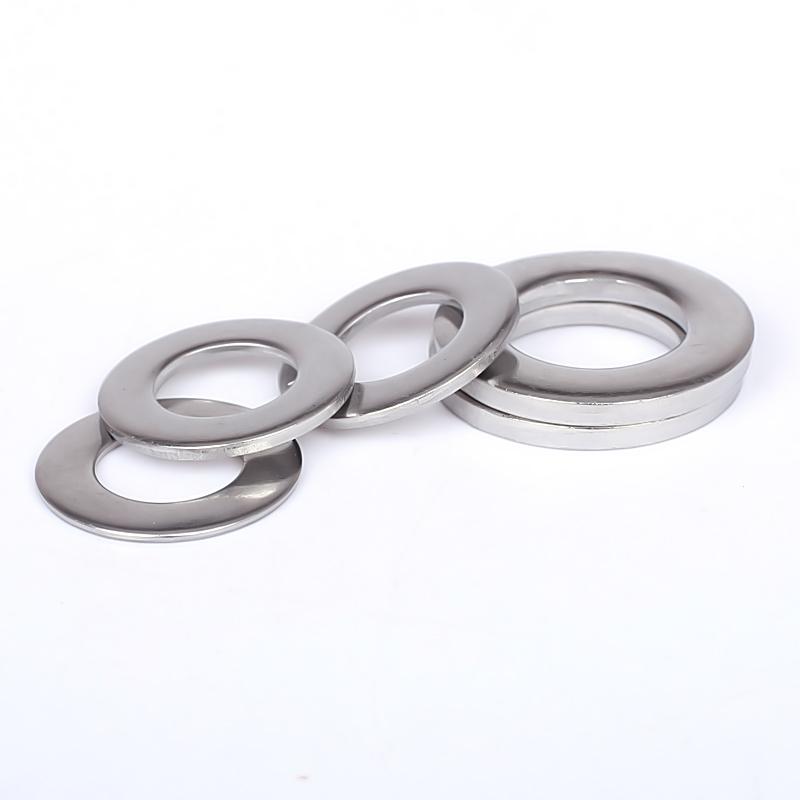
Ever tightened a bolt only to watch it loosen days later? The problem usually isn't the thread—it's the washer. Stainless steel flat washers distribute load, protect surfaces, and resist corrosion, but not all are worth your time. Below, we’ve sorted through the noise to highlight the best options for reliable fastening, including a few from Wanluo that consistently outperform generic hardware-store picks.
Why Stainless Flat Washers Beat Zinc-Plated in the Long Run
The initial appeal of zinc-plated flat washers is hard to ignore, especially when you are looking at a tight budget. But once those washers are exposed to rain, road salt, or even high humidity, the thin zinc layer starts to sacrifice itself. Every scratch from a wrench or vibration against a mating surface opens a tiny breach. From there, rust creeps under the plating and spreads like a stain you cannot wipe off. Stainless flat washers do not rely on a sacrificial coating that can flake or wear away. The corrosion resistance is built into the metal itself, so the washer remains intact and functional years after the zinc-plated version has turned into a brittle, orange-streaked disc.
Beyond corrosion, the long-term mechanical behavior tells the same story. Zinc plating can create uneven friction under torque, and once the plating breaks down, the base steel underneath begins to expand as it rusts. That expansion can loosen bolted joints, leading to premature fatigue or even failure. Stainless steel, especially 304 and 316 grades, forms a passive oxide layer that heals itself if scratched. There is no plating to peel, no hidden carbon steel waiting to bloom. In applications like marine hardware, food processing equipment, or outdoor structural connections, that difference translates into fewer re-torques, fewer replacements, and fewer callbacks.
The upfront price gap often distracts from the total cost of ownership. A zinc-plated washer might cost a fraction of a stainless one, but replacing corroded washers on a guardrail, a dockside ladder, or a rooftop HVAC unit involves labor, downtime, and sometimes scaffolding or confined-space permits. Stainless flat washers avoid that recurring expense. They also keep the surrounding assembly cleaner, since rust stains do not bleed onto adjacent materials. When you factor in the life of the structure, choosing stainless is not an upgrade in cost but a shift in where you spend your maintenance budget, away from emergency fixes and toward long-term reliability.
304 vs 316 Stainless: Choosing Without the Metallurgy Overload
If you've ever stood in a hardware aisle wondering why two nearly identical sheets of stainless steel have wildly different price tags, you're not alone. The short version is that 304 is the everyday workhorse—great for kitchen sinks, indoor railings, and brewing equipment. It shrugs off rust in normal conditions and keeps its shine with minimal fuss. 316, on the other hand, is the one you grab when salt, chlorides, or harsh chemicals are in the picture. Think coastal handrails, boat fittings, or anything near a pool. That extra nickel and the addition of molybdenum make it noticeably more resistant to pitting, but you'll pay a premium for that peace of mind.
Choosing between them doesn't require a metallurgy degree. A simple question does the heavy lifting: will this thing live near the ocean, get splashed with de-icing salts, or be cleaned with aggressive disinfectants? If yes, 316 earns its keep and will outlast 304 by years in those environments. If not, 304 is often the smarter buy—it welds beautifully, polishes up fine, and costs roughly 20-30% less. Plenty of restaurants and breweries run 304 daily without a spec of trouble because their exposure to chlorides is minimal.
One common trap is assuming “stainless” means stain-proof forever. Both grades can develop tea staining or surface rust if left dirty in humid, salty air, but 304 will show it sooner. For indoor or mild outdoor use, 304 plus an occasional wipe-down is usually more than enough. Save the 316 for places where you'd rather not think about corrosion again—marine environments, chemical processing, or that beachfront deck railing. Spending more on 316 for a kitchen sink won't hurt anything except your wallet, but spending less on 304 for a saltwater dock ladder will bite you within a season or two.
Matching Washer Size to Bolt Diameter: A 30-Second Rule
You don’t need a chart or a caliper every time you grab a washer. The quickest trick is to remember that a standard flat washer’s inner diameter sits about 1/16 inch (or roughly 1.5 mm) larger than the bolt’s nominal diameter. So for a 3/8-inch bolt, the washer hole should be around 7/16 inch, and for an M10 bolt, look for an 11 mm hole. That tiny bit of clearance lets the washer slide on without jamming, yet still keeps it centered under the bolt head.
For a sanity check in under half a minute, hold the washer up to the bolt shank. If you can wiggle the washer side to side no more than the thickness of a dime and it doesn’t drop over the threads freely like a hula hoop, you’re in the right zone. Too small and it won’t seat flat; too big and it will shift around and wear unevenly. This eyeball test works for standard SAE and metric coarse threads, and it saves you from digging through bins when the hardware store is out of the exact spec.
One nuance worth a few seconds: if you’re using a lock washer or a heavy structural washer, the rule still holds but you may want an extra 1/32 inch of clearance because those washers are slightly thicker and tend to bind on galvanized or coated bolts. When in doubt, choose the next size up in hole diameter rather than forcing a tight fit—bolt heads and nuts are forgiving, but a bent or cocked washer isn’t.
Salt Spray, Rain, and Sun: Where Flat Washers Need Stainless Most
Coastal air is the quickest test for a flat washer. Salt spray creeps into the gap between the washer and the mating surface, and once that salty film dries, it starts eating through zinc and even some coated steels. Stainless flat washers shrug this off because their passive layer re-forms after minor abrasion, so the washer doesn't turn into a rusty ring that loosens the joint.
Rain alone isn't as harsh, but it creates standing moisture exactly where a washer sits. On outdoor electrical enclosures, fence brackets, or boat trailers, water lingers under the washer head long after the rain stops. Stainless keeps the load spread evenly and avoids the rust jacking that can pry joints apart when ordinary washers corrode and expand.
Sunlight accelerates the failure of coated washers. UV breaks down paint, epoxy, and polymer films, leaving bare steel exposed to whatever moisture comes next. In solar panel mounts, greenhouse frames, and dockside hardware, stainless flat washers handle all three exposures without needing a coating to survive, so they stay functional even after years of direct sun and salt-laden rain.
Torque Without Tears: Preventing Washer Cupping and Bolt Loosening
Most washer cupping starts long before the first turn of the wrench. If the mating surfaces aren’t flat or the washer sits over a countersink that’s just slightly too deep, clamping force concentrates near the hole instead of spreading outward. Add a torque spec that’s already on the high side, and the washer’s outer edge lifts while the center collapses. That’s why you see a dome-shaped washer with a polished inner ring—it’s not wear, it’s the part telling you the load path was wrong from the start.
Bolt loosening gets blamed on vibration, but often the real culprit is lost preload. Fresh zinc plating, paint, or even light rust can embed under load, and within hours the clamp force drops by twenty percent. Thread lubricant choices matter too. A dry torque reading with anti-seize can easily push actual tension past yield, while a dirty thread gives you false torque—the wrench clicks, but the joint is still soft.
The practical fix isn’t just buying a more expensive torque wrench. Clean the threads, check for flat washers that aren’t actually flat, and use a sequence that brings the joint down evenly. If the design allows, switch to a thicker hardened washer or a flanged nut to spread load. And when in doubt, measure residual torque after a few thermal cycles rather than blindly re-tightening to the same number. That’s how you keep a bolted joint quiet without snapping or cupping the hardware.
When to Replace a Flat Washer: Signs Most People Miss
Flat washers rarely announce their failure with a loud crack or a sudden leak. Instead, the warning signs tend to hide in plain sight, often dismissed as normal wear or poor bolt torque. One of the most overlooked clues is a subtle change in surface finish. A washer that's starting to yield will develop faint circular scoring or a slightly burnished ring where it meets the bolt head. This isn't just cosmetic; it indicates the material is deforming under load, losing its ability to distribute pressure evenly.
Another sign people routinely ignore is a persistent need to retighten the same fastener. If a bolted connection keeps loosening despite correct torque specs, the washer may have lost its spring tension or become cupped. Flip the washer over and check for a concave shape or uneven thickness using calipers. Even a few thousandths of an inch of variation can create a pivot point, accelerating joint loosening under vibration. Washers should lie dead flat—any visible curvature means it's time for a replacement.
Corrosion is the obvious red flag, but most folks only look for rust on the exposed edges. The real damage often happens in the contact zone, hidden between the washer and the mating surface. Galvanic corrosion can etch deep pits there while the rest of the washer looks fine. If you're already removing a fastener for any reason, wipe the washer with a clean rag and inspect both faces under a bright light. Any pitting, flaking, or dark stains that don't wipe away are a sign the protective plating is compromised—replace it before the next assembly.
FAQ
Stainless steel holds up far better against rust and corrosion, especially outdoors or anywhere moisture shows up. Zinc plating can wear off over time, but the stainless material is solid all the way through, so you don't get that ugly rust bleeding onto your work.
Match the washer's inner diameter to the bolt's diameter as closely as possible. The outer diameter should be wide enough to spread the load without sticking out past the mating surface. A quick test: the bolt should slide through snugly, and the washer should sit flat without rocking.
Yes, but be aware of galvanic corrosion if the joint gets wet. Stainless is more noble than plain steel, so the steel bolt may corrode faster. It's usually fine for dry indoor use, but for wet or marine environments, pair stainless washers with stainless bolts.
Not necessarily. Thicker washers resist bending, but strength also depends on the steel grade and how the load is distributed. For most general fastening, a standard thickness works fine. Go thicker when you're dealing with soft materials or high clamping forces.
You need a grade like 316 stainless, not 304, because the chemicals in treated wood are corrosive. Also look for a larger outer diameter to prevent the washer from sinking into the soft wood over time.
That's a normal result of the stamping process. The burr side is slightly raised and usually faces away from the bolted material. If it bothers you, a quick file or deburring tool cleans it up, but it rarely affects performance.
They don't lock like a split washer or nylon nut, but they spread the load evenly, which reduces localized stress and keeps the fastener from embedding into the surface. That even contact helps maintain tension, so the bolt is less likely to back out under vibration.
Conclusion
Stainless steel flat washers earn their keep once you stop comparing upfront price and look at what happens after a few weather cycles. Zinc-plated versions can look fine on day one, but scratch the coating or let road salt sit in the seam and rust starts creeping underneath. That is why so many experienced builders default to stainless—not because they love spending more, but because they have already had to tear apart a bolted joint that seized or lost clamp load. Size matching matters just as much as material. A quick rule is to match the washer’s inside diameter to the bolt’s nominal diameter and use a washer whose outside diameter roughly doubles that number. If the washer is too small, it digs into the surface; too large, it invites uneven torque and cupping.
Choosing between 304 and 316 does not need to feel like a metallurgy exam. For most indoor jobs, light coastal exposure, or general fabrication, 304 holds up well. Step into salt spray, chemical washdowns, or constant marine humidity and 316 becomes the safer call because of added molybdenum. Torque habits also decide whether a stainless washer works with you or against you. Pull bolts down in stages, use a flat washer under the nut and bolt head when possible, and stop before the washer starts to dish. A cupped washer means load is concentrating on a ring instead of spreading evenly, which can lead to loosening later. Watch for washers that show visible dishing, cracks, galling marks, or thinning around the hole. Replacing them early is cheaper than chasing a loose assembly after it has already shifted.
Contact Us
Contact Person: Shane
Email: [email protected]
Tel/WhatsApp: 8613357785029
Website: https://www.wanluohardware.com