

Best Speaker Magnet Types for Superior Sound Quality
2026-08-26
Speaker design often hinges on a component that rarely gets the spotlight: the magnet. Ask any seasoned audio engineer, and they'll tell you that magnet type can dramatically shape clarity, bass response, and overall tonal balance. From the tight, energetic punch of neodymium to the smooth, vintage warmth of ferrite, each material brings its own sonic signature to the table. But which one actually gives you the superior sound quality you crave? In this post, we'll compare the leading speaker magnet types—so you can stop guessing and start building your ideal sound system. And when you're ready to upgrade, DAWA has the precision-engineered magnets to match your vision.
Neodymium’s Edge: Punchy Dynamics Without the Bulk
The moment a neodymium driver kicks in, you hear the difference—attack feels sharper, transients snap, and even subtle low-end textures surface without muddying the mix. That responsiveness comes from the magnet’s exceptional flux density, which lets a smaller motor structure exert the same control as a much larger ferrite assembly. Designers can shrink the overall driver footprint while preserving or even improving slew rate and precision, so a compact in-ear monitor can deliver the punch you’d expect from an over-ear headphone.
Beyond raw output, the real trick is how neodymium handles dynamic range. Instead of relying on sheer mass to move air, the focused magnetic field keeps the voice coil in a tighter, more linear gap. Distortion stays low during fast passages, and quiet details don’t get swallowed when the volume swings. Listen to a well-recorded kick drum paired with a fingerpicked acoustic guitar—each note retains its own space, with the low-end hit landing hard yet clean, never bloated or sluggish.
That “less bulk, more bite” quality also shows up in portable audio gear. A sleek, lightweight earbud housing can still host a neodymium driver that slams with authority, because the magnet does more work per gram. It’s not about raw volume; it’s about how quickly the diaphragm starts and stops, how crisply a snare cracks before the room ambience blooms. The result is a livelier, more tactile listening experience—one that feels fast and immediate without weighing down your ears or your bag.
Why Ferrite Magnets Deserve More Credit Than Audiophiles Give Them
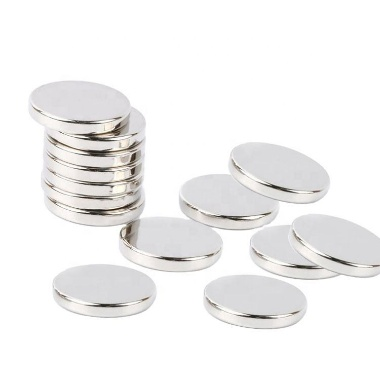
Ferrite magnets rarely get a fair shake in high-end audio circles. The moment a speaker driver swaps over to a neodymium motor, reviewers and hobbyists nod approvingly, assuming the upgrade is automatic. But that assumption overlooks what ferrite actually does well. It doesn’t need to be the strongest magnet in the room to shape a magnetic field intelligently. In many midwoofer and subwoofer designs, a properly sized ferrite ring can deliver a more uniform flux density across the voice coil gap than a smaller neodymium slug, simply because the physical geometry allows the field to spread more evenly. That uniformity translates into lower distortion at high excursion—something that gets lost when spec sheets reduce everything to gauss ratings.
There’s also a thermal argument that rarely makes it into forum debates. Ferrite has a higher Curie temperature than neodymium, and it loses its magnetic strength more gradually as it heats up. In a compact cabinet where the voice coil sits close to the magnet, that can mean the difference between a driver that stays linear during a long listening session and one that starts to sound mushy after an hour. Neodymium can be engineered with high-temperature grades, but those add cost and still don’t always match ferrite’s thermal composure. When you consider that most listening rooms don’t need the absolute highest energy product, ferrite’s stability becomes a real design asset, not a compromise.
Beyond the technical specs, ferrite deserves credit for keeping good sound accessible. The raw material cost is a fraction of neodymium, which means speaker designers can use larger, more carefully shaped motor structures without blowing the budget. That freedom often leads to better overall driver integration—thicker top plates, longer voice coils, and more deliberate magnetic gaps. A cheap ferrite driver can sound mediocre, sure, but so can an expensive neodymium one if the motor geometry is lazy. The magnet itself isn’t the bottleneck; it’s the engineering around it. Next time you see a speaker with a chunky ferrite stack, don’t assume the manufacturer cut corners. They may have simply chosen the right tool for a job that audiophiles have been trained to undervalue.
Alnico and the Art of Smooth, Forgiving Treble
Alnico doesn’t shout its presence the way some modern magnet materials do. Instead, it rounds off the hardest edges of high-frequency content, leaving behind a treble that feels less like a needle and more like a brush of silk across the top end. There’s a subtle compression at play too, almost as if the driver itself is leaning back slightly on transient peaks, which makes long listening sessions far less punishing.
Part of what separates alnico from ceramic or neodymium alternatives is how it saturates. Push a ceramic tweeter hard and it tends to stay stiff and clinical until it breaks up; alnico, by contrast, enters a gentle magnetic saturation that softly clips the waveform. That inherent non-linearity doesn’t read as distortion to the ear, but as a forgiving character—slightly softened cymbal hits, a vocal sibilance that never quite pierces, and a sweetness that seems to linger just a touch longer in the room.
The result is a treble region that many listeners describe as “easy.” It doesn’t sacrifice detail, but it rearranges the priorities: instead of hyper-exposed upper harmonics, you get a coherent, naturally decaying top end. For anyone who has winced at bright recordings or fatigued after an hour of digital source material, alnico’s way of handling treble is less a specification and more a small act of mercy.
Samarium Cobalt: When Heat and Stability Outrank Raw Power
Samarium cobalt magnets rarely make headlines for brute strength, but that’s exactly the point. While neodymium grabs attention with its jaw-dropping pull force, samarium cobalt quietly dominates in environments where lesser magnets fall apart—literally. Its magnetic output may be lower on paper, yet in applications demanding survival at 300°C or resistance to corrosion from salt spray, that “weaker” label becomes irrelevant.
The real story is stability. Samarium cobalt holds its magnetic properties across a temperature range that would permanently demagnetize most other rare-earth magnets. This isn’t a minor edge; it’s a fundamental shift in where and how motors, sensors, and couplings can operate. Designers who once had to over-engineer cooling systems or accept frequent replacements now build more compact, maintenance-free assemblies around samarium cobalt’s consistent behavior.
And the stability isn’t just thermal. Samarium cobalt resists oxidation and chemical attack without the need for protective coatings, which means one less failure point in medical devices, aerospace actuators, or marine equipment. When a magnetic field must remain predictable for decades—not months—raw power stops being the metric that matters. Heat and environmental endurance take the lead.
The Subtle Influence of Magnetic Flux on Midrange Clarity
Magnetic flux rarely gets talked about outside of driver design circles, yet it quietly shapes how a loudspeaker renders the midrange. In the gap where the voice coil moves, flux density isn't perfectly uniform. As the coil travels further from rest, it encounters a subtly weaker or less linear field. That unevenness adds low-order harmonic distortion—not enough to sound obviously "broken," but enough to smear transient edges and blur the separation between instruments. The result is a midrange that feels slightly congested, even when frequency response measurements look flat.
The issue becomes more audible when the driver is asked to handle complex musical passages. A voice coil moving through a nonlinear flux region generates a back-EMF that modulates with the signal itself. This modulation doesn't show up as a static tonal coloration; instead, it changes moment by moment with the music. On dense vocal harmonies or layered acoustic guitar work, the effect can make individual sources harder to follow. Reducing flux modulation—through shorting rings, copper pole caps, or underhung motor designs—often yields an immediate sense of midrange "cleaning up," though the on-axis response may not have changed at all.
What's tricky is that a certain amount of flux asymmetry can actually sound pleasing. Some listeners describe underhung designs as sterile or over-damped, while a touch of even-order distortion from mild flux falloff can add perceived warmth. Midrange clarity, then, isn't simply about maximizing linearity. It's about managing where the flux begins to bend, and how gracefully it returns to rest after each excursion. In practice, the best midrange drivers aren't the ones with the most rigidly flat magnetic environment; they're the ones that keep the flux's influence from dragging down the leading edges of notes.
Choosing a Magnet That Complements Your Amp’s Character, Not Just Specs
Tone chasing often starts with spec sheets, but magnets live in the space between numbers. A ceramic magnet might deliver the tightest low end on paper, yet feel sterile in a dirty, mid-forward amp. An alnico 2 could seem too soft for modern metal, but it can round out a bright, unforgiving circuit into something you actually enjoy playing for hours. The goal isn't to chase a magnet's isolated frequency curve; it's to imagine how that magnetic field interacts with your amp's own voice.
Think of the amp as a room and the magnet as the light source. A high-output ceramic is fluorescent lighting—bright, even, revealing every corner. In a dark, smoky-sounding amp, that can be harsh. Swap in a weaker alnico 4 and suddenly the same notes breathe, sag, and compress in a way that feels more like candlelight. The magnet doesn't need to change your amp; it needs to bring out the part of its character you already love, while softening what you don't.
Before buying, play your amp at the edge of breakup with your current speaker. Note where it fights you: too much bass flub? Harsh upper mids? Then pick a magnet that leans the other way, not just one with higher sensitivity or more wattage. Sometimes a modest alnico magnet in a low-power amp gives you more usable range than a high-spec ceramic that overwhelms the amp's natural compression. The right choice feels less like an upgrade and more like the amp finally finishing its sentence.
FAQ
Alnico's relatively low coercivity allows the magnetic field to shift slightly with the voice coil's own field, producing a smooth compression and sweet harmonic bloom that players often describe as 'musical.' This dynamic behavior is hard to replicate with stronger, stiffer magnets.
Not necessarily. Neodymium offers immense flux density in a tiny package, which helps designers create lightweight, high-sensitivity drivers. However, its field can be so intense that it changes the inductive behavior of the voice coil, sometimes leading to a brighter or more clinical sound unless the crossover and motor design compensate carefully.
Ferrite (ceramic) magnets are cheap, stable, and resistant to demagnetization from heat or opposing fields. When the magnetic circuit is properly designed with a large enough pole piece and gap, a ferrite motor can deliver excellent linearity and low distortion—so the material matters less than the engineering around it.
As voice coils heat up, their resistance rises, causing power compression. Different magnet materials have different temperature coefficients: ferrite can lose strength when hot, while neodymium can permanently demagnetize at much lower temperatures than alnico or samarium cobalt. This thermal behavior directly influences dynamic headroom and long-term consistency.
The shape determines the magnetic flux distribution in the voice coil gap. A well-designed undercut pole piece or a T-yoke with a copper shorting ring can do more for lowering distortion than simply swapping ferrite for neodymium. In other words, geometry often trumps raw magnet grade.
Yes. An overly strong field raises the electrical damping (Qes), which can overdamp the cone and suck the life out of the low end if the suspension isn't matched to it. It can also increase inductance modulation, causing intermodulation distortion in the midrange.
Samarium cobalt offers neodymium-like energy with far better thermal stability and corrosion resistance, but it's expensive and brittle. Its stable field under heat makes it ideal for compact tweeters and compression drivers where the magnet sits close to a hot voice coil and consistent high-frequency output is critical.
Instead of focusing on the magnet alone, look at the entire motor: voice coil diameter, gap clearance, pole piece geometry, and any shorting rings or copper caps. Swapping a magnet without re-engineering the magnetic circuit usually just shifts the frequency response and damping, often not for the better.
Conclusion
Chasing the “best” speaker magnet often starts with neodymium, and for good reason: its high energy density lets designers pack serious punch into compact drivers without the weight penalty. But that doesn't make it the default winner. Ferrite, long dismissed as a cheap workhorse, can deliver surprisingly balanced, fatigue-free sound when the motor is engineered well; its lower flux density actually tames harshness in some paper-cone designs. Then there's alnico, the vintage favorite, whose softer magnetic curve and gentle treble roll-off give acoustic instruments and vocals a forgiving, almost honeyed character that many listeners find more natural than modern precision. For extreme conditions, samarium cobalt rarely gets mentioned outside pro audio, yet its thermal stability and resistance to demagnetization make it the quiet hero when amps run hot or enclosures are tightly packed.
Beyond the magnet material itself, flux distribution across the voice coil gap quietly shapes midrange clarity; uneven fields can blur transient edges and smear imaging, even if the frequency response measures flat. That's why a well-designed ferrite motor can sometimes sound more coherent than a sloppy neodymium one. The real deciding factor should be your amplifier's personality: a bright, analytical amp often pairs beautifully with alnico's natural compression, while a laid-back tube amp might need the faster attack of a neodymium driver to stay engaging. Spec sheets won't tell you this. In the end, the superior magnet isn't the one with the highest grade or the most buzz—it's the one that lets your speakers and amplifier breathe together as a single musical voice.
Contact Us
Contact Person: Kelvin Lo
Email: [email protected]
Tel/WhatsApp: 0769-88561131
Website: https://dawamagnetic.com/