

Best Shock Absorber Boots for Maximum Suspension Protection and Durability
2026-11-17
Every bump, pothole, and rough patch sends debris flying straight toward your suspension. Without the right boots, shock absorber rods wear down fast. In this guide, we break down what actually makes a boot hold up under pressure—and why XIAYI options keep showing up in the toughest builds.
What Actually Wears Out Shock Absorber Boots First
The first thing that gives out is usually heat, not impact. The boot sits close enough to the shock body and brake components that it bakes through repeated drive cycles. Over time, the rubber or polyurethane loses its ability to flex, and tiny stress cracks start inside the accordion folds where the material is thinnest. That lower neck area, right above the mounting clamp, is often the first place those cracks become visible.
A slightly crooked install accelerates the damage. If the boot is not sitting perfectly straight or the clamp is over-tightened, every suspension movement pulls harder on one side of that narrow lower section. Grit also gathers in the folds and acts like sandpaper as the boot compresses and extends. The result is a tear that starts at the lip, not a puncture from a rock or road debris.
UV exposure finishes what heat and strain started. The upper portion sees more direct sunlight and dries out sooner, becoming brittle before the rest of the boot shows much wear. Depending on the vehicle, the first obvious split is either a cracked fold near the bottom clamp or a sun-bleached break up top.
Materials That Hold Up When Roads Get Rough
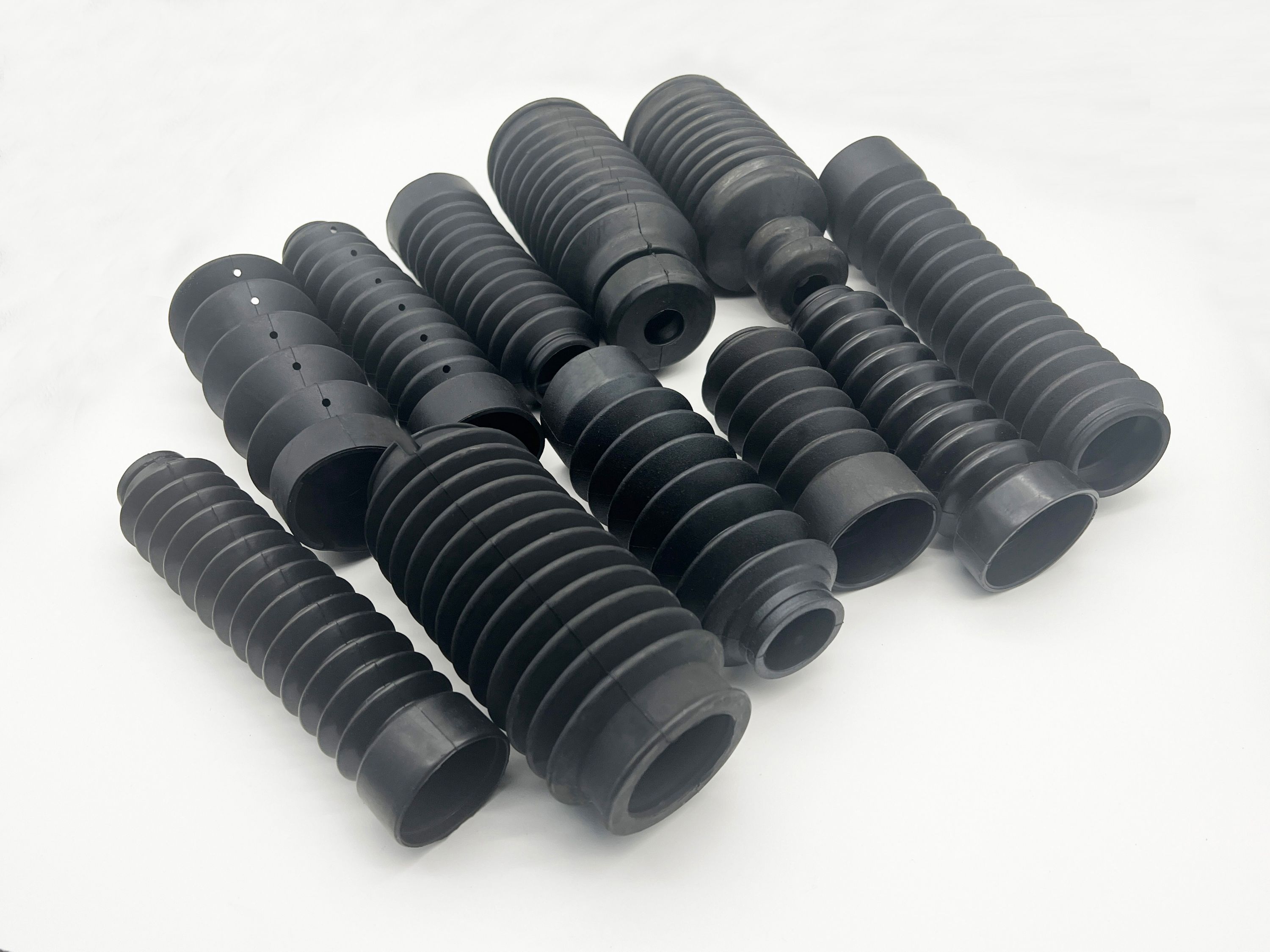
Asphalt blends modified with polymers and recycled tire rubber tend to shrug off the surface wear that turns ordinary pavement into a patchwork of cracks and potholes. Instead of stiffening into brittle sheets, these binders hold a slight elasticity through freeze-thaw cycles, allowing the road to flex just enough under heavy axle loads without splitting.
In spots that take constant punishment, open-graded stone and geotextile fabric often sit beneath the top course. That hidden layer gives water a fast exit route and keeps the subgrade from turning soft after a downpour. Fiber-reinforced concrete also proves its worth on curves and intersections, where braking trucks and turning buses create tearing forces that would rut a standard mix within a season.
The real shift is away from a single miracle product and toward blends that tolerate movement and shed water quickly. When the base stays firm and the surface can stretch instead of snapping, rough conditions stop becoming a maintenance emergency and start looking like ordinary weather.
Finding the Right Fit Without the Guesswork
Most fitting decisions go sideways when people rely on loose impressions instead of measurable details. A quick checklist of daily needs, space constraints, and non-negotiables narrows the field faster than scanning dozens of options and hoping something clicks.
Real clarity comes from testing a shortlist under the same conditions you actually care about. Instead of asking whether a choice looks good on paper, run it through a typical week: how it holds up, where it gets awkward, and whether it solves the problem without creating new friction.
That kind of side-by-side trial turns vague preferences into a decision you can defend. The goal is not to find the most popular option, but the one that disappears into your routine because it simply works.
Installation Mistakes That Shorten Boot Life
Most early boot failures trace back to the way the boot was handled before the first mile. Forcing a rubber boot over a sharp spline without proper lubrication can slice the inner liner, leaving a cut that grows with every flex cycle. Even a small tear lets in road grit and moisture, which gradually turns a flexible joint into a stiff, cracked shell. Instead of working the boot by hand, use the spreader tool that matches the joint size and apply a thin, even layer of the grease supplied in the kit.
Another common mistake is clamping the boot at the wrong angle or overtightening the bands. When the small end is pulled too far onto the shaft, the boot stretches and thins out at the fold, creating a weak point that splits under suspension movement. Overtightened stainless bands can cut into the rubber, while loose ones allow the boot to slip and expose the joint. A quick check is to rotate the wheel by hand after installation and watch the boot folds—if they bind or twist instead of rolling smoothly, reposition and adjust before the vehicle goes back on the ground.
Heat and chemical exposure during nearby repairs also silently shorten boot life. Greasing the joint and then immediately spraying brake cleaner or undercoating nearby can soften the neoprene, causing it to swell and lose its shape. Similarly, letting exhaust components rest directly against the boot during reassembly creates a hot spot that hardens the rubber within days. Let the area cool, keep solvents wiped away, and route any heat shields back to their original positions. These small habits matter more than the boot brand itself.
How to Spot Early Damage Before It Reaches the Shaft
A faint change in rhythm often shows up long before any metal reaches the shaft. Run your hand near the bearing housing and feel for a buzz that was not there last month, or listen for a skip that disappears once the equipment warms up. Fresh wear tends to leave clues in the lubricant first: a dull metallic haze, tiny flecks catching the light, or a smell that turns slightly burnt. Catching those small shifts means you can pull a filter sample or inspect a drain plug instead of waiting for the damage to walk deeper.
Watch the seals as well. A seal that starts weeping at a specific angle, or flings a thin line of grease only after shutdown, often signals misalignment or early spalling nearby. Compare temperatures across the housing rather than trusting one reading, because a hot spot that moves with load is a stronger warning than a uniform rise. When you notice two or three of these subtle signs together, stop and check the coupling, the base bolts, and the radial clearance before the shaft becomes the next thing to tell you something is wrong.
Do Premium Boots Really Outlast Budget Options
The short answer is usually yes, but not for the reason most people expect. Budget boots often rely on glued-on soles and bonded leather that cracks around the flex points within a single season. Higher-end pairs tend to use full-grain leather, firmer stitching, and soles that can actually be replaced instead of thrown away.
That said, paying more is not a guarantee. Some expensive boots are built for lightness or fashion and will wear out just as fast as a decent pair at a third of the cost. The real difference shows up in resoleable construction, where the upper can survive multiple sole replacements. If you walk daily on concrete, a budget boot might need replacing every year, while a well-made boot gets rebuilt for much less than the cost of a new pair.
There is also a break-in trade-off. Premium leather often starts stiff and forms to your foot over time, whereas cheap synthetic materials feel soft in the store but lose support quickly. For longevity, look for a simple design, a thick leather lining, and a sole that can be replaced rather than a polished brand story.
FAQ
They keep dirt, grit, moisture, and road salt off the polished shaft and seal area. Once abrasive particles work past the seal, they score the shaft and cause leaks that no boot can fix.
Look for splits, missing bellows sections, or a boot that has pulled away from the bump stop. If you can see the chrome shaft with the wheel turned or the suspension compressed, the boot is no longer doing its job.
For a daily driver on smooth pavement they can be fine for a while, but they tend to harden and crack after a few winters. If the vehicle sees gravel, mud, or heavy road salt, a thicker polyurethane or high-grade neoprene boot usually lasts longer.
Split boots make that possible. They wrap around the shaft and are secured with the included fasteners or zip ties. Solid boots offer a tighter fit, but you have to disconnect one end of the shock to slide them on.
It should not change spring rate or damping. What changes is how long the shock survives. If the old boot was packed with dirt or binding against the shaft, you might notice smoother movement after replacement.
Universal boots work well if you measure the compressed and extended lengths carefully and avoid excessive rubbing. Vehicle-specific boots are less hassle and often include the correct bump stop, but they cost more and can be harder to find for older models.
Short term it is usually not an immediate safety failure, but every wet and gritty drive accelerates wear on the shaft and seal. By the time the shock leaks, the boot replacement alone will not fix the damage.
The boot is a shield for the shaft and seal. The jounce bumper is a foam or rubber stop that prevents the suspension from bottoming out. Some kits combine both, but they solve different problems and should not be treated as interchangeable.
Conclusion
Most shock absorber boots don't fail because the rubber is old—they fail because grit, road salt, and constant flexing work into the folds long before the rest of the suspension shows wear. The first casualty is usually the thin area near the mounting point, where small tears start and then spread every time the shock cycles. Choosing a boot made from reinforced rubber or blended polyurethane gives a real advantage on rough pavement, since these materials resist splitting when temperatures drop and don't harden as quickly after exposure to brake dust and splash. The right fit matters just as much as the material. A boot that's slightly too short leaves part of the polished shaft exposed to debris, while one that's too wide rubs against other components and creates its own kind of damage. Measuring the collapsed and extended lengths before ordering removes most of the guesswork and prevents the boot from being stretched beyond what its folds can handle.
Installation shortcuts tend to shorten boot life faster than any road condition. Pinching the boot with standard zip ties, using the wrong clamp, or forcing it over a corroded shaft can create stress points that turn into cracks within a few months. A careful check of the shaft for pitting or dried mud before sliding the new boot on is worth the extra time. After installation, watching for early warning signs like uneven bulges, surface whitening, or fine cracks near the top lip gives a chance to replace the boot before the shaft itself gets scored. As for the price debate, premium boots often earn their cost through better seam construction and UV inhibitors rather than just a brand name, but a well-fitted mid-range polyurethane boot can still outlast an expensive rubber one if installed cleanly. The real difference comes down to matching the boot to how the vehicle is actually driven, not how the package looks on the shelf.
Contact Us
Contact Person: Leela
Email: [email protected]
Tel/WhatsApp: 8613586885132
Website: https://www.xiayishockparts.com