

Best Q235 Steel Plate Company for Durable Construction Projects
2026-09-24
Every construction manager knows that Q235 steel plate quality can make or break a project’s longevity. That’s why Sanhe Steel keeps showing up on shortlists for durable builds—but what exactly sets their plates apart? In this post, we dig into the real-world advantages that turn a standard material into a structural backbone.
The Steel Behind Landmarks That Outlast Their Mortgages
Walk past any century-old courthouse or a bridge that has shrugged off decades of freeze-thaw cycles, and you will find steel doing quiet, unglamorous work. It sits inside the stone and concrete, holding tension where masonry alone would crack, and it accepts the slow creep of time without complaint. The mortgages on these buildings were signed, paid off, and forgotten long ago, yet the steel remains, often outlasting the very institutions that financed them.
What sets landmark steel apart is not some exotic alloy but the way it was specified and placed. Builders who thought in generations, not quarters, chose heavier sections and insisted on details that kept moisture away from the metal. A riveted connection from 1910 can still carry its load because it was never allowed to rust in hidden pockets. Modern replacements often fail sooner, not because the steel is weaker, but because the surrounding design stopped respecting the material's need for air and drainage.
There is a lesson in that for anyone pouring a foundation today. The steel that outlasts a mortgage is not the cheapest tonnage on the invoice. It is the steel detailed by someone who drew a section, traced the water path, and asked what happens in year forty. Landmarks do not survive by accident; they survive because the skeleton was given as much thought as the facade.
What a Q235 Plate's Surface Tells You Before It Ever Leaves the Yard
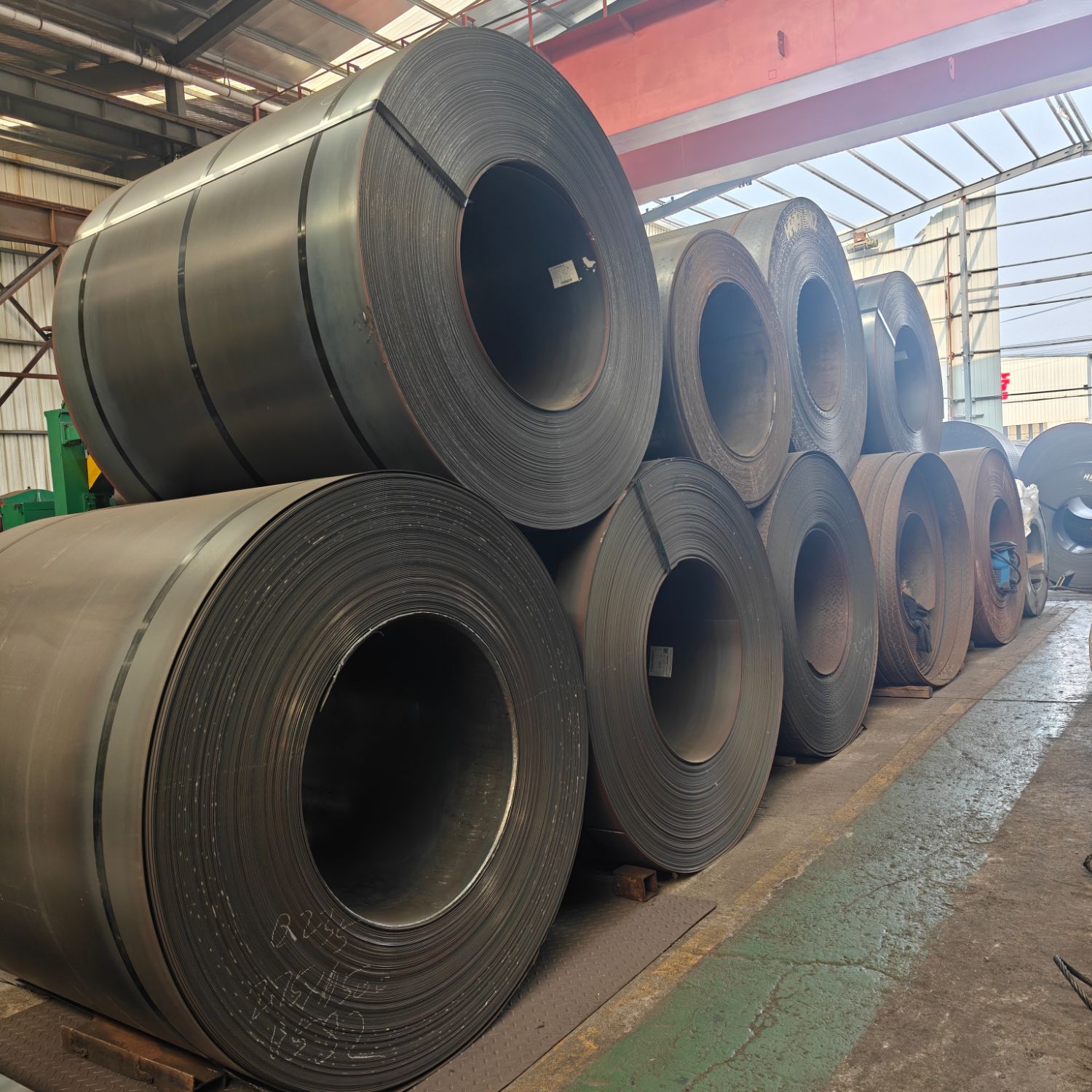
At first glance, a Q235 plate’s surface looks like a plain gray sheet, but it carries a record of the mill. The pattern of mill scale, that thin blue-gray oxide layer, tells you whether the plate was hot rolled and how evenly it cooled on the runout table. Uniform scale without red rust patches usually means the plate was kept dry and moved with slings that didn’t scrape. Flaking or loose scale often points to a lower finishing temperature or too much time sitting in open storage.
Look for mechanical damage that hints at rough handling before the plate ever gets loaded. Scuff marks from forklift forks, edge gouges, and chain scrapes change the surface long before delivery. More telling are surface-breaking defects like slivers, scabs, and laminations, which show up when you catch the light at a low angle. A small raised sliver can hide a crack that opens later under load, especially if the Q235 plate is headed for welding or forming work.
Rust is the most honest indicator of storage conditions. Light orange surface rust appears within days in humid weather and usually cleans off without real damage. Deep brown pitting, especially along the edges or around the stacking blocks, points to weeks of exposure or trapped moisture between plates. A plate with that kind of pitting may still be sound, but it deserves a closer check for thickness loss and hidden corrosion where water pooled. That’s why a careful yard inspection reads the surface before the truck ever pulls in.
Cutting to the Millimeter Without Making Enemies of Your Welders
When your cutting team starts hitting tolerances tighter than a weld bead's width, the guys on the floor don't always see it as a win. They see extra grinding, more fit-up time, and a schedule that suddenly feels impossible. The trick isn't loosening your standards—it's giving welders the information they need before the first arc strikes. Mark your cut edges with expected shrinkage, note any bevel angles that changed, and flag parts where the kerf wandered even half a millimeter.
That kind of transparency sounds obvious, but most shops skip it because it slows down the cutting station by a few minutes. Those minutes come back tenfold when a welder doesn't have to guess whether to gap a joint at 2mm or 3mm. If you're cutting to the millimeter, you've already done the hard part. Don't undo it by handing over a pile of parts with zero context.
And if you really want to keep the peace, invite a welder to the nesting review before you lock in the cut plan. Let them point out where a tight corner will make torch access miserable or where a slightly longer tab will save them a clamp. You'll still hit your numbers, but you'll do it with a crew that trusts the dimensions instead of fighting them.
When Your Crane Is Waiting: Delivery Schedules That Respect the Gantt Chart
A crane waiting on a delivery is not a minor hiccup; it's the entire lift plan losing its rhythm. On a tight urban site, tower crane time gets booked in fifteen-minute blocks, so a truck stuck at the gate or a load that arrives before the rigging crew is ready throws every subsequent activity off the critical path. When delivery schedules are built directly from the Gantt chart, each material drop corresponds to a specific lift window rather than a vague "morning" or "early afternoon" slot. That means the rebar bundle shows up when the crane can actually swing it, not when the supplier finds it convenient.
The most practical way to do this is to treat the Gantt chart as a constraint map, not just a progress tracker. Mark the crane's committed lifts in dark blocks, then back-time deliveries around those blocks with realistic unloading and inspection buffers. If a precast panel needs to be in place before the next floor's formwork starts, its delivery window isn't "sometime Tuesday" — it's the forty minutes after the crane finishes hoisting the column cages and before the concrete pump takes over. Setting the delivery schedule this way keeps the crane swinging, the crews moving, and the site from turning into an expensive parking lot for materials nobody can touch yet.
Not All Q235 Is Equal: The Chemistry We Refuse to Dilute
Walk through any steel yard and you'll see stacks of Q235 plate, all stamped with the same grade. But cut into two different lots and you might as well be working with two different metals. The specification allows a wide range for carbon, manganese, silicon, and especially for tramp elements like phosphorus and sulfur. We've seen Q235 from one mill weld cleanly at -10°C, while another batch from a different supplier cracks under the same rod, same preheat, same everything. The difference isn't in the name on the tag — it's in the melt chemistry that most buyers never ask to see.
Our stance is simple: we don't accept the bottom end of the tolerance band just because the certificate says "conforming." We order against a tighter internal window, one that pushes silicon toward the upper third for better deoxidation and keeps sulfur below half the standard limit. That means every heat we stock has been reviewed line by line, not just checked for a pass/fail stamp. If a mill can't meet our numbers, we don't buy from them. Period. It costs more up front, but it means the plate you get today behaves like the plate you got last month.
This isn't about being difficult — it's about knowing what actually matters when the torch hits the steel. Diluted chemistry shows up as porosity, as inconsistent hardness, as a workpiece that warps in the middle of a multi-pass weld. We'd rather lose a supplier than ship material that makes your job harder. So when you see our Q235 tags, you're not just seeing a grade. You're seeing a refusal to let the word "equivalent" hide the chemistry that was left out.
From Foundation Bolts to Roof Trusses: Plates That Fit the Whole Load Path
A continuous load path doesn't ask for more metal—it asks for connections that don't interrupt what the structure already wants to do. These plates start at the foundation with oversized bolt washers and base plates that seat against anchor rods without crushing the grout. From there, the same plate family carries shear through floor framing with shaped gussets and lands at the roof with truss anchors that keep chord and web members aligned. The hole patterns are laid out to match standard timber and steel spacings, so the plate becomes part of the member rather than a bolted-on afterthought.
Rather than a one-size-fits-all flat bar, the range includes plates that differ in thickness, bend angle, and bolt slot orientation depending on where they sit in the load path. Foundation plates use thicker stock and slotted holes to allow for cast-in-place bolt tolerance. Mid-span splice plates are pre-drilled for staggered fasteners to reduce splitting in engineered lumber. Roof truss plates add return flanges that wrap the bottom chord, resisting uplift without relying on a single row of nails. That variation means the same project can draw from one source without forcing a site modification.
On site, the plates read like a layout guide. Etched reference marks line up with common 16-inch and 24-inch framing modules, and the bend lines correspond to standard rafter slopes. Installers often note that cutting, shimming, or re-drilling becomes rare because the plates are already shaped for the joint, not just supplied as flat stock. In retrofit work, the multi-hole patterns let existing fasteners stay in place while new ones go in, which avoids weakening old members with extra holes.
FAQ
Q235 offers a practical balance of strength, weldability, and formability. It handles structural loads well without becoming brittle in normal conditions, and its mild carbon content makes on-site cutting and joining much less troublesome than higher-carbon grades.
Look for a company that provides mill test certificates showing actual chemical composition and mechanical properties, not just a generic datasheet. Also ask about their inventory depth, edge trimming quality, and whether they can handle custom length shearing or shot blasting before delivery.
Yes, thicker plates naturally resist bending and buckling under heavy loads, but the real key is consistent thickness tolerance. A supplier with tight rolling tolerances will give you more predictable performance and fewer weak spots in welded connections.
It can withstand brief exposure, but it will form surface rust quickly. For durable outdoor projects, you should plan for primer or galvanizing soon after fabrication. Some mills offer pre-primed or oiled surface options to slow down corrosion during storage and transport.
Beyond standard 4x8 or 2x6 meter plates, a capable supplier should offer laser or plasma cutting, beveling for weld prep, drilling, and even bending to your drawings. Having these services under one roof saves time and reduces the risk of mismatched tolerances between subcontractors.
For projects in freezing temperatures, you need to confirm that the plates meet a low-temperature impact test value, such as 0°C or -20°C Charpy results. Standard Q235 may not be suitable for very cold climates unless the mill adjusts the deoxidation and rolling process; a good company will help you choose the right grade variant.
You want a supplier with multiple distribution yards close to your site or a major port. Ask about their loading capacity, packaging for sea freight, and whether they bundle plates with edge protectors and waterproof wrapping. Reliable delivery scheduling can prevent costly crane downtime on site.
A lower upfront price can hide costs from poor flatness, rough edges, or inconsistent chemistry that cause rework and welding defects. A slightly higher per-ton cost for certified, clean-surfaced Q235 plate often leads to lower fabrication waste and fewer delays, making the whole project more economical.
Conclusion
A Q235 plate that will hold up a warehouse roof for four decades starts long before the first weld. The best suppliers treat surface inspection as a non-negotiable: flatness, scale, edge condition—checked before the plate ever moves off the yard. That level of scrutiny matters because the steel behind a landmark has to outlast its mortgage, not just its warranty. We hold the chemistry tight, refusing to let silicon or manganese drift into ranges that make the plate brittle or unpredictable. Cutting to the millimeter is standard, but doing it without turning your welders into enemies takes real shop-floor experience. Burrs are ground, bevels are consistent, and the fit-up doesn't fight the crew on site.
Delivery isn't a promise; it's a schedule. When the crane is already rented and the Gantt chart is pinned to the trailer wall, plate arrivals have to sync with the pour, the erection, and the bolt-up. That's why the best Q235 suppliers plan logistics around your sequence, not their warehouse convenience. And the plate itself has to match the entire load path—from thick foundation bolts bearing shear to roof trusses that see wind uplift, not just dead load. Not all Q235 is equal: some mills quietly dilute the melt to save a few yuan per ton. A supplier worth the name keeps the carbon, manganese, and sulfur where they belong, so the plate behaves the same on the tenth floor as it did on the first.
Contact Us
Contact Person: Zoey
Email: [email protected]
Tel/WhatsApp: +86 15865577002
Website: https://www.sanhesteels.com